American talk shows are television’s most durable living rooms. They have survived changing presidents, changing hairstyles, changing network executives, and at least twelve different ways to ask a celebrity, “So, what was it like working with Tom Hanks?” From late-night monologues to daytime confessionals, U.S. TV chat shows have shaped pop culture by giving viewers a familiar place to laugh, argue, cry, and occasionally watch someone storm offstage.
The phrase “longest running talk shows” can mean two slightly different things. Some shows are franchises, like The Tonight Show, which has changed hosts but kept the same basic desk-and-couch tradition alive for decades. Others are single-host landmarks, like Maury, Oprah, or Dr. Phil, where the host’s personality was the entire engine. This list looks at both, with context, because comparing Johnny Carson, Kelly Ripa, Maury Povich, and Jon Stewart in one sentence is exactly the kind of chaotic TV history party we deserve.
What Counts as a US TV Talk Show?
For this guide, a U.S. TV talk show means a regularly aired American program built around conversation, interviews, comedy, commentary, lifestyle segments, audience participation, or personal stories. That includes late-night talk shows, daytime talk shows, syndicated chat shows, panel shows, and interview programs. It does not include pure news broadcasts, game shows, or reality competitions, even if the host talks a lot. Sorry, game show hosts. You are charming, but the couch is not yours today.
Because television history is messy, the rankings below separate continuous franchises from iconic single-host or mostly single-format series. A franchise can continue after a host leaves. A single-host show usually ends when the host exits. Both types matter, but they tell different stories about staying power.
Longest Running US Talk Show Franchises and Chat Shows
1. The Tonight Show 1954 to present
The Tonight Show is the grandparent of American late-night television, and it still refuses to go to bed. Beginning in 1954, the NBC franchise helped define the modern late-night format: monologue, desk, band, celebrity interviews, comedy sketches, and a final musical or stand-up performance. Steve Allen, Jack Paar, Johnny Carson, Jay Leno, Conan O’Brien, and Jimmy Fallon all left their fingerprints on the show.
Its importance is bigger than its age. Johnny Carson turned the host’s chair into a national throne, making late-night TV feel like a nightly appointment. Jay Leno pushed the show deeper into broad mainstream comedy. Conan O’Brien’s short run became a case study in network turbulence. Jimmy Fallon brought games, viral clips, and social-media-ready celebrity bits. Through every era, The Tonight Show has remained the benchmark for long-running talk shows in the United States.
2. Late Night 1982 to present
NBC’s Late Night franchise began in 1982 with David Letterman, whose oddball humor made late-night television feel looser, stranger, and more mischievous. Letterman treated the format like a sandbox: stupid pet tricks, absurd remotes, ironic interviews, and a sense that the show might go off the rails at any second.
Conan O’Brien followed with surreal comedy and cult-favorite weirdness. Jimmy Fallon brought music, impressions, and internet-friendly sketches before moving to The Tonight Show. Seth Meyers then reshaped the hour into a sharp political comedy platform, especially through segments like “A Closer Look.” The result is one of TV’s most flexible chat-show franchises: same time slot spirit, wildly different comedic personalities.
3. Live with Kelly and Mark / Live Franchise 1983 to present
The Live franchise began locally as The Morning Show in New York in 1983 before becoming a nationally syndicated morning staple. Regis Philbin and Kathie Lee Gifford turned casual host chat into must-watch daytime comfort food. The magic was not complicated: two people at a desk, reacting to life, entertainment, weather, parenting, and whatever odd thing happened backstage.
Kelly Ripa joined in 2001 and became the franchise’s defining modern presence. Over time, the show evolved through pairings with Regis Philbin, Michael Strahan, Ryan Seacrest, and Mark Consuelos. Its longevity proves that not every long-running talk show needs explosive drama. Sometimes viewers simply want coffee, chemistry, celebrity guests, and a host who can make a broken air conditioner sound like breaking news.
4. The Late Show 1993 to 2026
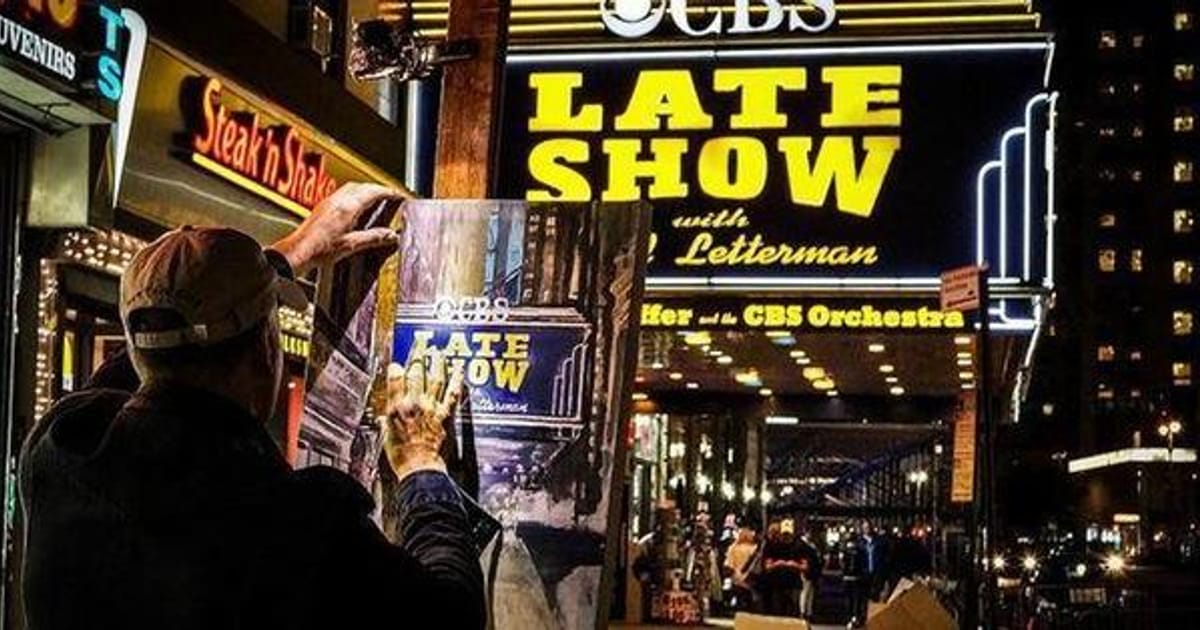
The Late Show launched on CBS in 1993 when David Letterman moved from NBC to his new 11:35 p.m. home. For more than two decades, Letterman gave CBS an instantly credible late-night identity, mixing dry wit, celebrity interviews, Top Ten lists, and an unmistakably skeptical attitude toward showbiz polish.
Stephen Colbert took over in 2015 and transformed the franchise into a more politically focused late-night program. His version leaned heavily into current events, especially during election cycles and national crises. CBS announced that the franchise would end in May 2026, giving The Late Show a roughly 33-year run. That makes it one of the longest-running American late-night talk show franchises, even if its ending reflects the tougher economics of modern network television.
5. The Daily Show 1996 to present
The Daily Show began in 1996 as a satirical news program hosted by Craig Kilborn. It became a cultural force under Jon Stewart, who turned fake news into a brutally effective way to talk about real politics, media spin, and civic absurdity. Trevor Noah later expanded the show’s global perspective, bringing his international background and generational voice to the desk.
In the 2020s, the show moved into a rotating-host era before Stewart returned part-time. Its long run matters because it blurred the line between comedy and commentary. For many younger viewers, The Daily Show was not just a place to laugh at politics. It was a place to understand why politics had become so laughable in the first place.
6. The View 1997 to present
Created by Barbara Walters, The View premiered in 1997 with a simple but powerful idea: put women of different generations and viewpoints around a table and let them discuss the day’s topics. The “Hot Topics” format became daytime television’s conversational boxing ring, complete with laughter, interruptions, heartfelt moments, and the occasional viral argument.
The show has lasted because it understands that viewers do not only want interviews; they want reaction. They want to see how public issues sound when filtered through personality, lived experience, and disagreement. The View helped make panel-based daytime talk a permanent part of American TV culture.
Longest Running Single-Host and Daytime Talk Shows
7. Maury 1991 to 2022
Maury, originally The Maury Povich Show, ran for more than three decades and became one of the most recognizable daytime talk shows in American history. Its early years included a broader mix of human-interest stories, but it eventually became famous for paternity tests, lie detector results, and emotional confrontations.
The show’s signature phrase, “You are not the father,” became a pop-culture punchline, meme, and daytime TV ritual. Critics often questioned the ethics of turning private family conflict into public entertainment. Still, the show’s longevity shows how powerful formula can be in daytime television. Viewers knew exactly what they were getting, and the suspense worked almost like a courtroom verdict with commercial breaks.
8. Donahue 1967 to 1996
Phil Donahue helped invent the modern daytime issue-oriented talk show. Donahue gave ordinary audience members a microphone and treated public debate as television drama. The show discussed politics, feminism, civil rights, religion, war, family conflict, and social change long before many daytime programs were willing to get that serious.
Donahue’s style influenced Oprah Winfrey, Sally Jessy Raphael, Geraldo Rivera, and many others. He did not simply interview guests; he moved through the audience, inviting viewers to become part of the conversation. In today’s language, he made the comment section live, but with better suits and fewer anonymous trolls.
9. The Jerry Springer Show 1991 to 2018
The Jerry Springer Show began as a more traditional talk program but eventually became the wildest circus in syndicated daytime TV. By the late 1990s, it was known for outrageous relationship reveals, security guards, shouting matches, chair-adjacent chaos, and audiences chanting “Jerry! Jerry!” like they were summoning a daytime television volcano.
Its reputation remains controversial. Some viewers saw it as lowbrow fun; critics saw exploitation. Either way, it became impossible to ignore. The show’s 27-season run proves that shock value, when packaged into a predictable format, can become a durable brand. Not always a classy brand, perhaps, but a durable one.
10. Charlie Rose 1991 to 2017
Charlie Rose represented the opposite end of the talk-show universe from Springer-style spectacle. The PBS interview program used a minimalist black-table format and focused on long, serious conversations with authors, politicians, actors, scientists, business leaders, and artists.
Its appeal was intellectual intimacy. The show trusted viewers to sit with a conversation instead of racing from joke to joke. It ended in 2017 after sexual misconduct allegations against Rose, but its long run remains a major example of the American interview show as a serious cultural forum.
11. The Oprah Winfrey Show 1986 to 2011
The Oprah Winfrey Show was not merely a talk show. It was a national mood ring. After becoming nationally syndicated in 1986, Oprah Winfrey built a daytime empire around empathy, celebrity interviews, personal transformation, book clubs, social issues, and unforgettable audience giveaways. Somewhere, someone is still emotionally recovering from the “You get a car!” moment.
Oprah’s greatest innovation was emotional authority. Guests did not just promote movies; they confessed, healed, explained, or reinvented themselves. Viewers trusted Oprah’s curiosity and warmth. Her show helped shift daytime talk from spectacle toward personal growth, even while inspiring plenty of imitators who tried to bottle the same lightning.
12. Jimmy Kimmel Live! 2003 to present
Jimmy Kimmel Live! premiered in 2003 and gradually became ABC’s longest-running late-night talk show. Kimmel’s early version had a scrappier, looser feel, but the program matured into a major network late-night player with celebrity interviews, comedy bits, viral pranks, political monologues, and emotional advocacy moments.
Kimmel’s staying power comes from adaptability. He can host the Oscars, roast politicians, prank celebrities, interview children, and then pivot into a sincere monologue about health care or national tragedy. That range has helped the show remain relevant in an era when late-night clips often travel farther online than they do on traditional television.
13. Dr. Phil 2002 to 2023
Dr. Phil launched in 2002 after Phil McGraw became a breakout figure on Oprah’s show. The program mixed advice, confrontation, family conflict, addiction stories, behavioral issues, and self-help language into a highly successful daytime formula.
McGraw’s style was direct, sometimes blunt, and often built around memorable phrases like “How’s that working for you?” The show drew criticism over its handling of vulnerable guests, but it remained one of syndication’s strongest performers for years. Its 21-season run shows the power of the “expert host” model in daytime television.
14. The Ellen DeGeneres Show 2003 to 2022
The Ellen DeGeneres Show brought dancing, celebrity games, surprise gifts, viral kid guests, and feel-good comedy to daytime TV. Premiering in 2003, it became one of the most successful syndicated talk shows of the 2000s and 2010s.
Ellen’s brand was built on friendliness, humor, and shareable moments. The show also became a major platform for celebrities promoting movies, music, and viral stories. Later workplace controversy complicated its legacy, but the program’s 19-season run and huge awards haul make it one of the defining daytime talk shows of its era.
15. The Mike Douglas Show and The Merv Griffin Show classic long-runners
Two classic names deserve special mention: The Mike Douglas Show and The Merv Griffin Show. Mike Douglas brought a relaxed daytime variety-talk style to American homes beginning in the early 1960s, mixing music, interviews, and guest co-hosts. Merv Griffin, meanwhile, hosted a sophisticated talk show across multiple network and syndicated runs while also becoming a legendary creator of game shows.
These shows helped build the bridge between early variety television and the more personality-driven talk shows that followed. They may not dominate modern search trends, but without them, the talk-show family tree would look suspiciously bare.
Why Some Talk Shows Last for Decades
They become habits, not just programs
The longest running talk shows usually become part of a viewer’s routine. Late-night shows help people close the day. Morning shows help them begin it. Daytime shows keep people company during lunch, chores, work breaks, or quiet afternoons. Once a show becomes a habit, viewers often stay even through host changes, set redesigns, and theme songs that sound like they were composed inside a very enthusiastic elevator.
They balance consistency with reinvention
Every durable talk show has a recognizable structure. The audience knows when the monologue arrives, when guests come out, when the panel debates, or when the big reveal happens. But the show also has to evolve. The Tonight Show adapted from Carson’s cool command to Fallon’s viral playfulness. The View shifted with political eras and co-host chemistry. The Daily Show changed as satire itself changed.
The host becomes the brand
In talk television, the host is not just an employee. The host is the product, the tone, the referee, and the reason viewers either stay or flee. Oprah made empathy feel powerful. Letterman made irony feel cool. Maury made suspense feel weirdly athletic. Kelly Ripa made morning chatter feel effortless. Jon Stewart made political exhaustion feel funny enough to survive.
Viewer Experience: Why Long-Running Talk Shows Feel Personal
Watching a long-running talk show is different from watching a scripted drama. A drama may have better lighting, tighter plots, and fewer awkward celebrity anecdotes, but a talk show has continuity with real life. It reacts to what happened today. The host ages with the audience. The set changes. The jokes reflect the headlines. The guests return years later with new projects, new scandals, new marriages, new memoirs, and sometimes new faces that suggest a dermatologist has been promoted to executive producer.
That is why these shows can feel oddly personal. Viewers may never meet the host, but they know the rhythm. They know how Jimmy Kimmel pauses before a serious point. They know how the table on The View can turn a political headline into a family argument at Thanksgiving. They know the comfort of Live host chat, where the first ten minutes can feel like eavesdropping on friends who are better dressed than you before 9 a.m.
There is also a shared-memory effect. Millions of Americans remember where they were when a famous interview aired, when Oprah gave away cars, when Letterman returned after 9/11, when Jon Stewart processed national grief through comedy, or when a daytime reveal became the next day’s school hallway joke. Talk shows create cultural timestamps. They are not always “important” in the formal historical sense, but they capture how people were talking, laughing, worrying, and distracting themselves at a specific moment.
For writers, media fans, and casual viewers, studying the longest running US talk shows is a reminder that television longevity is not only about ratings. It is about trust. Audiences return to hosts who give them a reliable emotional experience. That experience may be laughter, comfort, outrage, curiosity, gossip, debate, or the guilty thrill of watching someone open an envelope with life-changing DNA results. Different shows serve different needs, but the core promise is the same: sit down, stay a while, and let’s talk.
The best long-running chat shows also understand pacing. They know when to be silly, when to be serious, and when to let a guest simply tell a story. In a media world obsessed with speed, the talk show remains stubbornly human. It is people in chairs, speaking in real time, trying to entertain or explain the day. That sounds simple until you remember how many shows fail after one season. Staying interesting for 20, 30, 40, or 70 years is not an accident. It is craft, chemistry, timing, reinvention, and a little television magic.
Conclusion
The longest running talk shows in U.S. TV history reveal how flexible the format can be. A talk show can be polished late-night comedy, daytime therapy, political satire, celebrity promotion, intellectual conversation, or joyful morning chaos. The Tonight Show remains the towering franchise, while shows like Live, The View, The Daily Show, Maury, Donahue, Oprah, and Jimmy Kimmel Live! prove there is no single recipe for staying power.
What they share is a direct relationship with viewers. The host looks into the camera and says, in one way or another, “Let’s make sense of this together.” Sometimes “this” is politics. Sometimes it is grief. Sometimes it is celebrity gossip. Sometimes it is a man in a paternity-test episode sweating like he just heard the dramatic music of destiny. That range is exactly why American TV chat shows keep surviving. As long as people want conversation, comedy, confession, and connection, the talk-show couch will never be empty for long.