Amplifiers are the unsung gym coaches of the audio world. Your music arrives as a tiny electrical signal, politely whispering, “Hello, I am a violin solo.” The amplifier takes that signal, gives it a protein shake, and sends it to your speakers with enough strength to move air. That movement becomes sound. Simple idea, complicated machinery. Like coffee, amplifiers seem basic until someone starts talking about voltage rails, impedance curves, damping factor, headroom, and why your “1,000-watt” bargain amp sounds like a raccoon trapped in a cereal box.
This guide breaks down the nuts and bolts of audio amplifiers in plain American English. We will cover what amplifiers actually do, how watts really work, why impedance matters, what amplifier classes mean, how distortion sneaks in, and how to choose an amp that fits your speakers instead of bullying them into therapy. Whether you are building a home stereo, upgrading a studio setup, assembling a small PA system, or just trying to understand why your receiver gets hot enough to toast a bagel, this is your practical amplifier map.
What Does an Audio Amplifier Actually Do?
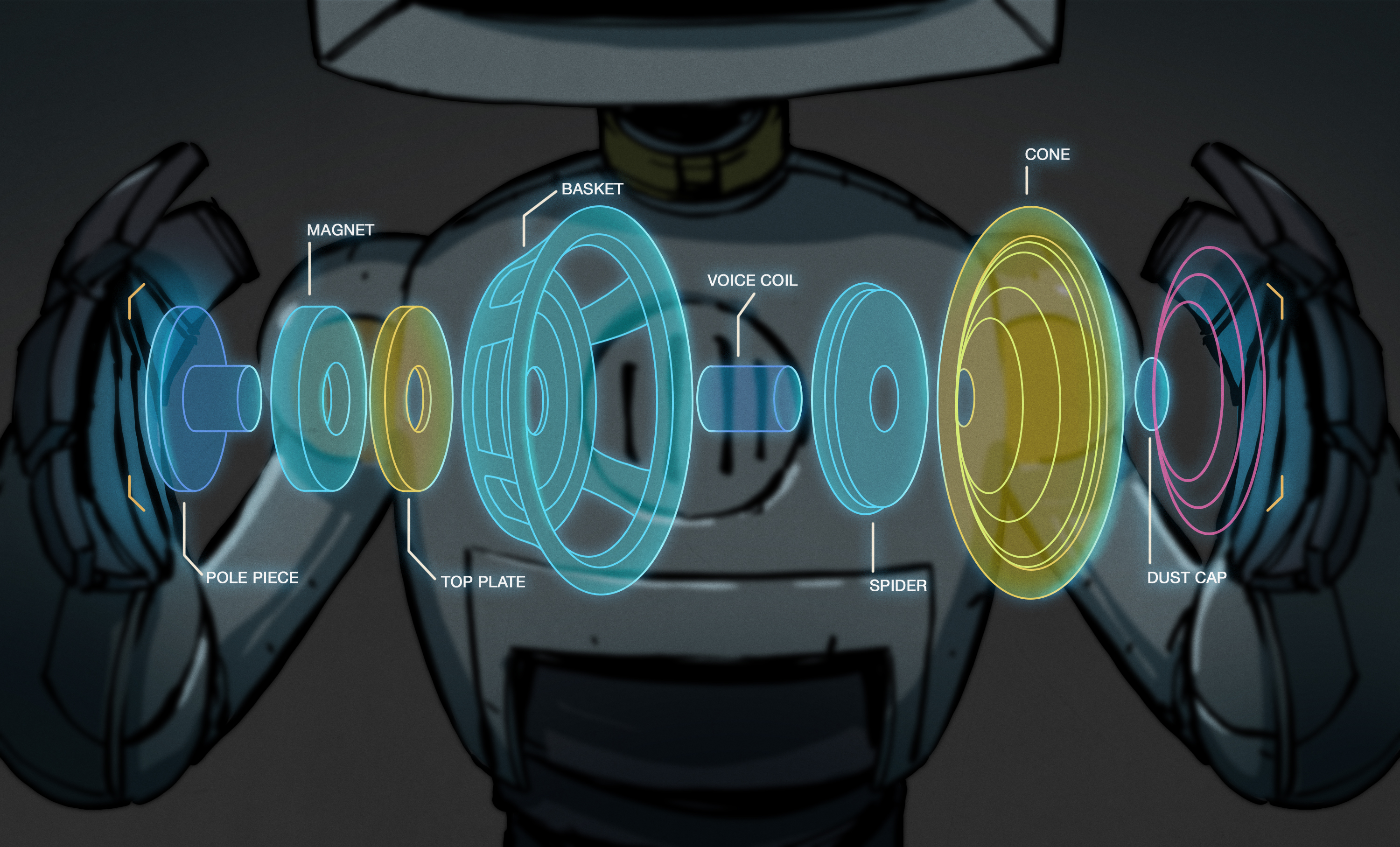
An audio amplifier increases the strength of an electrical audio signal. That signal may come from a turntable preamp, DAC, mixer, audio interface, phone, receiver, or streaming device. On its own, the signal is usually too weak to drive a passive speaker. The amplifier boosts voltage, current, or both, allowing the speaker’s voice coil to move back and forth. That movement pushes air, and your ears interpret those pressure changes as music, dialogue, footsteps, cymbals, explosions, or your neighbor’s questionable karaoke choices.
In a typical audio chain, the source provides the content, the preamp handles input selection and volume control, the power amplifier supplies muscle, and the speakers turn electrical energy into acoustic energy. Integrated amplifiers combine preamp and power amp sections in one box. AV receivers add surround processing, radio, HDMI switching, room correction, and other home theater duties. Standalone power amplifiers focus on one job: driving speakers cleanly.
The Big Three: Power, Impedance, and Sensitivity
Most amplifier confusion starts with three specs: power, impedance, and speaker sensitivity. They are connected, but not interchangeable. Think of them as a small band. Power is the drummer, impedance is the bass player, and sensitivity is the singer who determines whether the whole thing feels loud with very little effort.
Power: Watts Are Not a Personality Test
Amplifier power is usually measured in watts. More watts can mean more potential volume, but the relationship is not as dramatic as marketing departments would like. Doubling amplifier power gives roughly a 3 dB increase in sound pressure level, assuming the speaker can handle it. That is noticeable, but it is not “the walls have left the building” dramatic.
Continuous power ratings matter more than flashy peak numbers. A serious amplifier rating should tell you how many watts it can deliver into a specific impedance, across a specified frequency range, at a stated distortion level. “100 watts per channel into 8 ohms from 20 Hz to 20 kHz at 0.08% THD” tells you far more than “1,000 watts max power,” which may have been measured during a lightning strike in a marketing intern’s imagination.
Impedance: The Load Your Amp Has to Push
Speaker impedance is measured in ohms. Common nominal ratings include 4 ohms, 6 ohms, and 8 ohms. Lower impedance generally asks the amplifier to deliver more current. That can produce more power from a capable amp, but it can also stress an amp that is not designed for the load.
Here is the practical version: always check the amplifier’s supported speaker impedance and match it with speakers the amp can safely drive. If an amplifier is rated for 8-ohm speakers only, do not assume it will enjoy a pair of demanding 4-ohm towers. It may run hot, shut down, distort, or wave a tiny white flag internally.
Sensitivity: The Shortcut to Loudness
Speaker sensitivity tells you how loud a speaker plays from a given input, often expressed as dB SPL at 1 watt measured at 1 meter. A speaker rated at 90 dB sensitivity will play louder with the same amplifier power than a speaker rated at 84 dB. This is why a modest amplifier can sound huge with efficient speakers, while a powerful amplifier may still feel underwhelming with inefficient ones.
If you want more volume, do not shop by watts alone. Look at speaker sensitivity, listening distance, room size, and how loud you actually listen. The most expensive amplifier in the world cannot fix a system where the speakers and room are fighting like two cats in a laundry basket.
Amplifier Classes: A, AB, D, G, and H Without the Alphabet Headache
Amplifier class describes circuit design, not school grades. A Class D amplifier is not automatically worse than a Class A amplifier because “D” comes later in the alphabet. These classes refer to how output devices operate and how efficiently the amplifier converts electrical energy into usable audio power.
Class A: Smooth, Simple, and Toasty
Class A amplifiers keep their output devices conducting through the full waveform cycle. This can produce excellent linearity, but it wastes a lot of energy as heat. Class A designs often appeal to audiophiles who value simplicity and a particular sonic character. The downside is efficiency. A powerful Class A amp may double as a space heater, which is charming in January and less charming in July.
Class AB: The Classic Middle Ground
Class AB amplifiers combine ideas from Class A and Class B designs. They are more efficient than pure Class A and can deliver strong sound quality when well engineered. For decades, Class AB has been common in home audio, professional audio, and guitar amplifiers. It is the sensible sedan of amplifier classes: not always exotic, but dependable, familiar, and capable of getting you to the gig without requiring a fire extinguisher.
Class D: Efficient, Compact, and No Longer the Underdog
Class D amplifiers use high-speed switching rather than operating like traditional linear amplifiers. Their big advantage is efficiency. Less wasted energy means less heat, smaller power supplies, lighter chassis, and impressive power output from compact boxes. Modern Class D designs are widely used in powered speakers, subwoofers, home theater gear, car audio, portable PA systems, and high-end hi-fi.
Old stereotypes claimed Class D sounded cold or harsh. That may have been true for some early or poorly designed products, but modern Class D amplifiers can perform extremely well. As with all amp classes, execution matters more than the letter on the spec sheet.
Class G and Class H: Efficiency With Extra Tricks
Class G and Class H amplifiers are variations that improve efficiency by adjusting supply rails based on signal demand. In plain English, they avoid running at maximum internal voltage all the time. When the music needs more power, the amplifier responds. These designs can deliver high output without wasting as much energy as a traditional high-power linear amp.
Clipping, Distortion, and Headroom: The Trouble Trio
Clipping happens when an amplifier is pushed beyond its clean output capability. Instead of reproducing the signal waveform smoothly, the amp chops off the peaks. The result is harsh distortion, heat, and potential speaker damage. This is why an underpowered amplifier driven too hard can be more dangerous than a powerful amplifier used responsibly.
Headroom is the extra power reserve an amplifier has for short musical peaks. Music is dynamic. A snare hit, bass drop, movie explosion, or brass accent may require far more power for a brief moment than the average listening level suggests. An amplifier with adequate headroom handles those peaks without sounding strained.
Total harmonic distortion, often abbreviated THD, measures added harmonic content that was not in the original signal. THD+N includes distortion plus noise. Lower numbers can be good, but context matters. A vanishingly low distortion figure at one watt does not tell the whole story if the amplifier collapses at higher output or into a difficult speaker load. Read specs as a system, not as isolated trophies.
Damping Factor and Speaker Control
Damping factor describes how well an amplifier can control speaker motion, especially at low frequencies. It compares speaker impedance to the amplifier’s output impedance. A higher damping factor usually indicates lower amplifier output impedance, which can help control woofer movement and maintain flatter response. In real-world systems, speaker cable resistance, crossover design, and speaker impedance variation also play a role.
Do you need to obsess over damping factor until your family holds an intervention? No. Once it is reasonably high, other factors often matter more. But a very weak amplifier, long skinny speaker cables, or odd wiring choices can reduce control and make bass sound loose or uneven. Good speaker matching and sensible cable runs are still worth caring about.
Gain Structure: The Volume Knob Is Not a Power Meter
One of the most common audio mistakes is confusing gain with power. Turning a volume knob higher does not mean the amplifier suddenly became more powerful. It means you are feeding more signal into the amplification chain. If the source, preamp, mixer, or amplifier input stage is overloaded, distortion can appear before the power amp reaches its rated output.
Good gain structure means each stage receives a healthy signal without overload. In a studio or PA system, that means setting source levels, mixer trims, processor outputs, and amplifier input sensitivity so the system stays clean. In home audio, it means avoiding maxed-out source devices, cheap adapters that add noise, and “everything at 100% because louder is better” logic. Louder is not always better. Sometimes louder is just worse with confidence.
Matching an Amplifier to Speakers
Matching an amplifier to speakers is not about finding identical numbers. It is about compatibility, safety, and usable performance. Start with the speaker’s nominal impedance, sensitivity, and continuous power handling. Then check the amplifier’s rated output into that impedance. A good match gives you enough clean power for your listening habits without pushing either component beyond its comfort zone.
For Home Stereo
For a living room system, many listeners do not need huge wattage. Efficient bookshelf or floorstanding speakers may play beautifully with 40 to 100 watts per channel. Larger rooms, lower-sensitivity speakers, greater listening distances, and louder preferences may call for more. If your speakers dip below their nominal impedance at certain frequencies, choose an amplifier known for stable current delivery.
For Home Theater
AV receivers often advertise impressive power numbers, but those ratings may be measured with only one or two channels driven. In real surround use, multiple channels share the power supply. If your system uses difficult speakers or you listen loud, adding an external power amplifier for the front channels can reduce strain on the receiver.
For PA and Live Sound
Live sound needs more headroom because rooms are larger, noise floors are higher, and dynamic peaks can be demanding. Many professional guidelines recommend amplifier power above the speaker’s continuous rating when limiters are used properly, because short peaks need room to breathe. Without proper limiting, overpowering a speaker can become risky. In live audio, clean setup matters as much as raw wattage.
Integrated Amp, Receiver, or Separate Power Amp?
An integrated amplifier is ideal if you want a clean two-channel setup with fewer boxes. It combines source switching, volume control, and power amplification. A receiver adds radio or AV features. A separate power amplifier is useful when you already have a preamp, processor, mixer, or audio interface and need dedicated speaker-driving muscle.
Separates can offer flexibility. You can upgrade the preamp or processor without replacing the power amp. You can choose monoblocks for each speaker, a multichannel amplifier for theater, or a rugged pro amp for PA duty. The downside is cost, space, cables, and the irresistible urge to reorganize your entire rack at midnight.
Heat, Ventilation, and Reliability
Amplifiers turn some energy into sound and some into heat. Even efficient Class D models need airflow. Class A and Class AB amplifiers may need much more breathing room. Avoid stacking gear tightly unless the manufacturer says it is safe. Keep vents clear, leave space around heat sinks, and do not bury an amp inside a sealed cabinet unless you enjoy the smell of electronics reconsidering their career choices.
Thermal protection circuits can shut an amplifier down when it gets too hot. That is better than failure, but it is still a sign that something needs attention. Check speaker load, ventilation, listening level, dust buildup, and whether the amp is being asked to drive too many speakers at once.
Specs That Matter More Than Marketing Confetti
When comparing amplifiers, look for honest, complete specifications. Useful specs include continuous power per channel, rated impedance, frequency range, distortion level, signal-to-noise ratio, input sensitivity, input impedance, output connections, protection features, and cooling design. For multichannel amplifiers, pay attention to whether power is rated with one channel, two channels, or all channels driven.
Also consider build quality. A good power supply, reliable thermal management, solid connectors, quiet operation, and protection circuits are not glamorous, but they matter. An amplifier is not just a number generator. It is a machine that must deliver current repeatedly, safely, and cleanly.
Common Amplifier Myths
Myth 1: More Watts Always Means Better Sound
More watts can help when you need volume or headroom, but sound quality depends on the whole design. A clean 80-watt amplifier can outperform a noisy, inflated “500-watt” amp in real listening.
Myth 2: Class D Is Automatically Inferior
Modern Class D amplifiers can be excellent. Poor designs exist in every class. Judge the product, not the alphabet.
Myth 3: Any Amp Can Drive Any Speaker
Some speakers present tough impedance loads. Some amplifiers are not built for high current delivery. Compatibility matters.
Myth 4: If It Gets Hot, It Must Be Powerful
Heat can indicate power, but it can also indicate inefficiency or poor ventilation. Your amplifier should not need oven mitts as accessories.
Practical Buying Checklist
- Check the speaker’s nominal impedance and sensitivity.
- Choose an amplifier rated for that impedance.
- Look for continuous power ratings, not just peak claims.
- Leave enough headroom for dynamic peaks.
- Make sure the amp has the inputs your system needs.
- Consider ventilation, size, noise, and cooling fans.
- Read measurements and owner experiences, but do not worship one number.
Real-World Experiences: Lessons From the Amplifier Trenches
The first lesson many audio lovers learn is that an amplifier does not fix everything. I have heard modest systems sound wonderfully balanced because the amp, speakers, room, and setup worked together. I have also heard expensive systems sound oddly flat because someone chased watts but ignored placement, acoustics, and gain structure. Audio has a sense of humor. It lets you spend money in the wrong place and then quietly points at the carpet, curtains, and speaker distance.
One practical experience is the difference between “loud” and “clean.” A small amplifier can get a speaker loud enough for casual listening, but when the music becomes dynamic, the sound may harden. Cymbals get splashy. Bass loses shape. Vocals feel pushed forward in an unpleasant way. That is often the sound of limited headroom or early clipping. Replacing the amp with a cleaner, more capable model does not always make the system louder in an obvious way. Instead, it makes loud moments feel less panicked. The music stops clenching its jaw.
Another common lesson involves impedance. Many people connect extra speakers because more boxes must mean more sound, right? Then the amplifier overheats or shuts down. Wiring two 8-ohm speakers in parallel creates a 4-ohm load. Add more speakers and the load may fall below what the amplifier can handle. The amp is not being dramatic. It is being asked to push too much current. This is why manuals matter, even if reading them feels like admitting defeat to a stapled booklet.
Ventilation is another quiet hero. A well-matched amplifier can still misbehave if trapped in a cabinet with no airflow. Heat shortens component life and can trigger protection circuits. Leaving space around the amp, keeping vents clean, and avoiding direct sunlight are boring steps that work. Boring is underrated. In audio, boring often means reliable.
Then there is the “first watt” experience. In many home systems, you spend most listening time using only a few watts. That means low noise, channel balance, and clean performance at ordinary levels matter. A monster amplifier with poor low-level behavior may not be satisfying in a small room. On the other hand, a refined integrated amp with honest power can feel more musical because it stays quiet, controlled, and composed where you actually listen.
Finally, the best amplifier experiences usually happen when expectations become realistic. The amp should not be chosen as a trophy. It should be chosen as a partner. Give it compatible speakers, clean signal, sensible cable runs, and enough air. Do that, and the amplifier disappears from attention. That is the real goal. You stop thinking about watts and start noticing the bass line, the room around the piano, the breath before a vocal phrase, and the tiny studio details that make recorded sound feel alive. When an amplifier does its job well, it does not shout, “Look at me!” It simply opens the door and lets the music walk in wearing clean shoes.
Conclusion: The Amplifier Is the System’s Engine Room
Understanding amplifier nuts and bolts makes audio shopping far less mysterious. Power matters, but honest power matters more. Impedance matters because your amplifier must safely handle the speaker load. Sensitivity matters because efficient speakers need less power to get loud. Amplifier class matters, but it does not automatically determine sound quality. Engineering, implementation, and system matching matter most.
A great amplifier is not necessarily the biggest, hottest, heaviest, or most expensive. It is the one that drives your speakers cleanly, fits your room, supports your listening habits, and stays reliable over time. Choose with your ears, your specs, and a little common sense. The result is better sound, fewer surprises, and far less temptation to blame your speakers for crimes committed by poor amplifier matching.