There are two kinds of people who spot a beautiful vegetable garden. The first admires the tomatoes, compliments the gardener, and perhaps asks whether a spare cucumber might be available. The second looks left, looks right, and suddenly believes she has discovered a grocery store with no cashier.
According to a widely shared online story, one entitled neighbor chose the second option. She repeatedly helped herself to fruit and vegetables from a garden that a beloved family nanny had spent years cultivating. She apparently assumed the missing produce would go unnoticedor that nobody would dare confront her.
She was mistaken on both counts.
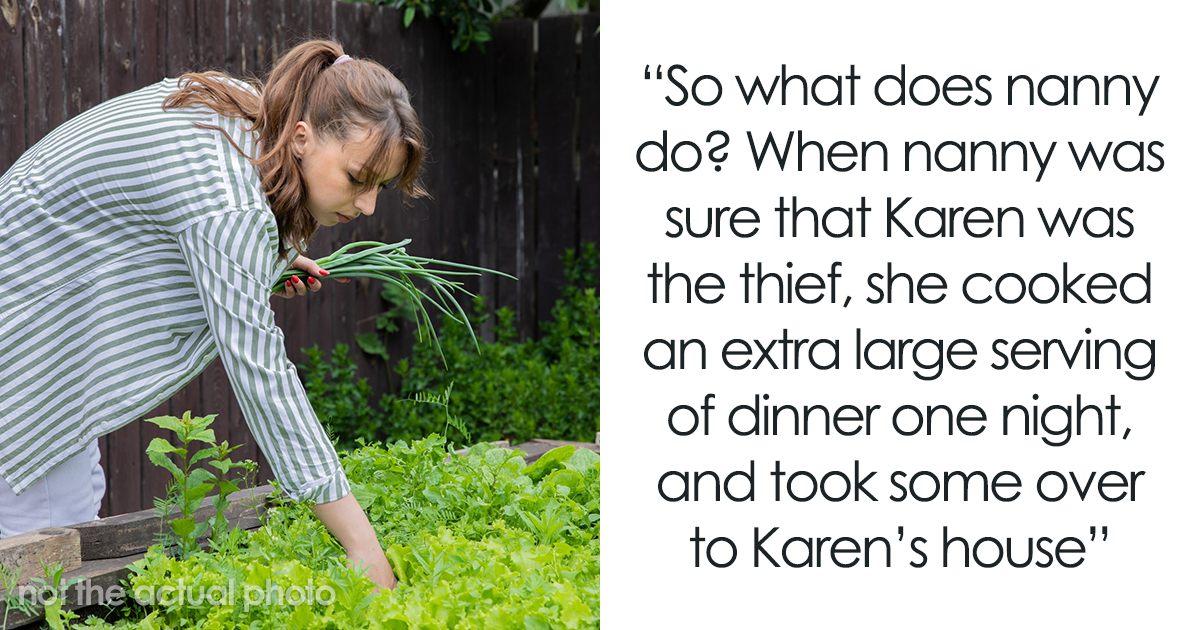
Instead of starting a shouting match or launching a neighborhood feud worthy of reality television, the gardener served up an unusually polite form of social accountability. She cooked the woman dinner, delivered it to her door, and loudly explained that she had noticed the neighbor taking food from the garden and did not want the family to go hungry.
That alone would have been enough to make most people consider moving to another ZIP code. Unfortunately for the garden thief, the story did not end there.
A Beloved Nanny Turned an Empty Lot Into a Thriving Garden
The account was reportedly shared online by someone recalling an incident from decades earlier. Their parents owned two adjoining properties in a small subdivision: one held the family home, while the other was an unfenced empty lot.
The family’s longtime nanny had worked with them for more than 25 years. She picked up the children, drove them to activities, prepared meals, and became part of the family. She also loved gardening, so the parents gave her permission to use the neighboring lot however she pleased.
She transformed it into a productive garden filled with fruit and vegetables.
This was not a decorative patch featuring one nervous basil plant and a tomato vine surviving entirely through positive thinking. It was a working garden that supplied fresh food for the household and the nanny’s own family. Neighbors also benefited because she freely shared extra produce with anyone who asked.
That final word matters: asked.
Sharing is a gift offered by the person who owns or grows something. Stealing is what happens when someone skips the conversation and treats another person’s labor as public inventory.
The Harvest Started Disappearing
For years, the arrangement worked beautifully. Then the nanny began noticing that the harvest was shrinking for reasons that could not be blamed on weather, insects, birds, or a squirrel with a suspiciously advanced banana-peeling technique.
Fruit she had been monitoring vanished before she could collect it. Good bananas disappeared while overripe ones were left behind. Vegetables seemed to be harvested at exactly the moment they became useful.
Experienced gardeners know their plants. They remember which tomato is nearly ripe, which squash will be ready by the weekend, and which pepper they have mentally assigned to Friday night’s dinner. When produce repeatedly vanishes, the pattern becomes difficult to ignore.
The family initially lacked proof, however. Accusing a neighbor without evidence could turn a missing-fruit mystery into an ugly community dispute. The father therefore installed security cameras covering the property and garden.
The footage reportedly revealed a human pest rather than a furry one.
The New Neighbor Treated the Garden Like a Free Produce Aisle
The person entering the garden was a newer neighbor, nicknamed “Karen” in the online retelling. Camera footage allegedly showed her collecting produce during hours when she was unlikely to be seen, including early mornings and late evenings.
Her timing suggested that this was not an innocent misunderstanding. People who genuinely believe produce is free usually do not schedule their harvest around the neighborhood’s sleep cycle.
She was also not taking a single fallen fruit from the roadside. She was entering someone else’s cultivated space and selecting valuable produce that another person had planted, watered, weeded, protected, and patiently waited to harvest.
The nanny was generous enough to give vegetables away. Karen simply did not want to ask.
Why Stealing From a Garden Feels So Personal
Someone unfamiliar with gardening might dismiss the theft as a few dollars’ worth of produce. That calculation ignores nearly everything that gives a homegrown harvest its value.
A vegetable garden begins long before the first ripe tomato appears. Gardeners choose varieties, prepare soil, plant at the proper time, manage weeds, watch for disease, protect seedlings, and provide consistent water. Different crops have different temperature and timing requirements, and even a well-maintained garden remains vulnerable to heat, frost, storms, animals, and pests.
Watering alone can involve a substantial commitment. A garden may require hundreds of gallons during a dry period, depending on its size, soil, and weather. Add the cost of seeds, tools, compost, fertilizer, trellises, mulch, fencing, and hours of physical work, and that “free cucumber” begins looking much less free.
There is also an emotional investment. Gardeners often plan meals around specific produce. Some save seeds from meaningful varieties. Others use gardening as exercise, stress relief, family tradition, or a connection to cultural foods they cannot easily find in stores.
Taking the harvest does not merely remove an object. It erases the reward at the end of a long process.
The Nanny Chose Dinner Instead of a Doorstep Argument
Once the nanny knew who had been taking the produce, she developed a response that was calm, theatrical, and devastatingly effective.
She prepared an extra-large dinner and carried a portion to Karen’s home. Karen’s young son reportedly answered the door. When Karen appeared, the nanny announced loudly that she had brought dinner because she had noticed Karen helping herself to the garden and did not want her or her children to go hungry.
It was a brilliantly constructed confrontation.
The nanny did not scream, threaten, or insult her. She presented herself as compassionate. Yet the message was unmistakable: I know what you did, I have proof, and your secrecy has ended.
The presence of Karen’s child added another uncomfortable layer. Adults may invent excuses for themselves, but explaining suspicious behavior in front of a child is considerably harder. Karen reportedly turned red and shut the door without accepting the food.
She lost both the argument and what was apparently an excellent dinner.
The Neighborhood Joined the Dinner-Delivery Campaign
The nanny was well known and loved throughout the small subdivision. After hearing what happened, several neighbors joined her unconventional accountability campaign.
For the next few days, people reportedly arrived at Karen’s house offering meals because they had heard she might be hungry enough to take food from someone else’s garden.
By then, the secret harvest operation was no longer secret. Karen was not being threatened or physically harmed; she was being forced to face the social meaning of her behavior. Every polite food delivery repeated the same question without saying it directly: Why steal from a generous gardener who would probably have shared if asked?
On the fourth day, Karen’s husband allegedly visited the family, apologized for her conduct, and offered compensation for the missing produce. The garden theft stopped.
The nanny had managed to protect her harvest without turning the block into a permanent war zone. Her weapon of choice was hospitality with an extremely sharp edge.
Was the Humiliating Surprise Justified?
Many readers naturally find the outcome satisfying. The response matched the offense in a clever way: someone secretly taking food was publicly offered food. It exposed the behavior without damaging property or creating physical danger.
Still, public embarrassment carries risks. A person who feels humiliated may apologize, but another person may retaliate, spread rumors, damage plants, harass the gardener, or escalate the conflict. Social consequences can be powerful precisely because they affect reputation, family relationships, and standing within a community.
The nanny’s approach appears to have succeeded partly because she had strong neighborhood relationships, clear evidence, and a reputation for generosity. The alleged thief could not easily claim that the gardener was selfish or had misunderstood an informal sharing arrangement.
In another setting, the same stunt might produce a shouting match instead of an apology. Clever does not always mean universally advisable.
What Gardeners Should Do When Produce Is Being Stolen
Confirm That the Losses Are Human-Caused
Missing produce is not automatically evidence of a dishonest neighbor. Deer, rabbits, birds, raccoons, rodents, and other animals can remove or damage crops. Some fruits fall, split, or disappear beneath dense foliage. Household members may also harvest something without mentioning it.
Look for patterns. Cleanly cut stems, footprints, opened gates, regular timing, and the selective removal of ripe produce may indicate human involvement. Animal damage often leaves bites, digging, droppings, broken stems, or partially eaten crops.
Document Repeated Incidents
Keep a simple record of what disappeared and when it was last seen. Photographs can establish the condition of plants before and after an incident. Documentation becomes especially helpful if the behavior continues or causes significant losses.
A camera may also help, but homeowners should consider privacy laws, audio-recording rules, property boundaries, and local restrictions before installing one. Aim cameras toward your own garden and access points rather than private areas of a neighbor’s home. Rules vary by state and municipality, so general internet advice is not a substitute for checking local requirements.
Make Ownership and Boundaries Obvious
An open lot or front-yard garden may confuse visitors who assume it is communal. That assumption does not create permission, but clear signs can remove the excuse.
A friendly notice such as “Private gardenplease do not pick without permission” is often enough. Low fencing, gates, raised-bed borders, trellises, and deliberate pathways can also communicate that the space is maintained and privately controlled.
For gardeners who enjoy sharing, a separate basket or stand marked “Freeplease take one” can preserve generosity while protecting the main harvest. Clear rules are much easier to follow than invisible ones.
Start With a Direct, Calm Conversation
When it feels safe, a factual conversation may stop the problem immediately. Avoid beginning with insults or a public accusation. State what you observed, explain that the produce is privately grown, and set a clear boundary.
A useful statement might be: “Several vegetables have been taken from my garden. This is private property, and no one has permission to harvest from it. Please ask me before taking anything.”
That sentence is less entertaining than arriving with a casserole and an audience, but it creates a record of clear notice without pouring gasoline onto the neighborhood grapevine.
Escalate Proportionately
If direct communication fails, consider a homeowners association, landlord, community-garden coordinator, neighborhood association, or local mediation service. Mediation allows a neutral person to help both sides discuss the problem and reach an agreement without immediately turning it into litigation.
Repeated trespassing, threats, vandalism, or significant theft may justify contacting local law enforcement or seeking legal advice. Property and privacy rules differ across jurisdictions, so gardeners should rely on local authorities rather than assuming every online legal claim applies everywhere.
Most importantly, avoid traps, dangerous wires, harmful substances, aggressive animals, or tampering with edible produce. A gardener should protect the zucchini, not create an emergency-room subplot.
Generosity Works Only When Consent Is Respected
The most revealing detail in the story is that the nanny already shared her harvest. The neighbor did not steal because generosity was unavailable. She stole because asking would have required acknowledging that the food belonged to someone else.
Community gardens and neighborhood food projects can strengthen local relationships, improve access to fresh produce, teach practical growing skills, and create welcoming green space. Some gardens distribute food collectively, while others consist of individually assigned plots. The word “community” does not automatically mean “take whatever you see.”
Healthy sharing depends on visible expectations. Who planted the crop? Who maintains it? Is harvesting open to everyone? Are there limits? Is the produce reserved for a household, food pantry, school, or specific group?
Good neighbors do not force gardeners to choose between generosity and security. They ask, respect the answer, and perhaps return later with homemade bread, flowers, or an offer to help weed.
Experiences and Lessons From Similar Garden Conflicts
Stories about stolen garden produce often produce stronger reactions than outsiders expect. In gardening communities, people commonly describe the loss as discouraging rather than merely expensive. A missing squash may represent weeks of watering. A stolen melon may be the only fruit a plant successfully produced. An entire row of onions can represent months of waiting followed by one empty afternoon.
One recurring experience is the confusion between an accessible garden and a public garden. Plants grown near sidewalks, roads, shared fences, apartment buildings, or community spaces are especially vulnerable. Passersby may convince themselves that one tomato will not matter. The problem is that ten people can independently make the same calculation, leaving the gardener with ten excellent reasons to stop planting tomatoes.
Another familiar pattern begins with casual permission. A gardener tells a neighbor, “Take a little rosemary whenever you need it.” The invitation somehow evolves into branches being stripped bare, immature plants being cut down, or guests arriving with shopping bags. The lesson is not to stop sharing. It is to define sharing clearly: which plants, how much, and whether permission must be requested each time.
Gardeners also learn that evidence changes the tone of a dispute. Without proof, a suspected thief can deny everything and accuse the gardener of being paranoid. A photograph, timestamp, witness, or properly positioned camera moves the discussion away from speculation. Documentation should still be handled carefully. Posting a person’s image online or rallying a digital crowd can create privacy concerns and escalate a small neighborhood conflict into lasting harassment.
Physical barriers help, but their greatest value is sometimes psychological. A short fence will not stop a determined trespasser, yet it removes the claim that someone accidentally wandered into the vegetable patch. Signs, gates, netting, and marked beds make ownership visible. Motion-activated lights can discourage nighttime visits without creating physical danger.
The most successful outcomes usually combine firmness with restraint. A gardener clearly states that taking produce is unacceptable, protects the area, records future incidents, and leaves room for the neighbor to correct the behavior. This approach may not deliver a cinematic moment, but it preserves options. The parties still have to collect mail, park cars, manage fences, and live within waving distance of one another.
The nanny’s dinner strategy worked because it converted a hidden act into a visible moral contradiction. Karen was apparently willing to take food but unwilling to be seen as someone who needed or stole it. The offer of dinner removed every flattering explanation. If she was hungry, food was being offered. If she was not hungry, why was she harvesting someone else’s garden before sunrise?
That is the broader lesson behind the humiliating surprise. Entitlement often survives in secrecy. Calmly naming the behavior can be more powerful than rage because it denies the offender a dramatic distraction. There is no argument about shouting, threats, or revengeonly the original conduct sitting on the doorstep beside a warm plate of food.
For most people facing a similar situation, a private conversation, clear sign, secure boundary, or mediator will be safer than a neighborhood dinner parade. Even so, the story remains memorable because the punishment fit the produce aisle. The nanny did not destroy anything, poison anything, or throw anything. She responded to stolen food with excessive generosity and allowed the thief’s own embarrassment to perform the heavy lifting.
Conclusion: The Garden Was Generous, but It Was Never Free
The neighbor’s mistake was not merely taking bananas or vegetables. It was assuming that another person’s patience, labor, and kindness had no owner.
The nanny understood the difference between feeding a community and allowing someone to exploit her. She shared willingly with people who asked, gathered evidence when the harvest began disappearing, and confronted the alleged thief in a way nobody in the neighborhood was likely to forget.
Her message was simple: needing help is nothing to be ashamed of, but secretly taking what belongs to someone else is not a harmless shortcut. Ask first. Respect the garden. And never underestimate a beloved nanny carrying a casserole and 25 years’ worth of neighborhood connections.
Note: The central incident is an anecdotal online account retold by multiple entertainment websites and has not been independently verified as a reported criminal case. The safety and legal guidance above is general information, not legal advice.