I am an ordinary woman. I own ordinary spoons, ordinary socks, and a very ordinary habit of saying, “I’ll clean that later,” right before future me files a formal complaint. But give me an eggshell, and suddenly I become the kind of person who leans over the kitchen table like a jeweler, a scientist, and a slightly overconfident raccoon all at once.
Some people see eggshells as trash. I see tiny blank canvases wearing fragile white armor. They are curved, delicate, stubborn, and dramatic. Touch them too hard and they crack like they have been personally insulted. Treat them gently, and they become miniature worlds: painted gardens, carved lace, mosaic tiles, tiny lamps, ornaments, memory keepers, and little miracles that started as breakfast.
Eggshell art may sound unusual, but it belongs to a long and beautiful tradition. Across cultures, people have decorated eggs to celebrate spring, rebirth, faith, protection, luck, family, and creativity. Ukrainian pysanky use wax-resist designs and layered dyes. Polish pisanki, confetti-filled cascarones, carved eggshells, Fabergé-inspired ornaments, and eggshell mosaics all prove one thing: the egg has never been just an egg. It is a symbol, a story, and sometimes, if you are brave enough, a very stressful craft project.
This article explores why eggshell art is so fascinating, how ordinary people can create extraordinary designs, and what it feels like to turn something fragile into something unforgettable.
Why Eggshell Art Feels So Magical
The beauty of eggshell art begins with contradiction. An eggshell is strong enough to protect life, yet weak enough to break in your hand. It is common, yet elegant. It is inexpensive, yet it can look luxurious when painted, carved, or polished. That tension is what makes handmade eggshell crafts so captivating.
A chicken eggshell is made mostly of calcium carbonate, which gives it a firm mineral structure. It also has thousands of tiny pores, allowing air and moisture to pass through. That is wonderful for nature and slightly inconvenient for artists, because the shell can absorb stains, odors, and moisture. In other words, the eggshell is not just sitting there politely. It has opinions.
For artists, crafters, and patient kitchen-table experimenters, that surface offers endless possibilities. It can be dyed, painted, etched, scratched, carved, glued, gilded, sealed, and arranged into mosaics. It can be rustic or royal, funny or sacred, modern or traditional. The eggshell accepts almost every personalityexcept rushing. Rushing and eggshells are not friends.
A Brief Look at Egg Decorating Traditions
Egg decorating is one of the oldest and most meaningful forms of folk art. Many cultures have used decorated eggs to mark seasonal changes, religious celebrations, and family rituals. The egg naturally suggests new life, so it became a perfect symbol for spring, renewal, hope, and resurrection.
Ukrainian Pysanky
One of the most famous forms of egg art is Ukrainian pysanky. The word is related to the idea of “writing,” because the artist writes patterns on the egg with melted wax before dipping it into dye. The process is repeated with multiple colors, moving from light to dark. When the wax is removed, the hidden design appears like a secret that finally decided to speak.
Pysanky often include geometric shapes, flowers, animals, crosses, stars, suns, and symbols of protection. These eggs are not random decorations. They carry meaning. A line may suggest eternity. A plant may represent growth. A bird may symbolize fulfillment or the soul. Making pysanky requires planning, patience, and a steady hand. It is not the craft to start five minutes before guests arrive unless you enjoy emotional suspense.
Cascarones
Cascarones are hollow eggshells filled with confetti and often used during celebrations. They are colorful, playful, and slightly mischievous. The idea is simple: decorate a hollow eggshell, fill it with confetti, seal it, and gently crack it over someone’s head for good luck. It is basically a party wearing an eggshell helmet.
Cascarones show that eggshell creativity does not always need to be quiet or delicate. Sometimes it can be loud, cheerful, and full of tiny paper pieces that will mysteriously remain in your living room for six months.
Fabergé-Inspired Eggs
Fabergé eggs are famous for their luxury, jewels, enamel, and elaborate surprises. While most of us are not casually attaching diamonds to an egg-shaped masterpiece before lunch, the Fabergé spirit still inspires modern crafters. Metallic paint, faux gems, beads, ribbon, velvet, and miniature details can turn a simple blown egg into something regal.
The lesson from Fabergé-inspired eggs is not that every craft needs to be expensive. It is that small objects can feel grand when detail, imagination, and craftsmanship come together.
Eggshell Mosaic
Eggshell mosaic is one of the most accessible ways to create unusual eggshell art. Instead of keeping the shell whole, you break it into small pieces and use them like tiny tiles. The fragments can be dyed or painted, then glued onto paper, canvas, wood, boxes, picture frames, or ornaments.
This method is perfect for anyone who accidentally cracks an egg while trying to preserve it. In eggshell mosaic, broken pieces are not failures. They are materials. That is a comforting philosophy for both art and life.
How to Prepare Eggshells for Art
Before you paint, carve, or glue, the eggshell needs to be cleaned and prepared. This step matters for both appearance and safety. Eggs can carry bacteria, so clean handling is important, especially if children are involved.
Step 1: Empty the Egg
To make a hollow eggshell, gently poke a small hole at the top and a slightly larger hole at the bottom. A pin, needle, or small craft drill can help. Then blow through one hole to push the egg white and yolk out through the other. Do this over a bowl so the egg can still be cooked later. Waste not, want not, omelet soon.
Step 2: Rinse the Shell
Rinse the inside of the shell with warm water. Some crafters use a tiny bit of mild dish soap or a diluted vinegar rinse. Shake gently, drain, and repeat until the inside feels clean. Avoid aggressive shaking unless you want eggshell confetti before the art has officially begun.
Step 3: Dry Completely
Let the shell dry thoroughly. Place it upright in an egg carton or on a towel with the larger hole facing down. Drying may take several hours or overnight. A damp shell can smell unpleasant, resist paint, or weaken your project.
Step 4: Seal If Needed
For painting, a thin coat of clear sealer, gesso, or primer can help create a smoother surface. For traditional dyeing, leave the shell untreated so it can absorb color. For carving, keep the shell clean and dry, and work slowly.
Unusual Things You Can Do on an Eggshell
If you want to do something unusual on the eggshell, you have many options. Some are simple enough for beginners. Others require patience, tools, and the emotional strength to survive the occasional crack.
1. Paint Tiny Landscapes
An eggshell is a perfect surface for miniature landscapes. You can paint a sunrise, a mountain, a cottage, a forest, or a tiny moonlit beach. Because the surface is curved, the image feels almost like a little planet. Acrylic paint works well, especially when applied in thin layers.
For a charming effect, paint the egg in sections: sky at the top, hills in the middle, flowers near the bottom. Add small dots of white for stars or flower petals. The result can be surprisingly poetic for something that once lived in a refrigerator door.
2. Create Eggshell Calligraphy
Writing on eggshells is harder than writing on paper because the surface curves away from your hand. But that challenge makes the result special. You can write a short quote, a name, a date, or a single meaningful word such as “hope,” “bloom,” “home,” or “begin.”
Use a pencil to sketch guide lines first. Then use a fine paint pen or a tiny brush. Do not press too hard. The eggshell does not appreciate bold handwriting energy.
3. Try Eggshell Carving
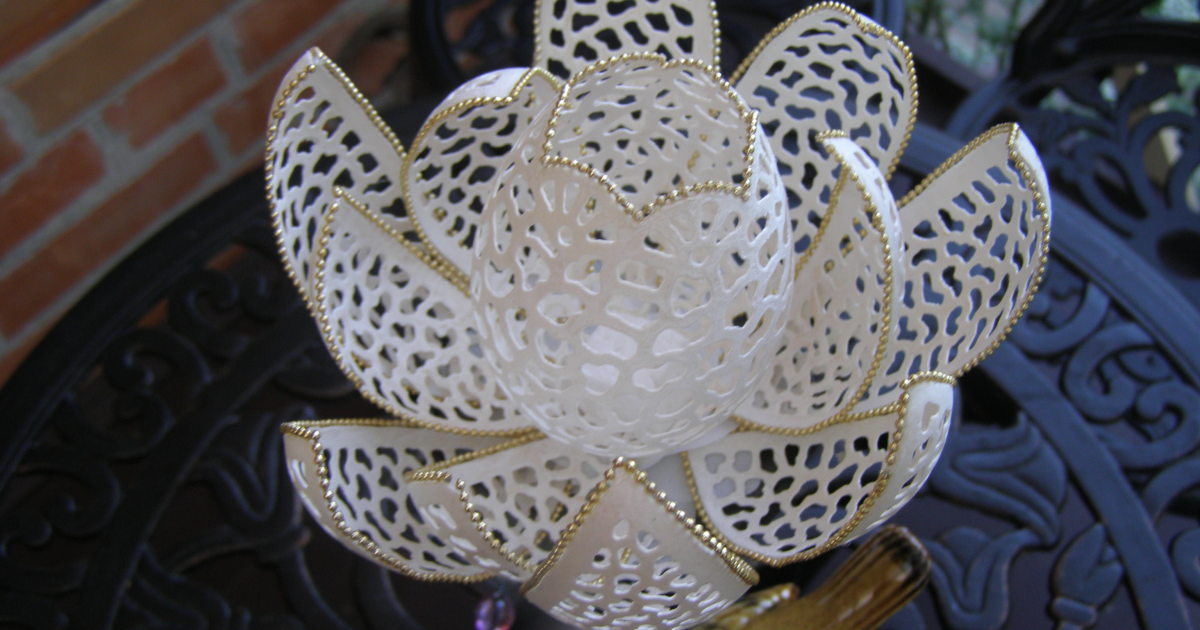
Eggshell carving is one of the most impressive forms of egg art. Artists use small rotary tools, engraving bits, or fine blades to cut delicate patterns into the shell. Some designs look like lace, windows, flowers, dragons, or cathedral screens.
Beginners should start with simple shapes: dots, lines, small leaves, or heart cutouts. Goose, duck, or ostrich eggs are often easier for carving because their shells are thicker than chicken eggs. Chicken eggs can still work, but they demand the patience of a monk and the hand pressure of a butterfly.
4. Make Eggshell Mosaic Wall Art
For eggshell mosaic, clean and dry the shells, remove the inner membrane if it peels away easily, then break the shell into small pieces. Dye or paint the pieces before gluing them, or glue them first and paint afterward.
You can create flowers, birds, abstract patterns, ocean waves, or even portraits. The natural cracks between shell pieces create texture and movement. When sealed with varnish, the mosaic can look like ceramic tile. It is affordable, eco-friendly, and strangely satisfying.
5. Turn Eggshells Into Tiny Planters
Eggshell planters are adorable and practical. Crack the top portion of the egg, empty and clean the shell, add a little soil, and plant herbs, microgreens, or tiny succulents. Draw faces on the shells, and the sprouts become hair. This is cute enough to make even a serious adult say, “Aww,” against their will.
Eggshell planters are also useful for teaching children about seeds and growth. The shell can eventually be crushed and added to compost, where it contributes calcium to the soil over time.
6. Build a Miniature Diorama
A hollow eggshell can become a tiny stage. Carefully cut an oval window into the front, then decorate the inside with paper flowers, miniature animals, moss, beads, fabric, or small photos. These little diorama eggs can be hung as ornaments or displayed in stands.
The magic comes from surprise. From the outside, it looks like a simple egg. Inside, there may be a garden, a fairy room, a winter scene, or a tiny library for a mouse with excellent taste.
7. Make a Glowing Eggshell Lantern
Carved or pierced eggshells can become soft little lanterns when placed over battery-powered LED lights. Never use a real flame inside an eggshell. That is not art; that is a tiny emergency waiting to audition.
Use small holes to create stars, flowers, or geometric patterns. When the light shines through, the shell becomes warm and luminous. White and brown eggs create different moods. White shells glow clean and bright, while brown shells give a softer, earthy tone.
Tools and Materials for Eggshell Art
You do not need a professional studio to begin. A kitchen table, good light, and a little courage will do. However, the right tools make the process easier and less likely to end in dramatic crunching.
- Clean eggshells or blown eggs
- Acrylic paints, natural dyes, or food-safe dyes
- Fine brushes and paint pens
- Pencils for sketching designs
- Clear sealer or varnish
- Craft glue or decoupage medium
- Tweezers for mosaic pieces
- Small drill bits or engraving tools for carving
- Soft cloth or foam pad for support
- Patience, preferably fresh and fully charged
Safety Tips Before You Start
Eggshell crafts are fun, but safety matters. Always wash your hands after handling raw eggs. Clean your work surface before and after preparing shells. Do not use cracked raw eggs that have been sitting out for a long time. If you are working with children, handle the emptying and cleaning yourself, then let them decorate the dried shells.
For carving, wear eye protection and a dust mask, especially when using rotary tools. Eggshell dust is fine and can irritate your eyes or lungs. Work slowly and keep the shell supported. Also, do not carve while angry, sleepy, or overly caffeinated. Eggshells can sense chaos.
Why Ordinary People Love Unusual Crafts
There is something deeply satisfying about transforming a humble object. Eggshell art reminds us that creativity does not require expensive supplies or a perfect studio. Sometimes it begins with breakfast leftovers and curiosity.
Unusual crafts also help us slow down. You cannot bully an eggshell into becoming beautiful. You must listen to it in your own way. You learn how much pressure is enough, how long paint needs to dry, how small details change the whole piece, and how mistakes can become texture, mosaic, or a new plan entirely.
In a fast world, fragile art feels rebellious. It says, “I know this may break, and I will make it anyway.” That is a surprisingly powerful message from something so small.
Specific Ideas for Beginners
If you are new to handmade eggshell crafts, start simple. Choose projects that allow mistakes to become part of the design.
Polka-Dot Eggshells
Paint the shell one solid color, then add tiny dots with the back of a brush. This is easy, cheerful, and nearly impossible to ruin. If one dot looks strange, add twenty more and call it a pattern.
Pressed-Flower Eggshells
Brush a thin layer of decoupage medium on the shell, place tiny dried flowers or petals on top, and seal with another thin coat. The result looks delicate and romantic.
Gold-Crack Mosaic
Paint eggshell fragments in soft colors, glue them onto a small canvas, and fill the gaps with gold paint. The cracks become the most beautiful part, which is also a lovely metaphor and cheaper than therapy.
Memory Eggs
Write a date, name, or short message on an eggshell ornament. Add small painted symbols that represent the memory: a flower for spring, a star for a dream, a paw print for a pet, or a wave for a vacation. Seal it and keep it in a small box.
How Eggshell Art Supports Sustainability
Eggshell art is also a creative way to reuse kitchen waste. Instead of throwing shells away, you can turn them into decorations, mosaics, seed starters, compost material, or garden accents. While one eggshell craft will not save the planet by itself, it does encourage a useful mindset: look twice before you toss something out.
Many beautiful crafts begin with leftovers. Fabric scraps become quilts. Old jars become lanterns. Broken plates become mosaics. Eggshells become tiny works of art. Sustainability does not always need to look serious and beige. Sometimes it can be colorful, fragile, and sitting proudly in an egg cup.
My Personal Experience: Being Ordinary, Making Something Unusual
The first time I tried to make art on an eggshell, I was not feeling artistic. I was feeling stubborn. I had seen a delicate painted egg online and thought, “How hard can it be?” This sentence has caused trouble in homes, garages, kitchens, and craft rooms across America.
I took one egg from the carton and stared at it like it had agreed to a contract. I poked a hole in the top, then another in the bottom. The first hole was fine. The second hole became less of a hole and more of a small geological event. Still, I continued. I blew out the egg, rinsed the shell, and placed it carefully on a towel. It rolled off the towel immediately. That was when I learned lesson one: eggs are round, and gravity is not supportive of art.
After drying the shell, I painted it pale blue. The color looked peaceful, which was funny because I was holding my breath like a person defusing a movie bomb. I added small white flowers with a fine brush. Some flowers looked like flowers. Others looked like confused popcorn. But when I stepped back, the whole egg looked charming. Not perfect. Not museum-worthy. But alive with effort.
That little blue egg changed the way I saw ordinary objects. I began saving shells instead of throwing them away. Brown eggs became rustic ornaments. White eggs became bright painted scenes. Broken shells became mosaic pieces. Even the failures became useful. If a shell cracked too much, I crushed it and used it for texture. If paint smudged, I turned the smudge into a shadow. If a design looked odd, I added vines. Vines are the emergency rescue team of craft mistakes.
Over time, I learned that eggshell art is not really about being fancy. It is about paying attention. You notice the curve of the shell, the way paint settles, the tiny ridges under your fingers, the difference between gentle pressure and disaster. You become patient because the material gives you no other choice. It is like working with a tiny teacher who cracks when disappointed.
I also discovered that people respond warmly to eggshell art. When I gave a painted egg to a friend, she held it with both hands and whispered, “It’s so delicate.” That reaction stayed with me. In a world full of mass-produced objects, a handmade eggshell feels personal. It says, “Someone spent time on this. Someone cared enough to work slowly.”
My favorite project was a small eggshell diorama. I cut a window into the front of a hollow shell and placed tiny paper flowers inside. I added a little moss, a bead that looked like a pearl, and a painted moon on the back wall. It was ridiculous and wonderful. A whole imaginary garden inside an egg. When I finished, I laughed because it felt impossible that such a tiny thing could make me so happy.
That is why I keep doing unusual things on eggshells. I am still an ordinary woman. I still burn toast sometimes. I still lose scissors while actively using them. But when I sit down with an eggshell, a brush, and a small idea, I feel connected to something older and sweeter than perfection. I feel connected to tradition, patience, humor, and the stubborn human desire to make beauty from whatever is nearby.
Eggshell art teaches me that fragile things are not useless. They simply need gentler hands. It teaches me that broken pieces can become mosaics, small surfaces can hold big stories, and ordinary women can make unusual magic at the kitchen table.
Conclusion
Eggshell art is unusual, but that is exactly why it is worth trying. It transforms a common household object into a canvas for patience, imagination, and personal expression. Whether you paint tiny landscapes, carve delicate patterns, create eggshell mosaic art, make glowing lanterns, or design miniature dioramas, each project proves that creativity does not need to be large to be meaningful.
The eggshell may be fragile, but the joy it creates can be surprisingly strong. It reminds us to slow down, reuse what we have, and find beauty in places most people overlook. So the next time you crack an egg, pause before tossing the shell away. You may be holding your next little masterpiece.
Note: This article is original, written in standard American English, and based on synthesized information from real craft, museum, cultural, food-safety, and eggshell-structure references. Source links and unnecessary citation tags have been intentionally omitted for clean web publishing.