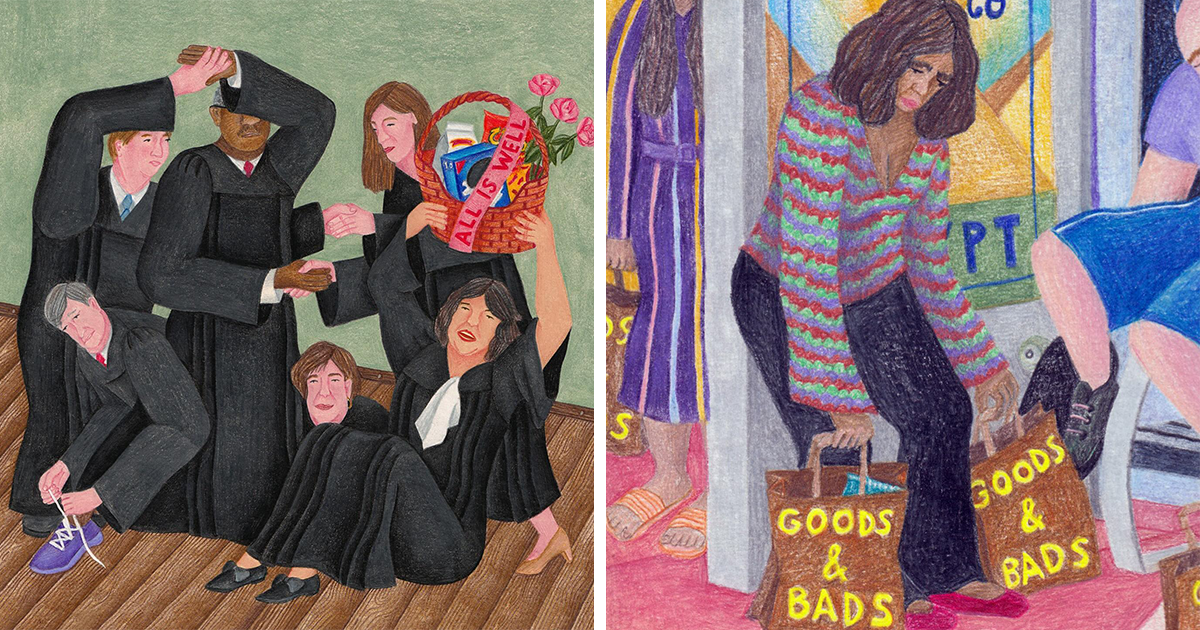
Note: This article is an original SEO-friendly feature inspired by real public information about Daukantė Draws, the artist behind a colorful, ironic, and wonderfully off-topic body of work that turns everyday life into a visual punchline with a philosophical aftertaste.
Modern life is strange. We wake up to alarms we set ourselves, stare into glowing rectangles for emotional support, buy things to organize the things we bought last week, and then call it “wellness” when we remember to drink water. Somewhere between the calendar invite, the delivery notification, and the tiny panic caused by a low battery icon, an illustrator like Daukantė Draws finds comedy gold.
The featured collection, “Illustrator Explores The Absurdity Of Modern Life With Clever And Funny Artworks (34 Pics),” celebrates the kind of art that makes you laugh first and think second. Sometimes the joke lands immediately. Sometimes it waits quietly in the corner, wearing a tiny hat, until your brain catches up. That is the charm of Daukantė’s visual world: it is playful, weird, ironic, and oddly precise about the ridiculous little performances we repeat every day.
Daukantė Draws is the creative identity of Lithuanian artist and illustrator Daukantė Subačiūtė. Her work often begins with casual everyday situations, wordplay, quirky objects, overheard dialogue, books, old movies, pop culture references, or a small observation that most people would ignore while scrolling past it at heroic speed. Instead of turning those details into obvious jokes, she bends them into clever illustrations that feel both light and loaded. The result is modern life humor with a raised eyebrow.
Who Is Daukantė Draws?
Daukantė Subačiūtė is a Lithuanian artist and illustrator living and working in Vilnius. Her background includes graphic design and information design, which may explain why her drawings often feel like little systems of meaning. They are not only pretty images. They are visual arguments wearing bright colors. Her art has been described in terms such as colorful, ironic, contrasting, and off-topic, which sounds like a very good personality for a dinner guest and a dangerous one for a corporate brainstorming session.
Her illustrations do not chase one single subject. That variety is part of the appeal. One drawing may poke at consumer culture, another may twist a familiar phrase into a literal image, and another may use absurd composition to make a quiet point about social habits. The humor rarely screams, “Look, I am funny!” Instead, it taps you on the shoulder and points at something ordinary until it becomes deeply suspicious.
This is why Daukantė’s work fits so well into the internet’s love of clever, funny artworks. The images are quick enough to enjoy in a scroll, but thoughtful enough to stay in your head after the scroll has moved on to a cat, a celebrity divorce, and an ad for socks that promise emotional transformation.
Why The Absurdity Of Modern Life Makes Such Great Art
The phrase absurdity of modern life sounds dramatic, but it really means this: daily life has become full of contradictions we are expected to treat as normal. We value rest, but brag about exhaustion. We want authenticity, but edit the photo. We want connection, but sometimes respond to messages three business days later because we “didn’t have the bandwidth.” We want simplicity, then download five productivity apps to help us achieve it.
Illustrators who explore modern life humor are not simply making jokes about phones, work, shopping, or relationships. They are drawing the gap between what we say we believe and what we actually do. That gap is where comedy lives. It is also where discomfort keeps a small apartment.
Daukantė’s clever illustrations often work because they transform familiar situations into visual contradictions. A mundane object becomes emotionally charged. A phrase becomes a scene. A social habit becomes a strange ritual. In her world, the ordinary is not boring. It is evidence.
The Style: Colorful, Organic, Ironic, And Deliciously Odd
One reason these funny artworks stand out is their organic visual style. The drawings do not feel cold or overly polished. They have warmth, looseness, and a hand-made personality that makes the absurdity feel more human. This matters. If modern life is already full of shiny interfaces and perfect branding, then a hand-drawn line can feel like a tiny rebellion.
Color also plays a major role. Instead of presenting satire in a gloomy package, Daukantė often uses brightness and quirkiness to pull the viewer closer. The color says, “Come in, this is fun.” The idea says, “Also, everything is a little strange and you should probably think about that.” It is a classic artistic sneak attack.
Why the humor feels smart instead of random
Good absurd art is not the same as random weirdness. A toaster wearing shoes is weird. A toaster wearing shoes because it has joined the morning commute is a joke. A toaster wearing shoes while holding a resignation letter because breakfast culture has become exploitative is social commentary. The difference is structure.
Daukantė’s illustrations often have that structure. They invite viewers to connect the dots between image, title, symbol, and situation. The joke may come from a pun, a surprising combination, a reversal of expectation, or a literal interpretation of something people usually say without thinking. This is why her art can feel funny and thoughtful at the same time.
Modern Society Is Already A Cartoon
Part of the reason these 34 pics feel so relatable is that modern society frequently behaves like a cartoon without needing much help. Consider the average day. A person may check a sleep-tracking app to confirm they slept badly, answer work emails during lunch, scroll through vacation photos while sitting indoors, save inspirational quotes about slowing down, and then panic because the Wi-Fi takes four seconds to load. If an illustrator draws this accurately, is it satire or documentation?
Visual artists who observe everyday life have a long tradition behind them. Editorial cartoons, comic strips, caricatures, and single-panel jokes have always helped people process social trends, politics, anxiety, technology, and culture. The format works because it is fast. A sharp image can compress a whole essay into one scene. It can say, “Look at what we are doing,” without needing a lecture podium or a PowerPoint deck titled Humanity: Areas For Improvement.
Daukantė’s work belongs to this broader tradition but has a distinctly contemporary flavor. Instead of relying only on political figures or news headlines, she often focuses on the small absurdities of ordinary life. That makes the art feel intimate. It is not just about society over there. It is about us, our habits, our contradictions, and our suspicious relationship with convenience.
How Clever Illustration Turns Small Moments Into Big Ideas
One of the most interesting things about Daukantė Draws is the way tiny moments become entry points into bigger questions. A casual object can hint at consumerism. A pun can open a door to loneliness. A funny scene can expose the awkward rules people follow without ever signing a contract.
This is the magic of social observation illustrations. They do not need to shout about meaning. They simply rearrange reality until the meaning becomes visible. A good illustration can make you realize that something you considered normal is actually very odd. And once you see it, you cannot fully unsee it.
Specific examples of themes that fit her visual world
While each artwork deserves to be viewed on its own terms, several recurring themes help explain the appeal of this collection:
- Everyday contradictions: The strange difference between what people say and what they do.
- Wordplay and puns: Phrases become literal scenes, often with unexpected emotional weight.
- Quirky objects: Ordinary things gain personality, tension, or symbolic meaning.
- Pop culture echoes: Familiar references appear in unusual contexts to expose modern absurdity.
- Human behavior: Small habits are exaggerated just enough to become funny.
- Social critique: The joke often points toward deeper ideas about work, identity, technology, or consumption.
These themes are excellent for SEO because they naturally connect with popular search interests such as funny illustrations, modern life art, absurd comics, clever artworks, satirical drawings, and relatable art. More importantly, they connect with real readers because they feel true.
Why We Love Funny Art That Makes Us Feel Slightly Attacked
The best modern life humor has a special flavor: laughter with mild personal exposure. You laugh at the image, then realize the image may have been laughing at you first. This is not an insult. It is a service.
People enjoy clever and funny artworks because they offer relief. Humor can make stress feel smaller. Creativity can help people step away from the daily grind. And visual humor, in particular, gives the brain a quick puzzle to solve. We see something unexpected, recognize the twist, and feel the small reward of understanding. It is entertainment, but it is also pattern recognition with a party hat.
Daukantė’s illustrations often operate through incongruity, meaning something appears where it does not quite belong, or a situation violates expectation in a playful way. That mismatch creates humor. But the best part is that the mismatch is rarely meaningless. It points back to real life, where so many things already feel mismatched: luxury ads during economic anxiety, wellness trends that require expensive accessories, online intimacy that can still feel lonely, and productivity culture that somehow makes everyone tired and behind schedule.
The Internet Helped This Kind Of Art Thrive
The internet is both the subject and the delivery system for modern absurdity. Social media has trained people to understand visual jokes quickly. A single image can travel faster than a carefully argued essay, especially if it captures a shared feeling. That is why clever illustration has become such a strong format for cultural commentary.
For artists like Daukantė Draws, platforms such as Instagram help build an audience around recurring style, tone, and personality. Viewers do not only follow an artist for one image. They follow a way of seeing. In this case, the way of seeing is colorful, ironic, curious, and willing to treat the everyday as a crime scene where the culprit is probably human behavior.
The downside, of course, is that the internet can flatten art into “content.” A thoughtful drawing becomes one more tile in an endless feed. But artists with a strong voice resist that flattening. Their work asks the viewer to pause, even briefly. And in the attention economy, a pause is practically an act of civil disobedience.
Why These 34 Pics Are More Than Just A Funny Gallery
A collection of 34 funny illustrations could easily be treated as a quick snack: scroll, laugh, move on. But Daukantė’s artworks reward slower looking. The humor is accessible, yet the ideas often have a second layer. That second layer is where the art becomes memorable.
Some pieces may feel relatable because they capture a familiar emotion. Others may be more abstract, asking viewers to interpret the image rather than simply consume it. That balance keeps the collection fresh. Not every artwork has to explain itself instantly. Sometimes the best funny art is the kind that leaves you thinking, “I am not completely sure what happened, but I feel personally involved.”
What Creators Can Learn From Daukantė Draws
Artists, writers, bloggers, and content creators can learn several useful lessons from this kind of illustration. First, specificity is powerful. The most memorable ideas often come from small, exact observations rather than broad statements like “technology is bad” or “people are weird.” Yes, people are weird. We have established that. But the art becomes interesting when it shows precisely how.
Second, humor does not have to erase seriousness. A funny image can hold emotional truth. A silly concept can point to a real problem. A bright color palette can make critique more inviting instead of less meaningful.
Third, personal voice matters. Daukantė’s work is not trying to look like every other popular comic on the internet. It has its own rhythm. That distinctiveness is what helps an illustrator stand out in a crowded digital world where everyone is yelling for attention and half the yelling is sponsored.
Experience: Living With The Absurdity After Seeing The Art
Spending time with illustrations like these changes the way you move through the day. At first, you simply admire the drawings. You notice the color, the joke, the strange little twist. Then, without warning, the art starts following you around like a polite ghost with excellent comic timing.
You stand in line at a coffee shop and suddenly the scene looks like an illustration waiting to happen. Eight adults stare at a menu as if choosing between oat milk and almond milk might affect the stock market. Someone orders a drink with six modifications and says, “Just something simple.” A barista writes a name on a cup with the confidence of a doctor signing a prescription. Nobody is doing anything wrong, but everything feels slightly theatrical.
Then you check your phone. There are notifications from apps you forgot you installed, emails marked urgent by people who have clearly never met an actual emergency, and a reminder to breathe from a device that also caused the stress. This is where Daukantė-style absurdity becomes useful. It does not make the world less strange. It gives the strangeness a frame.
At work, the effect continues. A meeting about saving time lasts an hour. A document called “final_final_revised_NEW” appears in a shared folder. Someone says, “Let’s circle back,” and everyone silently agrees to enter a geometric prison of follow-up emails. In ordinary life, these moments can be irritating. Through the lens of clever illustration, they become material. You are no longer merely trapped in modern systems. You are gathering references.
This is one of the great pleasures of funny modern life art: it teaches observation. It invites viewers to become collectors of tiny absurdities. The world becomes less flat. A grocery store self-checkout machine becomes a dramatic character. A luxury candle named after a forest becomes funny when you realize it costs more than a small tree. A person photographing soup before eating it becomes not a moral failure, but a small ritual of contemporary existence.
The experience is also comforting. Absurd art reminds us that everyone is improvising. The polished surfaces of modern life can make people feel as if they are the only ones confused, tired, overconnected, under-rested, and somehow still behind on laundry. But a clever illustration says, “No, we see it too.” That recognition creates a small community between artist and viewer.
After looking at Daukantė’s funny artworks, the best response is not only laughter. It is attention. Look at the objects on your desk. Listen to the phrases people repeat. Notice the little contradictions in your routines. Ask why a simple life requires so many chargers. Ask why “quick call” is the scariest phrase in office English. Ask why your online shopping cart knows you better than some relatives.
That is the quiet power of this kind of art. It does not demand that you reject modern life and move to a cabin where the Wi-Fi is emotionally unavailable. It simply asks you to see the comedy inside the machine. And once you do, the day becomes a little lighter, a little sharper, and a lot more drawable.
Conclusion: Funny Art With A Brain, A Wink, And A Very Accurate Mirror
“Illustrator Explores The Absurdity Of Modern Life With Clever And Funny Artworks (34 Pics)” is more than a catchy title. It describes a style of illustration that many readers crave right now: smart, relatable, visually playful, and honest about how strange everyday life has become.
Daukantė Draws succeeds because her art does not treat absurdity as an escape from reality. It treats absurdity as reality, just tilted slightly so we can finally see it. Her clever and funny artworks capture modern life in all its colorful contradiction: the awkward rituals, the consumer habits, the digital overload, the social performances, and the tiny private moments that somehow explain everything.
In a culture that often asks people to move faster, scroll faster, buy faster, and react faster, these illustrations offer a refreshing pause. They make us laugh, but they also sharpen our attention. And that may be the most useful kind of humor: the kind that entertains us while quietly upgrading our vision.