Vincent van Gogh painted skies that already swirl, fields that practically breathe, and flowers that look one gust of wind away from starting a small botanical parade. So when I say, “I bring Van Gogh’s paintings to life by making them move,” I do not mean I am improving them. That would be like adding glitter to a thunderstorm and calling myself a weather expert. I mean I am listening to the movement already hiding in the brushstrokes and giving it a gentle digital nudge.
Animated Van Gogh art sits at a fascinating intersection of classic painting, digital storytelling, motion design, and emotional interpretation. His work is unusually suited to animation because it was never visually quiet. Even when the subject is stilla chair, a bedroom, a vase of sunflowersthe paint itself seems restless. Thick lines bend around objects. Color pulses against color. The sky in The Starry Night does not simply sit above the village; it rolls, spins, glows, and performs what appears to be a full jazz solo in blue.
To make Van Gogh’s paintings move, the goal is not to turn masterpieces into flashy screensavers. The goal is to respect the original artwork while translating its internal rhythm into motion. The result can feel like stepping into the painting for a few seconds, as if the canvas has inhaled.
Why Van Gogh’s Paintings Feel Alive Before Animation Even Begins
Van Gogh’s art is famous for expressive brushwork, strong color, and emotional intensity. He belonged to the Post-Impressionist generation, but his style moved beyond simply recording light. He used color and line to express feeling, memory, tension, and wonder. That is why his work can feel so modern. A wheat field is not just a wheat field; it is a mood with roots.
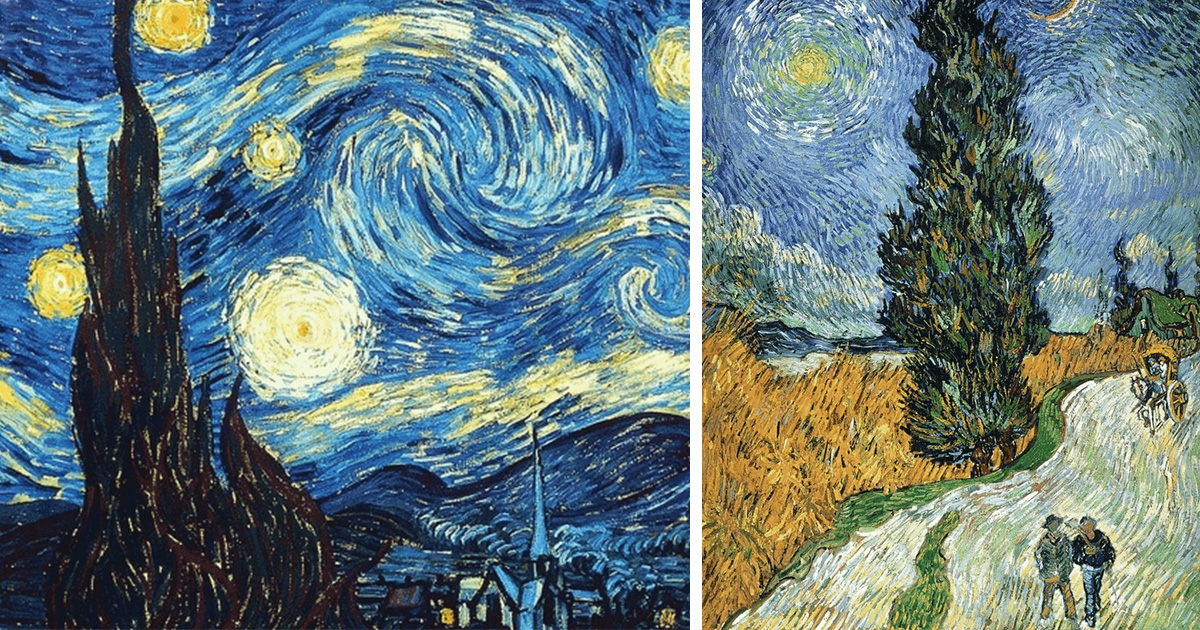
His brushstrokes often act like directional arrows. In Wheat Field with Cypresses, the clouds curl and drift, the trees climb like green flames, and the field ripples in strokes of yellow and ocher. In Irises, each flower has its own posture, almost like a crowd of blue dancers caught mid-step. In The Bedroom, the perspective tilts slightly, making the room feel intimate, unstable, and oddly theatricallike the furniture knows something but has agreed not to gossip.
This built-in movement is the reason animated Van Gogh paintings can feel natural when done carefully. The digital artist is not inventing motion from nothing. The movement is already implied by the paint. Animation simply makes that implication visible.
The Art of Making a Still Painting Move
Animating a Van Gogh painting begins with observation. Before opening animation software, I study the painting like a detective with excellent taste in color. Where does the eye travel first? Which brushstrokes curve, push, spiral, or vibrate? What parts of the image should remain still so the moving parts do not become chaos in a fancy frame?
The process often starts by separating the artwork into layers. A sky may become one layer, stars another, clouds another, buildings another, and foreground elements another. Then comes masking, which is the painstaking task of telling the computer, “This cypress tree is separate from that moon, and no, you may not smear them together like wet cake frosting.”
After that, motion is added with restraint. A star can pulse softly. A cloud can drift. A field can ripple. A candle flame can flicker. The trick is to avoid over-animation. Van Gogh’s paintings already contain visual electricity. Too much motion turns poetry into a carnival ride, and not the charming kind with popcornthe alarming kind where someone has lost a shoe.
Animating The Starry Night: Letting the Sky Breathe
The Starry Night is the obvious candidate for animation because the painting practically arrives with its own soundtrack. Painted in 1889 during Van Gogh’s stay at Saint-Rémy, it presents a night sky filled with radiant stars, a glowing moon, and sweeping blue currents above a quiet village. The contrast is irresistible: the heavens are having an emotional opera while the town below appears to be asleep.
When animating this painting, the sky deserves the most attention. The swirling bands can rotate slowly, but they should not spin like a washing machine full of sapphires. The stars may expand and contract with a soft glow. The moon can shimmer slightly. The cypress tree in the foreground might sway just enough to suggest wind, while the village remains grounded.
This balance matters because The Starry Night is not only about motion. It is about tension between stillness and turbulence, earth and sky, observation and imagination. If everything moves, the painting loses its emotional architecture. If only the sky moves, the viewer feels the difference between the human world below and the cosmic drama above.
Animating Sunflowers: A Vase With a Pulse
Van Gogh’s sunflower paintings are another beautiful challenge. At first glance, they seem less animated than the starry skies. There are no obvious clouds, no river reflections, no visible wind. But look longer and the flowers begin to feel like characters. Some stand proudly. Some droop. Some look as if they have just heard disappointing news from a bee.
To animate Sunflowers, subtlety is everything. The petals might tremble slightly. The seed heads can rotate by a fraction, suggesting the slow life of plants. The background can breathe with a barely visible shift in light. A warm glow may move across the vase, creating the impression of changing daylight.
The emotional tone should remain tender, not theatrical. Van Gogh painted sunflowers as symbols of friendship, warmth, and artistic identity. In motion, they should feel alive but not cartoonish. Nobody needs a sunflower winking at the audience. That is how museums start filing complaints.
Animating Irises: Turning Brushstrokes Into a Garden Breeze
Irises, painted in 1889, is one of Van Gogh’s most beloved flower paintings. The Getty describes the flowers as individually varied, with twisting and curved forms that show how carefully Van Gogh studied their shapes. That makes the painting perfect for motion design because the composition already contains botanical choreography.
In animation, the leaves can bend gently, the petals can shift as if touched by air, and the background flowers can flicker with sunlight. The movement should follow the natural direction of Van Gogh’s strokes. If the painted line curves left, the animation should not shove it right. Good motion design behaves like a polite guest: it notices the room before rearranging the furniture.
The best animated version of Irises would not make the flowers dance wildly. It would create the sensation of kneeling in a garden for ten seconds, watching color move in silence.
Animating The Bedroom: Stillness Can Move Too
The Bedroom is a different kind of challenge. The Art Institute of Chicago’s version documents Van Gogh’s room in the Yellow House in Arles, a place connected to his hopes for stability, friendship, and an artists’ community. Unlike The Starry Night, this painting does not ask for swirling skies. Its power comes from intimacy.
To animate The Bedroom, I would avoid making the bed bounce or the chairs scoot around like they are late for a meeting. Instead, I would animate light. A soft ray could move across the floor. The framed pictures on the wall might shift almost imperceptibly. The air could feel warm, still, and human.
This type of animation proves that bringing a painting to life does not always mean obvious movement. Sometimes it means creating atmosphere. A room can breathe. A wall can hold memory. A chair can remain perfectly still and somehow become more present.
Respecting the Original Painting
Whenever classic art enters the digital world, one question matters: does the new version honor the original, or does it merely use it as decoration? This question is especially important with Van Gogh because his paintings are now everywhereon mugs, tote bags, phone cases, socks, umbrellas, and probably at least one suspiciously emotional shower curtain.
Digital animation can either deepen appreciation or flatten it. If motion is added only to make the image “cool,” the result may feel shallow. But if animation helps viewers notice brush direction, color relationships, composition, and mood, it can become a form of close reading.
The key is humility. Van Gogh does not need rescuing from stillness. His paintings have survived more than a century because they already move people. Animation should not shout over that. It should whisper, “Look here. Did you notice how this line curves? Did you see how the yellow pushes against the blue? Did you feel the sky turning?”
Why Animated Van Gogh Art Works So Well Online
Animated Van Gogh paintings are especially powerful in digital spaces because modern audiences are used to motion. Social feeds move quickly. Videos autoplay. Attention spans sometimes behave like caffeinated squirrels. A moving artwork can stop the scroll, but it also has the potential to invite deeper looking.
That is the magic: motion catches attention, but art holds it. A viewer may first pause because a familiar painting is moving. Then they may begin to notice the structure of the original image. The animation becomes a doorway back to the canvas.
This is also why Van Gogh remains central to immersive exhibitions, projection experiences, and digital art projects. His work scales emotionally. A tiny detail on a phone screen can glow; a huge projection on a gallery wall can surround the viewer. His brushwork has enough energy to survive translation across formats.
The Tools Behind the Illusion
Different artists use different tools to animate paintings, but the basic methods often include digital layering, parallax movement, displacement maps, particle effects, frame-by-frame painting, and light animation. Parallax creates depth by moving foreground and background layers at different speeds. Displacement can make painted strokes ripple. Particle effects can add sparks, dust, stars, pollen, or glowing air.
However, software is only half the story. The real tool is judgment. A beginner may ask, “What can I make move?” A better question is, “What should move?” That tiny change separates thoughtful animation from visual spaghetti.
For Van Gogh, I often imagine that the brushstroke is the director. The motion should follow the paint’s own logic. If the original stroke is thick, curved, and urgent, the animation can be bolder. If the stroke is delicate, the movement should be delicate too. The painting gives instructions. The animator’s job is to stop pretending to be the boss and listen.
What Viewers Feel When Paintings Start Moving
People often respond to animated Van Gogh art with surprise first, then emotion. Surprise is easy: a famous still image suddenly moves. Emotion is more interesting. Movement can make viewers feel as if they are encountering the painting again for the first time. A familiar image becomes unfamiliar in a good way.
This matters because famous artworks can become invisible through overexposure. We think we know The Starry Night because we have seen it on posters and notebooks. But when the stars pulse or the sky rolls slowly, the image becomes strange again. We remember that this painting was not born as merchandise. It was a serious, searching, deeply human act of vision.
Personal Experience: What It Feels Like to Bring Van Gogh’s Paintings To Life
Working with Van Gogh’s paintings feels less like editing an image and more like entering a conversation with a very intense person who has excellent color instincts and absolutely no interest in small talk. The first time I animated a Van Gogh-inspired sky, I thought the process would be simple. Swirl the clouds, glow the stars, add a little movement, done. Easy, right? Famous last words, usually spoken right before a project file crashes at 2:13 a.m.
The real challenge was not making the painting move. The challenge was making it move in a way that still felt like Van Gogh. Too fast, and the sky looked like a hypnotic screensaver from 2004. Too slow, and the animation felt like it had missed its morning coffee. I learned to treat each brushstroke like a clue. The curves told me where the motion wanted to go. The contrast told me where the energy lived. The quiet areas told me where to leave things alone.
One of the most rewarding experiences is watching viewers react. People often smile at first because the movement feels magical. Then they lean closer. That second reaction is my favorite. It means the animation has done its job. It has not replaced the painting; it has pulled someone back into looking.
I also learned that restraint is harder than spectacle. It is tempting to animate everything: stars, trees, houses, roads, flowers, shadows, maybe even a suspiciously lively chair. But a painting is not a fireworks display. If everything demands attention, nothing receives it. The best animated moments are often the smallest: a pulse of light around a star, a soft breath in a field, a petal shifting like it has just remembered spring.
There is also something unexpectedly emotional about animating art made by someone who struggled so deeply and saw so fiercely. Van Gogh’s life is often reduced to suffering, but his paintings show much more than pain. They show attention. They show discipline. They show love for ordinary things: a chair, a tree, a field, a pair of boots, a café at night. When I animate his work, I try to preserve that tenderness. The motion should never turn the painting into a gimmick. It should help the viewer feel the care already inside it.
In the end, bringing Van Gogh’s paintings to life is not about making old art “modern.” It is about proving that great art never stopped being alive in the first place. The pixels move, yes, but the real movement happens in the viewer. A sky becomes less familiar. A flower becomes more fragile. A room becomes more human. And for a brief moment, the distance between a 19th-century canvas and a 21st-century screen feels surprisingly small.
Conclusion: Motion Is a New Way to Look, Not a Replacement
To bring Van Gogh’s paintings to life by making them move is to translate emotion into motion. It is a creative act built on respect, observation, and restraint. His paintings are already full of energy: stars swirl, flowers lean, fields ripple, rooms hum with private feeling. Digital animation simply reveals the movement that was already waiting in the paint.
When done well, animated Van Gogh art can help modern viewers reconnect with classic paintings. It can make familiar masterpieces feel fresh without stripping away their depth. It can turn a quick glance into a longer look. Most importantly, it can remind us that Van Gogh’s genius was never frozen in time. His work still moveson canvas, on screens, and in the imagination.