Learning how to rollerblade backwards looks impressive, feels slightly rebellious, and can make you appear far more coordinated than you felt five minutes earlier. It is also one of those skills that seems impossible until your feet suddenly roll in the opposite direction and your brain says, “Wait… we are doing this now?”
Backward skating is useful for more than showing off at the rink. It improves balance, edge control, body awareness, turning, transitions, hockey movement, freestyle skating, and overall confidence on inline skates. The key is not trying to launch into reverse like a shopping cart with a broken wheel. Start slowly, use a flat practice area, and build the movement one piece at a time.
This guide breaks down how to rollerblade backwards into 11 manageable steps. By the end, you should understand the backward stance, backward swizzles, C-cuts, steering, and safe ways to stop before your reverse adventure turns into an accidental floor inspection.
Before You Start Rollerblading Backwards
Before practicing backward skating, make sure you can comfortably skate forward, turn, balance on one foot for a few seconds, and stop while moving forward. You do not need Olympic-level skills, but you should be able to control your speed without panicking.
Choose a smooth, flat, dry surface with plenty of empty space. A quiet basketball court, rink, smooth parking lot, or paved path can work well. Avoid hills, crowded sidewalks, wet pavement, loose gravel, traffic, and areas with enough cracks to qualify as a tiny canyon system.
Wear a properly fitted helmet, wrist guards, knee pads, and elbow pads. Backward skating often involves a few unexpected falls, especially while learning the first swizzle motion. Protective gear does not make falling glamorous, but it does make it much less dramatic.
How to Rollerblade Backwards in 11 Steps
1. Start With Strong Forward Skating Skills
Backward skating becomes much easier when your forward skating foundation is solid. Practice gliding forward with bent knees, turning in both directions, and stopping under control. You should also know how to slow down using a heel brake, T-stop, plow stop, or another technique that feels comfortable and reliable for you.
Why does this matter? Because once you roll backward, you will eventually need to return to forward skating. If you cannot make that transition smoothly, backward skating can feel like driving a car without knowing where the brakes are located. Not ideal.
Spend a few minutes warming up with normal forward strides, wide turns, and gentle stops before attempting reverse movement. This wakes up your legs, ankles, core muscles, and confidence.
2. Put on Full Protective Gear
Backward skating puts you in a position where you may fall onto your knees, wrists, elbows, or backside. That is normal. Even experienced skaters occasionally have a disagreement with gravity.
Wear a helmet designed for recreational skating or cycling, along with wrist guards, knee pads, and elbow pads. Make sure your pads fit securely and do not slide around. Loose knee pads are mostly decorative, like putting a tiny umbrella on a watermelon.
Check that your inline skates are tight and supportive. Your heel should feel secure inside the boot, and your ankle should not wobble from side to side. Loose skates make edge control more difficult, especially when learning backward swizzles and C-cuts.
3. Choose a Flat, Open Practice Area
Do not learn how to rollerblade backwards on a hill, near traffic, or beside a lake unless you enjoy creating stories that begin with, “So, I had a bad idea.” A flat surface gives you time to correct mistakes before your speed increases.
Look for an area with smooth pavement and enough room to roll at least 20 to 30 feet without obstacles. A skating rink is ideal because the floor is predictable, but a quiet outdoor court can work just as well.
Keep the area clear of water, sand, pebbles, sticks, leaves, bags, pets, small children, and anyone carrying an iced coffee. Backward skating requires attention, and surprise obstacles do not improve the lesson.
4. Learn the Backward Athletic Stance
Your body position matters more than speed. Stand with your feet about hip-width apart, knees bent, chest lifted, and core gently engaged. Keep your weight centered over the middle of your skates rather than leaning heavily onto your heels.
Many beginners lean backward because they are moving backward. That is understandable, but it creates the exact balance problem you are trying to avoid. Think of your body as stacked: head over shoulders, shoulders over hips, hips over skates.
Keep your arms slightly in front of you or relaxed at your sides. Do not fling them around like you are trying to signal an airplane onto a runway. Calm arms help your body stay calm too.
5. Practice Walking Backward on Skates
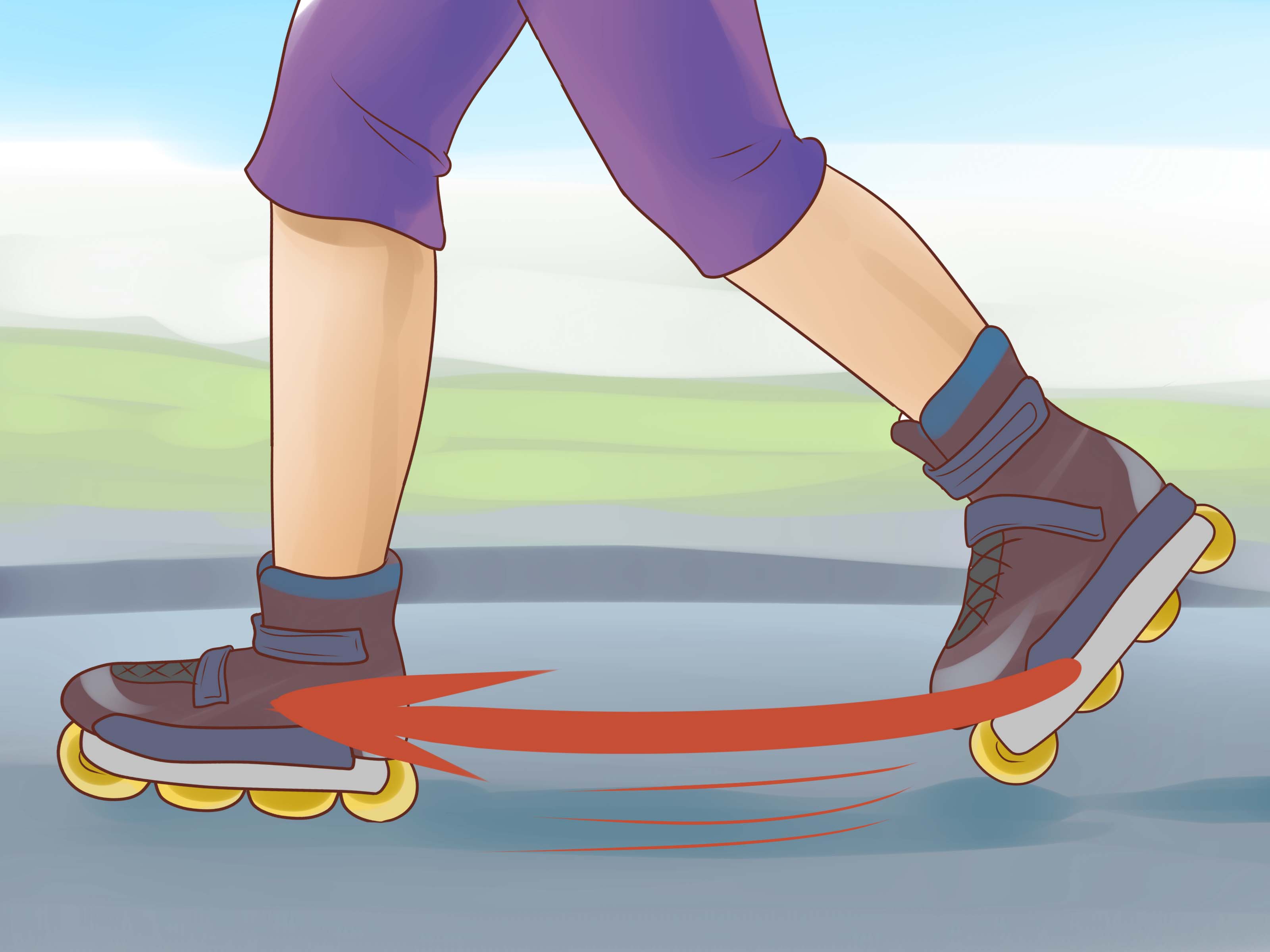
Before gliding backward, begin with tiny backward steps. Place your toes close together and let your heels sit slightly apart, forming a small inverted V shape. Keep your knees bent and your feet under your hips.
Take short, controlled steps backward. Do not lift your feet high or take giant strides. The goal is simply to feel your wheels moving behind you while your body stays balanced.
At first, it may feel like your legs are trying to speak two different languages. That is completely normal. Keep the steps small and stay relaxed. After several minutes, your balance will begin to feel more natural.
6. Try Half Backward Swizzles
Once backward walking feels comfortable, begin practicing half swizzles. A backward swizzle is also called a backward lemon because your feet trace the shape of a lemon or oval on the ground.
Start with your toes close together and heels slightly apart. Press your heels outward gently, allowing your feet to roll farther apart. Then stop before your feet become too wide. Bring them back toward the center using controlled pressure through your legs and edges.
Think small. Your first swizzle should be about the size of a dinner plate, not the size of a swimming pool. Large movements make it harder to balance and can cause your feet to split too far apart.
Repeat the motion slowly: push outward, glide, pull inward. Keep your knees bent throughout the entire movement.
7. Connect Full Backward Swizzles
When half swizzles feel stable, connect them into full backward swizzles. Begin with your toes close together, press your feet outward, then pull them back together. Each repetition should create a smooth oval shape beneath you.
Do not force the movement with your upper body. Your legs should guide the motion while your torso stays balanced above the skates. Imagine your feet are drawing two matching parentheses on the pavement.
Focus on rhythm instead of speed. Push out, pull in, glide. Push out, pull in, glide. This is the basic engine of backward skating, and it teaches your body how to move in reverse without relying on panic-powered arm flapping.
8. Keep Your Feet Under Your Body
A common mistake is allowing the feet to spread too far apart. When that happens, the skater often loses control and drops into an unplanned split that nobody requested.
Keep your feet inside your natural balance zone, roughly beneath your hips. Your knees should stay soft and slightly bent. If your feet begin drifting too wide, make the swizzle smaller and reduce the amount of force you use.
Small movements are not a sign of weakness. They are a sign that you are learning control. A tiny, controlled backward glide is much more useful than a giant reverse slide followed by a loud apology to the pavement.
9. Learn the Backward C-Cut
After you can perform smooth backward swizzles, start learning backward C-cuts. This move gives you more efficient power and eventually allows you to skate backward with longer, smoother strides.
Begin by gliding backward on both skates. Shift slightly more weight onto one leg while the other skate performs a small outward-and-returning arc. The moving skate should trace a loose letter C shape on the ground.
For example, let your left skate carry more of your body weight while your right skate makes a gentle C-cut. Then switch sides. Keep the movement compact at first. You are not trying to scrape paint off the pavement.
The supporting leg should remain steady and bent. The working leg creates the push, then returns beneath your body before you switch sides.
10. Alternate C-Cuts for Smooth Backward Skating
Once you can perform a single C-cut on each side, begin alternating them. Glide backward, make one C-cut with the right skate, return it under your body, then make one with the left skate.
Try to keep the movement quiet and controlled. Your shoulders should stay level, your chest should remain upright, and your core should help prevent twisting. If your upper body swings wildly side to side, slow down and make your C-cuts smaller.
As you improve, the motion becomes smoother and more automatic. You will feel less like you are forcing yourself backward and more like you are simply skating in a different direction.
11. Look Where You Are Going and Practice Safe Stops
Backward skating does not mean skating blindly. Keep checking the space behind you by looking over one shoulder every few seconds. Avoid twisting your entire body around for long periods because that can throw off your balance.
Use quick shoulder checks, especially near other skaters, people, walls, benches, curbs, or moving objects. If you are practicing outdoors, stay far away from roads and driveways.
For beginners, the safest way to stop while skating backward is usually to slow down, turn back to forward skating, and use the stopping method you already know. Do not depend on a heel brake while rolling backward. Instead, plan your route so you have plenty of space to make a gentle turn before stopping.
Common Backward Rollerblading Mistakes
Leaning Too Far Back
Leaning backward is the most common mistake when learning how to rollerblade backwards. It feels logical because you are moving in reverse, but it shifts your weight toward the rear wheels and increases the chance of falling backward.
Keep your knees bent and your body centered above your skates. Your chest should stay proud and lifted, but your hips should not drift behind your heels.
Making the Swizzle Too Large
Huge swizzles can feel powerful, but they often cause the feet to separate too far. Start with small lemons and gradually increase the size only when you can control the movement easily.
Think of backward skating as handwriting, not graffiti. Clean, compact movements beat giant, messy ones.
Staring at Your Feet
Looking down can make you feel safer, but it usually makes balance worse. Your head is heavy, and lowering it changes your posture. Look ahead, glance over your shoulder when needed, and trust your feet to do their job.
Trying to Go Fast Too Soon
Speed is not the goal when you first learn backward skating. Control is the goal. Build smooth swizzles, then steady C-cuts, then longer glides. Speed shows up naturally once your technique improves.
A Simple 20-Minute Backward Skating Practice Plan
For your first few sessions, keep practice short and focused. Spend five minutes warming up with forward skating, turns, and stopping. Spend another five minutes walking backward in small steps. Then practice backward swizzles for five minutes, followed by five minutes of gentle C-cuts.
Stop before your legs become too tired. Fatigue makes your knees straighten, your posture collapse, and your decision-making become suspiciously confident. It is better to practice 20 focused minutes three times a week than grind through one exhausting session.
Track your progress by noticing what feels easier. Maybe you can roll backward for five feet without stepping. Maybe your swizzles are quieter. Maybe you can check over your shoulder without turning into a spinning windmill. Those are real wins.
Conclusion
Learning how to rollerblade backwards takes patience, balance, and a willingness to look a little awkward for a while. Start with a safe practice area, stay low with bent knees, learn backward walking, build controlled swizzles, and then move into C-cuts.
The secret is not bravery or speed. It is repetition. With each practice session, your body learns where your balance belongs and how much edge pressure creates movement. Eventually, skating backward will feel less like a stunt and more like a natural extension of your skating skills.
Keep the movements small, wear your protective gear, check behind you often, and celebrate every smooth backward glide. Reverse skating may begin with baby steps, but before long, you will be rolling backward with enough confidence to make your forward-skating self slightly jealous.
Real Experiences Learning How to Rollerblade Backwards
Most people do not learn to rollerblade backwards in one smooth, cinematic afternoon. The usual experience is more like this: you watch someone glide backward at a rink, assume it cannot be that difficult, try it for fifteen seconds, and immediately discover that your legs have their own opinions.
The first strange feeling is usually the lack of visibility. When you skate forward, your eyes naturally scan the path ahead. When you skate backward, your brain starts asking important questions such as, “What is behind me?” and “Why did I think this was a good idea?” That uncertainty is normal. It fades as you learn to use quick shoulder checks and practice in open spaces.
Another common experience is realizing that backward skating is not really about pushing hard. Beginners often try to muscle their way backward with huge movements. That usually creates a wide-legged wobble that feels less like skating and more like trying to avoid stepping on invisible hot coals. Smaller swizzles are easier to control, and they teach your feet how to work together.
Many skaters remember the moment backward movement finally clicks. It is often not dramatic. You may be practicing little lemons, then suddenly you roll backward farther than expected without taking a step. For a second, everything feels quiet. Your knees stay bent, your feet stay beneath you, and the wheels simply carry you. That tiny success can be ridiculously exciting.
There are also plenty of awkward moments. You may accidentally turn when you did not mean to. You may lean back too far and sit down faster than expected. You may look over your shoulder, forget what your feet are doing, and begin rotating like a confused office chair. These are not signs that you are bad at skating. They are part of learning a movement that asks your body to operate in reverse.
Experienced skaters often say that backward skating improves forward skating too. Once you understand how to use your edges, stay low, shift weight, and keep your core stable, normal forward strides can feel more controlled. You start noticing how much your posture affects speed and how much smoother skating becomes when your knees remain flexible.
Practicing with a friend can also make the process easier. A friend can watch for obstacles, remind you not to lean backward, and provide emotional support when your “small swizzle” somehow becomes a full interpretive dance routine. Just make sure the friend gives useful advice instead of yelling, “Go faster!” from a safe distance.
Indoor rinks can be especially helpful because the surface is predictable and there are fewer surprises. Outdoor skating has its own rewards, but pavement can include tiny rocks, cracks, leaves, sand, and random objects that appear harmless until they meet a rollerblade wheel. Backward skating outdoors requires more awareness and more room to turn forward safely.
The biggest lesson from learning to skate backward is that confidence comes after repetition, not before it. Nobody begins by floating backward like a professional hockey player or freestyle skater. The confidence arrives after dozens of small attempts: one clean backward walk, one smooth swizzle, one controlled turn, one longer glide.
Eventually, you stop thinking about every foot position. Your body begins to recognize the rhythm. You push out, pull in, shift weight, and glance over your shoulder without feeling overwhelmed. That is when backward rollerblading becomes fun instead of frightening. And once it feels fun, you may find yourself practicing just because rolling backward feels like discovering a secret level in a game you thought you already knew.
Note: Practice backward skating only on a smooth, dry, level surface with enough open space to turn safely. If you are new to inline skating or feel unsteady, consider taking a lesson from a qualified skating instructor before practicing faster backward movements.