At Blue Hill at Stone Barns, even the flowers seem to understand the assignment: float beautifully, behave sustainably, and do not drip moss water into anyone’s perfectly composed dinner.
When Flowers Learn to Fly
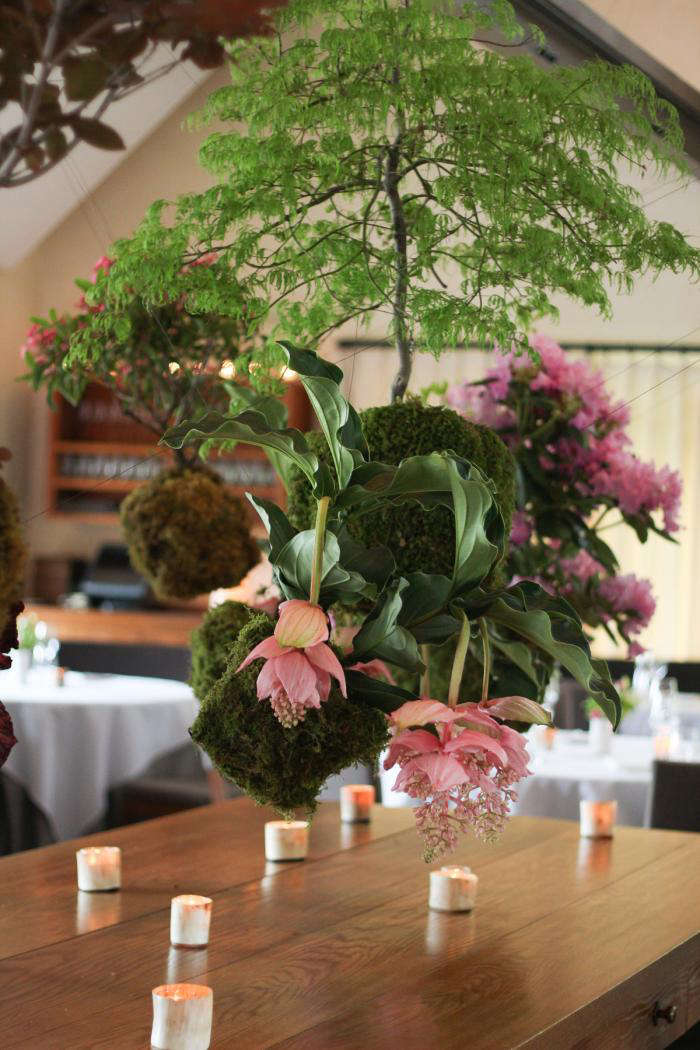
There are floral arrangements, and then there are floral arrangements that appear to have skipped botany class and enrolled in aerial acrobatics. The floating florals at Blue Hill at Stone Barns belong firmly in the second category. Suspended above the restaurant’s celebrated harvest table, the installation transforms live plants into a hovering garden: part centerpiece, part sculpture, part quiet dare.
The phrase “High Wire Act” fits because the design walks a delicate line. It must feel wild, but not messy. It must look effortless, while relying on careful engineering. It must celebrate nature without turning the dining room into a greenhouse with cutlery. Most importantly, it has to belong to Blue Hill at Stone Barns, a place where food, farming, design, and storytelling are braided together so tightly that even the garnish probably has a philosophy.
Located at Stone Barns Center for Food & Agriculture in New York’s Hudson Valley, Blue Hill at Stone Barns is known for its deeply seasonal, farm-driven dining experience. The restaurant does not simply decorate with nature; it collaborates with it. The floating florals are a perfect visual metaphor for that approach. They make the farm feel present in the room without shouting, “Look, agriculture!” in a straw hat.
The Setting: Blue Hill at Stone Barns and the Beauty of Restraint
Blue Hill at Stone Barns opened in 2004 within the Stone Barns Center for Food & Agriculture, a nonprofit farm, research, and education center founded with a mission to build a more ecological food culture. The property itself carries history: stone buildings, pastoral views, working fields, greenhouses, animals, and a sense that every surface has been patiently waiting for the right tomato to arrive.
The restaurant’s identity is inseparable from its location. Guests do not come only for dinner; they come for immersion. The farm informs the kitchen, the kitchen responds to the farm, and the dining room becomes the stage where that relationship is translated into taste, texture, scent, and atmosphere. There are no conventional menus at Blue Hill at Stone Barns. Instead, guests receive a multi-taste feast shaped by what the field and market offer at that moment. In other words, the farm gets the first draft, and the chefs edit with fire.
This is why a suspended garden makes so much sense here. A traditional floral arrangement might look pretty and polite, but it could also feel separate from the restaurant’s larger mission. Floating florals feel alive. They nod to seasonality, impermanence, soil, weather, and patience. They also gently remind diners that beauty is not always placed on the table. Sometimes it hovers overhead, making everyone slightly better at posture.
Who Designed the Floating Florals?
The floating floral installation is associated with Laureen Barber, co-owner and design director of Blue Hill. Barber has long shaped the visual language of the Blue Hill world, from the restaurant environment to its broader brand expression. Her design sensibility is not about loud luxury; it is about clarity, material honesty, and making every detail feel connected to the land.
That connection matters. In a farm-centered restaurant, decoration cannot feel like an imported afterthought. A vase of tropical blooms flown across the planet may be gorgeous, but it can also feel like wearing stilettos to milk a cow: possible, dramatic, and perhaps not fully aligned with the occasion. Barber’s floating florals instead work with woodland plants, moss, root balls, and living structure. They do not imitate nature; they bring actual nature into the dining room and ask it to levitate politely.
The installation was also developed with attention from the restaurant team, including the practical work of maintaining balance, moisture, and plant health. This is where the romance of design meets the daily reality of horticulture. Suspended plants are not props. They are living organisms with opinions, needs, and a remarkable ability to look offended when under-watered.
How the High Wire Floral Installation Works
The magic of floating florals begins with a deceptively simple idea: suspend living plants overhead while keeping their roots moist and their shape balanced. The execution, naturally, is less simple. If hanging a houseplant in your apartment has ever ended with a sad pothos and a mysterious ceiling stain, you already understand the stakes.
Root Balls, Moss, and Moisture
In the Blue Hill installation, the root balls are wrapped to retain moisture, then covered with moss for a natural, sculptural finish. The moss softens the engineering and gives each plant the look of a small floating island. Watering happens through an opening at the top, typically once or twice a week, depending on the plants and conditions.
This technique borrows from the visual language of kokedama, the Japanese-inspired practice of wrapping plant roots in moss and displaying them without a traditional pot. But at Blue Hill, the effect is more architectural than crafty. The plants are arranged in relation to the dining room, the table, and the light. They create a suspended canopy that feels organic rather than ornamental.
Plants That Can Handle the Spotlight
The plant palette includes woodland and low-light varieties that can adapt to the dining room environment. Reported examples include rhododendron, mountain laurel, lace leaf maple, weigela, smoke bush, and showy medinilla. These are not random pretty faces from the garden center lineup. They offer texture, bloom, foliage, and structure. Together, they create a layered composition that changes as different plants flower, fade, and are replaced.
That change is essential. Floating florals are not frozen in time. They are seasonal by nature, which makes them especially appropriate for Blue Hill at Stone Barns. Just as the kitchen responds to the fields, the installation can respond to the calendar. Spring might lean tender and floral. Summer can bring abundance. Autumn invites deeper tones and woody drama. Winter may focus on branch structure, evergreen mood, and the quiet glamour of plants that refuse to panic in January.
The Engineering of Effortlessness
Suspension wires must be adjusted as plants change size, weight, and shape. Balance is the secret ingredient. Too much weight on one side and the arrangement begins to look less like a floating garden and more like a botanical chandelier having an existential crisis. The goal is to maintain a composition that feels loose, natural, and alive while remaining structurally dependable.
Why Floating Florals Feel So Modern
Floating florals have become popular in restaurants, weddings, galleries, and high-end events because they solve a design problem with flair. They create drama without cluttering the table. They make a room feel immersive without blocking conversation. They also photograph beautifully, which in the modern hospitality world is not nothing. A suspended garden says, “Yes, this room has depth,” and Instagram quietly faints into its latte.
But at Blue Hill at Stone Barns, the idea feels less like a trend and more like a philosophy. The restaurant has always asked diners to look beyond the plate: toward the farm, the soil, the seed, the animal, the compost pile, and the network of choices behind a meal. Floating florals extend that same thinking into space. They encourage guests to look up, to notice atmosphere, and to consider plants as living partners in the experience.
The best hospitality design does not merely decorate a room. It changes how people behave inside it. A low floral arrangement can make a table feel intimate. A dramatic chandelier can make a room feel formal. A floating garden does something stranger and more memorable: it adds wonder. Diners may not know the mechanics of the installation, but they feel its effect. The room becomes lighter, greener, and slightly dreamlike.
Design Lessons from Blue Hill’s Floating Florals
The floating florals at Blue Hill Stone Barns offer practical inspiration for designers, florists, event planners, restaurant owners, and ambitious home decorators who own both a ladder and confidence.
1. Use Living Materials with Purpose
The installation works because the plants are not chosen only for color. They bring leaf shape, bloom cycle, branch structure, and ecological personality. Good floral design is not just about “what matches the napkins.” It is about how materials behave over time.
2. Respect the Room
Suspended florals need space to breathe. At Blue Hill, the arrangement relates to the harvest table and the dining room’s natural light. The plants do not fight the architecture; they converse with it. This is a useful lesson for any space: the best design listens before it speaks.
3. Make Maintenance Part of the Design
A living installation is not finished when it is installed. It needs watering, pruning, replacement, and occasional troubleshooting. The glamorous phrase is “botanical installation.” The less glamorous phrase is “someone has to check the moss.” Both are true.
4. Let Impermanence Be Beautiful
Cut flowers fade. Living plants bloom, rest, drop leaves, and shift. Instead of fighting that cycle, Blue Hill’s floating florals embrace it. The result feels more honest than a static arrangement. It is beauty with a pulse.
How to Bring the Floating Floral Idea Home
You do not need a Michelin-recognized restaurant or an 80-acre farm to borrow the spirit of this idea. You do, however, need humility, good hooks, and a healthy respect for gravity.
For a home version, start small. Try one or three moss-wrapped plants rather than attempting a full suspended meadow above your dining table. Choose plants that tolerate indoor light, such as pothos, ferns, orchids, or small shade-loving shrubs if you have a bright room. Wrap the root ball carefully, use moisture-retentive moss, and secure everything with twine or wire. Always test the weight before hanging anything overhead. Your guests should remember dinner for the conversation, not for the fern that entered the soup uninvited.
For events, floating florals can be especially effective above long tables, ceremony aisles, bar areas, or entryways. They free up table space and create an immersive environment. The trick is to coordinate with florists, venue managers, and rigging professionals early. A floating garden is not something to casually assemble thirty minutes before the guests arrive, unless your event theme is “panic, but make it botanical.”
The Dining Experience Beneath the Flowers
Imagine sitting beneath the floating florals at Blue Hill at Stone Barns. The room is calm but not stiff. The table feels generous. The light catches leaves overhead. A server brings something from the field: perhaps a tiny vegetable, a broth, a grain, a bite that tastes like a season condensed into one elegant argument. Above you, plants hover like a quiet reminder that the meal did not begin in the kitchen. It began in soil.
This is the emotional power of the installation. It frames the meal without distracting from it. It makes the dining room feel connected to the farm outside. It also brings a touch of playfulness to a serious culinary environment. Fine dining can sometimes become so reverent that everyone starts whispering at the carrots. Floating florals loosen the mood. They say: yes, this is artful; yes, this is thoughtful; yes, there are plants in the air, and everyone is going to be fine.
That balance between seriousness and delight is one reason Blue Hill at Stone Barns remains such a compelling reference point in American dining and design. The restaurant is ambitious, but its best moments are rooted in sensory pleasure. A perfect leaf, a warm stone wall, a moss-wrapped root ball, a plate that tells you something about the land without delivering a lecturethese are the details that stay with people.
Why This Installation Still Matters
The original floating floral moment at Blue Hill Stone Barns continues to resonate because it anticipated several major design conversations that are now everywhere: sustainable floristry, immersive dining, biophilic interiors, seasonal hospitality, and the desire for spaces that feel alive.
Today, more florists and event designers are thinking about foam-free arrangements, locally grown flowers, reusable mechanics, and plant-forward installations. Restaurants are also paying closer attention to atmosphere as part of storytelling. A dining room is no longer just a container for food. It is part of the meal’s meaning.
The floating florals demonstrate how a single design gesture can express an entire brand philosophy. They are beautiful, yes, but beauty is only the beginning. They also speak to care, maintenance, seasonality, and the quiet labor required to make nature appear effortless indoors. That is the real high wire act.
Extra Experience: What Floating Florals Teach Us About Slowing Down
Spending time with the idea of floating florals at Blue Hill Stone Barns changes how you look at a dining room. Most of us enter a restaurant and scan the obvious things first: tables, chairs, lighting, menu, and whether the bread situation looks promising. A suspended floral installation asks you to slow down and look upward. That small shift matters. It turns the room from a place where food is served into a place where an experience unfolds.
The most memorable part of a floating garden is not simply that it is suspended. Plenty of things can hang from a ceiling. Pendant lights do it every day and rarely ask for applause. What makes floating florals special is the tension between fragility and control. The plants look soft, but the system must be strong. The moss looks casual, but the watering schedule must be precise. The arrangement looks wild, but someone has thought carefully about weight, balance, bloom time, and sightlines.
That tension mirrors the broader Blue Hill experience. A meal there may feel natural, even spontaneous, but it is supported by farming knowledge, kitchen technique, service choreography, and design discipline. The guest experiences ease because many people have done difficult work behind the scenes. This is true of great hospitality in general: the better it is, the less you notice the machinery.
For visitors, floating florals can become a kind of emotional doorway. Before the first course arrives, the plants already suggest what kind of world you have entered. This is a place where roots matter. This is a place where beauty is allowed to be practical. This is a place where the ceiling has decided not to waste its potential. The installation prepares the senses for a meal shaped by land, season, and surprise.
For home decorators and event hosts, the lesson is not to copy Blue Hill exactly. Most dining rooms do not need a full aerial woodland hovering over the lasagna. The better lesson is to design with intention. Choose materials that mean something. Think about how guests move through a room. Consider scent, height, shadow, texture, and the view from the chair. A small hanging fern, a branch arrangement above a console, or a cluster of seasonal herbs near a kitchen window can create a similar feeling on a smaller scale.
There is also a lesson in patience. Living installations do not behave like plastic décor. They change. They need care. They sometimes look better on Tuesday than they did on Saturday. They remind us that design does not have to be permanent to be meaningful. In fact, its temporary nature can make it more memorable. A floating floral arrangement blooms, shifts, and eventually gives way to something else. That is not a flaw. That is the point.
In a culture obsessed with perfect images, the floating florals at Blue Hill Stone Barns offer a more generous kind of beauty: one that includes maintenance, seasonality, and a little risk. They are not just flowers in the air. They are a reminder that the most enchanting experiences often depend on balancethe balance between nature and design, elegance and humor, ambition and restraint, roots and flight.