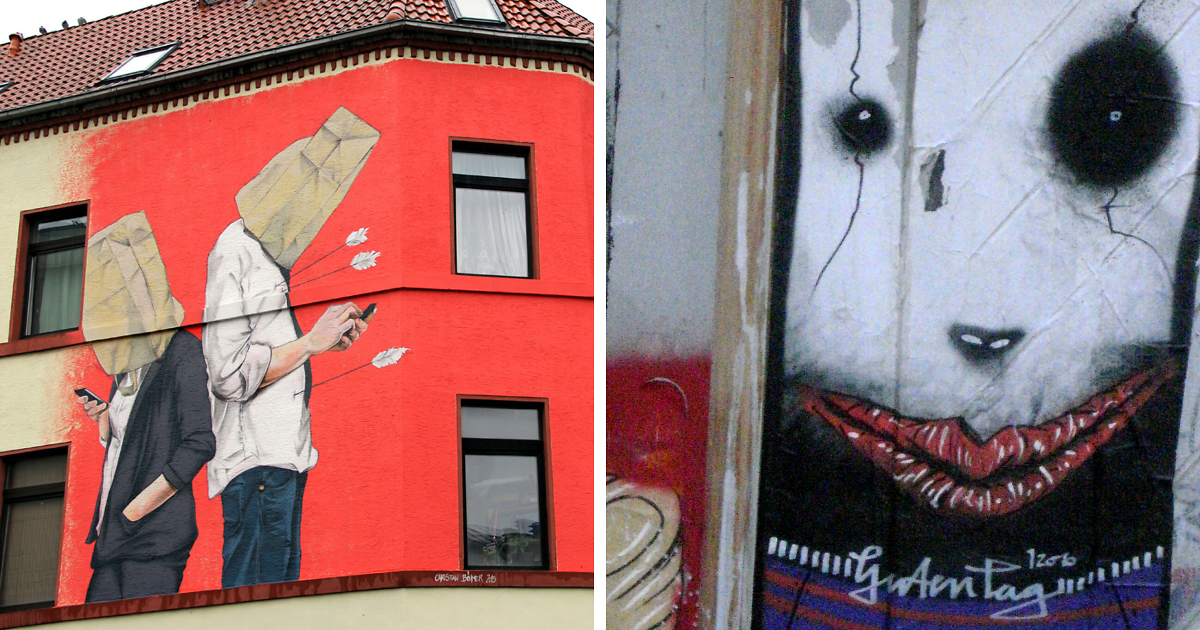
Street art has a strange superpower: it can turn the most forgettable walk to the grocery store into a tiny urban treasure hunt. One minute you are passing a brick wall, thinking about eggs, parking meters, and why your phone battery is already at 14%. The next minutebama giant neon octopus is holding a coffee cup beside a subway entrance, and suddenly your day has a plot twist.
That is the spirit behind the prompt: “Hey Pandas, show us a photo of street art you’ve seen.” It is simple, visual, and wonderfully democratic. You do not need a museum ticket. You do not need a velvet rope. You do not even need to understand what the artist “meant,” though if the mural includes a raccoon wearing sunglasses, we can safely assume the meaning is “this raccoon has excellent confidence.”
Street art photos are more than casual snapshots. They are records of public creativity, neighborhood identity, protest, humor, memory, and sometimes glorious weirdness. A mural on a corner store, a stencil under a bridge, a wheat-pasted portrait on a construction fence, or a hand-painted message on a boarded-up window can say something about a city faster than any brochure ever could.
Why Street Art Photos Feel So Personal
Unlike traditional art, street art meets people where they are. It lives on walls, alleys, doors, sidewalks, skate parks, train stations, and warehouse districts. You do not have to schedule an appointment with culture. Culture jumps out from behind a lamppost and says, “Surprise, I painted a phoenix on this garage.”
That accessibility is one reason street art has become such a popular subject for photography. A street art photo is not just about the artwork itself. It also captures the weather, the traffic, the cracked pavement, the person walking by with iced coffee, and the sense of place surrounding the piece. In other words, the city becomes part of the frame.
Many public-art programs in the United States recognize murals and street-based artworks as tools for civic identity. Cities such as Philadelphia, Miami, New York, Chicago, Los Angeles, and Cincinnati have developed strong mural cultures where public walls serve as storytelling spaces. Some works are commissioned, some are community-led, some are temporary, and some appear overnight like mysterious visual snacks left for the morning crowd.
From Graffiti Roots To Outdoor Galleries
Modern street art is often discussed alongside graffiti, especially the style-writing culture that rose in New York City during the late twentieth century. Graffiti writers developed tags, throw-ups, burners, and full pieces that transformed trains and walls into moving or stationary canvases. While city officials frequently treated graffiti as vandalism, artists and observers increasingly recognized its visual language, technical skill, and cultural force.
Artists such as Jean-Michel Basquiat and Keith Haring helped connect street-based expression with the gallery world, though the relationship has always been complicated. Street art can lose some of its bite when it becomes too polished, too branded, or too expensive to stand near without someone whispering “curatorial intervention.” Still, the move from subway walls to museums showed that the energy of the street could not be ignored.
Today, street art includes more than spray-painted lettering. It can be a hand-painted mural, a stencil, a paste-up, a mosaic, a sticker installation, a yarn-bombed pole, a painted utility box, a digital projection, or a legal wall curated by a public-art organization. Basically, if the city becomes the canvas and the public becomes the audience, street art has entered the chat.
What Makes A Great Street Art Photo?
A strong street art photo does not have to be technically perfect. Sometimes the best shot is slightly crooked because you were standing between a trash can and a bicycle rack while trying not to block someone’s lunch break. What matters most is that the image captures the feeling of discovery.
1. The Artwork Has A Clear Personality
The most shareable street art often has a distinct mood. It may be joyful, political, strange, romantic, angry, nostalgic, or wildly unserious. A mural of a local musician, a tribute to a neighborhood elder, a giant cartoon cat, or a phrase like “Stay Weird, Stay Kind” can all work because they invite a reaction.
2. The Setting Adds Context
Street art is not floating in a white gallery box. It belongs to a place. A photo that includes the corner store sign, the old fire escape, the passing bus, or the row of apartment windows gives viewers a stronger sense of where the art lives. The background is not clutter; it is part of the story.
3. The Photo Respects The Artist
If the artist’s signature or tag is visible, include it when possible. If you post the photo online and know the artist’s name, credit them. Street art is public, but it is still someone’s creative labor. A little credit costs nothing and prevents the internet from doing its favorite hobby: mysteriously separating art from the person who made it.
Famous U.S. Street Art Destinations Worth Knowing
Street art can be found almost anywhere, but some American cities have become especially famous for it. Miami’s Wynwood Walls helped turn a warehouse district into a major outdoor street-art destination, bringing together artists from around the world and attracting millions of visitors. The area is colorful, camera-friendly, and so full of murals that even the parking lots seem dressed for a festival.
Philadelphia is another essential city for mural lovers. Its long-running mural program grew from anti-graffiti efforts into a major public-art movement centered on community participation. Many Philadelphia murals honor local history, civil rights, music, neighborhood heroes, and collective memory. It is difficult to walk through parts of the city without feeling that the walls are having a thoughtful conversation with you.
New York City remains central to the story of graffiti and street art. From early subway writing to contemporary temporary installations, New York has treated public space as a visual battleground, playground, and archive. The city’s streets, plazas, and walls continue to host legal murals, paste-ups, installations, and unsanctioned works that appear and disappear with the rhythm of urban life.
Los Angeles has its own mural legacy, shaped by Chicano art, Hollywood imagery, political movements, and neighborhood storytelling. Chicago maintains a mural registry that helps document outdoor murals and street art, recognizing that public art can be fragile. Cincinnati has also gained national attention for its large collection of murals, proving that street art is not limited to coastal cities with famous coffee prices.
Street Art Is TemporaryThat Is Part Of The Magic
One of the reasons street art photos matter is that the artwork may not last. A wall can be repainted. A building can be demolished. A poster can peel. A mural can fade in the sun. A clever sticker can be removed by a very determined person with a scraper and no appreciation for raccoon-based social commentary.
This temporary quality makes photography important. A photo can preserve an artwork long after the original has changed or vanished. It can also document how a neighborhood looked at a specific moment in time. Street art is often a living archive, and everyday photographers become accidental historians when they stop to take a picture.
That does not mean every piece needs to be treated like a museum artifact. Some street art is intentionally brief. Some artists embrace decay, layering, and disappearance. The city keeps editing the gallery. New paint covers old paint. Weather adds texture. Someone places a sticker over a sticker. The wall becomes a conversation where nobody uses indoor voices.
The Social Side Of Sharing Street Art
Prompts like “show us a photo of street art you’ve seen” work because they invite people to share places, not just pictures. A person in Portland might post a mural of a fox curled around a moon. Someone in Detroit might share a bold industrial wall painted with geometric shapes. A traveler in Austin might upload a colorful message from a music district. A commuter in Brooklyn might reveal a tiny stencil they pass every morning and secretly consider their emotional support stencil.
Online communities love these posts because they create a casual map of creativity. Each photo says, “Here is something beautiful, funny, strange, or meaningful that crossed my path.” The comments often become part of the fun. People ask where it was taken, whether the mural still exists, who painted it, and whether anyone else has seen something similar.
This kind of sharing also helps smaller artists gain visibility. A local muralist may not have a massive advertising budget, but one excellent photo from a passerby can introduce their work to thousands of viewers. Street art already belongs to the public eye; photography simply extends the sidewalk.
How To Photograph Street Art Without Being That Person
Street art photography is usually easy, but there are a few etiquette rules worth keeping in your pocket. First, be aware of your surroundings. Do not step into traffic to capture the perfect angle unless your goal is to become part of a public safety poster. Second, avoid blocking doors, driveways, businesses, or pedestrians. The mural may be stunning, but someone still needs to get to their dentist appointment.
Third, do not climb on private property, fences, rooftops, or suspiciously wobbly dumpsters for a better shot. The internet does not need your “dedicated art explorer meets emergency room” story arc. Fourth, if people are in the frame, be respectful. A candid passerby can add life to the image, but avoid making strangers the unintended subject of your post.
Finally, credit the artist when you can. Look for a signature, tag, plaque, website, or social handle near the work. Many murals include credits at the bottom. If you cannot identify the artist, mention the location and invite others to help. The phrase “artist unknown” is better than pretending the wall spontaneously developed talent.
Ideas For Photos Pandas Can Share
If you want to join the prompt, you do not need to hunt for the most famous mural in America. Sometimes the smaller finds are more memorable. Look for painted utility boxes, alley murals, old ghost signs, skate park walls, underpass art, neighborhood memorials, restaurant murals, community gardens, school walls, and temporary festival pieces.
You can also think thematically. Share the funniest street art you have seen, the most colorful, the most emotional, the most mysterious, or the one that made you stop walking. A tiny sticker can be just as interesting as a huge mural if it has character. Bigger is not always better; sometimes a three-inch drawing of a frog on a drainpipe has more personality than a corporate wall painted to match a smoothie brand’s “urban authenticity campaign.”
When you post, include a short caption. Tell people where you saw it, what caught your eye, and what mood it gave you. Was it hidden behind a café? Did you find it during a trip? Did it brighten a boring commute? Did you turn a corner and feel personally judged by a painted pigeon? Details make the photo more memorable.
Why Street Art Belongs In Everyday Storytelling
Street art reminds us that cities are not only made of roads, buildings, and zoning meetings. They are made of imagination. Public art can celebrate local culture, challenge injustice, honor lost loved ones, brighten neglected spaces, or simply make people smile. It gives neighborhoods visual landmarks and gives residents something to point to when giving directions: “Turn left at the giant blue fish wearing sneakers.”
It also changes how people move through familiar spaces. A mural can make a blank wall feel welcoming. A painted staircase can make a climb feel less like punishment from your fitness app. A bold image on a corner can transform an ordinary intersection into a meeting point. Street art does not solve every urban problem, but it can make a place feel noticed, loved, and alive.
Conclusion: Show Us The Wall That Made You Stop
The best street art photos are not always the cleanest, sharpest, or most professional. They are the ones that capture a moment of surprise. They say, “I was here, this art was here, and for a second the city felt less ordinary.” That is worth sharing.
So, hey Pandas: show us a photo of street art you’ve seen. It can be a famous mural, a hidden stencil, a painted doorway, a neighborhood tribute, a wild cartoon character, or a poetic message on a wall that somehow knew exactly what you needed to hear that day. Tell us where you found it. Tell us why you liked it. Tell us if you had to stand awkwardly beside a trash bin to get the shot. We respect the craft.
Extra Experiences: What Street Art Teaches You When You Actually Stop And Look
One of the best experiences connected to street art is the simple act of slowing down. Most of us move through cities like we are being chased by our calendars. We walk past storefronts, bus stops, brick walls, construction fences, and alleyways without really seeing them. Then a mural interrupts the autopilot. It might be a huge portrait painted on the side of an old building, or it might be a tiny character hiding near a drainpipe. Either way, it asks for attention.
Street art often turns a regular walk into a memory. You may not remember the exact sandwich you bought that day, but you will remember the wall with the woman made of flowers, the tiger painted across a garage, or the phrase that made everyone in your group stop and say, “Wait, take a picture of that.” Those moments become personal landmarks. They are not official tourist attractions, but they feel more honest than many postcard spots.
Traveling with an eye for street art also changes how you explore a city. Instead of only visiting the polished landmarks, you start wandering into side streets, arts districts, old industrial blocks, and neighborhoods where local creativity is easier to see. You begin to notice how murals interact with businesses, sidewalks, music venues, schools, and community gardens. A city becomes less like a checklist and more like a living notebook.
There is also a special joy in finding street art by accident. Planned museum visits are wonderful, but accidental discovery has its own flavor. It feels like the city handed you a secret. Maybe you turned down the wrong street, got lost, and found a wall covered in bright birds. Maybe you were waiting for a rideshare and noticed a stencil beside your shoe. Maybe you were having a dull day and a painted dinosaur in roller skates improved the situation by at least 37 percent, which is not scientifically verified but emotionally accurate.
Street art can also start conversations between strangers. Someone sees you photographing a mural and says, “There’s another one around the corner.” A local shop owner tells you who painted it. A passerby remembers when the wall looked different. Suddenly, the artwork becomes a doorway into local stories. That is one of the reasons public art matters: it gives people something shared to talk about without requiring small talk about the weather, though the weather will still try to participate.
For photographers, street art is a great teacher. It forces you to think about light, angle, scale, and context. Do you shoot the whole wall or focus on one detail? Do you wait for someone to walk through the frame? Do you include the street sign, the bike rack, the shadow of a tree? Every choice changes the story. Even a phone photo can feel powerful when the composition respects both the artwork and the environment around it.
Most importantly, street art reminds us that beauty does not always ask permission to appear in our day. Sometimes it arrives on concrete, brick, metal shutters, or plywood. Sometimes it is polished and official. Sometimes it is rough, temporary, and gone by next week. That is why taking a photo can feel meaningful. You are not just collecting images; you are noticing the creative pulse of a place before it changes again.
Note: This original article synthesizes public information from U.S. museum, arts, city, and public-art resources and rewrites it into fresh editorial content for web publication.