Wrinkled laundry has an impressive talent for appearing at the worst possible moment. Your favorite shirt looks perfectly respectable until five minutes before a meeting, when it suddenly resembles a paper map that has been stuffed into a glove compartment since 1998.
The traditional solution is ironing, an activity that requires equipment, patience, and the willingness to stand beside a hot metal appliance while performing repetitive arm exercises. Fortunately, most everyday wrinkles can be prevented or released without setting up an ironing board.
The secret is not a magical gadget or a complicated folding ritual. It is managing four ordinary things: moisture, heat, movement, and timing. By choosing the right washer and dryer settings, leaving enough room for clothes to move, and hanging garments before creases become permanent-looking roommates, you can get smoother laundry with remarkably little effort.
Why Clothes Wrinkle in the First Place
Wrinkles form when fabric fibers change position during washing, drying, or storage and then settle into that position. Moisture makes many fibers more flexible. Heat adds energy, tumbling changes their arrangement, and cooling helps lock the new shape in place.
This explains why a warm shirt may look smooth when the dryer stops but become deeply creased after sitting underneath the rest of the load. It cooled while compressed, so the folds became more noticeable.
Natural fibers such as cotton and linen usually wrinkle more readily than many synthetic fabrics. Polyester blends tend to resist creasing better, although they can still become wrinkled when packed tightly or exposed to inappropriate heat. The garment care label remains the final authority because two shirts that look similar may require very different treatment.
The Lowest-Effort Strategy Starts in the Washer
Trying to repair severe wrinkles after laundry day is harder than preventing them during the wash. A few automatic choices can eliminate much of the problem before clothes even reach the dryer.
Do Not Pack the Drum Like a Moving Van
An overloaded washing machine cannot move clothing freely. Shirts, pants, and sheets become twisted together, detergent and water circulate less effectively, and creases are pressed into the load.
Leave enough space for garments to move during the cycle. The exact capacity depends on the machine, but laundry should not be compressed into a solid block. If you have to lean on the door to close it, your washer is not full; it is being held hostage.
Separate Heavy and Lightweight Fabrics
Washing heavy jeans, towels, and sweatshirts with lightweight blouses or dress shirts encourages wrinkling. The heavier pieces press, twist, and drag the lighter fabrics around the drum.
Sorting by fabric weight does not require a sophisticated laundry laboratory. One load can contain towels and sturdy casual clothing, while another contains shirts, lighter pants, and wrinkle-prone garments. This small division usually produces better washing and drying results.
Use the Permanent-Press Cycle When Appropriate
The permanent-press cycle is designed to reduce creasing in many synthetic blends, button-down shirts, casual pants, and similar garments. Washer versions commonly use gentler agitation, a cooler rinse, or a slower final spin than a standard heavy-duty cycle.
A slower spin may leave slightly more moisture in the fabric, but it can also prevent the washer from pressing deep creases into clothing. Use the cycle only when the care label allows machine washing.
Shake Each Garment Once
When transferring clothes to the dryer, give wrinkle-prone items one firm shake. This separates sleeves, loosens twisted pant legs, and opens fabric that has folded onto itself.
This is admittedly not zero movement, but it takes about three seconds and can prevent significantly more work later. Consider it a tiny investment with an excellent return and no annual management fee.
Let the Dryer Do the Hard Work
A modern dryer can be an effective wrinkle-removal machine when it is loaded correctly and given the right instructions. The goal is to let garments tumble freely, avoid excessive drying, and keep clothing moving until it can be removed.
Choose an Automatic or Moisture-Sensing Cycle
Timed drying runs for the selected number of minutes whether the load needs that much time or not. An automatic cycle uses moisture sensors to determine when clothing is dry enough and can reduce unnecessary exposure to heat.
Overdrying may make some fabrics feel stiff, contribute to shrinkage, and encourage stubborn wrinkles. Automatic drying is therefore one of the easiest set-it-and-forget-it options, especially for mixed everyday loads.
Use Permanent Press or Low Heat
On many dryers, permanent press uses medium heat followed by a cooling period. The cooler finish helps fabrics transition gradually instead of remaining motionless while extremely warm.
Delicate or low-heat cycles may work better for heat-sensitive fabrics. They generally take longer, but they are gentler and reduce the risk of overheating synthetic fibers. Always match the setting to the care label rather than treating “high heat” as the universal answer to every laundry emergency.
Turn On Wrinkle Guard, Extended Tumble, or Wrinkle Shield
Manufacturers use different names, but these options perform a similar job. After the main drying cycle ends, the dryer tumbles the load periodically to stop garments from resting in one compressed pile.
This feature is ideal for anyone who starts laundry and then becomes distracted by dinner, work, children, television, or an online video that somehow turns into a 47-minute investigation of abandoned shopping malls.
Extended tumbling does not replace prompt unloading forever, but it gives you a useful grace period.
Use a Steam or Refresh Cycle
If your dryer includes a steam-refresh, dewrinkle, or wrinkle-release setting, use it for a small number of clean, dry garments. Steam adds moisture while warm air and tumbling relax the fabric.
These cycles work best on light to moderate wrinkles and relatively small loads. A drum packed with twelve shirts, four pairs of pants, and a determined fitted sheet will not behave like a spacious garment spa.
Remove the refreshed items as soon as the cycle ends and place them on hangers. Otherwise, the newly relaxed fabric may cool into another set of wrinkles.
Try the Damp-Washcloth Rescue
No steam feature? Put one or two wrinkled garments in the dryer with a clean, damp washcloth. The cloth should be damp rather than dripping wet. Run a short cycle using a temperature permitted by the clothing labels.
The moisture creates steam-like conditions inside the drum. Check the garments after approximately five to ten minutes, then hang them immediately. This method is particularly useful for everyday cotton shirts, cotton-polyester blends, casual pants, and similar washable clothing.
Do not use this shortcut on garments labeled “do not tumble dry,” leather, suede, structured clothing, heavily embellished items, or fabrics that may be damaged by heat.
The Two-Minute Rule After Drying
The easiest time to handle clean clothing is immediately after the dryer stops, while the fabric is still warm and flexible. You do not need to conduct a ceremonial folding session. Just prevent the load from collapsing into a cold heap.
Hang dresses, blouses, button-down shirts, and dress pants. Smooth collars, cuffs, button plackets, and seams with your hands. Fold T-shirts, pajamas, and casual items loosely instead of pressing them into an overfilled basket.
Keep empty hangers beside the dryer so hanging clothes requires no trip to another room. This tiny environmental change is surprisingly effective. Laundry systems fail when the easiest option is “throw everything into the basket and deal with the consequences next Thursday.”
A Fabric-by-Fabric Wrinkle Plan
| Fabric or garment | Low-effort approach | Important caution |
|---|---|---|
| Cotton shirts | Use permanent press, avoid overloading, and hang while slightly warm. | High heat may shrink some cotton garments. |
| Linen | Remove while slightly damp, smooth by hand, and air-dry on a hanger. | Linen naturally wrinkles, so expect a relaxed rather than razor-sharp finish. |
| Polyester blends | Use medium or low heat and a brief steam refresh when needed. | Excessive heat may create shine or damage heat-sensitive fibers. |
| Jeans and heavy pants | Dry separately from lightweight shirts and remove promptly. | Heavy garments can crush lighter clothing in a mixed load. |
| Silk and delicate fabrics | Air-dry or use a garment steamer when the label permits. | Do not assume the dryer is safe, even on a no-heat setting. |
| Wool and cashmere | Lay flat to dry, reshape gently, or use carefully controlled steam. | Heat and agitation may cause shrinking or felting. |
| Activewear | Use low heat or air-dry promptly. | High heat can damage elastic fibers and performance finishes. |
Create an Almost Automatic Wrinkle-Free Routine
The best laundry routine does not rely on heroic motivation. It arranges the process so that the easiest choice also produces the smoothest clothes.
Keep Supplies Beside the Machines
Store hangers, a drying rack, wool dryer balls, and wrinkle-release spray within reach. When these tools live in another room, they tend to become decorative possessions rather than useful equipment.
Use a Cycle-Finished Alert
If your washer or dryer sends notifications, enable them. Otherwise, set a phone timer when you start the cycle. The alert is not there to boss you around; it prevents a warm load from becoming a cold sculpture.
Dry Smaller Loads
Large loads may appear more efficient, but clothing needs space to tumble. Splitting an oversized load into two dryer batches can improve airflow, shorten the struggle with damp spots, and reduce compression wrinkles.
Use Wool Dryer Balls
Wool dryer balls move between garments and help separate fabrics as the drum turns. Better separation can improve airflow and reduce tangling. They are not miracle workers, but they are reusable and require no attention once tossed into the dryer.
Keep Wrinkle-Release Spray for Emergencies
Commercial wrinkle-release spray can handle light creases when you do not have time to rerun the dryer. Follow the product directions, test delicate or dark fabrics in an inconspicuous place, mist lightly, smooth the fabric with your hands, and hang it until dry.
Wrinkle-Removal Tricks That Need a Reality Check
Many popular laundry hacks work under the right conditions, but not every method is equally convenient or safe.
Steam from the Shower
Hanging clothes in a steamy bathroom may soften light wrinkles, but it is slow and uses considerable hot water when the shower is running only for that purpose. It is more practical during a shower you already planned to take.
A Hair Dryer
A hair dryer can help with a small crease when the fabric is lightly dampened, but it requires holding, directing, and smoothing. That is not exactly zero effort; it is ironing with more noise and less authority.
Ice Cubes in the Dryer
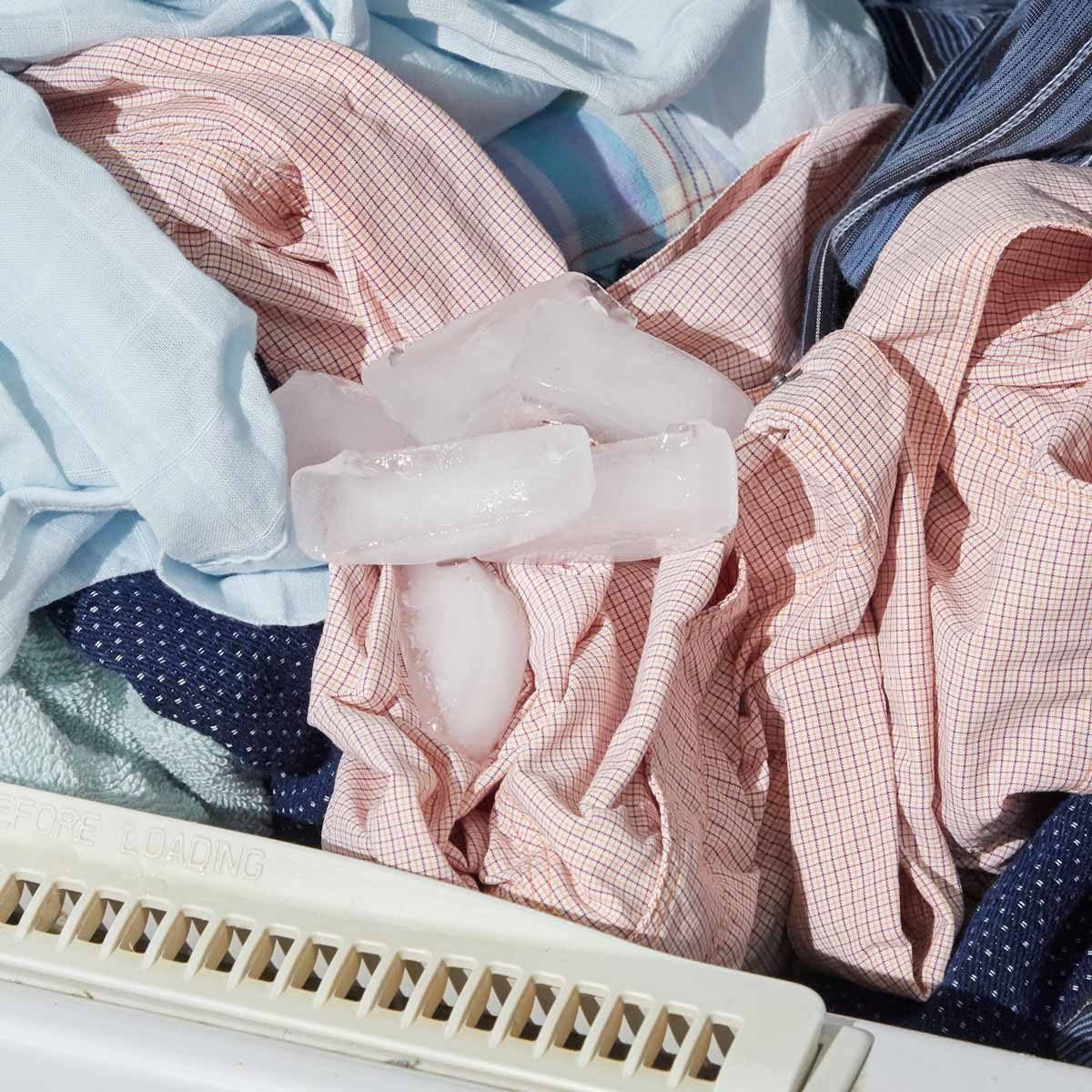
Ice cubes can melt and create moisture in a warm dryer, but a damp washcloth provides more predictable moisture and is less likely to produce an enthusiastic clunking soundtrack.
Very High Heat
More heat is not automatically better. Excessive temperatures may shrink cotton, weaken elastic, damage synthetic fabric, or set certain stains. Use the lowest effective temperature permitted by the care label.
Quick Wrinkle Solutions for Common Situations
You Need One Shirt Before Work
Place the shirt and a damp washcloth in the dryer for five to ten minutes on an appropriate setting. Remove the shirt immediately, smooth the collar and button placket, and put it on a hanger while you finish getting ready.
You Forgot an Entire Load Overnight
Do not rerun a full drying cycle. Separate the garments into smaller groups and use a steam-refresh or short damp-towel cycle. Hang wrinkle-prone items after each batch.
Your Clothes Wrinkled in a Suitcase
Hang garments as soon as you arrive. Use a travel steamer or wrinkle-release spray for visible creases. Rolling casual clothing when packing can also reduce hard fold lines and save suitcase space.
Your Bedsheets Look Crumpled
Dry sheets without crowding them among towels and heavy clothing. Remove them while slightly warm or barely damp, smooth them by hand, and place them directly on the bed. The mattress becomes the world’s largest folding board, minus the folding.
Frequently Asked Questions
Can a dryer remove every wrinkle?
No. A dryer is excellent for light and moderate wrinkles, especially when moisture, heat, and tumbling are combined. Deep creases in linen, thick cotton, uniforms, and formal clothing may still require a steamer or iron.
Is a steamer easier than an iron?
For quick touch-ups, delicate garments, dresses, and clothing with pleats or difficult shapes, a steamer is often easier because the garment can remain on a hanger. An iron is better when you need crisp collars, sharp trouser creases, or a highly polished finish.
Will wrinkle guard dry wet clothes?
Wrinkle-guard features are generally designed to keep already-dried clothing moving after the main cycle. They are not substitutes for a complete drying cycle. Feature names and operation vary, so consult the appliance manual.
Can I use a steam cycle on delicate clothing?
Only when the care label and appliance instructions permit it. Steam is gentler than pressing a hot soleplate directly onto many fabrics, but heat and moisture can still affect structured garments, dyes, finishes, and delicate fibers.
What does “zero effort” really mean?
It means shifting the work to your appliances and routine. You may still press a button, shake a shirt, or place clothing on a hanger. The goal is to eliminate lengthy ironing sessions, not to train your laundry to fold itself while discussing your weekend plans.
Real-Life Experiences: What Actually Made Laundry Easier
My biggest wrinkle problem was never a lack of equipment. I owned an iron, an ironing board, and enough good intentions to open a small dry-cleaning business. The problem was that I disliked taking everything out, waiting for the iron to heat, and carefully pressing clothes I was going to wrinkle again by sitting in a car.
The first change that made a noticeable difference was reducing the size of my dryer loads. I used to move an entire washer load directly into the dryer, even when it included towels, jeans, T-shirts, and dress shirts. The clothes technically became dry, but lightweight pieces emerged looking as if they had spent the cycle underneath a stack of dictionaries.
Once I began separating heavy items from shirts and lighter clothing, the difference was immediate. The shirts had room to tumble instead of being wrapped around wet jeans. Drying also became more consistent, so I stopped adding another 30 minutes just because one towel was still damp.
The second breakthrough was embarrassingly simple: I placed hangers beside the dryer. Previously, hanging shirts required carrying them upstairs, finding empty hangers, and making room in the closet. That minor inconvenience was enough to convince my brain that throwing everything into a basket was a perfectly acceptable long-term storage system.
With hangers within arm’s reach, I began hanging shirts directly from the dryer. I would smooth the collar, pull the sleeves straight, and fasten the top button. The process took less than a minute, and many shirts no longer needed additional treatment.
I also tested the damp-washcloth method after forgetting a load overnight. The dryer contained a cold, compact pile with wrinkles deep enough to deserve their own ZIP codes. I removed two shirts and a pair of casual pants, added a clean damp washcloth, and ran a short cycle.
The result was not equivalent to professional pressing, but it was more than good enough for ordinary work clothes. The key was removing the garments immediately. During an earlier attempt, I refreshed a shirt and then left it in the machine while answering email. It cooled into a new shape, proving that the dryer can provide a second chance but not unlimited forgiveness.
A steam-refresh cycle became my favorite tool for lightly worn clothing. A jacket or shirt that had spent a day hanging over a chair could be refreshed without a complete wash. I learned to use the feature for only a few garments at a time. Stuffing the drum reduced the effect because the clothing could not move freely.
Travel produced another useful lesson. I once packed dress shirts with sharp rectangular folds and was surprised when they arrived with sharp rectangular creases. Rolling casual items worked better, while dress shirts benefited from loose folding and immediate unpacking. A small wrinkle-release spray handled minor problem areas without turning the hotel room into an ironing studio.
The most effective routine was eventually the least dramatic one: wash similar fabric weights together, avoid filling the dryer completely, use an automatic cycle, enable extended tumbling, and hang wrinkle-prone clothing while warm. No single step felt revolutionary. Together, however, they reduced ironing from a weekly obligation to an occasional response to formal clothing and particularly stubborn linen.
The experience taught me that easier laundry is usually the result of better timing rather than greater effort. Wrinkles are most manageable before they cool and settle. Catch clothing at that stage, and your dryer does most of the work. Miss it, and you may find yourself negotiating with a crumpled shirt at 7:45 on Monday morning.
Conclusion: Smooth Clothes Without the Ironing Marathon
Getting wrinkles out of laundry with almost zero effort is less about removing creases and more about preventing them from setting. Give garments room in the washer and dryer, separate heavy fabrics from lightweight clothes, select automatic or permanent-press cycles, and use steam-refresh or extended-tumble features when available.
Most importantly, remove clothing while it is still warm. Hang wrinkle-prone garments, smooth obvious folds with your hands, and let gravity finish the job. For a forgotten shirt or cold dryer load, a brief cycle with a damp washcloth can provide a quick second chance.
You may still need an iron for formal shirts, crisp creases, and determined linen. For everyday laundry, however, a smarter routine can keep the ironing board folded, the clothes presentable, and your free time safely protected from unnecessary encounters with hot metal.