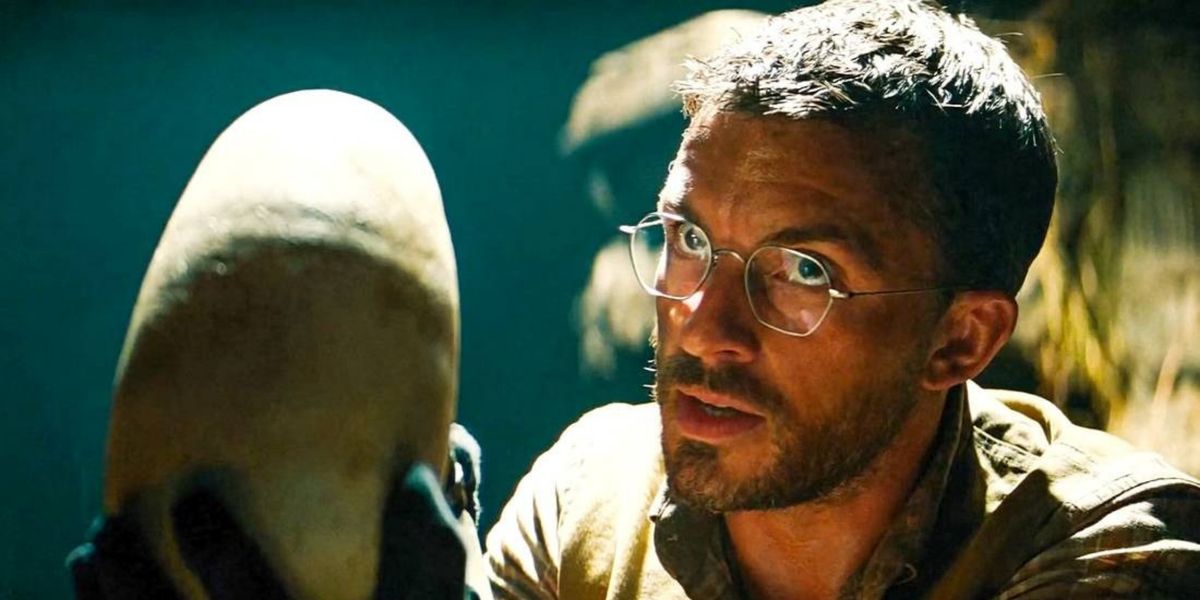
Gareth Edwards on Spielberg’s Jurassic World Rebirth change is the kind of behind-the-scenes story movie fans love: a director enters a legendary franchise, pays tribute to the master who inspired him, then gets gently reminded by that same master that nostalgia is a seasoning, not the entire soup.
The change in question was not about replacing a dinosaur, recasting a hero, or giving a velociraptor a podcast. It was about tone. Edwards, who directed Jurassic World Rebirth, originally leaned heavily into Easter eggs, callbacks, and homages to Steven Spielberg’s earlier work, especially Jurassic Park and Jaws. Spielberg, serving as executive producer, reportedly wanted many of those references reduced. The result became a fascinating creative tug-of-war between fan love and franchise freshness.
And honestly, that tension is exactly what makes the story interesting. A new Jurassic movie has to do two very different things at once: honor the original 1993 classic and prove it is not just wearing its older sibling’s fossil-print hoodie. Edwards understood the first job. Spielberg pushed him toward the second.
What Was Spielberg’s Big Change in Jurassic World Rebirth?
The major Spielberg-requested change was to scale back the visible homages and Easter eggs in Jurassic World Rebirth. Edwards has said that his first cut included a large number of nods to earlier Jurassic Park movies and Spielberg classics. After Spielberg and screenwriter David Koepp saw the cut, they encouraged him to remove many of those references.
That note makes sense when you think about Spielberg’s position. He was not simply another executive producer protecting a brand logo. He was the filmmaker who gave cinema one of its most famous “welcome to the park” moments. To Edwards, references to Spielberg’s films were affectionate love letters. To Spielberg, they may have risked making the new movie feel like it was circling the same enclosure instead of finding new territory.
Edwards did remove many of the callbacks, but the process did not end there. Test audiences later wanted more affection for the original Jurassic spirit, so some references came back. The final version landed somewhere in the middle: enough nostalgia to make longtime fans grin, not so much that the film became a two-hour game of “Spot the Spielberg.”
Why Gareth Edwards Wanted So Many Spielberg Homages
For Edwards, the affection was personal. He has often described Spielberg as one of the central reasons he became a filmmaker. That background matters because Jurassic World Rebirth was not just another studio assignment for him. It was a chance to step into a cinematic playground built by one of his heroes.
Edwards had already handled giant-scale genre filmmaking before Rebirth. He directed Godzilla, brought a grounded war-movie texture to Rogue One: A Star Wars Story, and explored human emotion inside large-scale science fiction with The Creator. Still, Jurassic is a different beast. It is not merely about big creatures. It is about wonder, fear, corporate arrogance, scientific temptation, and the moment when humans realize they are not at the top of the food chain after all. Dinner plans change quickly when dinner has teeth.
Because Spielberg’s fingerprints are all over that formula, Edwards naturally reached for visual and tonal echoes of the original. A boat sequence could evoke Jaws. A jungle reveal could carry the awe of Jurassic Park. A suspenseful pause before a creature attack could feel like classic Spielberg: let the audience hear the danger before seeing it, then let imagination do a little unpaid overtime.
The Balance Between Nostalgia and a New Beginning
Jurassic World Rebirth was designed as a fresh chapter for the franchise. Written by David Koepp, who co-wrote the original Jurassic Park screenplay and wrote The Lost World: Jurassic Park, the movie steps away from the main characters of the previous Jurassic World trilogy. Instead, it introduces a new group led by Zora Bennett, played by Scarlett Johansson, alongside characters played by Mahershala Ali and Jonathan Bailey.
That clean-slate approach is important. After several films expanded dinosaurs into a global problem, Rebirth returns the story to a more focused adventure structure. The film follows a dangerous mission connected to dinosaur DNA, corporate ambition, and a remote environment where nature is very much not interested in human scheduling.
Spielberg’s note about reducing callbacks fits that broader strategy. If a movie is supposed to be a rebirth, it cannot spend all its time staring at baby photos. Nostalgia can invite audiences back into the world, but originality keeps them there. The best legacy sequels know when to ring the old bell and when to build a new door.
David Koepp’s Role in the Creative Reset
David Koepp’s return gave Jurassic World Rebirth a direct line to the DNA of the original franchise. That does not mean the film simply repeats 1993. Koepp’s writing has always worked best when big ideas are placed inside tight, practical problems: get off the island, survive the storm, reach the boat, avoid becoming a snack with shoes.
In Rebirth, that compact adventure style helps the movie feel less like a mythology lecture and more like a survival ride. The characters are not spending the entire film explaining franchise continuity on a whiteboard. They have goals, threats, and a ticking sense of danger. This is where Koepp and Edwards seem well matched. Koepp brings structure; Edwards brings scale and visual texture.
The Spielberg change also shows the value of having original creative voices involved without allowing the film to become trapped by the past. Koepp and Spielberg knew the danger of too many self-references. Edwards knew the audience still wanted emotional connection to the original. The final balance came from that creative friction.
How the Easter Eggs Still Survived
Although many references were removed, Jurassic World Rebirth did not become a completely nostalgia-free zone. Several callbacks remained in subtler form. That is usually the smarter way to handle franchise Easter eggs. The audience should not feel like the movie is pausing every three minutes to wink so hard it sprains an eyelid.
Some references connect to the visual language of Jurassic Park: jungle suspense, humans dwarfed by prehistoric scale, and the familiar mix of awe and dread. Others echo Spielberg’s broader adventure style, including water-based tension that naturally reminds viewers of Jaws. The difference is that these nods are folded into the movie’s design rather than held up like collector’s items in a glass case.
This approach is healthier for the franchise. A callback works best when it rewards longtime fans without confusing new viewers. A teenager watching Jurassic World Rebirth as their first dinosaur movie should still understand the story. A fan who has rewatched Jurassic Park enough times to recognize the sound of a goat getting nervous should get a few extra treats.
Thailand Changed the Movie, Too
Spielberg’s Easter-egg note was not the only major creative adjustment. Edwards has also discussed how filming in Thailand changed scenes from the script. Instead of forcing every planned moment into a pre-decided shape, the production allowed real landscapes to influence the action.
That matters because Jurassic movies depend on believable environments. If the jungle feels fake, the dinosaurs feel fake. If the mud, water, trees, rocks, humidity, and awkward human panic feel real, the digital creatures have a world to inhabit. Edwards has long favored a grounded, documentary-like approach to large-scale science fiction. Thailand’s rivers, mangroves, and dense landscapes gave Rebirth a more tactile setting than a purely stage-bound production could provide.
One reported example involved changing a scene from a hill ledge to a mangrove swamp after the team found a more exciting location. That kind of adjustment reveals Edwards’ practical instincts. Instead of treating the script like a museum artifact, he treated it like a living map. If the real world offered a scarier, stranger, more cinematic option, the movie followed it.
Why Real Locations Matter in a Dinosaur Movie
There is a simple rule in effects-heavy filmmaking: the more impossible your creature is, the more believable everything around it needs to be. A dinosaur can be computer-generated, but the rain on a character’s face, the wet leaves under their boots, and the panic in their body language should feel physically present.
Edwards’ preference for real locations and filmic texture helps explain why Jurassic World Rebirth aims to feel like an adventure discovered in the wild rather than assembled entirely on a hard drive. That is also why the Spielberg comparison matters. The original Jurassic Park worked not only because the dinosaurs looked revolutionary, but because the movie treated them as part of a physical world. The glass of water rippled. The fence failed. The rain poured. The humans looked magnificently underqualified.
Rebirth tries to recover some of that grounded danger. It brings the franchise back toward suspense, atmosphere, and survival mechanics. The creatures may be bigger and stranger, but the emotional engine is old-school: people go somewhere they should not go, science has once again overestimated its ability to manage chaos, and nature responds with a very firm customer-service complaint.
The New Dinosaurs and the Horror Edge
Jurassic World Rebirth also introduces genetically altered creatures, including the Distortus rex and Mutadon. These designs push the franchise into more monstrous territory while still connecting to the long-running theme of human interference. The dinosaurs are frightening not simply because they are predators, but because they represent bad ideas with funding.
That distinction is important. The original Jurassic Park treated dinosaurs as animals. They were dangerous, but they were not villains. Later franchise entries experimented more openly with hybrid creatures, and Rebirth continues that thread by making mutation and experimentation part of the horror. It is not just “what if dinosaurs came back?” It is “what if people brought them back, then kept tinkering because apparently nobody in this universe has seen a consequences chart?”
Edwards’ background in creature spectacle helps here. His Godzilla understood scale. Rogue One understood pressure and sacrifice. The Creator showed his interest in blending technological wonder with human feeling. Jurassic World Rebirth gives him a chance to combine all three: giant creatures, mission-driven suspense, and characters who must keep moving even when the world around them is roaring.
What the Spielberg Change Says About Legacy Sequels
The story of Spielberg asking Edwards to reduce homages is bigger than one movie. It speaks to the challenge facing almost every legacy franchise. Modern audiences enjoy nostalgia, but they also recognize when it becomes a crutch. A familiar theme song can create goosebumps. A familiar shot can create applause. Too many familiar things, however, can make a film feel like a premium-priced memory tour.
The best legacy sequels do not worship the original; they understand it. They ask why it worked. In Jurassic Park, the answer was not just dinosaurs. It was pacing, character contrast, suspense, awe, and the deliciously bad decision-making of people who thought an island full of resurrected predators needed a gift shop.
Spielberg’s note seems to have pushed Rebirth closer to that philosophy. Instead of copying the surface of the original, the film had to chase its feeling. That is harder. It is also more valuable.
Audience Reaction and Box Office Impact
Whatever debates surrounded its callbacks, Jurassic World Rebirth arrived as a major summer release and opened strongly at the global box office. The film’s first five days brought in hundreds of millions worldwide, showing that audiences still have a healthy appetite for dinosaurs, especially when the adventure promises a fresh cast and a return to dangerous terrain.
That response suggests the franchise still has power when it offers a clear hook. Rebirth was not marketed as another chapter in the Chris Pratt and Bryce Dallas Howard storyline. It was positioned as a new mission, a new cast, and a new chance to rediscover the danger and wonder of the series. The Spielberg change supported that positioning by keeping the film from leaning too heavily on old references.
Of course, box office success does not automatically settle every creative debate. Some fans will always want more direct callbacks. Others prefer a cleaner break. But the conversation itself shows that Jurassic remains culturally alive. People still care about how these movies handle awe, fear, science, and the sacred cinematic art of running from something with enormous teeth.
500-Word Experience Section: What This Change Feels Like for Fans and Filmmakers
For longtime fans, Gareth Edwards on Spielberg’s Jurassic World Rebirth change feels surprisingly relatable. Anyone who has ever created something inspired by a favorite artist knows the problem. You want to honor the thing that changed your life, but you do not want your work to become a scrapbook. That balance is tricky. It is even trickier when the artist you admire is standing nearby with notes.
Watching a legacy sequel can feel like visiting a childhood neighborhood after years away. You want the old landmarks to still be there. You want the gate, the music, the jungle, the suspense, the feeling that something impossible is about to step out from behind the trees. But you also want new streets, new stories, and new reasons to stay. If everything is exactly the same, the magic can start to feel preserved rather than alive.
That is why Spielberg’s note matters. From a fan experience perspective, it protects the movie from becoming overloaded with references. The first few Easter eggs create delight. The tenth can start to feel like homework. Viewers should not need a franchise encyclopedia open in another tab to enjoy a dinosaur chase. The emotional basics should still work: danger, wonder, humor, character, and spectacle.
From a filmmaker’s perspective, Edwards’ situation is both a dream and a nightmare wearing the same safari vest. Imagine being invited to direct a Jurassic movie by Steven Spielberg. That is like being asked to cook dinner for the person who invented your favorite meal. Naturally, you might use the classic ingredients. Then the inventor says, “Nice, but maybe stop copying the old recipe.” That note could sting, but it could also save the dish.
The best lesson from this experience is that creative feedback is not always a rejection of passion. Spielberg was not telling Edwards to love Jurassic Park less. He was pushing him to make Jurassic World Rebirth stand on its own. Edwards, meanwhile, was not wrong to want the film to feel connected to the original. His fan perspective helped preserve the emotional warmth audiences expect from the franchise.
For writers, directors, and content creators, this is a useful case study. References should serve the story, not decorate it like stickers on a laptop. If a callback deepens emotion, builds atmosphere, or sharpens theme, keep it. If it only says, “Remember this?” maybe let it go. The audience probably does remember. That is why they bought the ticket.
For moviegoers, the Spielberg change creates a better viewing experience because it leaves room for discovery. The film can still remind fans of Jurassic Park without being trapped inside it. The dinosaurs can still roar in familiar ways, but the adventure has room to breathe, sweat, splash through mangroves, and surprise people. In a franchise built on resurrecting the past, that may be the smartest kind of rebirth.
Conclusion: A Smart Change for a Franchise Built on Old DNA
Gareth Edwards’ comments about Spielberg’s Jurassic World Rebirth change reveal a thoughtful creative process behind the blockbuster machinery. The movie needed nostalgia, but not too much. It needed Spielberg’s influence, but not a museum tour of Spielberg references. It needed to respect the original while proving that the franchise could still evolve.
That is the real story behind the change. Spielberg helped Edwards trim the obvious callbacks so Rebirth could become more than a fan tribute. Edwards helped keep enough affection in the film so it still felt connected to the awe that made Jurassic Park unforgettable. Somewhere between those instincts, the movie found its balance.
In the end, the lesson is simple: life finds a way, but good editing finds a better one.