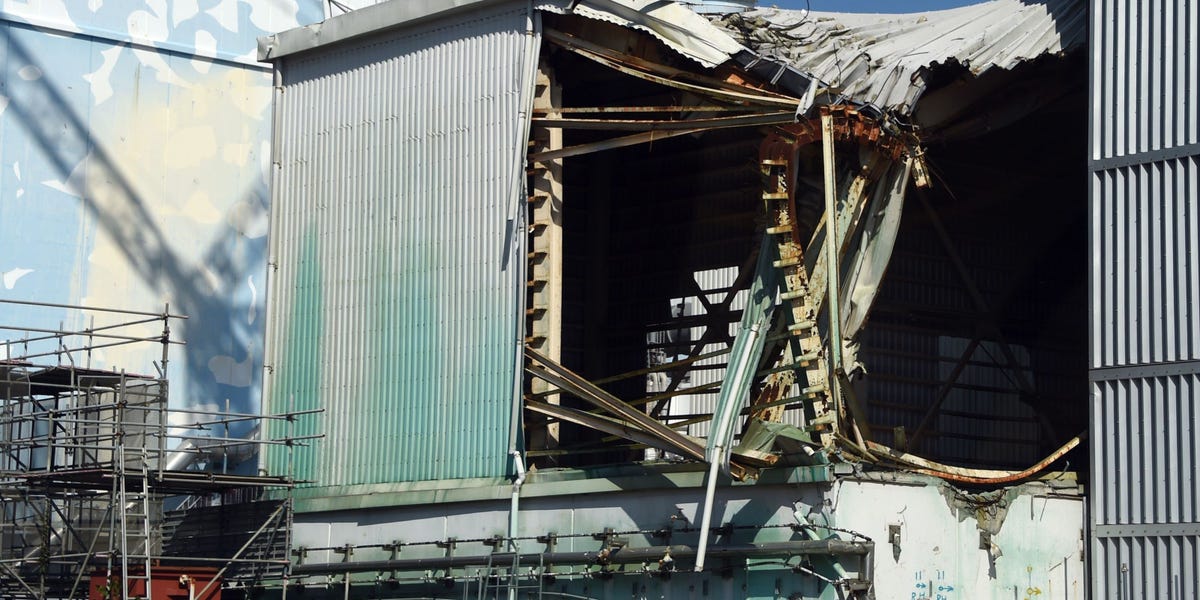
Imagine building a robot tough enough to crawl into a shattered nuclear reactor, only for the place to look at your engineering masterpiece and say, “Cute.” That, in a nutshell, is one of the strangest and most sobering stories from the Fukushima Daiichi cleanup. More than a decade after the March 11, 2011 earthquake and tsunami knocked out cooling systems and triggered meltdowns in Units 1, 2, and 3, the plant remains one of the most complex decommissioning sites on Earth. The radiation is so intense in some interior zones that humans cannot safely enter, and even specialized robots have stalled, lost cameras, fried electronics, or simply failed to come back with the data engineers needed.
The headline sounds like science fiction: Fukushima’s radiation is killing robots. But the reality is both more technical and more unsettling. Radiation does not “kill” a robot like a movie villain with a laser pointer. It damages sensors, corrupts electronics, darkens camera lenses, weakens cables, interferes with communication, and exposes every design flaw in machines that must operate in darkness, water, debris, and maze-like wreckage. In other words, Fukushima is not just a nuclear cleanup project. It is a brutal final exam for robotics.
What Happened at Fukushima Daiichi?
On March 11, 2011, a massive offshore earthquake and tsunami struck northeastern Japan. At Fukushima Daiichi, the tsunami disabled critical cooling systems. Without enough cooling, fuel in three reactors overheated and melted. The result was not one tidy disaster scene, but three different damaged reactors, each with its own hidden geometry, debris field, radiation profile, and unanswered questions. AP reported in 2026 that the three damaged reactors still contain at least 880 tons of melted fuel debris, with radiation levels still dangerously high.
That fuel debris is the heart of the problem. It is not neatly stacked fuel rods waiting politely for removal. It is a mixture of melted nuclear fuel, structural materials, concrete-like deposits, metal fragments, and other material that cooled into strange shapes in places workers cannot easily see. Engineers need to know where it is, what it looks like, how radioactive it is, and how it can be removed without making the situation worse. Small detail, big headache.
Why Robots Became the Cleanup Crew
Humans can work in some areas of the Fukushima site with protective clothing, strict time limits, and careful monitoring. But the inner containment areas are another story. Radiation can reach levels that make direct human entry impossible. That is why robots became essential. They are the eyes, hands, flashlights, scouts, swimmers, crawlers, and unlucky interns of the decommissioning effort.
Robots have been sent to climb stairs, crawl through narrow openings, map radiation, photograph damage, swim through water-filled spaces, and prepare paths for more advanced probes. Wired described Fukushima as “no job for humans,” noting that debris, thick concrete walls, blocked signals, radiation-damaged microprocessors, and camera failures all complicated robotic missions.
The Robots That Went Inand Did Not Always Come Out Smiling
The Early Scout Robots
In the first years after the accident, robots were deployed to survey damaged reactor buildings and measure radiation. Some were adapted from disaster-response or military-style systems, while others were designed specifically for nuclear work. The challenge was that Fukushima did not come with a user manual. Staircases were damaged, debris blocked paths, water filled areas that were not supposed to be swimming pools, and radiation levels could vary sharply from one location to another.
Reuters reported in 2016 that robots sent in to find highly radioactive fuel had “died,” a phrase that became famous because it captured the weirdness of the situation: machines built to protect humans were themselves being defeated by the environment.
The Scorpion Robot
One of the best-known Fukushima robots was the scorpion-shaped probe designed for Unit 2. Its camera-mounted “tail” was meant to help it inspect the area below the reactor pressure vessel. Before that mission, TEPCO used another remote-controlled device to clear a route and collect images. During that work, TEPCO reported radiation as high as 650 sieverts per hour inside the Unit 2 primary containment vessel. That is an astonishing number and a reminder that “high radiation” is not just a dramatic phrase here.
The scorpion robot’s mission ultimately struggled. The machine encountered obstacles and did not deliver the smooth, heroic robot adventure one might expect from a glossy tech demo. Fukushima does not care about glossy demos. It is a place where a robot can be smart, expensive, custom-built, and still get humbled by a chunk of debris sitting in exactly the wrong place.
Little Sunfish
Then came “Little Sunfish,” a small underwater robot developed to explore flooded spaces in Unit 3. It was designed to operate in darkness, intense radiation, and water, equipped with cameras, lights, propellers, and sensors. Wired reported that the robot was created to search for and photograph melted radioactive fuel that had been missing inside Fukushima Daiichi.
Little Sunfish showed that robots could still make progress where earlier attempts struggled. It did not magically solve Fukushima, but it helped engineers understand the interior environment. That is often how Fukushima cleanup advances: not in Hollywood-style breakthroughs, but in small slices of information gathered by machines that have to survive long enough to phone home.
How Radiation Damages Robots
Radiation is a sneaky enemy for electronics. It can create single-event effects, where particles disrupt the state of electronic components, and total ionizing dose effects, where accumulated radiation gradually degrades materials and circuits. NASA explains that radiation effects on electronics include single-event effects and total ionizing dose, both major concerns for systems that must operate in harsh environments.
Inside Fukushima, that matters because robots rely on microchips, cameras, cables, motors, sensors, lights, and communication systems. A robot may still have wheels, treads, or propellers, but if its camera goes blind or its controller starts misbehaving, it becomes a very expensive paperweight in a place where nobody wants to go retrieve paperweights.
Radiation can also affect camera sensors, causing image noise or failure. It can damage insulation in cables. It can corrupt memory. It can shorten the life of components that would work perfectly fine in a warehouse, school lab, or your uncle’s garage next to the suspicious pile of “spare parts.” Fukushima requires robots that are not just mobile, but radiation-hardened, waterproof, remotely operated, compact, and able to navigate unknown terrain. That is a brutal shopping list.
Why Fukushima Is So Hard for Robotics
Unknown Terrain
Robots perform best when engineers understand the environment. Fukushima’s interior areas are partly unknown. Pipes may be broken, platforms may be missing, and debris may block routes that looked possible on old drawings. A robot can be designed for a reactor’s original layout, only to discover that the actual post-meltdown layout has been rearranged by heat, explosions, water, and gravity. Very inconsiderate of physics.
Communication Problems
Wireless communication struggles through thick concrete, steel, water, and complicated plant structures. Many robots need cables for power, control, or data. But cables can snag, drag, twist, or limit movement. In tight spaces, a cable is not just a lifeline. It is also a leash, a trip hazard, and occasionally the robot equivalent of stepping on your own shoelace.
Water, Darkness, and Debris
Some Fukushima robots must operate underwater. Others must crawl through narrow pipes or openings. Many need bright lights because the interior is dark. But lights and cameras generate heat, consume power, and can fail under radiation. Add cloudy water, sediment, broken metal, and tight access points, and suddenly the phrase “send in a robot” sounds less like a solution and more like the beginning of a very expensive experiment.
Progress Is Happening, But Slowly
Despite all the failures, the robot story at Fukushima is not only about defeat. It is also about persistence. In 2024, AP reported that a remote-controlled robot successfully retrieved a tiny piece of melted fuel from inside one of Fukushima’s damaged reactors for the first time since the 2011 meltdown. The sample was only about 5 millimeters, but symbolically, it was huge. It meant engineers had finally touched and collected a bit of the material that future decommissioning plans must deal with.
IEEE Spectrum also reported on the use of a 22-meter, 4.6-ton robotic arm designed to extend into the failed reactor and extract a fuel sample for analysis. The scale of that machine says a lot: this is not a Roomba with a flashlight taped to it. This is precision engineering under conditions where one wrong move can jam equipment, lose visibility, or delay planning for months.
The 2026 Drone Mission: A New Look Inside Unit 3
In 2026, tiny drones provided another important glimpse inside Unit 3. AP reported that micro-drones measuring just 12 by 13 centimeters and weighing only 95 grams captured footage showing a hole in the bottom of the pressure vessel and likely melted fuel debris hanging in formations described as brown and gray objects. The drones also gathered radiation measurements and data for three-dimensional mapping.
This kind of mission matters because decommissioning depends on knowledge. Engineers cannot remove what they cannot locate. They cannot design tools for conditions they cannot measure. Every image, radiation reading, and 3D map helps turn Fukushima from a mystery box into a complicated engineering problem. Still a nightmare, yesbut at least a nightmare with diagrams.
Is Fukushima Still Dangerous?
Fukushima remains dangerous inside the damaged reactor areas. That is why robots and remote-controlled equipment are so important. But it is also important not to confuse danger inside the containment zones with danger everywhere on Earth. For example, the U.S. Environmental Protection Agency reported that its RadNet system detected nothing unusual in the first week after the accident and later detected very low levels of iodine-131 in Hawaii. The EPA monitored air, precipitation, drinking water, and milk as part of its response.
So yes, parts of Fukushima Daiichi are extremely hazardous. No, that does not mean the entire Pacific Ocean is glowing like a discount Halloween decoration. Good science requires both concern and proportion. The reactor interiors are severe environments; the broader public discussion should be careful, evidence-based, and allergic to panic.
What Fukushima Teaches About Nuclear Cleanup
The Fukushima cleanup is teaching engineers that nuclear decommissioning after a severe accident is not just about radiation shielding. It is about robotics, materials science, remote operations, radiation-resistant electronics, underwater navigation, 3D mapping, and human decision-making under uncertainty. The machines must be tough, but the planning must be tougher.
It also teaches humility. Before Fukushima, a robot might look impressive in a laboratory test tank. Inside a damaged reactor, the same robot faces the engineering version of an obstacle course designed by a committee of earthquakes, tsunamis, melted fuel, broken steel, darkness, and invisible radiation. Passing that course requires repeated testing, failure, redesign, and patience.
Why the Phrase “Killing Robots” Matters
Calling the radiation “so bad it is killing robots” is dramatic, but it points to a real engineering problem. Robots are supposed to go where people cannot. When even robots fail, the public gets a clearer picture of the severity of the environment. The phrase also makes radiation less abstract. A sievert-per-hour number can feel distant. A dead robot stuck inside a reactor is easier to understand.
Still, the phrase should not be used as clickbait without context. Fukushima is not a monster movie. It is a long, technical cleanup operation where every robot failure provides useful information. If a camera fails, engineers learn about radiation tolerance. If a crawler gets stuck, they learn about debris. If a drone succeeds, they gain data for the next mission. At Fukushima, even failure has homework attached.
Conclusion: The Cleanup Is a Marathon With Robot Shoes
Fukushima Daiichi remains one of the world’s most difficult decommissioning projects because its most important areas are also the hardest to reach. The radiation can damage machines. The debris can trap them. The water can hide obstacles. The structures can block signals. Yet robots remain the best path forward because they can enter spaces that would be far too dangerous for humans.
The story of Fukushima’s robot-killing radiation is not only about disaster. It is about the limits of technologyand the stubbornness of engineers who keep improving it anyway. Each robot that fails, maps, swims, crawls, photographs, or retrieves a tiny sample moves the cleanup one step closer to reality. It may take decades. It may demand new machines that do not exist yet. But the lesson is clear: when humans cannot safely enter the hot zone, robots become more than tools. They become explorers in one of the harshest workplaces on the planet.
Experience Notes: What This Story Feels Like From the Human Side
Reading about Fukushima’s robots is a strange experience because it turns a highly technical cleanup into something almost personal. A robot enters the reactor, and suddenly people start rooting for it. It has no feelings, no lunch break, no tiny robot family waiting at home, and yet when it stalls or loses its camera, the news feels oddly sad. That is because the robot represents human hope. It is the brave little machine sent into the place we cannot go.
For anyone who has worked with technology, even on a much smaller scale, the Fukushima missions are painfully relatable. A laptop freezes during a presentation, a drone loses signal behind a tree, a phone battery dies at 2%, and we complain like civilization is collapsing. Now imagine depending on electronics inside a damaged nuclear reactor where radiation is attacking circuits, visibility is poor, the path is unknown, and retrieval may be impossible. Suddenly, your printer jam seems less dramatic. Still annoying, absolutely, but less dramatic.
The experience also changes how people think about robots. Popular culture often presents robots as nearly invincible. They are metal, so they must be tough, right? Fukushima shows the opposite. Modern robots are often delicate systems wrapped in durable shells. Their bodies may be metal, but their brains are electronics, and electronics do not enjoy being blasted by ionizing radiation. A robot can look rugged and still be vulnerable in ways that are invisible until the mission begins.
There is also a lesson in patience. Many people expect disaster recovery to follow a simple pattern: accident, response, cleanup, done. Fukushima does not fit that pattern. More than a decade later, engineers are still gathering basic information from inside the reactors. That can feel frustrating, but it is also realistic. You cannot rush into a high-radiation environment with guesswork and optimism. Optimism is nice, but it is not a radiation shield.
From a communication perspective, Fukushima is a reminder that the public needs clear explanations, not just numbers. Saying “650 sieverts per hour” is accurate, but many readers do not instantly understand what that means. Saying “radiation levels can disable robots in hours” gives the number emotional weight without needing to exaggerate. Good science writing should do both: respect the data and translate it into human terms.
Finally, Fukushima’s robot missions show how progress often looks unimpressive from the outside. A tiny fuel sample. A blurry image. A few minutes of drone footage. A 3D map of a damaged space. These may not sound like blockbuster achievements, but they are the building blocks of safe decommissioning. In a place where one wrong assumption can create years of delay, a few reliable facts are worth celebrating. Fukushima is teaching the world that the future of nuclear cleanup may be slow, remote-controlled, cable-managed, radiation-hardened, and occasionally stuck behind a piece of debrisbut still moving forward.
Note: This HTML article is written for web publishing in standard American English, based on publicly reported information from reputable sources and rewritten in an original, reader-friendly SEO style.