There are two kinds of re visible, and those who sweep because they can feel one rogue grain of rice judging them from across the kitchen.
This guide is for the second group. Not because everyone needs a museum-quality floor at all times, but because sweeping properly is one of those small domestic skills that makes a home feel calmer, cleaner, and oddly more under control. You cannot solve every problem in life with a broom, unfortunately. But you can eliminate the dust bunny that has been quietly building a condo beneath the sofa.
Learning how to sweep a floor well is less about frantic arm-waving and more about technique. The right broom, a sensible route through the room, short controlled strokes, and a dustpan that actually touches the floor can turn a ten-minute chore into a surprisingly satisfying ritual. This is domestic science, not domestic punishment.
Why Sweeping a Floor Properly Matters
Sweeping is the first line of defense against the ordinary debris of human existence: crumbs, pet hair, tracked-in grit, dried leaves, cereal fragments, mystery fuzz, and whatever your child or roommate dropped while insisting they “barely made a mess.”
On hard floors, loose grit can act like tiny sandpaper under shoes, socks, chair legs, and the paws of enthusiastic dogs. Regular sweeping helps keep dust and debris from being ground across wood, laminate, vinyl, tile, and other hard surfaces. It also makes later mopping easier because you are not turning dry crumbs into a sad little soup.
For perfectionists, sweeping is not merely about visual cleanliness. It is about restoring order. A clean floor creates a visual reset for a room. The kitchen looks less chaotic. The hallway stops feeling like a public walkway. The living room regains its dignity.
The Perfectionist’s Sweeping Toolkit
You do not need a closet full of gadgets, a professional janitorial cart, or a mop that connects to Wi-Fi. You need a few useful tools that work together.
1. Choose the Right Broom
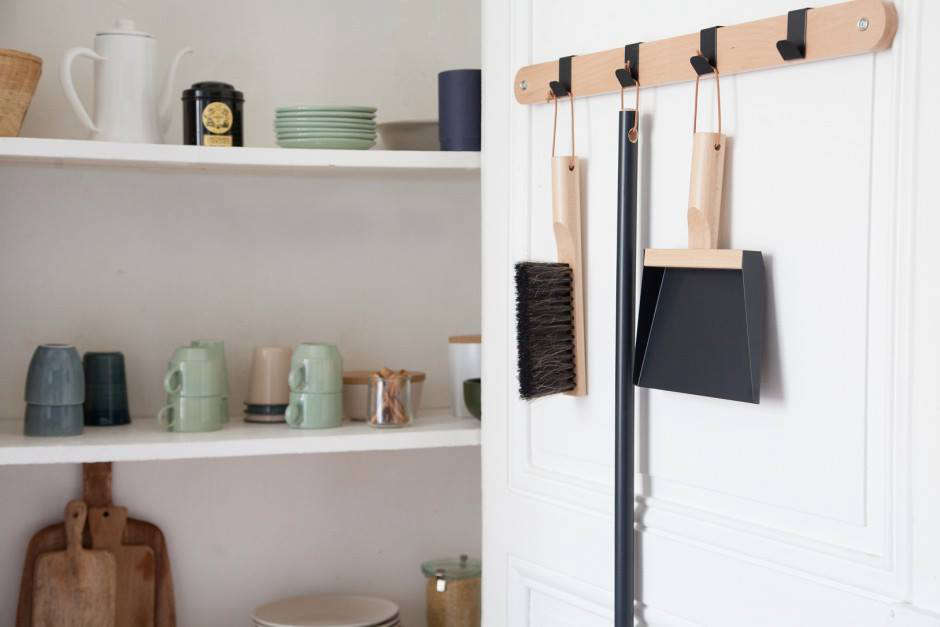
For everyday indoor sweeping, an angled broom with soft or medium synthetic bristles is usually the best option. The angled edge helps reach corners, baseboards, and the awkward zone behind furniture where dust enjoys a long retirement.
Use a softer broom for hardwood, laminate, luxury vinyl plank, and other delicate hard floors. A stiffer broom is more useful for garages, porches, patios, and outdoor spaces where dirt has arrived with a work ethic.
If pet hair is your main enemy, consider a rubber or silicone broom. These can collect hair effectively from hard floors and low-pile rugs, especially when traditional bristles seem to be gathering fur into a tiny animal-shaped sculpture instead of removing it.
2. Use a Dustpan That Does Not Betray You
A dustpan should sit nearly flush with the floor. If there is a visible gap beneath its edge, you will create the classic dustpan problem: a neat pile of debris that refuses to enter the pan and instead forms a second, smaller pile directly underneath it.
A long-handled dustpan can reduce bending, while a handheld dustpan gives you more control for small messes. Either works. The key is making sure the lip is clean and flat against the floor before you sweep debris inside.
3. Keep a Small Handheld Vacuum Nearby
A handheld vacuum is not cheating. It is an advanced finishing tool. Use it for the thin dust line that sometimes remains under the edge of a dustpan, for corners packed with hair, or for fine debris that refuses to cooperate with broom physics.
4. Add a Microfiber Cloth to the Team
A dry microfiber cloth is useful for baseboards, corners, floor vents, and the underside of furniture. Sweeping works best when you remove the dust waiting above the floor before it gets the chance to drift down and undo your entire performance.
How to Sweep a Floor Like You Mean It
Step 1: Clear the Floor Before You Start
Do not sweep around shoes, grocery bags, charging cables, laundry piles, pet toys, and chairs if you can move them easily. Sweeping around obstacles may feel efficient, but it leaves hidden debris behind and gives dust too many places to hide.
Pick up larger items first. Move lightweight chairs. Slide small rugs aside. Check under the dining table. Look beneath the couch. This is usually where you discover a pencil, a hair tie, two crackers, and an object you cannot identify without calling a household meeting.
Step 2: Start at the Far End of the Room
Begin at the point farthest from the doorway or exit. The goal is to sweep debris toward one central collection area while gradually working your way out of the room.
This prevents the classic mistake of cleaning yourself into a corner. There is nothing quite like finishing a beautifully swept floor only to realize you must walk across it to leave.
Step 3: Use Short, Controlled Strokes
Do not swing the broom like you are trying to launch a curling stone across the Olympics. Long, dramatic strokes tend to scatter fine dust and push debris in unpredictable directions.
Instead, use short strokes with the broom angled slightly toward you. Keep the bristles in contact with the floor, but do not press so hard that they bend flat. The broom should guide dirt, not scrape the floor into submission.
Work in small sections. Sweep loose debris into a narrow line, then guide that line into a compact pile. Think of the broom as a shepherd. Your goal is not to terrorize the dust; your goal is to herd it calmly toward its final destination.
Step 4: Sweep Along the Baseboards First
Baseboards are the VIP lounge of household dust. Start by sweeping along the edges of the room, especially near corners, under cabinets, and beside appliances.
Use the angled edge of the broom to pull debris away from walls. Then sweep it toward the center of the room. This is more effective than beginning in the middle, where you may unknowingly push dirt into the perimeter and create more work for yourself later.
Step 5: Create One Main Debris Pile
Perfectionists often make too many piles. One pile near the doorway. One near the table. One beside the pantry. Suddenly the room resembles a tiny archaeological dig.
Choose one final collection point that is easy to reach with a dustpan. Sweep everything toward it. Keeping one controlled pile makes the process faster and prevents loose dust from migrating across an already-clean area.
Step 6: Use the Dustpan With Intention
Place the dustpan flat on the floor. If needed, hold it steady with your foot or hand. Sweep debris in using gentle strokes rather than ramming the pile forward at full speed.
For stubborn fine dust, pull the broom backward slightly before the final sweep into the dustpan. This helps gather small particles into a tighter line. If a thin strip remains under the dustpan lip, use a microfiber cloth or handheld vacuum to finish the job.
The Secret to a Truly Clean Sweep: Inspection
A perfectionist does not simply sweep. A perfectionist inspects.
After you finish, stand near the doorway and look across the floor at a low angle. Light from windows or overhead fixtures often reveals dust, hair, and crumbs that are invisible when you look straight down. This is the moment when the floor tells the truth.
Check high-traffic zones first: in front of the refrigerator, beneath the dining table, near exterior doors, beside pet bowls, around litter boxes, and under desks. These areas collect debris faster than the rest of the room.
Run your hand lightly along the lower edge of the baseboards if you are feeling especially committed. You may find dust there. You may also find inner peace. Results vary.
How to Sweep Different Types of Floors
Hardwood Floors
Use a soft broom, microfiber dust mop, or vacuum designed for hard floors. Avoid aggressive bristles and avoid dragging heavy grit around. Sweep regularly, especially near entrances where sand, soil, and tiny pebbles arrive on shoes.
Tile Floors
Tile can handle more robust sweeping, but grout lines love collecting crumbs and fine dirt. Sweep diagonally across grout lines occasionally to pull debris out of the grooves. A small brush may help in stubborn areas.
Laminate and Vinyl Floors
Use a soft-bristle broom or microfiber dry mop. Keep the floor dry while sweeping, and remove loose grit before damp mopping. The goal is gentle maintenance, not a floor-cleaning battle scene.
Kitchen Floors
Kitchen floors require frequent spot sweeping because they attract crumbs with the enthusiasm of a magnet. Sweep after cooking, baking, feeding pets, or attempting any recipe that involves flour. Flour is not a food ingredient; it is a lifestyle choice that ends up everywhere.
Garage and Outdoor Floors
For garages, patios, sidewalks, and porches, use a push broom with stiffer bristles. Push debris in long strokes toward one collection point. Do not use your nice indoor broom outside unless you enjoy bringing outdoor grit back into the house later.
Common Sweeping Mistakes Perfectionists Should Avoid
Sweeping Too Fast
Fast sweeping often sends dust into the air and pushes debris under furniture. Slow down. The goal is not cardio. The goal is removal.
Using a Dirty Broom
A broom packed with hair, lint, and sticky crumbs cannot sweep effectively. Pull out visible debris after each use. Wash the broom head occasionally if it becomes grimy, then allow it to dry completely before storing it.
Ignoring the Dustpan
A dirty dustpan can leave residue on the floor or prevent debris from sliding inside properly. Wipe it out regularly. Your dustpan is not a decorative tray for crumbs. It deserves basic respect.
Forgetting Under Furniture
Dust under furniture does not disappear because you cannot see it. It simply waits. Sometimes for months. Sometimes for the exact moment guests arrive and a toy rolls beneath the couch.
Sweeping Hazardous Materials
Do not casually sweep up broken glass, renovation debris, suspected lead dust, fireplace ash, chemical spills, or other potentially hazardous materials with an ordinary household broom. Use appropriate protective equipment and follow the correct cleanup method for the material involved.
How Often Should You Sweep?
There is no single rule because every household produces chaos at its own speed. A quiet apartment with no pets may need sweeping once or twice a week. A busy kitchen, family home, or pet-friendly space may benefit from daily spot sweeping.
The easiest system is to sweep when you notice visible debris rather than waiting for a giant cleaning day. A two-minute sweep after dinner is easier than a forty-minute crumb expedition on Saturday morning.
For a practical routine, sweep kitchens and entryways several times a week, living areas once or twice a week, and under furniture during regular deep cleaning. Add more frequent passes during shedding season, rainy weather, holiday cooking, or any week when your home appears to be hosting a snack convention.
Conclusion: The Floor Is the Foundation of a Clean Home
Learning how to sweep a floor properly is one of those basic home skills that pays off every day. The method is simple: clear the room, start at the far end, sweep along edges, use short controlled strokes, gather debris into one pile, and finish with a clean dustpan.
The perfectionist’s secret is not sweeping harder. It is sweeping smarter. Respect the corners. Check the baseboards. Keep the broom clean. Never underestimate the emotional power of seeing a clean floor after a long day.
A well-swept floor will not solve your inbox, your laundry mountain, or the mysterious noise coming from the refrigerator. But it will make your home feel more peaceful, more polished, and noticeably less crunchy underfoot.
Perfectionist Experiences: What Sweeping a Floor Teaches You About a Home
There is a particular kind of satisfaction that comes from sweeping a floor properly. It is not the same as the satisfaction of buying something new or finishing a huge project. It is quieter than that. It is the feeling of looking across a room and realizing that the space has stopped fighting you.
At first, sweeping seems like a very basic task. You hold a broom, move dirt into a pile, and throw the pile away. But anyone who has lived with pets, children, roommates, cooking hobbies, muddy shoes, or a fondness for eating crackers on the couch knows that floors have personalities.
The kitchen floor is usually the loudest personality in the house. It collects coffee grounds, toast crumbs, onion skins, pet food, and tiny pieces of packaging that seem to reproduce overnight. Sweep the kitchen after making dinner, and the room immediately feels more civilized. Leave it alone for two days, and the floor begins to look like it hosted a tiny farmers market after closing.
The entryway is another revealing place. A quick sweep there can tell you what kind of week everyone has had. Sand means someone went outside. Leaves mean the weather changed. Small pebbles mean a person walked through the house wearing shoes despite being told not to. A single mysterious screw means someone is probably assembling furniture, fixing something, or accidentally taking apart a household appliance.
Then there is pet hair. Pet hair is not merely debris. It is a long-term relationship. A person may vacuum, sweep, dust, mop, and still find one perfect strand of fur on a freshly folded towel. At some point, you learn to stop treating it as a personal betrayal. You sweep what you can, clean the broom afterward, and accept that your pet is contributing emotionally to the interior design.
Perfectionist sweeping also teaches patience. It is tempting to rush through the room with giant broom strokes, especially when company is coming over in twenty minutes. But that is how dust gets pushed under the sofa, crumbs escape around the dustpan, and one sock gets accidentally swept into a corner where it will live until winter.
The better approach is to slow down just enough to notice the room. Sweep the edges first. Check under chairs. Look behind doors. Make one pile instead of five. The task becomes less annoying when you stop seeing it as proof that the house got messy and start seeing it as a simple reset button.
There is also something unexpectedly grounding about a broom. It has no battery to charge, no app to update, no password to reset, and no notification asking whether you enjoyed your sweeping experience. It is just a tool with one job: move dirt from where it should not be to where it can be removed.
That may be why sweeping remains such a useful domestic skill. It is immediate. You can see the result. You can hear the difference under your feet. And when the floor is clean, the entire room feels a little more ready for whatever happens next.