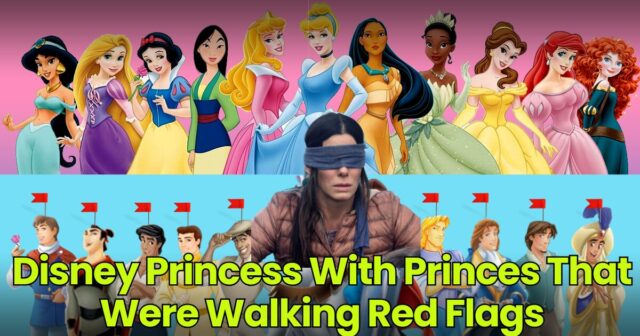
Fairy tales are famous for castles, curses, magical hair, glass slippers, and men who show up with the confidence of someone who has never once had to assemble IKEA furniture. But when we revisit classic Disney Princess romances through modern eyes, some of these princes and love interests look less like perfect dreamboats and more like walking red flags wearing capes.
To be fair, Disney movies were created across many decades, and each reflects the storytelling habits of its time. The early princes often had the emotional depth of a decorative lamp: handsome, heroic, and present mainly when the plot needed a kiss or a horse. Later love interests became more complicated, funnier, and more human. Some learned, apologized, changed, and earned trust. Others? Well, let’s just say the relationship résumé has suspicious gaps.
This article takes a playful but thoughtful look at Disney Princesses with princes who displayed red flag behavior. We are not here to cancel childhood nostalgia. We are here to laugh, analyze, and learn why “he owns a castle” is not automatically a personality.
What Counts as a “Walking Red Flag” in a Disney Romance?
A red flag is a behavior that suggests a relationship might become unhealthy, unsafe, or emotionally exhausting. In real life, warning signs can include controlling behavior, dishonesty, manipulation, rushing intimacy, ignoring boundaries, jealousy, cruelty, or refusing to take responsibility. In Disney terms, it may look like lying about your identity with help from a genie, locking someone in a castle, or building an entire marriage plan around footwear.
Of course, fictional stories exaggerate everything. Nobody expects a real date to defeat a dragon before dinner. Still, fairy tales shape how people talk about romance. That makes them worth revisiting. The goal is not to ruin the magic; it is to update the relationship checklist. Sparkles are great. Mutual respect is better.
Snow White and the Prince: The Original Mystery Man
The Prince from Snow White and the Seven Dwarfs is one of Disney’s earliest romantic figures, and he has the classic old-school prince problem: he barely exists. He appears, sings, disappears, and later returns at exactly the dramatic moment. As fairy-tale machinery, it works. As a modern relationship model, it is thinner than a paper napkin at a royal buffet.
Red flag: Love with almost no communication
Snow White’s prince is not cruel or dishonest. His main issue is that the romance depends almost entirely on instant attraction. We do not see real conversation, shared values, conflict resolution, or emotional compatibility. The movie presents love as destiny, but real relationships need more than a dramatic entrance and excellent cheekbones.
The famous awakening kiss also belongs to an older fairy-tale tradition that modern audiences often question. Today, healthy relationships emphasize boundaries and mutual consent. In that sense, the scene is best understood as a historical storytelling trope, not dating advice. Please do not copy-paste it into real life. That is not romance; that is how you get escorted out of a hospital.
Cinderella and Prince Charming: The Shoe-Based Hiring Process
Prince Charming seems pleasant, polished, and not actively chaotic. Compared with some later princes, he is almost aggressively normal. Still, the plot of Cinderella gives him a strange romantic strategy: meet a woman once, lose her at midnight, then send people around the kingdom to identify her by shoe size.
Red flag: He likes the idea more than the person
Prince Charming is not a villain. But the relationship moves at lightning speed. He knows Cinderella is graceful, kind, and mysterious, but he does not know her everyday life, dreams, stress habits, or whether she steals fries from other people’s plates. These things matter.
The slipper search is iconic, but it also reminds us how many classic Disney romances skipped the “getting to know you” stage. Cinderella deserved safety, dignity, and happiness. She also deserved someone who could recognize her face without needing a footwear investigation. Sir, respectfully, look up.
Aurora and Prince Phillip: Better Prince, Weird Setup
Prince Phillip from Sleeping Beauty is often considered one of the better early Disney princes because he actually takes action. He challenges expectations, fights Maleficent, and helps break the curse. He has courage, commitment, and dramatic horse-riding skills. The man understood the assignment, and the assignment was “dragon.”
Red flag: A romance shaped by other people’s plans
The red flag in Aurora and Phillip’s story is not only Phillip himself. It is the arranged structure around them. Their families plan their future before they can choose it. Phillip later falls for Aurora when he knows her as a mysterious girl in the forest, while Aurora has been raised in isolation and does not fully understand her royal identity.
That makes the romance feel dreamy but also complicated. A healthy relationship needs personal choice, honesty, and room to say yes or no. Phillip is brave and more emotionally present than some early princes, but the whole situation comes wrapped in destiny, secrecy, and parental planning. Beautiful animation? Absolutely. Healthy dating blueprint? Needs revisions.
Ariel and Prince Eric: The Man Who Fell for a Voice
Prince Eric from The Little Mermaid is charming, adventurous, and generally kind. Among Disney princes, he scores pretty well. He does not imprison Ariel, mock her dreams, or demand that she change for him. However, the romance still has one giant complication: Ariel gives up her voice to become human, while Eric spends much of the movie chasing the memory of a mysterious singer.
Red flag: Idealizing someone before knowing them
Eric’s red flag is not cruelty. It is romantic projection. He becomes attached to an idea: the voice, the rescue, the mystery. Meanwhile, Ariel cannot fully explain who she is. The result is a relationship built under magical communication problems, which is a fancy way of saying, “This couple needs a calm conversation and maybe a very patient therapist crab.”
Eric improves because he is open-hearted and ultimately accepts Ariel’s truth. Still, the movie reminds us that attraction should not be based only on fantasy. A real partner is not a dream image, a perfect voice, or a rescued memory. A real partner is a full person with opinions, history, and possibly a collection of forks they call dinglehoppers.
Belle and the Beast: The Red Flag Castle Has Turrets
If this article had a red flag alarm, the Beast would set it off so loudly that Lumière would start flickering. In Beauty and the Beast, the Beast begins as angry, isolated, emotionally volatile, and willing to hold Belle in the castle in exchange for her father’s freedom. That is not a misunderstanding. That is a serious problem with Gothic architecture.
Red flag: Control, anger, and captivity
The Beast’s early behavior includes intimidation, poor emotional regulation, and control over Belle’s movement. These are not tiny flaws like “leaves socks on the floor.” These are major warning signs. The film works because it is a transformation story: the Beast learns humility, kindness, and self-sacrifice. But his growth matters precisely because his starting point is so bad.
Belle is not saved by liking his library. The relationship becomes healthier only as the Beast changes his behavior, respects Belle more, and eventually releases control. That distinction is important. Real people should not stay in harmful situations hoping love will magically reform someone. Character development is charming in movies. In life, changed behaviornot dramatic musicis the proof.
Jasmine and Aladdin: Cute Couple, Big Lie
Aladdin is one of Disney’s most likable love interests. He is funny, brave, and compassionate. He also lies to Jasmine about who he is, creates a false royal identity, and lets the performance grow until it becomes a relationship problem the size of a parade elephant.
Red flag: Dishonesty dressed as confidence
Aladdin’s insecurity is understandable. He believes Jasmine will not accept him as a poor “street rat,” so he becomes Prince Ali. But the lie removes Jasmine’s ability to make a fully informed choice. That is the red flag. Even when someone lies because they feel unworthy, the result can still damage trust.
Jasmine’s strength is that she does not want to be treated like a prize or political bargaining chip. She wants freedom, honesty, and respect. Aladdin becomes a better partner when he stops performing and tells the truth. The lesson is simple: if your entire dating profile requires a magic lamp to verify, it may be time to start over.
Pocahontas and John Smith: The Historical Baggage Is Not a Carry-On
Disney’s Pocahontas frames the relationship between Pocahontas and John Smith as a bridge between cultures. In the film, their connection encourages empathy and challenges prejudice. However, modern viewers often recognize that the story sits inside a much heavier historical context involving colonization, power imbalance, and cultural conflict.
Red flag: Power imbalance and romantic simplification
John Smith is not treated as a simple villain in the movie, but he does arrive as part of a colonial expedition. That creates a huge imbalance around the romance. The issue is bigger than whether he is handsome or says the right things. The surrounding system is dangerous, unequal, and politically charged.
As a Disney story, Pocahontas tries to make a message about listening across difference. As relationship analysis, it reminds us that context matters. A romance is not healthy just because two people feel drawn to each other. Safety, community impact, honesty, and power all matter too.
Mulan and Li Shang: Respect After the Power Dynamic
Li Shang is not officially a prince, but he is one of the most discussed Disney love interests, so he earns a seat at the red flag council. In Mulan, he is Mulan’s commanding officer, which creates an obvious power dynamic. He trains her, judges her performance, and has authority over her military future.
Red flag: Authority plus romance equals complicated
Shang’s early role is not romantic; it is disciplinary. He is strict, demanding, and focused on military success. The relationship becomes more respectful later, especially after Mulan proves her courage and intelligence. But in real life, a romance between a leader and someone under their authority can be risky because one person has more power.
To Shang’s credit, he grows in respect for Mulan’s ability. He also struggles with the expectations of his world. Still, the lesson is useful: admiration should not require someone to first survive your judgment, your training montage, and your emotional confusion.
Tiana and Prince Naveen: The Charming Freeloader Era
Prince Naveen from The Princess and the Frog begins as a charming mess. He is fun, musical, and easy to like, but he is also irresponsible, spoiled, and allergic to hard work. Tiana, by contrast, is disciplined, ambitious, and focused. She has a plan. Naveen has vibes.
Red flag: Charm without responsibility
Naveen’s early red flag is emotional and practical immaturity. He expects life to entertain him. He has to learn that love is not just flirting under the moonlight; it is showing up, helping, and respecting another person’s dreams. Tiana is not looking for a decorative husband. She is building a future.
The good news is that Naveen actually changes. He learns to work, sacrifice, and support Tiana’s goals. His arc is one of the healthier Disney transformations because it does not ask Tiana to shrink herself. It asks Naveen to grow up. Honestly, more fairy tales should include this clause.
Rapunzel and Flynn Rider: Handsome Thief, Excellent Redemption Arc
Flynn Rider, also known as Eugene Fitzherbert, enters Tangled as a thief hiding in Rapunzel’s tower. That is a rough first impression. Handsome? Yes. Funny? Absolutely. Trustworthy? Not yet. If a man’s opening move is “crime plus fake name,” the red flag is not subtle; it is doing jazz hands.
Red flag: False identity and self-interest
Flynn initially helps Rapunzel because he wants something. He uses charm as a tool and hides behind a manufactured persona. But unlike some red flag characters, Eugene has one of Disney’s clearest growth arcs. He becomes more honest, vulnerable, and selfless. He stops treating life like a hustle and starts caring about Rapunzel’s freedom.
That is why Flynn remains beloved. He begins as a warning label but becomes a partner. The relationship works because Rapunzel gains agency, sees the world, challenges manipulation, and makes choices for herself. Eugene’s best quality is not his smolder. It is that he eventually drops the act.
Modern Disney Princesses Without Princes: A Healthy Plot Twist
One of the most refreshing changes in modern Disney storytelling is that not every princess needs a prince. Merida in Brave, Moana in Moana, and Raya in Raya and the Last Dragon have stories driven by identity, family, leadership, trust, courage, and community rather than romance.
This shift matters. It tells audiences that a character can be complete without a love interest. Romance can be wonderful, but it should not be treated as the only happy ending available. Sometimes the real victory is healing a family bond, restoring trust, saving an island, or finally getting everyone to stop making marriage the only item on a girl’s life menu.
The Biggest Disney Prince Red Flags, Ranked by Real-Life Lesson
1. Control is not romance
The Beast’s early behavior is the clearest example. A partner who uses fear, anger, or confinement is not “passionate.” That is unsafe. A healthy relationship requires freedom, respect, and emotional responsibility.
2. Lies damage trust, even when they come from insecurity
Aladdin and Flynn both hide behind false identities. Their stories become healthier only when honesty replaces performance. In real relationships, you should not need a fake title, fake name, or fake lifestyle to be worthy of love.
3. Moving too fast can hide missing information
Snow White, Cinderella, and Aurora all come from an era of instant fairy-tale romance. The problem is not sweetness; it is speed. Real trust takes time, conversation, and shared experience.
4. Power dynamics matter
Pocahontas and John Smith, as well as Mulan and Shang, show that romance does not happen in a vacuum. Culture, authority, status, and safety can shape whether a relationship is truly equal.
5. Growth is good, but it must be real
Naveen, Flynn, Aladdin, and the Beast all improve. That makes their stories satisfying. But the key is visible change. Apologies without changed behavior are just decorative confetti.
Why These Red Flags Still Make Great Stories
A perfect prince would actually be a boring movie. Imagine a Disney film where the love interest communicates clearly, respects boundaries, has stable finances, and schedules couple check-ins every Sunday. Healthy? Yes. Box office fireworks? Maybe not.
Stories need conflict. Characters need flaws. Disney romances endure because they dramatize growth, courage, misunderstanding, sacrifice, and change. The trick is knowing the difference between enjoying a fictional arc and accepting bad behavior in real life. You can love Beauty and the Beast without dating a man who communicates exclusively through yelling at furniture.
The best modern reading of Disney princes is not “all romance is bad.” It is “romance is better when both people are honest, free, safe, and respected.” A castle is optional. Emotional maturity is not.
Real-Life Experiences Related to Disney Princes Who Were Walking Red Flags
Many people first learn about romance from stories. That does not mean they copy every scene, but the emotional patterns stick. A kid watching Cinderella may remember the idea that someone special will “just know.” A teenager watching Aladdin may relate to pretending to be cooler than they feel. An adult rewatching Beauty and the Beast may suddenly think, “Wait a minute, why did nobody call castle security?”
One common real-life experience is mistaking intensity for love. Fairy tales often move quickly because the movie has limited time. Real relationships, however, need a slower pace. When someone says all the right things immediately, texts constantly, wants instant commitment, or makes you feel guilty for having your own life, it can feel flattering at first. But healthy affection leaves room to breathe. It does not rush you into a tower and call it destiny.
Another experience is falling for potential instead of behavior. The Beast becomes kind. Naveen becomes responsible. Flynn becomes honest. These arcs are entertaining because we see clear transformation. In real life, people sometimes stay in unhappy relationships because they imagine who the other person could become. The problem is that potential cannot replace present-day respect. Someone may have a tragic backstory, a cute smile, and excellent dramatic lighting, but if they keep hurting your feelings or ignoring your boundaries, the issue is not your lack of patience.
Dishonesty is also easy to romanticize in fiction. Aladdin lies because he feels unworthy. Flynn lies because his fake identity protects him. Viewers understand them because insecurity is relatable. In real life, though, trust is built on truth. If someone hides major parts of who they are, changes stories, or performs a personality just to impress you, the relationship becomes unstable. You cannot build a healthy connection on a magic carpet made of missing facts.
People also experience the “I can fix them” trap. Belle is often praised for seeing goodness in the Beast, but real relationships should not require one person to become a full-time emotional repair shop. Supporting someone is different from rescuing them from the consequences of their own behavior. A healthy partner works on themselves. They do not hand you a toolbox and say, “Congratulations, you are now responsible for my growth.”
Finally, modern Disney Princess stories show a valuable alternative: romance is not the only measure of happiness. Merida wants control over her future. Moana follows a calling larger than dating. Raya learns trust after betrayal. These stories connect with people who have realized that being single is not a problem to solve. Sometimes the bravest thing is not finding a prince. It is learning your values, building your confidence, and refusing to treat red flags as party decorations.
That is the real takeaway from revisiting Disney princes. Enjoy the songs, the gowns, the dramatic rescues, and the suspiciously well-trained horses. But when it comes to real relationships, choose honesty over mystery, respect over control, and communication over a man who needs an enchanted object to develop basic empathy.
Conclusion: Keep the Magic, Update the Standards
Disney Princess romances are part of pop culture history, and many still have charm, humor, and emotional power. But when we look at these princes through a modern relationship lens, the red flags become impossible to ignore. Some are mild, like moving too fast. Some are serious, like control, dishonesty, or unequal power. Some princes grow into better partners; others mostly remain handsome plot devices with excellent posture.
The fun of revisiting these stories is that we do not have to choose between nostalgia and critical thinking. We can enjoy the fantasy while learning from it. The best love stories are not about perfect people. They are about respect, accountability, honesty, and growth. In other words, keep the castle if you wantbut make sure the relationship has working emotional plumbing.
SEO Tags
Note: This article uses Disney films as pop-culture examples for entertainment and relationship analysis. Fictional character arcs can be fun to discuss, but real relationships should always be based on respect, honesty, safety, and mutual choice.