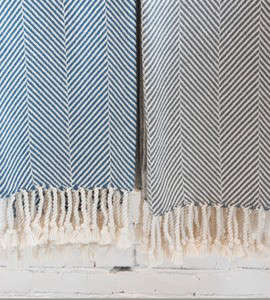
A cotton herringbone throw is one of those home accessories that quietly earns its keep. At first glance, it may look like a decorative blanket whose primary job is to lounge handsomely over the arm of a sofa. Give it a week, though, and it may become your reading blanket, movie-night companion, emergency guest-room layer, porch cover, and unofficial defense against an aggressively air-conditioned living room.
The appeal comes from a useful combination: cotton offers familiar comfort and easygoing versatility, while the herringbone pattern brings more visual character than an ordinary solid weave. The result can fit into farmhouse, coastal, traditional, Scandinavian, transitional, bohemian, and modern interiors without looking as though the blanket wandered in from the wrong decorating catalog.
From fabric construction and sizing to washing, styling, and shopping considerations, here is what makes cotton herringbone throws worth understanding before one lands permanently on your favorite chair.
What Is a Cotton Herringbone Throw?
A cotton herringbone throw is a relatively small blanket made entirely or partly from cotton and featuring the recognizable herringbone design. Herringbone is based on repeating diagonals that reverse direction at regular intervals, producing a broken zigzag or V-shaped effect resembling the skeleton of a herring fish.
Yes, one of interior design’s most elegant patterns is named after fish bones. Decorating history has a sense of humor.
In genuine woven herringbone fabric, the design is created by the arrangement of the yarns rather than simply printed on top. This gives the material dimensional texture and helps the pattern remain visually interesting even when the colors are subtle.
Herringbone vs. Chevron
Herringbone and chevron are frequently confused. Both use angled lines, but chevron normally forms continuous, neatly aligned V shapes. Herringbone looks more staggered, with one diagonal section appearing to meet the side of another rather than creating a perfectly continuous point.
The difference may seem tiny until you stare at throw blankets online for 45 minutes. Then, suddenly, you become the person explaining broken twills to your family.
Why Cotton Works So Well for Throw Blankets
Cotton remains popular in home textiles because it combines softness, absorbency, breathability, and familiar everyday care. The exact feel depends heavily on yarn quality, weave density, finishing, and whether the fabric is blended with another fiber, but a well-made cotton throw can provide comfortable coverage without the dense, insulating feeling of a heavy winter blanket.
Breathable Comfort
For people who like being covered but dislike overheating, a lightweight cotton throw blanket is particularly useful. Cotton can work during transitional weather, cool summer evenings, air-conditioned afternoons, and mild winter days.
It will not necessarily replace a thick wool blanket in a freezing house, but that is not really the job. Think of a cotton throw as the versatile middleweight of the blanket world.
A Natural Hand Feel
Cotton fibers can produce fabrics ranging from crisp and structured to remarkably soft. Longer, finer fibers and quality yarn construction can contribute to smoother, stronger textiles, while washing and finishing processes can further change the hand feel.
Do not assume every product labeled “100% cotton” will feel identical. Two cotton throws can differ noticeably in softness, thickness, drape, surface texture, and weight.
Useful Throughout the Home
A decorative cotton throw can be used on a sofa, armchair, bed, bench, reading nook, porch chair, or guest-room luggage rack. Some homeowners also keep one in the car for road trips or picnics.
That versatility is one reason throws around 50 by 60 inches and 50 by 70 inches are widely sold in the U.S. market. They provide enough material for casual individual coverage without becoming full-size bed blankets that require advanced folding geometry.
Why the Herringbone Pattern Is So Easy to Decorate With
Herringbone has enough structure to make a room interesting without shouting for attention. From a distance, a fine herringbone may almost read as a textured solid. Up close, the angled weave provides depth and movement.
That makes a herringbone throw blanket especially effective when a space feels flat but does not need another bold print.
Neutral Herringbone Throws
Ivory, beige, gray, taupe, charcoal, cream, and natural cotton tones are easy choices for flexible decorating. A cream-and-gray cotton herringbone throw can soften a dark leather sofa, while beige or oatmeal works naturally with wood, rattan, linen, and warm white walls.
Neutral does not have to mean boring. Texture becomes more noticeable when color contrast is restrained, allowing the weave itself to do the decorating.
Colorful Herringbone Throws
Navy, sage green, terracotta, mustard, muted blue, dusty pink, and other earthy colors can introduce personality without creating the visual intensity of a giant floral or geometric blanket.
For example, a navy-and-ivory herringbone design works comfortably in coastal spaces, while rust or ochre can warm up a modern neutral living room. Sage pairs naturally with oak, cream upholstery, and houseplantsthe decorating equivalent of everyone getting along at Thanksgiving.
How to Choose the Right Cotton Herringbone Throw
The photograph is only the beginning. Before buying, pay attention to fiber composition, dimensions, weight, construction, finishing, fringe, and care instructions.
1. Check the Fiber Content
If natural-fiber content matters to you, verify whether the throw is actually 100% cotton. “Cotton throw” can sometimes describe a cotton-rich blend rather than an all-cotton product.
Blends are not automatically inferior. Cotton combined with acrylic, polyester, or another fiber may be designed to alter softness, drying time, wrinkle behavior, warmth, or durability. The important thing is understanding what you are buying rather than discovering the blend after your first laundry day.
2. Look at the Dimensions
Common decorative throw dimensions include approximately 50 x 60 inches, 50 x 70 inches, 51 x 67 inches, and larger 55 x 75-inch styles. Even ten or fifteen extra inches can make a meaningful difference when the blanket is actually being used rather than photographed.
A smaller 50 x 60-inch throw is convenient for draping over furniture and covering your lap. A longer 50 x 70 or 55 x 75-inch version is usually more satisfying for lounging, particularly for taller adults.
3. Examine the Weave
Look closely at product photography to determine whether the herringbone effect comes from the actual weave, contrasting yarn colors, surface printing, or a combination of techniques.
A pronounced woven structure generally gives a throw richer texture. Finer herringbone feels more tailored and subtle, while oversized patterns look casual and graphic.
4. Consider Weight
“Cotton” does not necessarily mean lightweight. A loosely woven cotton throw can feel airy, while a densely woven or multi-layer cotton blanket can have considerable heft.
Choose a lighter version for warmer climates, travel, layering, or decorative use. Select a denser throw if you want more substantial warmth and a blanket that feels reassuringly present on the body.
5. Inspect the Fringe
Fringe and tassels are common on herringbone throws because they reinforce the textile’s relaxed, traditional look. They are attractive but introduce a practical question: will the blanket face children, pets, robotic vacuums, or enthusiastic laundering?
Twisted or tightly finished fringe generally looks neater over time than very loose decorative strands. If uncomplicated care is your top priority, finished edges may be preferable.
How to Style Cotton Herringbone Throws
Drape One Over a Sofa
For a casual arrangement, fold the blanket lengthwise and drape it over one corner or arm of the sofa. Avoid making every edge perfectly symmetrical unless you are styling a furniture showroom. A little looseness makes the room feel more lived in.
On a solid sofa, use herringbone to add pattern. On a heavily patterned sofa, choose a low-contrast herringbone so the room does not look as though all the textiles are competing for a promotion.
Layer It Across a Bed
A herringbone cotton throw works especially well across the lower third of a bed. Pair it with crisp cotton bedding for a clean layered appearance or combine it with linen, velvet, or knit pillows for more texture.
The herringbone pattern can visually bridge simple bedding and more decorative accent pillows without demanding that everything match exactly.
Add Texture to an Armchair
Fold a throw vertically and place it over the back of a reading chair. This creates a strong decorative line while keeping the blanket within reach when your reading session unexpectedly becomes a nap.
Use Seasonal Color Instead of Seasonal Clutter
Throws are useful for seasonal decorating because they change a room without requiring storage tubs full of novelty accessories. Try sage or pale blue in spring, relaxed natural cotton in summer, rust or caramel in fall, and navy, evergreen, or charcoal during winter.
Caring for a Cotton Herringbone Throw
Always follow the manufacturer’s care label. Cotton products may appear similar yet have dramatically different washing instructions because dyes, weave structure, blends, fringe, and finishing treatments vary.
Washing
Many cotton throws are machine washable, often with cool or cold water and a gentle cycle. Mild detergent can help limit unnecessary stress on the fibers and colors. Washing with similar colors is particularly sensible for darker or strongly dyed blankets.
However, some decorative cotton or cotton-blend throws recommend delicate washing, flat drying, hang drying, or even dry cleaning. Do not assume that “cotton” automatically means “throw it into whatever cycle is already running.”
Drying
High heat can contribute to shrinkage and unnecessary wear, so low-heat tumble drying or air drying is commonly recommended when permitted by the care label. Reshape woven throws while damp if necessary, particularly around fringed edges.
Managing Wrinkles
Cotton naturally develops some wrinkles, especially after washing. For decorative throws, this is rarely a crisis. A slightly relaxed texture often suits the material.
If the care label allows ironing, use the specified temperature. Otherwise, smooth the blanket by hand after washing and let gravity perform some free household labor.
Are Cotton Herringbone Throws Good for Every Season?
They can be, provided the weight suits your climate. Lightweight cotton is popular for year-round use because it offers coverage without trapping the same amount of warmth associated with thick fleece or heavy wool.
During warmer months, a breathable woven throw can handle chilly evenings and aggressive indoor air conditioning. In autumn and spring, it becomes an easy standalone layer. In winter, it works well over bedding or underneath a heavier blanket.
This layering flexibility makes an all-season cotton throw particularly useful in homes where temperatures change significantly between rooms or throughout the day.
Cotton Herringbone vs. Other Throw Materials
Cotton vs. Wool
Wool generally offers stronger insulation for genuinely cold conditions. Cotton usually feels easier and less intimidating for everyday use and may appeal more to people who find wool itchy or overly warm.
Cotton vs. Polyester Fleece
Fleece can deliver more warmth for its weight and dries quickly, while cotton offers the hand feel and breathability associated with a natural plant-based fiber. Which is better depends on whether your priority is warmth, texture, drying speed, or fiber preference.
Cotton vs. Cashmere
Cashmere offers exceptional softness and luxury but normally comes with a much higher price and more cautious care requirements. Cotton herringbone throws occupy a far more everyday-friendly category: stylish enough to display, practical enough to actually use.
Common Buying Mistakes to Avoid
- Buying from the photograph alone: Check dimensions, materials, and care instructions before ordering.
- Assuming every cotton throw is soft: Yarn quality, weave, and finishing determine the final feel.
- Ignoring size: A beautiful small throw may disappoint if you expected full-body coverage.
- Overlooking fringe care: Decorative tassels may require gentler washing and drying.
- Confusing herringbone with printed zigzags: If textile texture matters, verify that the design is woven.
- Expecting winter-duvet warmth: Many cotton throws are intentionally lightweight.
Who Should Consider a Cotton Herringbone Throw?
A cotton herringbone throw is a particularly good match for someone who wants one accessory to provide both decoration and practical coverage. It works for minimalists who want subtle texture, traditional decorators who appreciate classic patterns, and renters who want to refresh a room without replacing furniture.
It can also make a useful housewarming or wedding gift. Neutral colors are generally safest when the recipient’s decorating style is unknown, while a larger size makes the gift more functional.
Living With Cotton Herringbone Throws: Everyday Experiences
The real test of a throw blanket begins after the styled photographs are forgotten and the blanket joins everyday household life. This is where cotton herringbone throws tend to reveal their strengthsand a few quirks.
The Sofa Experience
On a living-room sofa, a medium-weight cotton herringbone throw often strikes an appealing balance. It looks decorative when folded but does not need to remain untouched. Someone can grab it during a movie, bunch it into a pillow, wrap it around cold feet, and return it to approximately the correct location afterward.
Approximately is the key word. No household blanket remains professionally styled for long unless nobody is allowed to live there.
The herringbone texture is particularly forgiving because the pattern provides visual movement even when the fabric is slightly rumpled. Unlike a perfectly smooth decorative textile, it does not demand constant straightening.
The Warm-Climate Experience
In warmer regions, lightweight cotton throws can be more useful than heavily insulated blankets. Imagine an evening when the outdoor temperature is comfortable but the ceiling fan creates just enough chill to make bare legs regret their choices. A breathable cotton layer solves the problem without turning the sofa into a sauna.
The same applies to air-conditioned offices, apartments, and hotel rooms. Cotton provides that small amount of warmth that makes a space comfortable without requiring a heavy winter blanket.
The Guest-Room Experience
Placing a herringbone throw at the end of a guest bed serves two purposes. It makes plain bedding look more complete, and it gives guests an optional layer without forcing them to reorganize the entire bed.
A 50 x 70-inch throw is especially useful here. It is large enough for practical coverage yet compact enough to fold neatly across a full, queen, or king bed as an accent.
The Pet Experience
Pet owners may discover that the throw they carefully selected for themselves is quickly reassigned by managementthat management being the dog or cat.
Washability becomes far more important once fur, muddy paws, and spontaneous naps enter the equation. For pet-heavy households, machine-washable cotton with tightly secured fringe is generally easier to live with than a highly delicate decorative weave.
Loose tassels may also attract cats who interpret them not as artisanal finishing but as complimentary toys.
The First-Wash Experience
The first laundering often determines whether a throw becomes a favorite or an object of suspicion. Cotton can tighten or shrink, particularly when exposed to excessive heat. Some woven throws also emerge wrinkled or with fringe that needs reshaping.
Following the care label, using moderate temperatures, and avoiding unnecessary high heat can help maintain the original dimensions and texture. If the throw recommends air drying, give it enough space for airflow rather than folding it over itself while wet.
The Long-Term Experience
A practical throw usually becomes softer and more familiar with repeated use. The ideal cotton herringbone blanket does not merely survive life on the sofa; it becomes associated with routinesSunday coffee, late-night television, afternoon reading, sick days, holiday guests, and naps that were allegedly going to last only twenty minutes.
That is ultimately why the category works. Herringbone provides enough visual sophistication to make the blanket part of the decor, while cotton keeps it approachable enough to remain part of ordinary life.
Final Thoughts
Cotton herringbone throws occupy a useful middle ground between decorative accessory and functional blanket. Their broken-twill pattern adds timeless visual texture, while cotton can provide breathable comfort for lounging, layering, travel, guest rooms, and everyday decorating.
The best choice is not necessarily the most expensive or the heaviest. Look for the right dimensions, a comfortable weave, clear fiber labeling, secure finishing, a color that works with your room, and care instructions you are actually willing to follow.
A good throw should make a sofa look better, make a chilly evening more comfortable, and tolerate the fact that real households do not behave like furniture catalogs. If it manages all three, it has earned its place over the armrest.
Note: Product dimensions, fiber blends, washing instructions, and drying recommendations differ among manufacturers. Always check the sewn-in care label and individual product specifications before cleaning a cotton herringbone throw.