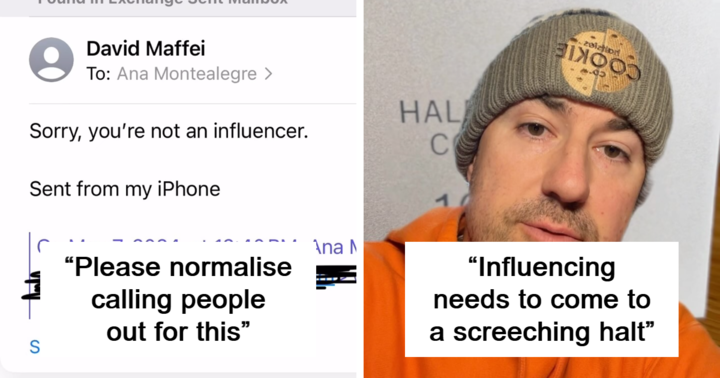
Every few months, the internet gathers around a fresh drama like villagers around a town square fountain. This time, the fountain was full of cookies. A New York cookie shop went viral after its owner publicly pushed back against a bride-to-be who described herself as an influencer while asking for free cookies for bridal party boxes. The reply was not wrapped in corporate velvet. It was blunt, funny, and, depending on your tolerance for public callouts, either heroic or a little too crispy around the edges.
The business at the center of the debate was Halfsies Cookie Company, a Hudson Valley brand known for oversized, made-from-scratch cookies and a social media voice that does not exactly whisper. When owner David Maffei received a message from someone hoping to include the shop’s cookies in bridal party gifts, he initially pointed her toward the company’s website. Then the conversation shifted toward “collaborations with influencers.” After checking her social media presence, he decided she did not meet his definition of an influencer. When she clarified that she was a “beginner influencer,” his now-famous response landed like a rolling pin on marble: he joked that he was a beginner astronaut.
And just like that, the cookie dough hit the fan.
What Actually Happened?
The viral exchange reportedly began with a cheerful wedding-related pitch. The bride-to-be said she was newly engaged and wanted to “spoil” her bridal party with products from the cookie company. On the surface, the message sounded familiar: upbeat, friendly, sprinkled with exclamation points, and written in the polished language of modern collaboration requests. If you have ever seen an influencer outreach email, you know the rhythm. It is part business proposal, part compliment sandwich, and part “wouldn’t it be magical if your inventory became my party favor?”
Maffei’s first response was simple: congratulations, and feel free to order from the website. That answer would have ended the story in a calmer universe. But the sender asked whether the company collaborated with influencers. After looking at her online accounts, Maffei concluded that the audience was too small to justify free product. Reports said her following was around the low thousands across Instagram and TikTok, which placed her far below what many agencies typically call a micro-influencer.
That detail matters because “micro influencer” is not just a cute phrase people can sprinkle on their bio like powdered sugar. In marketing, the label usually refers to creators with a defined niche, consistent content, measurable engagement, and a meaningful audience. Exact follower ranges vary by agency, but many place micro-influencers somewhere around 10,000 to 100,000 followers, while smaller creators are often called nano-influencers. Even then, follower count is only the appetizer. Brands also care about engagement, audience fit, content quality, sales history, and whether the person has ever actually bought the product they are praising.
Why the Cookie Shop’s Response Went Viral
The exchange spread because it touched a nerve larger than one cookie order. For small business owners, free-product requests can feel endless. One box of cookies may not sound like much to an outsider. But small businesses do not operate on fairy dust, exposure, and vibes. Ingredients cost money. Packaging costs money. Shipping costs money. Labor costs money. Even the electricity that keeps the oven hot is not paid in hashtags.
That is why Maffei’s response resonated with many entrepreneurs. His point was not that influencer marketing is useless. In fact, he has said influencer marketing helped grow the company. The issue was the flood of poorly matched requests from people who had never ordered, did not follow the brand, and seemed to treat “collaboration” as a softer way to say “free stuff.” For a small family business, giving away products without a strong reason can quickly turn from marketing into charity with bubble wrap.
The story also went viral because the reply was memorable. “I’m a beginner astronaut” is the kind of line the internet adopts immediately. It is short, sarcastic, and absurd enough to fit on a meme. It also captures the frustration many business owners feel when someone invents a professional label before proving the professional value behind it.
The Internet Split Into Two Camps
As expected, online commenters divided themselves into two familiar teams: Team “Protect Small Businesses” and Team “That Was Unnecessary.”
Team Protect Small Businesses
Supporters argued that Maffei said what many small business owners are too polite to say. In their view, asking for free products from a business you do not support is bad form, especially when the product is intended for a personal event like a wedding or bachelorette party. A bridal party box is lovely, but it is not automatically a marketing campaign. Sometimes it is just a shopping list wearing a ring light.
This side also pointed out that exposure does not pay invoices. A post from a small account may produce a few likes, a few comments, and one aunt asking, “Where did you get those?” But that does not necessarily convert into orders. A business must calculate whether a collaboration has a realistic chance of bringing in revenue, brand awareness, user-generated content, or long-term customer value. If the answer is no, the polite business decision is still no.
Team That Was Unnecessary
Critics, however, felt the public callout went too far. They argued that a business can decline a request without turning someone into content. Even if the pitch was awkward, they said, a private “thanks, but we are not offering collaborations at this time” would have done the job. From this perspective, the viral post punched down at someone with a small following while the business benefited from the attention.
That criticism is worth considering. Brutal honesty can be refreshing, but it can also become a branding shortcut. The internet rewards sharp edges. A savage reply often travels farther than a graceful one. For brands, the temptation is obvious: one spicy post can generate more reach than a month of product photography. But the risk is equally real. If the audience feels the joke is cruel rather than clever, the brand may win views and lose trust.
What Counts as a Real Influencer?
The Halfsies debate raises a useful question: what makes someone an influencer in the first place?
It is not merely having an account. Most adults have an account. Your uncle posting blurry grill photos every Sunday is not automatically a barbecue influencer, although he may strongly disagree. A real influencer has the ability to influence behavior, not just collect followers. That influence can be measured in clicks, comments, saves, shares, sales, sign-ups, bookings, or brand awareness. The best creators understand their audience and can explain why a partnership makes sense.
A strong creator pitch usually includes more than “I love your product” and “I am getting married.” It explains audience demographics, average views, engagement rate, past campaign results, content ideas, deliverables, timeline, usage rights, and disclosure plans. That may sound less glamorous than a pastel mood board, but marketing is a business. If a creator wants a brand to invest product, time, and shipping costs, the creator needs to show what the brand receives in return.
Why “Exposure” Is Not Always a Fair Trade
The word “exposure” has become the haunted house of small-business marketing. People keep inviting business owners inside, and something expensive always disappears.
Exposure can be valuable when it reaches the right people. A food creator with a loyal audience in the same region as a bakery may drive real orders. A wedding planner with an engaged local following may introduce a brand to future brides. A niche dessert reviewer with high trust may spark sales even with a smaller audience. In those cases, free product can be a smart sampling strategy.
But random exposure is not strategy. If a cookie shop ships a box to someone whose followers are mostly friends, family, and former classmates, the business may receive a thank-you story that vanishes in 24 hours. That is not a campaign. That is a snack with a caption.
Small businesses must think in margins. Cookies are not digital files that can be duplicated at no cost. Each order requires ingredients, baking time, cooling time, packaging, labels, shipping materials, customer service, and risk. If the product arrives late, melted, damaged, or simply underappreciated, the business absorbs the downside. That is why smart brands create criteria before saying yes to collaborations.
The FTC Angle: Free Products Are Not Invisible
Another layer of the conversation involves disclosure. In the United States, the Federal Trade Commission says creators should clearly disclose material relationships with brands. That includes payment, employment, family connections, and free or discounted products. In plain English: if a brand gives you something of value and you post about it, your audience should understand that relationship.
This matters because influencer marketing works best when trust is preserved. Followers deserve to know whether a recommendation is organic or connected to a free product. A creator may genuinely love the cookies. The cookies may be so good they cause a brief spiritual event. But if the box was gifted, the post should make that clear. Transparency protects the creator, the brand, and the audience from the soggy middle ground where advertising pretends to be casual enthusiasm.
What Small Businesses Can Learn From the Viral Cookie Drama
The Halfsies moment is not just internet entertainment. It is a practical case study for bakeries, boutiques, restaurants, skincare startups, candle makers, and every other business that receives “collab?” messages before breakfast.
1. Create a Clear Collaboration Policy
A business should not have to make a new decision every time someone asks for free product. Create a simple influencer collaboration policy. Include minimum audience requirements, preferred niches, geographic focus, content expectations, disclosure requirements, and whether the brand offers gifted product, affiliate codes, paid campaigns, or wholesale event pricing.
This does not need to be cold or corporate. A bakery could say, “We love working with creators who already know our cookies, have an engaged food or lifestyle audience, and can provide clear campaign details.” That is friendly, firm, and less likely to become a screenshot festival.
2. Offer Discounts Instead of Free Products
For wedding parties, bachelorette boxes, and personal events, a discount code may be more appropriate than a free shipment. It acknowledges the request without turning the business into a sponsor for every celebration. If the person truly loves the brand, a discount helps. If they only wanted freebies, they will vanish faster than warm cookies in an office kitchen.
3. Track Results
Influencer marketing should not be based on hope alone. Give creators unique discount codes, affiliate links, or tracking URLs. Ask for screenshots of analytics. Measure reach, engagement, clicks, and sales. A small creator who drives 20 orders is more valuable than a large creator who produces 20 fire emojis and no revenue.
4. Stay Human, Even When Saying No
A blunt brand voice can be powerful, but every “no” is still a customer touchpoint. Public humor should be used carefully. The best response protects the business without humiliating the person. A line can be funny without becoming a flamethrower.
What Aspiring Influencers Can Learn
For creators, the lesson is equally clear: earn the relationship before asking for the reward. Buy from the brands you admire. Post genuine content. Tag them naturally. Build a portfolio. Show that your audience responds. Learn basic analytics. Understand FTC disclosures. Then, when you pitch, pitch like a professional.
A beginner creator is allowed to be a beginner. Everyone starts somewhere. But starting somewhere does not mean skipping the part where you create value. A new photographer does not walk into a camera store and ask for a free lens because they are a beginner photographer. A new chef does not ask a farm for free produce because they are a beginner chef. A new influencer should not expect a small business to supply products before there is a clear marketing reason.
The better path is simple: become a customer first. If you love a cookie company, order the cookies. Share your honest experience. Create beautiful content. If the brand reposts you, keep going. Over time, you may build a real case for collaboration. That case is far stronger than “I have a party and would like your products to appear in it.”
Why the Story Hit So Hard in the Wedding Economy
There is also a wedding-culture angle here. Modern weddings often come with a long runway of content: engagement announcements, bridal boxes, bridesmaid proposals, bachelorette weekends, shower favors, welcome bags, reception details, after-party snacks, and honeymoon posts. Each moment can become a mini production. For brands, that creates opportunity. For small businesses, it also creates pressure.
Some brides and bachelorette groups now send mass emails to brands asking for gifts in exchange for posts. Sometimes the requests are thoughtful and targeted. Other times, they are copy-and-paste messages sent to dozens or hundreds of companies. The problem is not celebration. Weddings are joyful. The problem is when joy arrives with an invoice for someone else.
Businesses can support celebrations without becoming unpaid vendors. A cookie shop can offer bridal bundles, custom packaging, limited event discounts, or affiliate programs for planners. What it should not have to do is donate product every time someone with a ring light discovers the word “collaboration.”
The Bigger Marketing Lesson: Authenticity Has a Receipt
Influencer marketing is not dead. It is maturing. Brands still benefit from creators who build trust and tell stories well. Micro and nano creators can be especially effective because their audiences often feel more personal and engaged. But authenticity has a receipt. The creator should know the product, understand the audience, and offer value beyond “I will post.”
For businesses, the best partnerships often come from creators who already behave like fans. They buy the product. They know the flavors. They understand the shipping schedule. They can explain why their audience would care. That kind of creator is not asking for a handout; they are proposing a partnership.
For creators, the best pitches are specific. Instead of “I would love to collab,” try: “I create dessert content for brides planning Hudson Valley weddings. My average Reel reaches 18,000 viewers, and my audience is 72% women ages 24 to 34 in New York and New Jersey. I would like to feature your cookies in a bridesmaid proposal box video, with one Reel, three Stories, a tagged post, and a disclosed gifted-product label.” That pitch may still get a no, but at least it arrives wearing shoes.
Was the Cookie Shop Right?
The fair answer is: mostly yes on the business principle, maybe debatable on the public execution.
Maffei was right that small businesses need boundaries. He was right that not every person with an Instagram account is an influencer. He was right that free products can become a real cost when requests arrive in waves. He was also right that aspiring creators should build credibility before asking brands to invest in them.
But critics are also right that public callouts can be messy. A person can send a bad pitch without deserving to become the internet’s main character. The stronger long-term play for brands may be to turn frustration into education: explain what qualifies for a collaboration, why free product has a cost, and how creators can pitch responsibly. That keeps the wit without making the brand look like it enjoys dunking on people.
Experience-Based Takeaways: What This Viral Cookie Moment Feels Like in the Real World
Anyone who has worked with small businesses knows this situation is painfully believable. The outside world often sees a product and imagines only the finished item: the glossy cookie, the neat box, the cute sticker, the Instagram-ready moment. Behind the scenes, there is a person ordering ingredients, answering emails, fixing shipping problems, cleaning equipment, checking inventory, and wondering why butter costs what it does. When a stranger asks for free product, the request may sound small. To the owner, it can feel like another tiny leak in a boat they are still trying to keep afloat.
I have seen similar dynamics in restaurants, handmade shops, local bakeries, and service businesses. The request usually begins with compliments. “I love your brand.” “Your products are amazing.” “This would be such a good fit for my audience.” Then comes the ask. Sometimes the creator has a real audience and a thoughtful plan. Other times, the pitch is so generic it could have been sent to a cookie shop, a dog groomer, or a roofing company with only three words changed. That is when business owners start to feel less like potential partners and more like vending machines with feelings.
The best experiences happen when both sides respect the exchange. A creator who has purchased from a brand, understands the product, and brings a clear idea to the table feels completely different from someone asking for free items for a private event. A good creator says, “Here is the audience I can reach, here is the content I can make, here is how I will disclose the partnership, and here is why this benefits you.” That kind of message makes a business owner lean in. It sounds like collaboration, not extraction.
On the business side, the best owners learn to separate irritation from policy. It is tempting to reply with sarcasm when the tenth freebie request of the week lands in the inbox. Sarcasm is delicious. It is also risky. A written policy saves energy. It lets the owner say, “Thanks for thinking of us. At this time, gifted collaborations are reserved for creators who meet our campaign criteria. You are welcome to order through our website, and we would love to see your photos if you share them.” That answer is not as viral as “beginner astronaut,” but it is a lot less likely to start a digital food fight.
There is also a lesson for everyday consumers. If we want small businesses to survive, we have to normalize paying them. Tagging a business is kind. Reviewing a business is helpful. Recommending a business is wonderful. But none of those should become a loophole for avoiding the checkout button. The cleanest support is still the old-fashioned kind: buy the cookies, enjoy the cookies, tell people the cookies were great, and resist the urge to call yourself the mayor of CookieTok after one carousel post.
The Halfsies story went viral because it was funny, sharp, and relatable. But underneath the joke is a serious business truth. Influence is not a title you award yourself because you want something. It is a result you prove through trust, consistency, audience connection, and measurable value. A small business has every right to ask, “What will this cost us, and what will it realistically return?” That is not rude. That is survival with a spreadsheet.
In the end, the cookie shop’s brutal honesty worked because many people recognized the exhaustion behind it. The internet laughed at the astronaut line, but business owners heard the deeper message: please do not mistake our friendliness for unlimited free inventory. And aspiring influencers should hear the other half: build first, ask later, disclose always, and remember that even viral cookies begin with someone paying for flour.
Conclusion
The viral Halfsies Cookie Company story is more than a funny exchange between a bakery owner and a “beginner influencer.” It is a snapshot of where influencer marketing stands now: powerful, crowded, often misunderstood, and badly in need of clearer boundaries. Small businesses can benefit from creator partnerships, but only when the value exchange is real. Creators can build meaningful careers, but only when they treat brands as partners rather than free-product dispensers. The sweetest collaborations are built on respect, transparency, and results. Everything else is just crumbs.