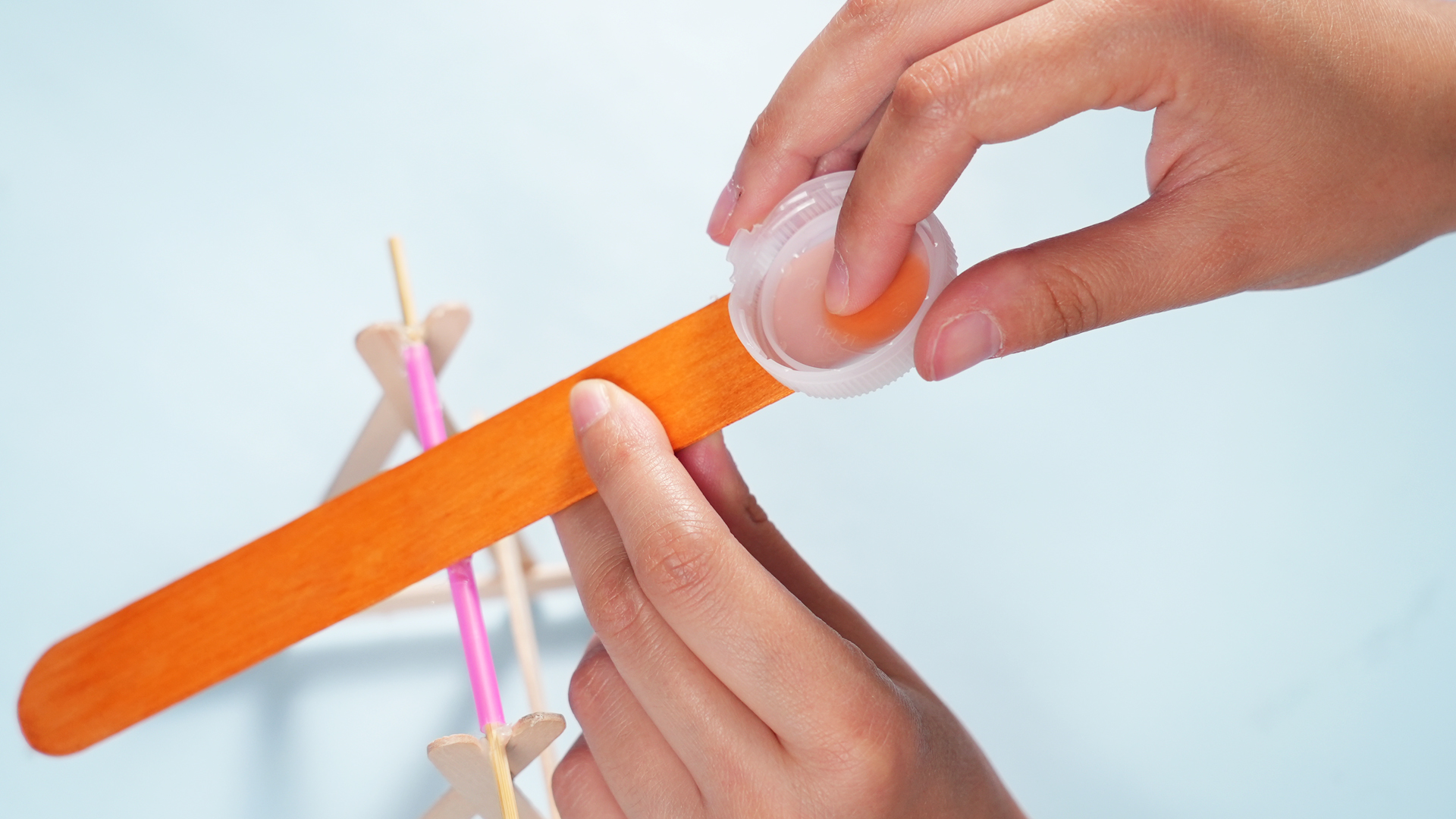
Few machines capture the imagination quite like the catapult. It is dramatic, historic, and packed with physics concepts that make science feel less like homework and more like a movie trailer. The very word catapult brings to mind castles, sieges, engineering, and the universal human instinct to say, “I bet this can launch farther.” That said, the real educational value of catapults is not in flinging random objects across the room. It is in understanding energy transfer, levers, tension, trajectory, and the design thinking behind simple machines.
This article takes a safer route. Instead of explaining how to build a projectile device, it breaks down three ways to study a basic catapult concept: through its simple-machine design, through the physics that powers it, and through safe STEM activities that let students explore the idea without creating something risky. Think of it as all the fun science, minus the “who put a dent in the wall?” conversation.
Why Catapults Still Fascinate Us
Catapults have been part of human history for centuries. Ancient armies used siege engines to throw stones, fire, and other heavy materials over walls and across battlefields. While the historical versions varied in size and mechanism, the core idea was remarkably consistent: store energy, release it quickly, and send an object through the air.
Today, catapults show up less on battlefields and more in classrooms, museums, and STEM discussions. That is because they offer a vivid demonstration of how mechanical force and stored energy interact. Students can look at a catapult and immediately connect abstract physics concepts to something visual and memorable. In other words, it is the rare science topic that feels both educational and a little bit theatrical.
Way 1: Understand the Catapult as a Simple Machine
The Lever Is the Star of the Show
At its heart, a basic catapult works like a lever. A lever is one of the classic simple machines, and it helps multiply force. In a lever system, three parts matter: the fulcrum, the effort, and the load. The fulcrum is the pivot point. The effort is the force applied. The load is the thing being moved.
When people study a catapult design, they are really studying how leverage works. The placement of the pivot point changes how force is distributed. A longer throwing arm can increase speed at the end of the arm, while a shorter arm may create a different balance of control and power. This is why the lever principle is such a useful entry point for discussing catapult mechanics without turning the lesson into a how-to guide.
Frame, Arm, and Energy Storage
A catapult concept also includes a support frame, a throwing arm, and some form of stored energy. Historically, that stored energy came from twisted rope, tension, gravity, or counterweights depending on the design. In a classroom discussion, these components can be examined through diagrams, scale models that do not launch anything, or digital simulations.
Students often find it helpful to compare catapults to familiar objects. A seesaw demonstrates a lever. A bent ruler shows stored potential energy. A door hinge shows a pivot. When you connect these everyday examples to catapult mechanics, the system becomes less mysterious and much easier to understand.
Design Thinking Without the Danger
One of the safest ways to explore catapults is through design analysis. Students can compare diagrams of different styles, identify where the fulcrum sits, explain what stores energy, and predict how changes in shape might affect motion. This teaches engineering logic without requiring anyone to launch a single thing. It also avoids the classic classroom problem known as “someone got overly confident with a rubber band.”
Way 2: Learn the Physics Behind Catapult Motion
Potential Energy and Kinetic Energy
The physics of a catapult begins with potential energy. This is stored energy waiting to be released. When tension, twisting force, or height is involved, energy is being held in reserve. Once the mechanism is released, that potential energy turns into kinetic energy, which is the energy of motion.
This transfer is the real lesson. Students can grasp a major physics principle by watching how stored energy becomes movement. In safe demonstrations, teachers often use diagrams, animations, or controlled examples to show this conversion rather than encouraging students to create their own launchers.
Force, Angle, and Distance
Another useful concept is the relationship between force and motion. A stronger release generally increases speed, but distance is not determined by force alone. The angle of release matters too. That is where projectile motion enters the conversation.
When an object moves through the air, gravity pulls it downward while its forward momentum carries it ahead. This creates a curved path called a trajectory. In math and physics classes, students often use this idea to understand why two objects with different launch angles can travel very different distances, even if they start with similar force.
There is also the issue of air resistance, which acts like the universe politely saying, “Not so fast.” Lightweight objects are affected more by drag, while denser objects may travel differently. That makes catapult physics a nice bridge between ideal equations and real-world messiness.
Accuracy vs. Power
A common misconception is that the strongest design is automatically the best one. In reality, engineering is full of trade-offs. More power may reduce control. A longer arm may increase speed but also change timing. A small shift in release conditions can alter the path dramatically. That is why catapults are excellent tools for discussing optimization. Engineers do not just ask, “Can it move?” They ask, “Can it move predictably, safely, and consistently?”
Way 3: Explore Catapult Concepts Through Safe STEM Activities
Use Simulations and Virtual Labs
One of the best modern alternatives to hands-on projectile building is a digital simulation. Virtual labs let students test variables like arm length, release angle, force, and mass in a controlled environment. There is no mess, no broken lamp, and no need to explain to a parent why a marshmallow became a ceiling ornament.
These tools are especially valuable because students can change one variable at a time and record what happens. That supports real scientific thinking: form a hypothesis, test it, observe the result, and revise the idea. In many cases, simulations teach the concept more clearly than improvised physical models because they reduce distractions and highlight cause-and-effect relationships.
Study Historical Machines Through Drawings and Museums
Another safe option is historical analysis. Ancient catapults, trebuchets, and ballistae each relied on different engineering principles. By comparing them through museum resources, textbooks, and educational diagrams, students can learn about technological evolution, military history, and mechanical innovation all at once.
This approach also opens up broader questions. Why did one design replace another? What materials were available in a certain time period? How did engineers solve problems before modern manufacturing existed? Suddenly, the topic is no longer just about motion. It becomes a story about creativity under pressure and the long history of problem-solving.
Create Non-Launching Classroom Models
For teachers and parents who want something tactile, non-launching models are the safer choice. A display model can show the parts of a catapult, identify the fulcrum, and illustrate how energy would be stored and transferred, all without actually sending objects into motion. This keeps the learning focused on structure and physics instead of turning the lesson into an indoor sporting event nobody approved.
These models can be labeled, compared, and discussed. Students can write short explanations of how each part functions, or analyze how changing the pivot position might affect movement in theory. This is a strong option for elementary and middle school STEM settings because it keeps the activity visual, memorable, and much easier to manage.
Key Lessons Students Can Learn from Catapult Science
Engineering Requires Trade-Offs
Catapult concepts teach that every design decision has consequences. A change that improves speed may reduce stability. A design that seems powerful may become harder to control. That is a deeply useful engineering lesson because it mirrors real design work in fields ranging from automotive safety to aerospace systems.
Physics Is More Than Equations
For many learners, physics clicks when it becomes visible. Energy transfer, torque, momentum, and trajectory can seem abstract on paper. But once students see how these ideas connect in a real mechanism, the concepts become easier to remember and far more interesting.
History and Science Often Overlap
Catapults are also a reminder that scientific ideas are not isolated from culture. Mechanical inventions are shaped by human needs, available materials, and historical context. A lesson on catapults can connect science, math, history, and even language arts if students are asked to research ancient engineering or write about technological change.
Common Misunderstandings About Catapults
Not Every Ancient Throwing Device Was the Same
People often use the word catapult as a catch-all term, but historically there were many kinds of siege engines. Some relied on torsion. Others used counterweights. Some were better for hurling stones, while others launched darts or bolts. Understanding these differences helps students appreciate how varied engineering solutions can be.
Bigger Is Not Always Better
It is tempting to assume that size equals effectiveness. In reality, large machines can become more difficult to manage, transport, and operate. The best design depends on the goal. This is another excellent lesson in optimization and constraints.
The Real Value Is Educational, Not Destructive
Modern interest in catapults should focus on the principles they demonstrate, not on their ability to throw things. The educational payoff comes from studying simple machines, motion, and history in a way that captures attention. The goal is understanding, not destruction. Your living room, your classroom windows, and your unsuspecting houseplants will all support this philosophy.
Experience and Reflection: Why This Topic Sticks With People
One reason catapult science remains so memorable is that it sits at the perfect intersection of curiosity and mechanics. People are naturally drawn to machines that do something dramatic. A gear turning quietly in the corner is interesting to some students, but a lever system that demonstrates stored energy and sudden motion tends to grab attention instantly. Even when explored safely through diagrams, simulations, or non-launching models, the idea feels active. It feels like science with personality.
In many classrooms, topics like force and motion can seem a little dry at first. Terms such as torque, trajectory, and potential energy are important, but they can feel abstract until students connect them to something visual. Catapult-themed lessons often change that. Suddenly, students are not just memorizing vocabulary. They are discussing why pivot placement matters, why one design seems more stable than another, and why changing one variable affects the whole system. That moment of connection is where real learning begins.
There is also something uniquely satisfying about the historical side of the topic. Students often realize that ancient engineers were solving complicated problems without computers, modern materials, or convenient online tutorials. That realization can be surprisingly inspiring. It shows that innovation is not just about advanced technology. It is about observing patterns, testing ideas, and improving designs over time. In other words, engineering has always been part logic, part creativity, and part stubborn refusal to give up.
Teachers and parents frequently notice that catapult-related discussions invite broad participation. Some learners are drawn in by the history. Others love the math. Others enjoy the problem-solving aspect. A few just like anything that sounds medieval and slightly dramatic. The topic offers multiple doors into STEM, which makes it effective for mixed-interest groups. It can support discussion, research, sketching, measurement, and analysis without requiring complicated equipment.
Another valuable experience tied to this subject is learning restraint. That might sound less exciting than energy transfer, but it matters. Good STEM education is not simply about making something move. It is about making smart choices, asking safe questions, and knowing when a concept is better explored through a simulation or display model than through a hands-on launcher. That lesson carries far beyond catapults. It reflects how real science and engineering work in the world: curiosity is important, but responsibility matters too.
For many students, the strongest memory is not a dramatic launch or a flashy demonstration. It is the realization that complex systems can be understood piece by piece. A frame supports the structure. A pivot changes motion. Stored energy becomes movement. Angle changes the path. Once learners start breaking a machine into parts and relationships, they begin thinking like engineers. That mindset is powerful because it applies everywhere, from bridges and bicycles to robotics and architecture.
In the end, catapult science endures because it makes learning feel vivid. It offers story, structure, and motion all at once. Explored safely, it can turn a simple lesson on force into a richer conversation about design, history, and the way ideas travel across centuries. That is a pretty good return on one ancient machine. And unlike an actual flying projectile, that kind of knowledge tends to land exactly where you want it to.
Conclusion
Catapults remain one of the most engaging ways to introduce core STEM ideas, but the smartest path is to focus on how they work, what they teach, and how to explore them safely. By studying catapults as simple machines, analyzing the physics of energy and motion, and using safe classroom alternatives like simulations, diagrams, and non-launching models, learners can gain a deeper understanding of engineering without unnecessary risk.
That is the real win. The topic becomes more than a flashy historical curiosity. It becomes a hands-on gateway into physics, design thinking, and scientific reasoning. And that kind of learning travels far, even when nothing actually gets launched.