Note: This article is an original, rewritten synthesis based on public information about Cliff Fong, his Los Angeles home, his Bonhams collection auction, Galerie Half, Matt Blacke Inc., and related American design coverage.
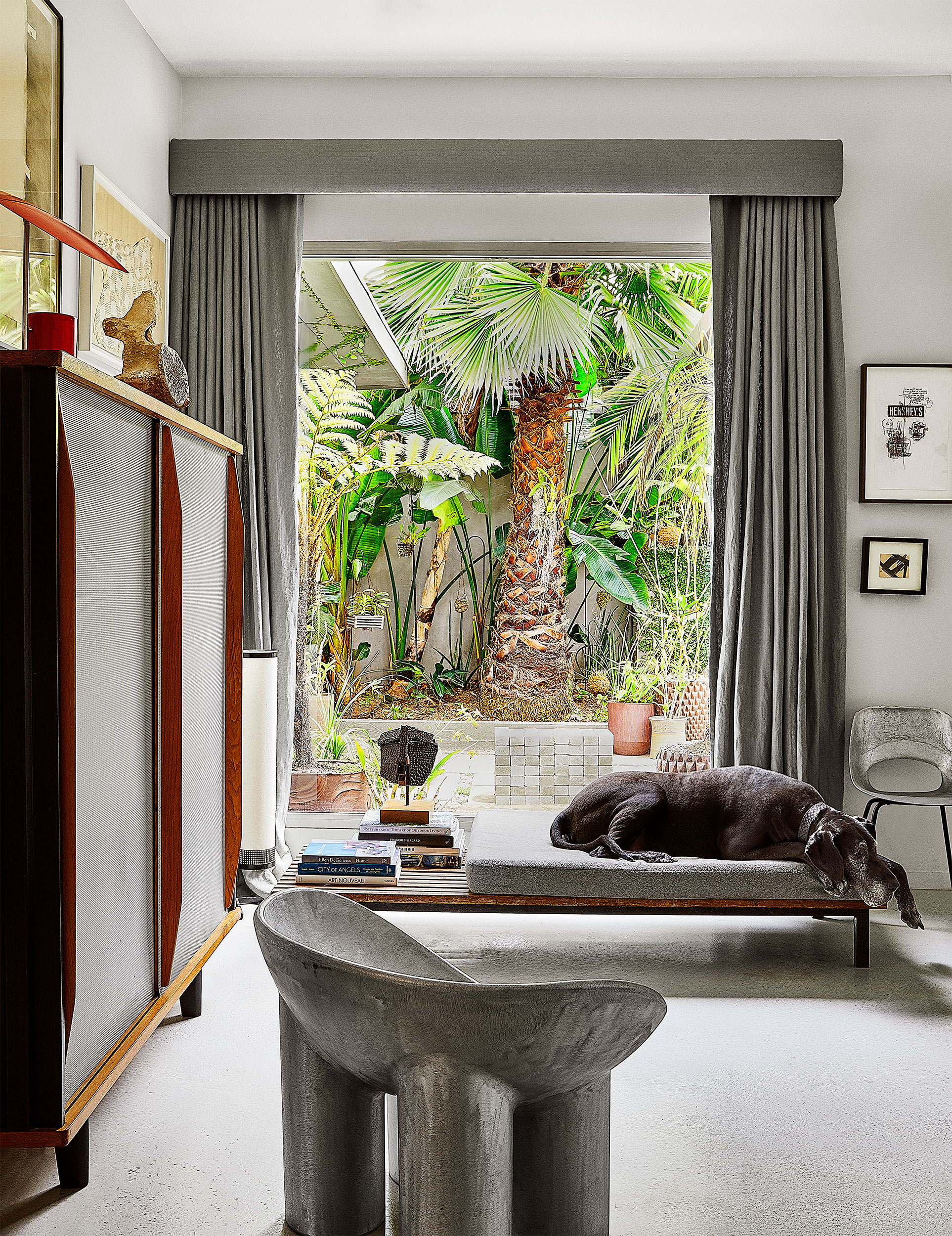
Some homes are decorated. Some homes are collected. And then there are homes like designer Cliff Fong’s Los Angeles residence: a place where every chair, cabinet, lamp, drawing, and garden path seems to have passed a very strict audition. Before the auction that sent much of his personal collection into the world, Fong’s 1953 ranch-style house in central Los Angeles offered a rare look at how a top designer lives when he is not designing for a client, a celebrity, or a glossy magazine spread.
The answer? He lives with restraint, history, personality, and just enough tension to keep the eye awake. No showroom stiffness. No “I bought everything in one afternoon” syndrome. Fong’s home was layered with 20th-century design, vintage finds, fine art, family pieces, books, dogs, orchids, and the quiet confidence of someone who knows that a room does not become interesting by shouting. Sometimes the best interiors speak in a low voice and let the furniture do the eyebrow raise.
The auction, presented by Bonhams in Los Angeles in March 2023 under the title CURATED | The Collection of Cliff Fong, was not simply a sale of beautiful objects. It was a revealing design moment. Fong, founder of Matt Blacke Inc. and a partner at Galerie Half, allowed a substantial portion of the furniture, art, and objects from his own home to leave. For many design lovers, that sounds almost unthinkable. For Fong, it was part of a creative reset.
Who Is Cliff Fong?
Cliff Fong is a Los Angeles-based interior designer known for mixing important vintage furniture, contemporary art, antiques, and casual pieces with a calm but unmistakably sophisticated eye. Before interiors became his central stage, Fong worked in fashion, including with influential Los Angeles retailers such as Maxfield, Fred Segal, and Ron Herman. That background matters because his rooms often feel styled rather than decorated in the conventional sense. They have rhythm, proportion, contrast, and an almost wardrobe-like understanding of how one strong piece can transform everything around it.
Fong’s firm, Matt Blacke Inc., has become associated with interiors that are collected, personal, and quietly luxurious. His client list has included major names such as Ellen DeGeneres and Ryan Murphy, but his work rarely feels like a performance for fame. Instead, it reflects a belief that interiors should be shaped by context: the architecture, the owner, the landscape, the art, the objects, and the feeling of daily life.
He is also closely tied to Galerie Half, the Los Angeles showroom known for vintage and antique furniture, lighting, and objects. Galerie Half has helped define a certain West Coast design language: European modernism, American craft, weathered surfaces, soulful patina, sculptural forms, and a talent for making rare pieces feel livable rather than locked behind velvet ropes.
The House: A 1953 Ranch with a Modern Soul
Fong’s Los Angeles home was built in 1953, a period when the ranch house became a symbol of relaxed California living. But this was not a cookie-cutter suburban ranch filled with predictable midcentury clichés. Before Fong purchased the approximately 2,400-square-foot home in 2016, it had already been owned by an architect who introduced memorable updates, including an asymmetrical skylight at the entry.
Fong then edited the house with the same discipline he brings to interiors. He replaced dark mahogany floors with light gray cement, added contemporary doors and windows, and reduced visual clutter by stripping back competing finishes. The result leaned into concrete and glass, two materials that can sound cold on paper but, in the right hands, become a neutral stage for texture, shape, art, and greenery.
This is one of the most important lessons from Cliff Fong’s Los Angeles home: architecture does not always need more decoration. Sometimes it needs fewer interruptions. By quieting the finishes, Fong made room for the furniture and art to breathe. A Charlotte Perriand table could look sculptural. A Jean Prouvé armoire could carry weight. A Jean Royère chair could become a character, not just a seat.
Before the Auction: Why Let Go?
For collectors, letting go is the hard part. Buying is easy. Anyone with a credit card and a late-night obsession with online listings can acquire objects. Editing is where taste becomes real. Fong’s decision to auction much of his collection was rooted in his desire for change. Many of the pieces had followed him for years, across different homes and chapters of life. They were historically important, personally meaningful, and visually powerful. But that was exactly the point: they carried memory, and sometimes memory becomes heavy.
Rather than moving to another house, Fong chose to change the interior life of the home he already loved. That distinction is fascinating. He did not reject the house. He rejected creative complacency. The garden, the proportions, the setting, and the atmosphere still worked. What needed renewal was the collection inside.
In design terms, this is a radical idea. Most people refresh a room by buying a new rug, painting a wall, or moving the sofa two inches and calling it personal growth. Fong took the more dramatic route: he released major pieces by some of the most admired names in 20th-century design. It was less “spring cleaning” and more “museum-quality emotional detox.”
The Collection: Masters of 20th-Century Design
The Bonhams sale included 151 select works of art and design from Fong’s home and related collections. The auction featured names that make design collectors sit up straighter: Charlotte Perriand, Jean Prouvé, Serge Mouille, Jean Royère, Pierre Jeanneret, Dan Johnson, Gio Ponti, Alexandre Noll, Børge Mogensen, and others. These are not background names. They are the kind of designers whose work shaped the language of modern furniture, lighting, and interiors.
Among the notable pieces connected to Fong’s home were a vintage Børge Mogensen black leather Embassy sofa, a Jean Royère cream mohair Trèfle armchair, a Jean Prouvé sun shutter, a Charlotte Perriand three-legged table, Les Arcs stools, and a Jean Prouvé armoire. The sale also included art and design highlights such as works by Vern Blosum and Wolfgang Tillmans, as well as important furniture by Perriand, Jeanneret, and Prouvé.
The sale performed strongly, reportedly earning about $820,000 overall and selling 100 percent by value. That result says something about Fong’s eye. A private collection can reveal whether a designer’s taste is merely fashionable or deeply informed. In this case, the market responded to the seriousness, rarity, and cohesion of the objects.
Inside the Living Areas: Privacy, Intimacy, and Precision
One of the most interesting moves in Fong’s home was his use of a Jean Prouvé sun shutter to create separation between the dining and living areas. In a smaller house, openness can quickly become overexposure. Many homeowners assume that removing barriers always improves a space. Fong’s home argues otherwise. Sometimes a room becomes more comfortable when it reveals itself slowly.
The Prouvé piece created privacy and intimacy without making the interior feel boxed in. It acted as architecture, sculpture, and furniture all at once. This is the kind of move that separates confident interiors from generic open-plan spaces. Instead of saying, “Look, here is the whole room,” it says, “Come closer; there is more to discover.”
Built-in shelves housed Fong’s design reference books, which he chose to keep. That detail matters. The books were not just decoration. They were part of the working mind of the house. In a home filled with auction-worthy furniture, it is easy to focus only on marquee pieces, but the shelves reveal the deeper structure of Fong’s practice: research, memory, and constant looking.
The Dining Area: Charlotte Perriand Meets Family Life
In the dining zone, Fong paired a Charlotte Perriand three-legged table with Les Arcs stools by the same designer, a Joe Goode charcoal drawing, and a Jean Prouvé armoire that had served as his young son’s toy chest. That last detail is wonderfully human. In many houses, a Jean Prouvé armoire might be treated like a sacred relic. In Fong’s home, it could hold toys.
This is one of the reasons the home felt alive rather than precious. The pieces were significant, but they were not frozen. A room can include museum-level design and still function as a family home. It can hold art and children, rare furniture and everyday routines. In fact, the contrast often makes the room better. A serious armoire becomes more charming when it has done time as a toy chest. That is patina of the best kind: not just age, but use.
Fong did keep some pieces, including a brushed aluminum Faye Toogood Roly-Poly chair. That choice hints at his ongoing interest in sculptural contemporary design alongside vintage modernism. The home was never a strict historical reenactment. It was a mix, and that mix is central to his style.
The Bedroom: Memory, Meaning, and the Art of Emptying Out
Fong’s bedroom, once decorated with works by artists such as Gonzalo Lebrija and Lita Albuquerque, became almost empty after the auction process. That emptiness is worth considering. Many design stories focus on accumulation: the perfect chair, the rare lamp, the hard-to-find cabinet. But Fong’s story also celebrates subtraction.
After years of collecting, even beloved objects can begin to create creative noise. They remind us of where we have been, what we used to like, who we were when we found them, and what we thought we were building toward. Those memories can be beautiful, but they can also become a room full of invisible Post-it notes. Fong’s decision to clear space was not anti-sentimental. It was a way of making room for new vision.
Still, not everything left. He kept an original Le Corbusier dresser in his closet, a functional piece that inspired built-in quarter-sawn oak storage around it. He also kept an ornate black-and-gold secretary that had been in his family and came from his mother. These decisions reveal a subtle hierarchy. Market value matters, but personal value can matter more. A piece that carries family history may outrank a famous designer’s chair, no matter how seductive the auction estimate.
The Garden: Orchids, Koi, and the Real Reason He Stayed
If the auction represented release, the garden represented attachment. Fong’s jungle-like backyard was one of the primary reasons he did not simply move to a new house. The outdoor space included a koi pond, a steel shade structure, a Louis Poulsen copper Artichoke pendant, jasmine, wisteria, and a remarkable orchid collection reportedly numbering around 400 species.
That garden changes the way we understand the house. The interior may have been edited, emptied, and reset, but the landscape remained a living collection. Unlike furniture, plants cannot simply be packed, cataloged, and shipped to the highest bidder without consequence. They grow into a place. They create routines. They reward patience. They also misbehave, because plants are the divas of the natural world and orchids are arguably their opera singers.
The garden gave the home a sense of continuity. While the furniture collection moved on, the koi pond, flowering vines, and orchids continued to mark time. In a city like Los Angeles, where reinvention is practically a civic hobby, Fong’s backyard offered a quieter kind of luxury: the pleasure of staying put long enough to watch something grow.
What Makes Cliff Fong’s Design Style So Distinctive?
Fong’s interiors are often described through the idea of “the mix,” and for good reason. His rooms do not rely on one period, one country, one price point, or one mood. A Fong interior might place French modernist furniture near American art, rustic surfaces near polished ones, and rare design beside humble objects. The success comes from proportion and restraint.
The mix works because it is edited. Without editing, eclectic design becomes clutter wearing an expensive jacket. Fong’s home showed how disciplined curation can make diverse objects feel inevitable. The cement floors and glassy architectural shell created a neutral field. The furniture added form. The art added charge. The garden added softness. The dogs, books, storage, and family pieces added life.
Another important quality is confidence in negative space. Fong does not appear afraid of emptiness. He understands that a sculptural chair looks stronger when it has air around it. A table feels more important when it is not crowded by decorative filler. A room gains authority when not every corner is forced to perform.
Lessons for Collectors and Homeowners
1. Buy with curiosity, not panic
Fong’s collection reflected years of looking, learning, traveling, and refining. The best rooms rarely come from instant purchasing. They come from attention. If every item in a home is bought because it was available immediately, the result may be convenient but not memorable. A better approach is to let the room develop over time.
2. Let architecture guide the mood
The 1953 ranch house did not need to pretend to be a Paris apartment or a New York loft. Fong honored its California character while sharpening it with concrete, glass, and carefully chosen vintage pieces. Good design starts with the house you actually have, not the fantasy house you saved to a mood board at midnight.
3. Use important pieces casually
A Prouvé armoire used as a toy chest is a master class in relaxed sophistication. Design is more interesting when it participates in life. That does not mean treating valuable pieces carelessly. It means refusing to turn your home into a nervous museum where everyone is afraid to sit down.
4. Keep what still serves you
Fong did not sell everything. He kept pieces that were functional, personal, or emotionally rooted. This is a useful rule for any home edit: keep what supports your life now, not what only supports an old version of your identity.
5. Remember that empty space is a design tool
After the auction, parts of the house became nearly empty. That emptiness was not failure. It was possibility. A cleared room can be unsettling at first, but it can also be a fresh page. Sometimes the most luxurious thing in a home is breathing room.
Design Experiences Inspired by Cliff Fong’s Los Angeles Home
Spending time with the story of Cliff Fong’s Los Angeles home offers a practical experience for anyone who loves interiors: it makes you want to walk through your own rooms with sharper eyes. Not judgmental eyes, exactly, but honest ones. The kind that ask, “Do I still love this?” and “Is this chair here because it belongs, or because I gave up moving it in 2019?” These are brave questions. They may lead to a better living room. They may also lead to discovering three missing phone chargers, two mystery screws, and a candle you bought during a brief but intense beige phase.
The first experience to take from Fong’s home is the value of editing before adding. Many people respond to a stale room by shopping. Fong’s auction suggests the opposite: remove first. Before buying another side table, take away the one that has been annoying you for years. Before adding art, clear the wall and see what the room feels like without visual noise. A home often tells you what it needs after you stop forcing it to host too many things.
The second experience is learning to separate memory from obligation. Objects can hold stories, but not every story needs to remain on display forever. A chair bought during an exciting period of life may no longer fit the way you live. A cabinet inherited from family may be priceless to you even if it would never impress an auction specialist. The goal is not to become ruthless. The goal is to become precise. Keep the pieces that continue to deepen your life. Release the ones that only prove you once had good taste.
The third experience is to create contrast. Fong’s home worked because it balanced hard and soft, rare and personal, modern and organic. Cement floors met orchids. Glass met old wood. Serious furniture met dogs. That is a useful formula for real homes. If a room feels too polished, add something weathered. If it feels too rustic, add a clean modern line. If it feels too controlled, add a plant that refuses to behave. Nature is excellent at ruining perfection in the most attractive way.
The fourth experience is to build a home around rituals, not just objects. Fong’s garden, with its koi pond and orchids, was not merely a backdrop. It supported a way of living: weekend tea, plant care, watching flowers open, noticing seasonal changes. That is more meaningful than simply owning beautiful things. A home should invite repeated pleasures. A reading chair near morning light. A dining table that actually gets used. A shelf of books within reach. A garden corner where time slows down and your email inbox becomes, briefly, someone else’s problem.
The final experience is understanding that reinvention does not always require relocation. Fong stayed in the house but changed the contents. That is an encouraging idea for anyone who feels stuck at home. You may not need a new address. You may need a clearer room, a better traffic flow, a new relationship with old possessions, or the courage to let a former favorite move on. Before the auction, Cliff Fong’s home was a portrait of a collector. After it, the house became something else: a place ready for the next chapter. That may be the most elegant design move of all.
Conclusion: A Home That Proves Taste Is Also Timing
Before the Auction: Inside Designer Cliff Fong’s Los Angeles Home is more than a look inside a beautiful designer residence. It is a story about timing, taste, and the courage to evolve. Fong’s 1953 ranch-style house showed how meaningful interiors are built from contrast: concrete and orchids, modernist furniture and family heirlooms, rare design and everyday life. The Bonhams auction turned private rooms into a public design event, but the deeper lesson is intimate. A home is not finished when every space is filled. It is alive when it can change.
For homeowners, collectors, decorators, and design lovers, Fong’s Los Angeles home offers a refreshing reminder: great style is not about owning everything forever. It is about knowing what belongs now. Sometimes that means keeping the family secretary, the useful dresser, the books, and the garden. Sometimes it means letting a Jean Royère chair or Charlotte Perriand table begin a new life somewhere else. Good design, like good living, requires both attachment and release. And occasionally, it requires a very well-curated auction catalog.