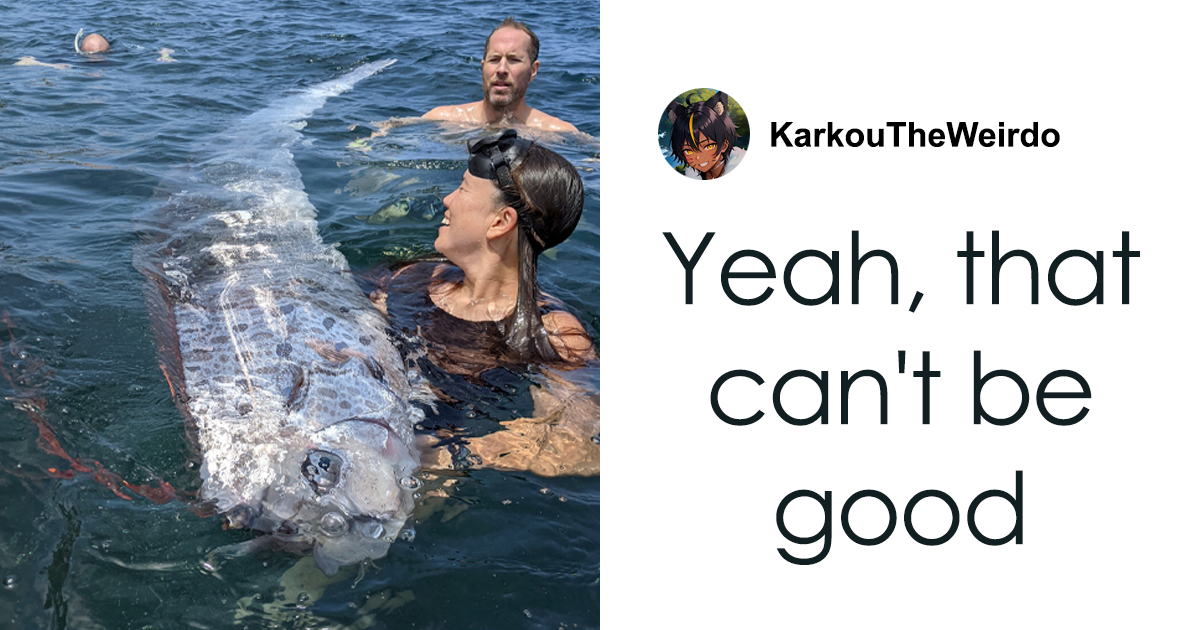
A strange silver ribbon appeared in San Diego waters, and suddenly the Pacific looked less like a postcard and more like the opening scene of a monster movie. The creature was not a dragon, not a movie prop, and not a rejected pool noodle from Poseidon’s garage. It was an oarfishone of the rarest, most mysterious deep-sea fish ever seen near the surface.
Found near La Jolla Cove in August 2024, the long, shimmering fish immediately captured public attention because oarfish have a dramatic nickname: the “doomsday fish.” In folklore, especially in Japan, oarfish are sometimes believed to appear before earthquakes or tsunamis. That legend gives the San Diego discovery its spooky headline appeal. But the real story is far more interesting than superstition alone.
This rare sea serpent-like fish offers a peek into a hidden world beneath the waves, where sunlight fades, pressure rises, and creatures evolve into shapes that make humans say, “Absolutely not,” while still leaning closer for a better look.
The San Diego Oarfish Discovery: What Actually Happened?
The oarfish was discovered floating dead near La Jolla Cove, north of downtown San Diego. A group of kayakers and snorkelers came across the animal and helped bring it ashore. Marine experts later identified it as a short-crested oarfish, scientifically known as Regalecus russellii.
The specimen measured about 12.25 feet long and weighed more than 74 pounds. Its body was long, flat, silvery, and marked with dark spots. A red dorsal crest ran from its head, giving it the look of a royal sea ribbon that had wandered out of a myth and into Southern California traffic.
Scientists from UC San Diego’s Scripps Institution of Oceanography, NOAA Fisheries’ Southwest Fisheries Science Center, and California State University Fullerton examined the fish through a necropsy, which is basically an animal autopsy. The goal was not to prove a curse, but to learn more about a species humans almost never get to study up close.
Why Oarfish Look Like Sea Serpents
Oarfish are among the longest bony fish in the world. Some species can grow beyond 20 or even 30 feet, which explains why sailors and coastal communities have long connected them with sea monster legends. Imagine seeing a silver blade of a fish rising vertically through dark water, with a red crest fluttering like underwater fire. You would not calmly say, “Ah yes, a mesopelagic filter feeder.” You would probably say something less scientific and louder.
A Fish Built For The Twilight Zone
Oarfish usually live in deep ocean zones, especially the mesopelagic or “twilight” zone, where sunlight is faint and the environment is difficult to observe. They are not typical beach visitors. When one appears at the surface or washes ashore, scientists often suspect illness, injury, disorientation, unusual currents, or environmental stress.
Unlike sharks or tuna, oarfish are not powerful, muscular hunters. They feed mainly on small creatures such as krill, plankton, and tiny crustaceans. Their long bodies help them move through the water column, and their reflective silver skin may help them blend into dim deep-sea light.
The “Bad Omen” Legend: Earthquake Fish Or Ocean Coincidence?
The oarfish’s spooky reputation comes largely from folklore. In Japanese tradition, the oarfish has been called a messenger from the sea god’s palace. Over time, stories developed claiming that oarfish appearances could warn of coming earthquakes or tsunamis.
The legend gained modern attention after reports of multiple oarfish washing ashore before Japan’s devastating 2011 Tōhoku earthquake and tsunami. That timing made the story irresistible. Humans love patterns, especially scary ones. If a giant silver fish appears and then the earth shakes, the brain immediately starts connecting dots, even if the dots are actually just standing awkwardly near each other at a party.
Scientific analysis, however, does not support the idea that oarfish can predict earthquakes. A 2019 study examining deep-sea fish appearances and earthquakes in Japan found no reliable correlation. The U.S. Geological Survey has also emphasized that animal behavior before earthquakes remains difficult to interpret and has not produced consistent, reliable prediction methods.
Can Animals Sense Earthquakes At All?
Animals may sometimes react seconds before humans feel strong shaking because they can detect the faster, weaker P-waves that arrive before the more damaging S-waves. That is different from predicting an earthquake days or weeks in advance. A dog barking right before your couch starts wobbling is not the same as a fish filing a seismic forecast from the deep.
So, was the San Diego oarfish a bad omen? Scientifically, no. Symbolically, maybebut not in the magical disaster-warning sense. Its appearance is a reminder that the deep ocean is still poorly understood, and rare strandings can reveal important information about marine life, ocean conditions, and environmental change.
Why La Jolla Is A Hotspot For Strange Ocean Visitors
La Jolla is not just beautiful; it is also oceanographically interesting. The area sits near underwater canyons that bring deep water closer to shore. These submarine features may help explain why unusual deep-sea animals occasionally appear near San Diego beaches.
For scientists, that makes La Jolla a valuable natural laboratory. For beachgoers, it means a normal day of kayaking can suddenly turn into “Congratulations, you found a legendary sea serpent.”
What Scientists Hope To Learn From The Rare Specimen
The San Diego oarfish was not just measured, photographed, and admired like the world’s strangest red-carpet guest. Researchers collected samples that may help answer several important questions.
Genetics And Evolution
Fresh tissue samples can help scientists study the oarfish genome. Because these animals are rarely found in good condition, every specimen is valuable. Genetic data can reveal how oarfish adapted to deep-sea life and how they relate to other marine species.
Diet And Food Web Role
By studying isotopes and stomach contents, researchers can better understand what oarfish eat and where they fit in the ocean food web. Deep-sea ecosystems are complex, and even one specimen can add useful clues.
Pollution And Deep-Sea Health
Scientists may also examine tissues for contaminants such as microplastics or legacy pollutants. The deep sea can seem remote, but human pollution has a rude habit of showing up where it was definitely not invited.
Why People Are So Fascinated By The Doomsday Fish
The oarfish sits at the perfect crossroads of science and folklore. It is real enough for a lab table, strange enough for mythology, and rare enough to make every sighting feel like a message. That combination is powerful.
People are drawn to the oarfish because it looks like proof that the ocean still has secrets. In an age when satellites track storms and phones can identify houseplants, a 12-foot mystery fish reminds us that Earth is not fully explained. There are still creatures below the surface that can make a room full of scientists and internet commenters equally excited.
Should San Diego Residents Worry?
No one should treat an oarfish sighting as an earthquake warning. California already has real earthquake risks, and residents should prepare using science-based safety steps: secure heavy furniture, keep emergency supplies, know how to drop, cover, and hold on, and follow official earthquake guidance.
The oarfish is not a replacement for seismic monitoring. It is not a slippery emergency alert system. It is a rare deep-sea animal whose appearance deserves curiosity, respect, and careful studynot panic.
Experiences And Reflections: What A Rare Sea Serpent Teaches Us
Imagine arriving at La Jolla Cove expecting a normal ocean day. Maybe you planned to kayak, snorkel, take a few photos, and pretend for three hours that email does not exist. The water is bright, the cliffs are golden, and the sea lions are performing their usual unpaid comedy routine. Then someone spots a long silver shape floating near the surface.
At first, the mind tries to place it into a familiar category. Is it kelp? A tarp? Some kind of weird inflatable? Then the details sharpen: the pale metallic body, the huge eye, the red fin, the impossible length. Suddenly, the ocean feels bigger than it did five minutes ago.
That is the emotional power of an oarfish encounter. It interrupts ordinary life. It makes people look down into the water and remember that the sea is not just scenery. It is a living system stacked in layers, from sunlit shallows to dark depths where animals move through cold water almost no human will ever visit.
For the people who helped recover the San Diego oarfish, the experience was probably a mix of awe, confusion, sadness, and responsibility. Awe, because few people ever see such a creature. Confusion, because a deep-sea animal at the surface always raises questions. Sadness, because the fish was dead. Responsibility, because rare specimens should not be treated like beach souvenirs. They are scientific opportunities.
The public reaction also says a lot about us. Some people immediately reached for earthquake legends. Others focused on marine biology. Some cracked jokes because humor is how humans handle things that are too strange to process directly. A 12-foot “doomsday fish” floating near San Diego is exactly the kind of story that makes the internet put on a lab coat and a wizard hat at the same time.
But the most meaningful experience is the shift in perspective. The oarfish reminds us that mystery still exists in the natural world. Not fake mystery. Not conspiracy mystery. Real mysterythe kind that sends scientists into labs, encourages museums to preserve specimens, and inspires ordinary people to ask better questions.
What pushed the fish toward the surface? Was it sick? Injured? Disoriented by currents? Influenced by ocean conditions? Was its appearance simply a rare accident made more visible because people happened to be nearby? Each question matters more than the old “bad omen” label.
There is also a lesson in how we respond to fear. Folklore gives the oarfish drama, but science gives it depth. The earthquake legend may be memorable, yet the real value of the animal is not its supposed ability to warn us about disaster. Its value lies in what it can teach us about deep-sea biology, ocean change, and the limits of human knowledge.
So the next time a rare sea serpent surfaces in San Diego waters, the best response is not panic. It is wonder, followed by careful observation. Take photos from a respectful distance. Contact local marine authorities or researchers. Let experts handle the animal safely. And yes, make one tasteful joke about sea dragons if you must. The ocean can handle it.
Conclusion: The Real Omen Is Curiosity
The rare oarfish found in San Diego waters is easy to frame as a bad omen, especially with centuries of earthquake folklore swimming behind it. But the facts tell a better story. This was a rare deep-sea fish, found in an unusual place, giving scientists a valuable chance to study one of the ocean’s most elusive animals.
The earthquake legend may keep the headline alive, but the science gives the story meaning. The oarfish is not a prophet of doom. It is a messenger of mystery, reminding us that the deep ocean remains one of Earth’s greatest frontiers. And honestly, if the sea wants to send a reminder, a 12-foot silver serpent is certainly more memorable than a memo.
Note: This article is based on real public information about the 2024 La Jolla Cove oarfish discovery, marine science research, earthquake-prediction guidance, and documented oarfish folklore. It avoids unsupported claims that oarfish can predict earthquakes.