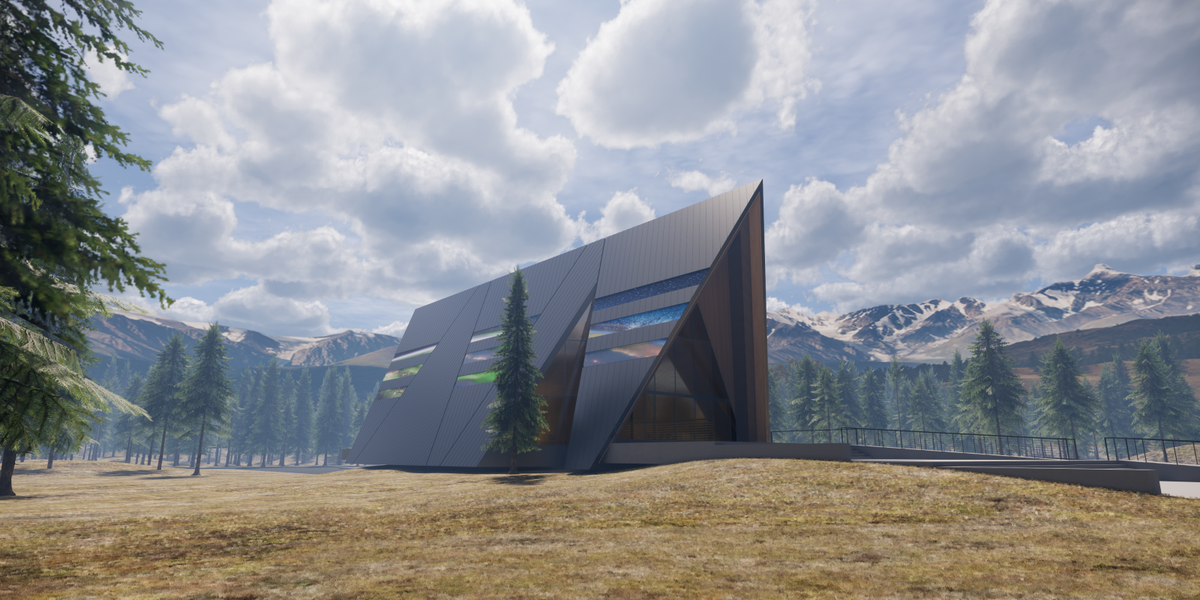
The Aurora Nuclear Plant, more accurately known as Oklo’s Aurora Powerhouse, is one of the most closely watched advanced nuclear projects in the United States. It is not the classic image of a giant nuclear station with cooling towers photobombing the horizon like concrete mushrooms. Instead, Aurora is designed as a compact, fast-fission power plant that could produce dependable clean electricity and high-temperature heat from a much smaller footprint.
At its center is a big idea wrapped in a small package: use modern reactor design, metallic fuel, and fast-neutron technology to deliver reliable power for customers that cannot afford outages, excuses, or “the wind took the day off” moments. The first Aurora project is being developed at Idaho National Laboratory, a site with deep nuclear history and the kind of technical infrastructure that makes advanced reactor testing possible.
For energy watchers, the Aurora Nuclear Plant matters because it sits at the intersection of several major trends: rising electricity demand, artificial intelligence data centers, industrial decarbonization, advanced reactor licensing, and the urgent need for a domestic nuclear fuel supply chain. In plain English, Aurora is one of the projects trying to answer a difficult question: can nuclear energy become smaller, faster to deploy, easier to finance, and still safe enough to earn public trust?
What Is the Aurora Nuclear Plant?
The Aurora Nuclear Plant is a proposed advanced fission power plant developed by Oklo Inc., an American advanced nuclear company. Oklo generally calls the design the Aurora Powerhouse, which is a helpful name because it signals that the project is meant to be a complete power-producing facility, not simply a reactor sitting in a laboratory like a very expensive science fair volcano.
The U.S. Nuclear Regulatory Commission describes the Aurora design as a liquid metal-cooled, metal-fueled fast reactor with a maximum power level of up to 75 megawatts electric. That makes it much smaller than a conventional large nuclear reactor, which often produces around 1,000 megawatts electric or more. Aurora is designed for customers that need firm, always-available power, such as data centers, industrial sites, defense facilities, remote communities, and energy-hungry manufacturing operations.
The first project, known as Aurora-INL, is located at Idaho National Laboratory. That location is important. INL has been home to decades of reactor research, including the Experimental Breeder Reactor II, a sodium-cooled fast reactor that operated in Idaho from the 1960s to the 1990s. Aurora draws heavily from that fast-reactor heritage, while updating the concept for a modern commercial energy market.
How Aurora Is Different From Traditional Nuclear Power Plants
Most operating U.S. nuclear power plants are large light-water reactors. They use ordinary water as both coolant and moderator, and they are built around big centralized generation. Aurora takes a different path. It is a fast reactor, meaning it uses fast-moving neutrons rather than slowing them down with a moderator. This difference matters because fast reactors can use fuel more efficiently and may support future recycling of used nuclear materials.
Liquid Metal Cooling
Aurora is described as a liquid metal-cooled reactor. Fast reactors often use sodium or another liquid metal because these coolants transfer heat efficiently and can operate at low pressure compared with water-cooled reactors. Lower pressure can simplify certain engineering challenges, although sodium systems require careful design because sodium reacts with water and air. In the nuclear world, every technology gets a superpower and a homework assignment.
Metallic Fuel
The Aurora design uses metallic fuel. Metallic fuels have a long history in fast reactor research and can offer strong thermal performance. Oklo has also emphasized the possibility of using high-assay low-enriched uranium, known as HALEU, and eventually recycled nuclear material. HALEU is enriched below weapons-grade levels but higher than fuel used in today’s conventional light-water reactors. Many advanced reactor developers see HALEU as essential because it allows smaller cores, longer operating cycles, and higher performance.
Smaller Size, Different Market
The Aurora Nuclear Plant is not trying to replace every large reactor one-for-one. Its value proposition is different. A compact reactor could be deployed near customers that need dedicated power, especially where grid congestion, carbon goals, or energy security concerns make conventional power purchasing less attractive. Think of it less like a mega-mall power plant and more like a specialized energy engine built for a particular customer.
Why Idaho National Laboratory Matters
Idaho National Laboratory is one of the most important nuclear research sites in the United States. The site has hosted many experimental reactors and remains central to advanced reactor development. For Aurora, INL offers technical support, nuclear infrastructure, fuel-cycle expertise, and a regulatory environment designed for testing and demonstration.
The Aurora-INL site is near the Materials and Fuels Complex, which is significant because advanced reactors are not only about reactor vessels and turbines. They also depend on fuel fabrication, materials testing, safety analysis, waste planning, transportation logistics, and trained nuclear workers. A reactor project without fuel is just an ambitious metal sculpture with better press releases.
Oklo has pursued fuel fabrication capabilities connected to Aurora and related fast reactor designs. The U.S. Department of Energy has also selected companies, including Oklo, for advanced nuclear fuel line pilot projects. That fuel work matters because many advanced reactors require HALEU, and the domestic HALEU supply chain remains one of the biggest practical constraints facing the next generation of nuclear power.
The Licensing Story: Progress, Setbacks, and a Second Swing
The Aurora Nuclear Plant has had a notable regulatory journey. Oklo submitted a custom combined license application to the Nuclear Regulatory Commission in 2020 for an Aurora reactor at Idaho National Laboratory. In 2022, the NRC denied that application without prejudice because the agency determined Oklo had not provided enough technical information to complete the review. “Without prejudice” is important: it means the door was not permanently closed. It was more like the regulator saying, “Come back with the missing homework, and we can talk.”
Since then, Oklo has taken a more staged approach. The company has been working through pre-application activities with the NRC and has also advanced Aurora-INL through the Department of Energy’s Reactor Pilot Program. In 2025, Oklo announced that it had broken ground on its first Aurora powerhouse at INL. In 2026, the company announced DOE approval of a Nuclear Safety Design Agreement for Aurora-INL, moving the project into another phase under DOE oversight.
Another milestone arrived when the NRC approved Oklo’s Principal Design Criteria topical report for the Aurora powerhouse in Idaho. A topical report does not equal a full reactor license, but it can establish reusable regulatory foundations for safety, reliability, and performance requirements. For a company planning repeat deployments, that kind of approved framework can reduce duplicated review work later.
Why the Aurora Nuclear Plant Is Getting Attention
Aurora is getting attention because the U.S. electricity system is under pressure. Power demand is rising from data centers, artificial intelligence, electric vehicles, heating electrification, and new manufacturing. At the same time, utilities and large companies are trying to reduce carbon emissions without sacrificing reliability. Solar and wind are growing quickly, but they are variable. Batteries help, but long-duration firm power remains valuable. Nuclear power, with its high capacity factor, fills a special role in that puzzle.
Conventional U.S. nuclear plants have historically run at very high capacity factors, often producing power around the clock for long stretches. That reliability is one reason advanced nuclear developers are targeting data centers and industrial customers. A data center cannot simply tell millions of users, “Sorry, the electrons are buffering.” It needs power that is clean, steady, and available at 3 a.m. during a heat wave.
Oklo has also attracted attention through commercial agreements and partnerships related to future power supply. These agreements signal market interest, although many are non-binding or depend on future licensing, financing, construction, and fuel availability. In other words, the market is excited, but the plant still has to do what all energy projects must eventually do: get built, get approved, and work.
Potential Benefits of the Aurora Nuclear Plant
Reliable Clean Energy
One of Aurora’s biggest selling points is reliability. Nuclear plants produce electricity without direct carbon dioxide emissions during operation. For customers pursuing clean energy goals, a small advanced reactor could provide firm power that complements renewables rather than competing with them.
Small Footprint
Aurora’s compact design could reduce land requirements compared with sprawling energy infrastructure. A smaller site may also make it easier to place power generation near industrial customers, reducing transmission constraints. That does not mean siting will be easy, but it does mean the project has different land-use possibilities than a large conventional power station.
Fuel Efficiency and Recycling Potential
Fast reactors can, in principle, extract more energy from nuclear fuel and support recycling strategies. Oklo has discussed fuel recycling as part of its long-term business model. If successful, this approach could reduce the amount of unused energy left in spent fuel and create a more circular nuclear fuel cycle. That would be a major achievement, though it requires technical success, regulatory approval, economic competitiveness, and careful safeguards.
Industrial Heat
Aurora is not only about electricity. Advanced reactors can also provide usable heat for industrial processes. Clean industrial heat is a difficult decarbonization challenge because many factories need high temperatures that are hard to supply with ordinary electrification. A compact nuclear plant that provides both electricity and heat could become valuable for chemicals, fuels, minerals, manufacturing, and hydrogen production.
Challenges Facing Aurora
No honest article about the Aurora Nuclear Plant should pretend the road ahead is paved with confetti. Advanced nuclear projects face serious challenges.
Licensing Complexity
Even with recent progress, Aurora still must satisfy rigorous safety requirements. Advanced reactor licensing is evolving, but it remains demanding for good reason. Nuclear energy can offer major public benefits, but public trust depends on transparency, technical quality, emergency planning, waste management, and independent oversight.
Fuel Supply
HALEU supply is one of the biggest bottlenecks for advanced reactors in the United States. Without enough qualified fuel, even a well-designed reactor cannot operate. DOE fuel programs, pilot facilities, and private investments are meant to solve this, but the supply chain must scale from promising announcements to real production.
Economics
Small reactors may offer factory-style repeatability, reduced site work, and customer-specific deployment. However, first-of-a-kind projects are rarely cheap. Aurora’s economics will depend on construction cost, financing, licensing duration, fuel cost, operations, customer contracts, and whether future units can be built faster and cheaper than the first.
Public Understanding
Nuclear technology comes with public concern. Some concerns are technical, some emotional, and some are rooted in real historical failures. Aurora’s success will require more than engineering. It will require clear communication about safety systems, waste handling, emergency planning, security, and long-term stewardship. The public does not need slogans; it needs straight answers.
What to Watch Next
The next chapter for the Aurora Nuclear Plant will likely focus on detailed safety analysis, fuel fabrication progress, DOE authorization steps, NRC engagement, construction milestones, and customer agreements. Observers should watch whether Oklo can convert regulatory progress into physical progress, then convert physical progress into reliable power production.
Key questions include: Can Aurora meet its schedule? Can the fuel supply chain support deployment? Will the first unit validate the business model? Can Oklo repeat the design efficiently? Will customers sign binding agreements at scale? And most importantly, will the project demonstrate safety and reliability in a way that earns confidence beyond the nuclear industry’s inner circle?
Real-World Experience Around the Aurora Nuclear Plant
Following a project like the Aurora Nuclear Plant is a different experience from reading about a finished power station. A conventional plant has a record: output, outages, costs, inspections, and decades of operational lessons. Aurora is still in the proving stage, so the experience is more like watching a high-stakes engineering story unfold in real time. There are blueprints, milestones, permits, technical reports, investor presentations, public optimism, and the occasional regulatory plot twist. It is part energy project, part technology startup, part national infrastructure experiment.
For a local community member near Idaho National Laboratory, the experience may begin with curiosity. The project is compact compared with traditional nuclear stations, but “small” does not automatically mean “simple” in public perception. People want to know what will be built, how fuel will be handled, whether emergency planning changes, how transportation routes are managed, and whether jobs will be created. They may also wonder if the plant will quietly become a neighbor for decades. Nuclear projects do not arrive like food trucks; they become part of the regional identity.
For an engineer or energy analyst, Aurora is fascinating because it tests whether fast-reactor concepts can move from historical demonstration to modern commercial deployment. The technical heritage of EBR-II gives Aurora a serious foundation, but today’s standards, market pressures, and regulatory expectations are different. The experience of evaluating Aurora means balancing enthusiasm with discipline. A promising reactor design still needs quality assurance, supply-chain reliability, operator training, cyber protection, maintenance planning, and a convincing cost structure. The electrons do not care how exciting the press release was.
For a data center operator, the experience is more practical: power must be clean, firm, and available. If an Aurora-style plant can provide dedicated power for high-demand computing loads, it could become a strategic asset. But customers will look closely at delivery timelines, contract terms, backup power, licensing risk, and whether the plant can scale from a first unit to a fleet. In that world, “advanced nuclear” sounds great, but “delivered on time” sounds even better.
For the general public, Aurora offers a chance to rethink nuclear energy without ignoring its responsibilities. The project is smaller and newer than the nuclear plants many Americans know, but it still belongs to the nuclear family. That means it carries both the promise of carbon-free reliability and the burden of proving safety. The best experience for readers is to follow Aurora with open eyes: appreciate the innovation, ask hard questions, watch the milestones, and resist both blind hype and automatic dismissal. Advanced nuclear power is not magic. It is engineering. And engineering, when done well, is often more impressive than magic because it has to survive contact with reality.
Conclusion
The Aurora Nuclear Plant represents one of the most ambitious attempts to bring advanced nuclear energy into a new commercial era. Its compact fast-reactor design, Idaho National Laboratory location, fuel-recycling ambitions, and potential role in powering data centers and industry make it a project worth watching closely. Aurora is not yet a proven commercial fleet, and important questions remain around licensing, fuel supply, cost, construction, and public acceptance. Still, it captures why advanced nuclear energy is back in the national conversation: the United States needs reliable, clean, high-density power, and small fast reactors may become part of that solution.
If Aurora succeeds, it could help redefine what a nuclear plant looks like, where it can be built, and who it can serve. If it struggles, its lessons will still shape the next generation of reactor development. Either way, the Aurora Nuclear Plant is more than a single project in Idaho. It is a test case for whether advanced fission can move from bold promise to dependable power.