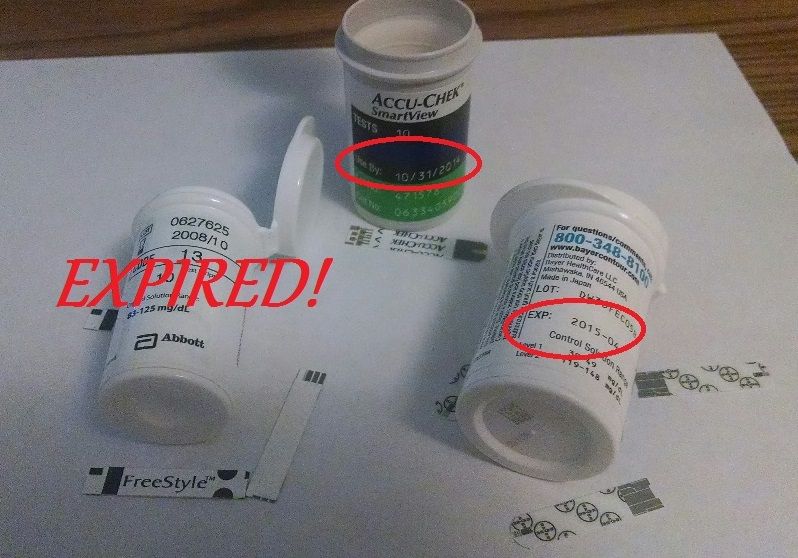
If expired milk is a gamble, expired glucose test strips are a plot twist. One may ruin your cereal. The other may mess with a treatment decision. That is why this question comes up so often in diabetes life: Can I still use expired glucose test strips? The practical answer is simple, even if nobody loves hearing it: you really should not rely on them. The longer answer is more useful, because real life is messy, diabetes supplies are expensive, and most people have at least one mystery vial sitting in a drawer like it pays rent.
Glucose strips are not tiny pieces of magic cardboard. They are chemical tools. They are designed to work for a certain period, under certain storage conditions, with a certain meter, and with a certain testing technique. Once you push past that expiration date or treat the vial like it belongs in a beach bag, a hot car, or a steamy bathroom cabinet, accuracy can start to slide. And when accuracy slides, decisions about insulin, food, exercise, and safety can slide right along with it.
This guide breaks down what expired test strips really mean, what risks matter most, when a strange reading should raise your eyebrow, and how to keep your blood sugar checks as trustworthy as possible.
Do Glucose Test Strips Really Expire?
Yes, they really do. The expiration date is not decorative. It is not there to make your wallet cry for sport. Test strips contain reactive chemicals and enzymes that are meant to measure glucose in a blood sample. Over time, those ingredients lose stability. Manufacturers assign expiration dates based on how long they can stand behind the strip’s performance when it is stored the right way.
That means the date on the vial is more like a confidence line than a random sticker. Before that date, the company is saying, “Used correctly, this should perform as labeled.” After that date, the company is no longer making that promise. That does not mean every expired strip instantly becomes nonsense at midnight. It does mean accuracy is no longer something you should assume.
Some brands also add another wrinkle: an open-vial life or discard date. In plain English, a strip container may be good until the printed expiration date or only for a certain number of months after opening, whichever comes first. So a vial can look perfectly young on paper and still be “too old” in practice if it has been opened for a while.
Why Expired Strips Are a Bigger Deal Than They Sound
The main problem is not that expired strips are dramatic. It is that they can be misleading. A wrong number may lead to the wrong response. If a strip reads lower than your actual glucose, someone might delay carbs, miss a low, or take too much insulin. If it reads higher than reality, they might correct a number that did not need correcting. Diabetes is hard enough without faulty homework.
And here is the tricky part: expired strips do not usually announce their retirement with fireworks. Sometimes they throw an error. Sometimes they give a value that seems plausible. That is what makes them sneaky. A strip does not have to be wildly wrong to cause a problem. Even a modest mismatch can matter when you are trying to decide whether to bolus before a meal, drive a car, go for a run, or treat a possible low.
In short, the real risk is not the strip itself. The real risk is the treatment decision you make because you trusted the strip.
Storage Matters Almost as Much as the Date
A test strip can technically be “not expired” and still perform badly if it has been stored like a vacation souvenir. Moisture, humidity, heat, and extreme cold can all damage strips. That is why keeping the vial tightly closed matters so much. Those strips do not enjoy bathroom steam, kitchen humidity, glove compartments, beach bags, windowsills, or backpacks roasting in summer heat.
The classic diabetes move is tossing supplies into whatever bag is nearby and hoping for the best. Unfortunately, hope is not a storage condition. If strips are exposed to air for long periods, stored in a place that gets hot or damp, or transferred into a random container because the original vial seemed “too bulky,” accuracy can take a hit.
The safest routine is also the least glamorous: keep strips in their original container, cap it tightly after every use, store it in a cool and dry room-temperature place, and do not leave it where temperatures swing. Boring? Absolutely. Effective? Also absolutely.
Can You Ever Use Expired Test Strips in a Pinch?
This is where real life barges into the room wearing muddy boots. People run out of supplies. Pharmacies close. Insurance plays games. Travel happens. Storms happen. Diabetes does not take a long weekend.
Officially and medically, expired strips are not recommended. That is the clear answer. But many people are not asking the question because they love rulebooks. They are asking because they are stuck. If someone has no other option in the moment, the smartest mindset is not “great, problem solved.” It is “this reading may be unreliable, so I need to be extra cautious.”
That means avoiding big, aggressive treatment decisions based on one odd result from an expired strip. It means repeating the test if possible, washing and drying hands carefully, checking whether the reading matches symptoms, comparing with a current CGM trend if the person uses one, and switching to fresh strips as soon as humanly possible. It also means taking symptoms seriously. If a person feels low, high, sick, confused, shaky, or just very off, that feeling deserves attention even if the strip result looks polite and respectable.
The safest rule of thumb is this: expired strips are never the first choice, and they should not be trusted for important dosing decisions when better options are available.
Signs a Reading Might Be Off
Sometimes the clue is obvious. The number makes no sense. You feel low, but the meter says you are fine. You feel sky-high and thirsty, but the reading looks suspiciously calm. Your CGM trend and fingerstick are arguing like siblings in the back seat. That is when it is time to pause instead of panic.
Common reasons a reading may be unreliable
Expired strips are only one suspect on the list. Readings can also be thrown off by strips exposed to humidity or heat, dirty hands, wet fingers, alcohol that has not dried, a blood drop that is too small, the wrong strip for the meter, a dirty meter, low battery, or problems with technique. In other words, an odd number is not always the strip’s fault, but the strip still gets a lot of blame because it often earns it.
If a result looks weird, do a quick reality check. Wash hands with soap and water, dry them well, retest with a new strip, and look at the bigger picture. Did you just eat? Exercise? Treat a low? Sit in the sun? Miss insulin? Are you sick? Context matters. Blood sugar is a moving target, not a framed portrait.
How to Make Your Meter Readings More Trustworthy
Accuracy is not only about avoiding expired strips. It is about creating good testing habits that reduce the chance of bad data.
1. Check both dates
Look for the printed expiration date and, if your brand uses one, the discard date after opening. Write the open date on the vial with a marker. Future You will appreciate the favor.
2. Use the right strips for the right meter
Test strips are not interchangeable party guests. Use the specific strip designed for your specific meter. “Close enough” is not a diabetes strategy.
3. Keep the vial closed
Open it, take one strip, shut it. Do not leave the cap loose while making breakfast, answering texts, and wondering where your other sock went.
4. Watch the environment
Room temperature and dry storage are your friends. A hot car, humid bathroom, or beach tote are not.
5. Wash and dry your hands
Even a tiny bit of food, sugar, lotion, or moisture can throw off a reading. Clean hands beat mystery numbers.
6. Use control solution when things seem off
If your meter supports it, a control solution check can help confirm whether the meter and strips are working together as they should. It is not exciting, but neither is a false high before dinner.
7. Avoid secondhand strips
Cheap supplies from unknown sellers may be expired, tampered with, stored badly, or previously opened. Saving money is understandable. Buying uncertainty is less appealing when the uncertainty is attached to your bloodstream.
What to Do With Old or Questionable Strips
If strips are expired, damaged, heat-exposed, moisture-exposed, or from a vial you do not trust, retire them. Do not keep them around as “emergency maybe strips” unless you are in a true backup situation and understand the risk. In most everyday circumstances, questionable strips are more stress than support.
A better emergency plan is to keep an extra sealed vial in your diabetes kit, travel bag, desk drawer, or glove compartment replacement pouch stored inside the car only when temperatures are controlled. Rotate supplies before trips. Check dates monthly. Keep enough on hand that “I found these behind the cereal boxes” does not become a diabetes management strategy.
When a Bad Reading Becomes a Bigger Safety Issue
A suspicious strip is not just an equipment problem when symptoms are serious. If blood sugar seems very low or very high, if symptoms do not match the reading, or if someone is confused, vomiting, unable to keep fluids down, or showing signs of severe hypoglycemia or possible diabetic ketoacidosis, this moves out of the “hmm, weird number” category. That is the point to follow the person’s emergency plan and get urgent medical help.
Technology is helpful, but it is not a substitute for judgment. A meter is a tool. It is not a magician, not a therapist, and definitely not the boss of your common sense.
The Bottom Line on Using Expired Glucose Test Strips
Can expired glucose test strips still produce a number? Sometimes, yes. Can that number be trusted? Not enough to make that a comfortable habit. Test strips expire because the chemistry inside them changes over time, and poor storage can speed up the trouble. Once reliability is in doubt, the number on the screen becomes less useful and more dangerous.
The best play is to use fresh strips, store them correctly, keep the vial closed, check dates regularly, and treat odd results like clues instead of commandments. If you are ever forced into a pinch, be cautious, verify when you can, and do not make high-stakes diabetes decisions on a reading that already arrived with a question mark attached.
Because in diabetes care, “probably fine” is not nearly as comforting as it sounds.
Real-Life Experiences With Expired Glucose Test Strips
One of the most common real-world stories goes something like this: a person with diabetes is cleaning out a bag, finds an old vial of strips, and thinks, “Well, they look fine.” The first reading even seems believable. That is the trap. The strips do not come with a dramatic warning label that says, “Greetings, I am now a chaos goblin.” They just quietly become less dependable. Many people only realize something is wrong when the number on the meter does not line up with how they feel. A person may feel shaky and sweaty, test, and get a reading that suggests everything is normal. Or they may feel perfectly fine and get a number high enough to make them rethink lunch, insulin, and the meaning of life.
Another common experience happens during travel. Someone packs carefully, feels very organized, and then discovers halfway through the trip that the vial in the kit is expired or has been cooked by heat. Airports, road trips, beach vacations, and summer errands are prime conditions for accidental strip abuse. A lot of people learn the hard way that diabetes supplies hate hot cars with the passion of a thousand suns. In those moments, the stress is not just about the strip. It is about not knowing whether the data is trustworthy enough to make a safe decision away from home.
Parents of kids with diabetes often describe a different kind of stress. They are not just reading a number. They are trying to make sense of a number before soccer practice, during a school day, or at 2 a.m. when everyone is already running on fumes. If the meter gives a strange result and the strips turn out to be expired, it can feel like the equipment betrayed the whole household. The emotional part is real. People rely on these tools constantly, so when a strip turns sketchy, it is not just annoying. It chips away at confidence.
Adults managing diabetes on a tight budget often tell the most frustrating stories of all. They know fresh strips are safer, but cost and insurance barriers can push them into difficult decisions. That is why the conversation around expired strips is not only about chemistry. It is also about access. For many people, the question is not “Should I use expired strips?” It is “What do I do when the fresh ones are not available yet?” That gap between ideal care and real life is where a lot of anxiety lives.
The most reassuring pattern in these experiences is that people get smarter fast. They start writing open dates on vials. They stop storing strips in random bags. They keep a backup stash. They learn to retest when a result looks suspicious and to respect symptoms when the number seems odd. In other words, experience turns people into detectives. And in diabetes management, a healthy little skepticism is often one of the best survival skills around.