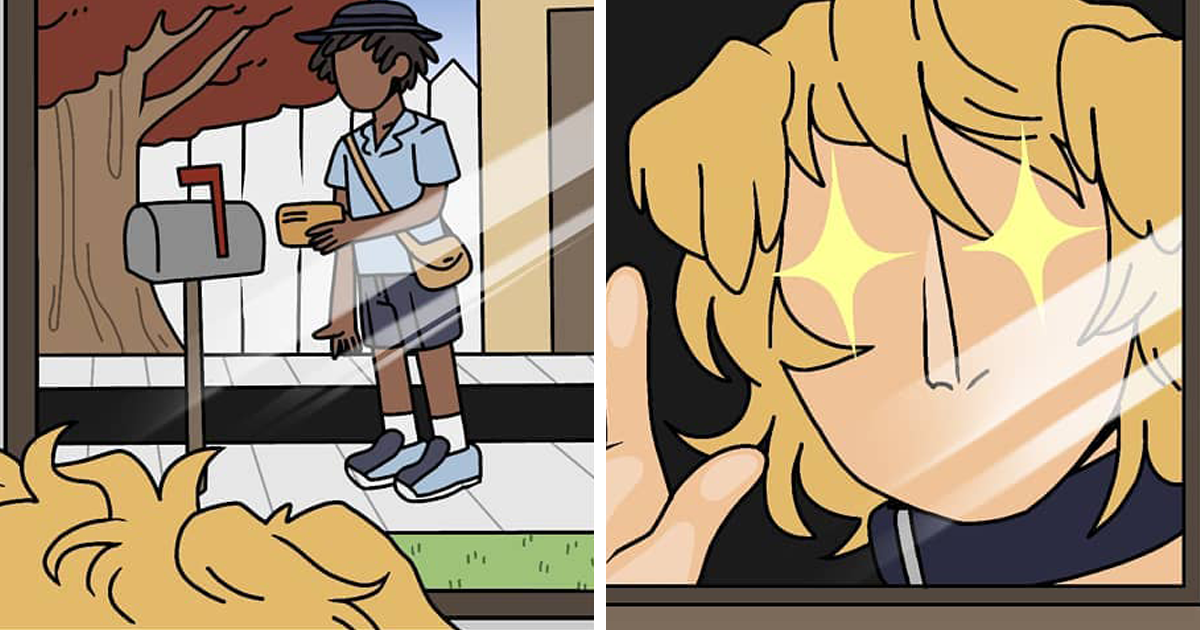
Everyday life rarely arrives with dramatic background music. Most of the time, it shows up wearing sweatpants, holding an unpaid bill, and asking why you opened the refrigerator when you were not even hungry.
That wonderfully unglamorous territory is where Dre, the artist behind TheRandomNinjaKitty, finds her best material. Her colorful, relatable comics transform ordinary frustrations, awkward thoughts, friendship moments, pop-culture obsessions, and social pressures into quick visual jokes. At the time her collection of 40 comics was originally featured, her Instagram audience had grown to approximately 98,000 followers.
The number is impressive, but it is not the most interesting part of the story. The real achievement is that thousands of strangers can look at a drawing about a tired brain, an uncomfortable conversation, or a strangely judgmental pet and immediately think, “Excuse me, how did this artist get access to my private life?”
Dre’s comics succeed because they do not treat everyday problems as insignificant. They treat them as shared experiencesand then give them a punchline.
Meet Dre, the Artist Behind TheRandomNinjaKitty
Dre began creating comics about people around her while she was still in high school. Coworkers and friends became characters, inside jokes became story ideas, and small moments gradually developed into a continuing webcomic series.
Her work has appeared under the name TheRandomNinjaKitty on social media and on webcomic platforms such as Tapas. The title may suggest a highly trained feline silently leaping across rooftops, but the comics are much broader and considerably more unpredictable. Dre describes her creative universe as a place containing friends, cats, possums, skeletons, girl-related experiences, and what she jokingly calls a very sad brain.
That description is practically a complete summary of modern adulthood. Add a dying phone battery and a mysterious subscription charge, and the collection would qualify as a documentary.
Dre’s body of work combines slice-of-life storytelling with memes, creative puns, popular culture, friendship, personal observations, and occasional commentary on social issues. Rather than building one continuous fictional adventure, she captures many short emotional adventuresthe kind that begin with confidence and end five minutes later with someone hiding under a blanket.
Why Everyday Problems Make Excellent Comics
A problem does not need to involve an alien invasion to be worth illustrating. Sometimes the most relatable crisis is trying to behave normally after saying “You too” when a restaurant server tells you to enjoy your meal.
Small struggles work especially well in comics because readers recognize them almost instantly. A facial expression, a short caption, and a carefully timed final panel can communicate an experience that would require several paragraphs to explain in ordinary prose.
Recognition Creates the First Laugh
Relatable humor often begins before the official punchline. The reader sees the situation and recognizes it: procrastinating until a simple task becomes a national emergency, replaying an embarrassing conversation from six years ago, or feeling personally betrayed by clothing that fit perfectly last week.
Recognition produces a tiny emotional surprise. Readers may believe their strange habits are uniquely theirs, only to discover that thousands of other people apparently conduct the same midnight arguments with their own brains.
Exaggeration Delivers the Punchline
Dre frequently turns ordinary reactions into dramatic visual events. Mild disappointment can become complete emotional collapse. A passing thought can become a character with its own agenda. A pet can behave like a tiny landlord who contributes nothing financially but still expects premium service.
The exaggeration is funny because the underlying emotion remains accurate. Nobody literally melts into the floor when an awkward situation occurs, but many people understand the spiritual desire to do so.
Simple Panels Keep the Joke Moving
TheRandomNinjaKitty comics generally use clean shapes, expressive characters, bright colors, and direct dialogue. This visual economy matters. Readers can understand the setup quickly, follow the change in emotion, and reach the final joke without getting lost in decorative details.
Simple artwork is not the same as careless artwork. In a short comic, every eyebrow, pause, speech bubble, and reaction must help the story. A single blank stare may perform more emotional labor than an entire page of dialogue.
The Everyday Problems Her Comics Explore
The 40-comic collection covers a playful mixture of personal experiences and widely recognizable situations. Its appeal comes partly from variety: one comic may focus on an internal struggle, while another wanders into friendship, animals, shopping, popular entertainment, or social expectations.
The Brain as an Unreliable Roommate
Many relatable comics turn the mind into a character because the mind rarely behaves like a professional assistant. It forgets useful information, remembers humiliating events with astonishing clarity, invents unlikely disasters, and becomes unusually philosophical when everyone else is trying to sleep.
Dre’s “sad brain” style of humor gives an external form to confusing emotions. Instead of delivering a serious lecture about overthinking, insecurity, or low motivation, a comic can stage a conversation between the person and the unhelpful voice in her head.
The joke does not erase the difficult feeling. It makes the feeling easier to identify and share.
Friendship Without the Polished Filter
Online culture often presents friendship as a sequence of coordinated outfits, perfect brunches, and beautifully timed candid photographs. Real friendship usually involves stolen snacks, terrible advice, affectionate insults, unexplained noises, and conversations that would be impossible to defend in court.
Dre’s early comics were inspired by coworkers, friends, good times, and inside jokes. That origin gives the series a casual energy. The characters are not performing ideal relationships. They are navigating the comfortable nonsense that develops when people know one another well enough to stop pretending they are normal.
Cats, Possums, and Other Agents of Chaos
Animals are ideal comic characters because their behavior already feels like physical comedy. Cats can communicate disappointment without saying a word. Dogs can transform a two-minute absence into an emotional reunion. Possums look as though they have just received extremely troubling financial news.
By combining human worries with expressive animals, Dre creates jokes that are both absurd and familiar. The animals may not understand the problem, but they are fully prepared to make it more complicated.
Pop Culture as a Shared Language
Movies, television shows, fandoms, memes, and familiar fictional characters provide another layer of connection. Dre has created fan art related to animated programs and uses popular culture as inspiration for some comics.
These references work because fans already understand the emotional shorthand. A recognizable character, quote structure, or meme format can establish a situation immediately. Dre can then twist the reference, connect it to everyday life, or use it to expose the comical gap between heroic fiction and ordinary reality.
Fantasy characters may save entire kingdoms. The average reader is trying to answer one email without rewriting the first sentence twelve times.
Social Expectations and Women’s Experiences
Some of Dre’s comics also address subjects connected to gender expectations, body image, clothing, confidence, social behavior, and the contradictory standards women encounter.
Humor can make these topics approachable without pretending they are meaningless. A short comic can expose an unfair assumption, challenge a stereotype, or show the absurdity of an expectation through a character’s reaction.
The best social humor does not simply announce that something is frustrating. It reveals exactly why it is frustrating and allows readers to recognize the pattern for themselves.
Why Nearly 100,000 Fans Found the Comics Relatable
Follower counts do not grow from drawing skill alone. Audiences return when a creator offers a recognizable voice, consistent emotional honesty, and an experience worth sharing.
The Comics Feel Personal but Not Exclusive
Dre frequently draws from her own environment, but the resulting jokes remain open enough for other people to enter. A comic inspired by one friend can remind thousands of readers of their own friendships. A particular moment of anxiety can reflect a feeling experienced across different ages, locations, and backgrounds.
This balance is essential. Specificity makes a story feel authentic, while recognizable emotion makes it universal.
They Give Readers a Safe “Me Too” Moment
One of the most powerful reactions to relatable art is not laughter but relief. Seeing a private worry represented publicly can reduce the sense that a person is uniquely awkward, lazy, anxious, emotional, or confused.
The comic quietly says, “Someone else experiences this.” The comment section then adds, “Actually, several thousand of us do. We have apparently formed a committee.”
Shared humor can turn embarrassment into connection. Readers tag friends, compare experiences, and build conversations around a situation that might have felt uncomfortable to discuss directly.
Short Comics Fit the Rhythm of Social Media
A compact comic is naturally suited to platforms built around scrolling and sharing. Readers can understand it in seconds, revisit it later, or send it to a friend with no explanation beyond, “This is you.”
That accessibility helps independent artists reach audiences without relying on traditional newspaper syndication or a major publishing deal. Social platforms, Tapas, Patreon, and similar services allow creators to publish directly, receive immediate feedback, and develop a community around recurring work.
A Simple Art Style Can Carry Complicated Feelings
Dre’s straightforward visual style helps the emotional content remain clear. Characters are expressive, reactions are easy to read, and the panel sequences prioritize timing.
This clarity is especially useful when a comic moves from silliness into vulnerability. A complicated emotional experience can feel overwhelming when explained clinically. A cartoon version may create just enough distance for the reader to engage with it.
Visual metaphors also make invisible experiences visible. Anxiety can become an intrusive creature. Motivation can physically disappear. Confidence can enter a room dramatically and leave through the nearest window after one mildly critical comment.
The drawing does not need to look realistic because the feeling already does.
Relatable Comics Are More Than Disposable Internet Jokes
It is easy to dismiss short online comics as lightweight entertainment, especially when they feature memes, animals, or exaggerated reactions. However, comic art has long been used to document personal experiences, respond to cultural changes, question social rules, and transform ordinary life into narrative.
Webcomics continue that tradition in a format designed for digital communities. Their subjects may be small, but small subjects often reveal larger truths. A joke about shopping can point toward financial pressure. A comic about appearance can reveal unrealistic beauty standards. A panel about exhaustion can reflect the emotional demands of work, school, relationships, or constant online availability.
Readers do not always need a grand speech. Sometimes they need a tiny illustrated person staring into the distance while everything goes wrong.
What Emerging Comic Artists Can Learn From Dre
The success of TheRandomNinjaKitty offers several practical lessons for artists hoping to create relatable webcomics.
Start With Moments You Actually Know
Artists do not need to invent an enormous fictional universe before publishing. A strange conversation, an annoying habit, a friendship joke, or an unexpected emotional reaction can become a complete comic.
Personal observation is valuable because it includes details that generic jokes lack. The more honestly an artist captures the moment, the more likely readers are to recognize the emotion.
Develop a Voice, Not Just a Drawing Style
Visual consistency helps readers identify a creator, but personality keeps them interested. Dre’s mixture of absurdity, pop culture, vulnerability, social commentary, and animal chaos creates a recognizable voice.
A creator’s voice can appear in dialogue, pacing, recurring characters, subjects, and even the kinds of problems chosen for jokes.
Let Readers Participate
Webcomic audiences are not passive. They comment, share, tag friends, interpret jokes, and occasionally reveal stories stranger than anything the artist could have invented.
That interaction can help creators understand which emotions resonate while building a sense of community. It should not replace the artist’s instincts, but it can turn individual posts into ongoing conversations.
Conclusion: Laughing at the Problems That Follow Us Around
Dre’s 40 relatable comics demonstrate that ordinary life contains more than enough material for meaningful comedy. A tired mind, a chaotic friend, a suspicious cat, an uncomfortable social rule, or a badly timed memory can become a complete visual story.
TheRandomNinjaKitty does not solve everyday problems. The comics perform a different service: they make those problems recognizable, shareable, and slightly less powerful. Readers may still procrastinate, overthink, spend too much time online, and lose arguments to their pets. At least they can laugh while doing it.
That is why the collection connected with approximately 98,000 followers. The characters may belong to Dre, but the emotions belong to almost everyone.
Related Experiences: When an Ordinary Day Becomes a Relatable Comic
To understand the appeal of everyday-problem comics, imagine a completely normal weekday. The alarm rings, and your first creative act is constructing a legal argument for remaining in bed. You promise yourself five more minutes. Twenty-five minutes later, you are moving through the house like a contestant on a game show called Where Did I Put My Other Shoe?
Breakfast appears simple until you discover that the milk is empty, the coffee machine needs cleaning, and the one clean spoon has entered another dimension. None of these problems is serious enough to become a dramatic story. Together, however, they feel like a carefully coordinated attack.
On the way to work or school, your brain remembers an embarrassing comment you made years ago. No one else remembers it. The witnesses may not even live in the same city anymore. Your brain has nevertheless restored the event in high definition and scheduled a private anniversary screening.
Later, you receive a message that says, “Can we talk?” There is no additional context. Within seconds, your imagination produces twelve possible disasters, three fictional arguments, and a documentary about your mysterious disappearance. The sender eventually explains that they wanted to ask where you bought your desk lamp.
Lunch brings another familiar experience: deciding to save money and then paying $18 for a meal because the menu described ordinary ingredients with confidence. A sandwich becomes an “artisan stack.” A small pile of lettuce becomes a “garden composition.” You eat it anyway because financial responsibility can begin tomorrow, preferably after dessert.
In the afternoon, motivation finally arrives. You make a list, organize your workspace, open the correct file, and prepare to become the most productive person in recorded history. Then a notification appears. You check it for two seconds and somehow emerge forty minutes later knowing the relationship history of two strangers, the correct way to wash a cast-iron skillet, and which medieval occupation matches your personality.
At home, a pet watches you with the exhausted expression of a manager disappointed by your quarterly performance. You provide food, shelter, toys, and affection. The animal responds by choosing the cardboard box in which the toys were delivered.
By evening, you are determined to relax. Instead, you remember laundry, unanswered messages, tomorrow’s schedule, and the fact that vegetables are aging silently in the refrigerator. You open a social media app for “just a minute” and find a comic showing a character experiencing the same absurd combination of exhaustion, guilt, distraction, and snack-related decision-making.
You laugh because the artist has compressed your entire day into four panels. The details may differ, but the emotional sequence is exact: confidence, confusion, chaos, surrender.
This is the experience relatable comics capture so effectively. They take moments that seem too small to mention and reveal that those moments are widely shared. The joke provides emotional distance, while the comments provide evidence that nobody is navigating modern life with the effortless competence advertised in productivity videos.
A relatable comic does not tell readers that everything is perfect. It tells them that imperfection has company. The missed alarm, awkward reply, uncooperative brain, expensive sandwich, judgmental cat, and abandoned to-do list become part of a collective story.
Tomorrow, the same problems may return. Fortunately, they may also return as new material.