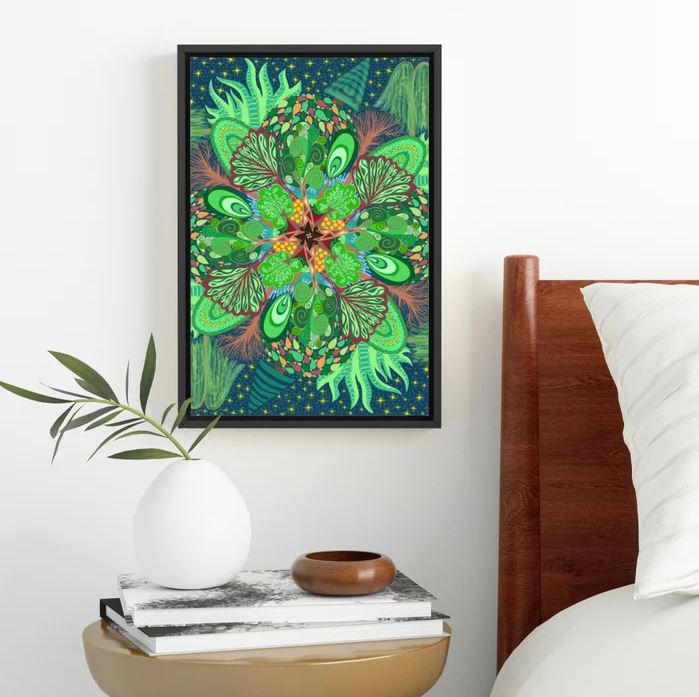
Life can be a little too beige sometimes. The inbox pings, the laundry sulks in the corner, traffic performs its daily opera, and your coffee somehow gets cold while you are still holding it. Then comes a page filled with swirling lines, hidden shapes, tiny patterns, and unexpected spaces waiting for color. Suddenly, the ordinary world has a trapdoor.
Artiks – My Intricate Abstract Drawings To Color Our Mundane Life is more than a poetic title. It describes a creative approach that turns everyday dullness into visual movement. These drawings invite the viewer to slow down, look closer, and participate. They are not merely pictures to admire from a polite distance. They are maps, puzzles, meditations, playgrounds, and tiny rebellions against the boring parts of the day.
Intricate abstract drawings work because they do not demand one correct interpretation. A curve may look like a wave to one person, a vine to another, and a suspiciously dramatic noodle to someone who skipped lunch. That freedom is the charm. Abstract art gives the eye something to explore while leaving the mind enough room to wander.
What Makes Artiks-Style Abstract Drawings So Captivating?
At the heart of Artiks-style work is detail. Not decorative clutter, not random scribbling, but organized complexity. These drawings often rely on repeated marks, layered shapes, flowing lines, geometric pockets, organic curves, and small visual surprises tucked inside larger compositions. The result feels alive, almost as if the drawing is still growing while you look at it.
Unlike representational art, which may show a face, landscape, object, or scene, abstract drawing uses the basic language of art: line, shape, form, color, rhythm, contrast, balance, and texture. A thick black curve can feel heavy. A cluster of tiny circles can feel playful. Sharp triangles may add tension, while soft spirals can calm the page down. In other words, abstract art speaks without wearing a name tag.
Intricacy Creates Curiosity
The more detailed a drawing is, the longer it can hold attention. Your eyes travel from one section to another, noticing small changes in pattern, density, spacing, and direction. This is why intricate abstract drawings are so satisfying to color. They give the mind a gentle task: choose, fill, pause, compare, continue. It is productive enough to feel meaningful and simple enough to avoid turning into homework wearing a fake mustache.
Abstraction Lets Everyone Enter
One of the best things about abstract drawings is that you do not need an art history degree, a beret, or the ability to say “juxtaposition” with a straight face. You can simply respond. Maybe a section feels energetic. Maybe another feels quiet. Maybe a pattern reminds you of a city map, coral reef, dream, storm, song, or the inside of your brain on Monday morning. That personal connection is part of the artwork.
Coloring the Mundane: Why Ordinary Life Needs Art
The phrase “color our mundane life” hits a real nerve. Most days are not cinematic. We are not constantly standing on mountaintops while violins swell in the background. We are answering emails, washing dishes, waiting in lines, misplacing keys, and pretending we understand printer error messages. Art does not erase those ordinary moments, but it can transform how we experience them.
When you color an intricate abstract drawing, you create a small zone of control. The page may be complicated, but the next decision is simple: blue or orange, dark or light, calm or bold. In a world that frequently feels like twenty browser tabs arguing with each other, that simplicity is refreshing.
Color also changes emotional tone. A black-and-white drawing may feel architectural, mysterious, or intense. Add soft greens and blues, and it becomes restful. Add electric pink, deep purple, and yellow, and suddenly the page has the personality of a jazz band that drank espresso. The same drawing can become many different worlds depending on the color choices.
The Beauty of Lines, Patterns, and Controlled Chaos
Intricate abstract drawings often balance two forces: control and chaos. Too much control can feel stiff. Too much chaos can make the viewer feel like they accidentally opened a drawer full of tangled headphones. The magic happens in between.
Lines guide the viewer through the artwork. Some lines act like roads. Others behave like rivers, fences, vines, threads, sound waves, or cracks of lightning. Patterns bring rhythm. Repeated dots, stripes, loops, scales, tiles, waves, and crosshatching create visual music. The viewer may not consciously count the repetitions, but the eye senses order.
Negative space is just as important. Empty areas allow the drawing to breathe. Without them, the page can become visually exhausting. A skilled abstract drawing knows when to whisper and when to shout. It understands that even the wildest party needs a quiet corner where someone can eat chips in peace.
Why Intricate Abstract Drawings Are Perfect for Coloring
Coloring has become popular among adults because it offers a rare combination: creativity without pressure. You do not have to invent the whole image from scratch, but you still make meaningful artistic choices. Intricate abstract drawings are especially good for this because they provide many small spaces, repeated motifs, and flexible color opportunities.
With a realistic coloring page, you may feel limited. A tree is usually green or brown unless it is autumn, fantasy, or having an identity crisis. But in an abstract drawing, a leaf-like shape can be turquoise, gold, charcoal, or rainbow sherbet. Nothing complains. The drawing gives permission.
Coloring Encourages Focus
Complex patterns invite concentration. The mind follows the hand. The hand follows the line. The line leads into the next shape. This loop can feel grounding because attention is placed on the present moment. You are not solving your entire life. You are deciding whether the tiny crescent near the spiral should be lavender. Sometimes that is enough.
Coloring Makes Creativity Approachable
Many adults secretly believe they are “not creative” because someone once criticized their drawing in third grade. Tragic. Probably involving a horse that looked like a refrigerator. Coloring intricate abstract art can help rebuild creative confidence because there is no single correct result. Two people can color the same Artiks-inspired drawing and produce completely different moods, both valid and both interesting.
The Mindful Side of Abstract Coloring
It is important to be clear: casual coloring is not the same as professional art therapy. Art therapy is a clinical practice guided by trained professionals. However, creative activities like drawing, doodling, and coloring can still support relaxation, focus, and emotional expression in everyday life.
That is why Artiks-style intricate drawings feel so timely. Modern life is noisy. Screens flash. Notifications breed like rabbits. Even leisure can become another performance. Coloring an abstract drawing offers a slower, tactile experience. You choose a pencil, marker, gel pen, or brush. You watch pigment meet paper. You notice edges, pressure, movement, and texture. The experience is wonderfully analog, like your nervous system found a cozy chair.
Mindful coloring also encourages patience. Intricate drawings cannot be finished in three aggressive minutes. They ask for time. They reward returning. A page may begin during a lunch break, continue during a quiet evening, and finish on a weekend morning. This extended process turns the artwork into a companion rather than a task.
How to Approach an Artiks-Inspired Coloring Page
Facing a highly detailed abstract drawing can be intimidating at first. There may be hundreds of small shapes and no obvious starting point. The trick is not to color the entire universe at once. Start with one area. One spiral. One border. One cluster of shapes. The page will slowly reveal its rhythm.
Choose a Mood Before Choosing Colors
Instead of grabbing colors randomly, ask what mood you want the final piece to have. Calm? Use softer tones, cool colors, and gentle transitions. Energetic? Try high contrast, bright accents, and unexpected combinations. Mysterious? Work with deep blues, violets, grays, black, and metallic touches. Playful? Bring in warm colors, candy tones, and cheerful surprises.
Repeat Colors to Create Harmony
One beginner mistake is using every color in the box immediately, as if the pencils are auditioning for a talent show. Repetition helps. Choose a small palette and repeat those colors across the page. This connects different sections and makes the finished drawing feel intentional instead of chaotic.
Use Contrast for Drama
Contrast gives abstract coloring its spark. Place light next to dark, warm next to cool, smooth shading next to flat color, or muted tones beside bright accents. Contrast helps important shapes stand out and keeps the eye moving through the composition.
Leave Some Areas White
Yes, really. You do not have to color every inch. White space can add elegance, balance, and breathing room. It can make detailed areas feel more dramatic. Think of it as silence in music. Without silence, even a great song becomes noise.
Specific Examples of Everyday Inspiration
The best abstract drawings often begin with ordinary observations. A cracked sidewalk can become a network of angular lines. Steam rising from coffee can become layered curves. The pattern of rain on a window can become dots and trails. A crowded subway map can inspire intersecting routes. Even the pile of charging cables behind a desk could become a surprisingly dramatic composition, though perhaps one that should also inspire cleaning.
Artiks-style drawings can turn these daily details into visual stories. The artist does not need to copy reality directly. Instead, they extract rhythm. The curve of a plant, the grid of apartment windows, the repetition of tiles in a kitchen, the movement of people crossing a streetall can become abstract marks. This is how mundane life becomes material for beauty.
Why Abstract Drawings Feel Personal
Abstract art often feels personal because it leaves space for memory. A viewer may see something the artist never intended. That is not a failure; it is part of the experience. The drawing becomes a mirror, not because it reflects your face, but because it reflects your associations.
One person may color a dense spiral pattern while thinking of ocean currents. Another may see galaxies. Someone else may simply enjoy how red looks beside teal. Abstract work allows all of these responses. It does not force a single narrative. It invites a conversation.
Artiks and the Joy of Slow Looking
We live in a culture of quick glances. Scroll, tap, swipe, repeat. Intricate abstract drawings resist that speed. They ask the viewer to look slowly. A detail missed at first may become the best part later. A hidden shape may appear after several minutes. A small pattern may suddenly connect two distant areas of the page.
This slow looking is valuable. It trains attention. It deepens appreciation. It reminds us that not everything meaningful announces itself with fireworks and a push notification. Some things reveal themselves quietly, line by line.
Experiences Related to Artiks – My Intricate Abstract Drawings To Color Our Mundane Life
The most memorable experience with intricate abstract drawings often begins in a very ordinary setting. Imagine sitting at a kitchen table after a long day. The dishes are nearby, pretending not to exist. Your phone is face down, which is both noble and slightly suspicious. In front of you is a black-and-white abstract page filled with loops, fragments, curves, dots, and tiny compartments. At first, it looks overwhelming. Then you choose one color.
The first few marks feel cautious. You color a small shape in blue, then another in green. A narrow ribbon becomes yellow. A cluster of dots becomes red. After ten minutes, the page starts to change. The drawing no longer feels like someone else’s design. It begins to feel like a collaboration. The artist built the maze, but you are lighting the lanterns inside it.
Another experience comes from noticing how color choices reveal mood. On a tired day, you may reach for soft gray, pale blue, moss green, and warm beige. The result feels quiet, like rain tapping a window. On a restless day, you may choose orange, magenta, lime, and black. Suddenly, the same drawing looks like a parade got lost inside a thunderstorm. Neither version is wrong. Both are honest.
Intricate coloring can also become a social activity without becoming noisy. Two friends can sit at the same table coloring different pages, speaking only occasionally. There is comfort in that kind of shared silence. It feels rare now, almost luxurious. No one has to perform. No one has to win. The only competition is against the tiny white spaces that somehow multiply when you are not looking.
For artists, creating Artiks-style drawings can be even more immersive. The process may begin with a single line and grow into a complex ecosystem. One curve suggests another. A blank corner asks for a pattern. A dense area needs balance, so the opposite side becomes lighter. The drawing evolves through decisions that are small but constant. It is less like building a wall and more like tending a garden.
There is also a useful lesson hidden in these drawings: complexity becomes manageable when approached piece by piece. A finished intricate artwork may look impossible, but it was made one mark at a time. That is a surprisingly helpful reminder for ordinary life. Big problems, messy schedules, creative blocks, and emotional clutter can all feel like a giant abstract page. You do not solve everything at once. You begin with one shape.
Perhaps the deepest experience is the return to wonder. Mundane life can dull perception. We stop seeing the patterns around us because we are busy naming tasks. Abstract drawing reverses that habit. It teaches the eye to notice rhythm in shadows, repetition in architecture, movement in crowds, and beauty in small irregularities. The world does not become less ordinary. We become more awake to it.
That is why Artiks-style intricate abstract drawings matter. They do not promise escape from daily life. They offer a way to re-enter it with sharper eyes and brighter colors. They remind us that even a plain Tuesday can hold pattern, texture, and surprise. Sometimes the difference between boredom and beauty is simply the decision to pick up a pencil and begin.
Conclusion: Turning Ordinary Days Into Living Patterns
Artiks – My Intricate Abstract Drawings To Color Our Mundane Life celebrates the power of detail, imagination, and color to transform everyday experience. These drawings are not just decorative pages. They are invitations to slow down, focus, play, and see ordinary life differently.
Through line, pattern, contrast, and color, intricate abstract drawings give structure to wandering thoughts and beauty to quiet moments. They can make creativity feel approachable, help attention settle, and turn a blank hour into something personal. Whether you are an artist, a coloring enthusiast, or someone who simply wants a break from the glowing rectangle brigade, this kind of art offers a refreshing reminder: life may be mundane sometimes, but it is rarely empty.
All it takes is one line, one color, one small decision. Then another. Before long, the page changes. And, in a small but real way, so does the day.