JoJo Siwa has never met a rebrand she could not turn into a glitter cannon, a headline, and a group project for the entire internet. Once known for oversized bows, rainbow optimism, and a brand so sparkly it could probably be seen from space, Siwa has spent the last few years sprinting through public reinvention: child star, queer pop provocateur, “Karma” chaos agent, reality-TV headline maker, and nowat least according to baffled fansa possible “trad wife” aesthetic experiment.
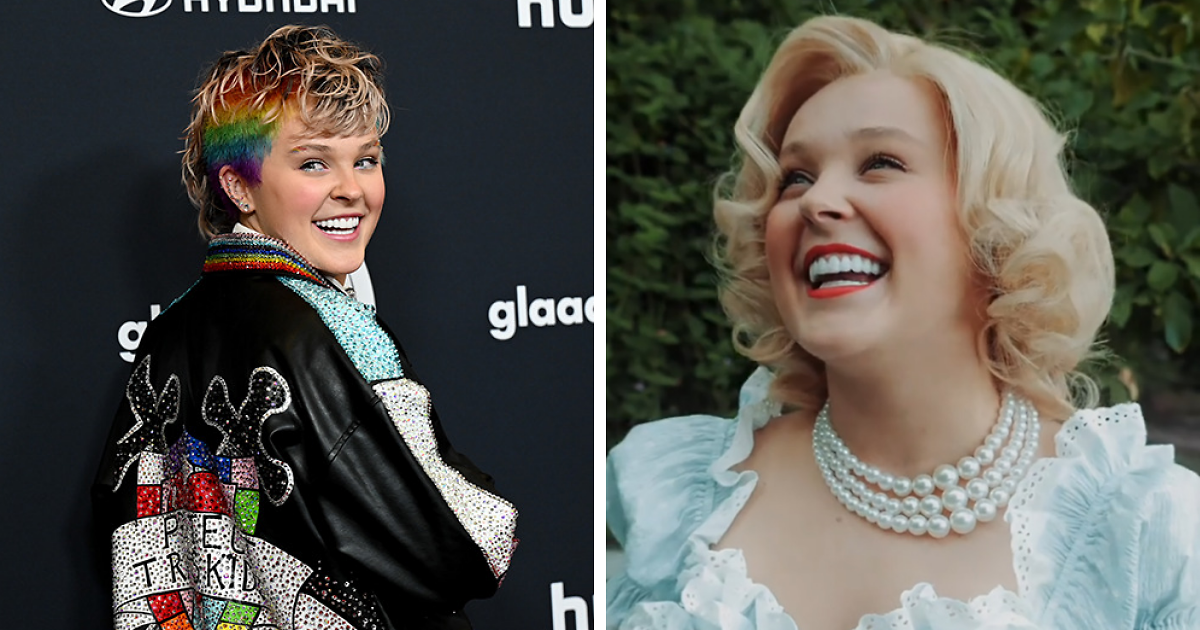
The latest online uproar began after Siwa previewed and released a cover of “Bette Davis Eyes,” the smoky 1981 hit made famous by Kim Carnes. In the clip, Siwa traded her loud, punky, post-Nickelodeon styling for retro blonde curls, pearls, soft makeup, and a vintage-inspired outfit. The intention seemed to be old Hollywood glamour. The internet, naturally, took one look and yelled, “Is this a 1950s housewife audition tape?”
From there, the comment section became a cultural food fight. Some fans joked that Siwa had moved from “gay pop” to “straight pop.” Others called the styling “trad wife realness,” connecting the look to the online trend of women romanticizing traditional gender roles, homemaking, submission, and ultra-feminine domesticity. And because this is JoJo Siwa, the conversation did not stop at the wig. It quickly became a messy debate about queer identity, celebrity branding, fan entitlement, and whether pop stars are allowed to change without submitting a formal application to the internet first.
What Actually Happened With JoJo Siwa’s “Bette Davis Eyes” Cover?
Siwa’s “Bette Davis Eyes” cover arrived in July 2025 after clips of her performing the song began circulating online. The original Kim Carnes version is not just any old karaoke-night classic. It is a Grammy-winning, chart-topping song with a raspy vocal style so recognizable that trying to recreate it is like trying to do an impression of Cher, Dolly Parton, and your aunt who smokes on the patio at the same time. It can go iconic very quicklyor it can go “please lower the volume in this grocery store.”
Siwa appeared to lean into the Carnes-inspired vocal texture, and that became one of the first targets for criticism. Many listeners mocked the raspy delivery, arguing that it sounded exaggerated. Others criticized the visual direction, saying the vintage curls, pearls, and soft feminine styling felt dramatically disconnected from Siwa’s previous “Karma” era, which featured darker makeup, theatrical costuming, and a deliberately edgy adult-pop presentation.
The most viral reaction, however, centered on the phrase “trad wife.” Fans were not necessarily saying Siwa had become an actual traditional wife. Instead, they were reacting to the visual shorthand: pearls, retro hair, old-school femininity, and a sudden pivot from rebellious queer-pop branding to a look that some people associated with conservative domestic nostalgia. In internet language, nuance often leaves the chat before the first screenshot is even taken.
Why Fans Connected the Look to the “Trad Wife” Trend
The term “trad wife” is short for “traditional wife.” Online, it usually refers to women who embrace or promote traditional gender roles, often emphasizing homemaking, marriage, motherhood, cooking, modesty, and male-breadwinner family structures. On social media, the trend can appear in soft-focus videos of sourdough, prairie dresses, spotless kitchens, and captions about feminine energy. It can also carry political baggage, especially when connected to anti-feminist messaging or rigid ideas about gender.
That is why Siwa’s look hit a nerve. A retro outfit is not automatically a political statement. A pearl necklace is not a manifesto. A blonde bob does not file taxes jointly with patriarchy. But in 2025 internet culture, aesthetics rarely travel alone. People do not just see clothing; they see signals, references, trends, communities, and possible ideological baggage. The old Hollywood look that Siwa may have intended as a nod to Bette Davis landed for some viewers as “trad wife cosplay.”
That reaction was intensified by timing. Siwa had recently been in the news for her relationship with Chris Hughes, a British reality-TV personality she met during “Celebrity Big Brother UK.” She had also spoken publicly about moving away from the label “lesbian” and identifying more broadly as queer. For some disappointed fans, the “Bette Davis Eyes” aesthetic became a visual symbol of a story they were already telling themselves: that Siwa was leaving behind the queer image they had attached to her.
The “Straight Pop” Joke Has a Backstory
The “straight pop” jokes make more sense when you remember Siwa’s earlier “gay pop” controversy. In 2024, while promoting “Karma,” Siwa said she wanted to create or help establish a genre called “gay pop.” The comment was widely criticized because queer artists existed long before JoJo Siwa put rhinestones on shoulder pads. Fans and musicians pointed out that LGBTQ+ pop history includes decades of artists, from disco icons and glam performers to modern queer stars who have built entire worlds of sound, identity, and resistance.
Siwa later clarified that she did not mean she had invented queer music. Her point, as she explained, was that she wanted “gay pop” to have a more official home as a recognized category. Still, the phrase stuck to her like glitter on a theater kid’s backpack. When the “Bette Davis Eyes” clip appeared, fans dusted off the old discourse and joked that if “Karma” was supposed to be “gay pop,” then this new vintage-housewife look must be “straight pop.”
It was a sharp joke because it compressed several controversies into one line. It mocked the rebrand. It referenced her relationship with a man. It questioned the authenticity of her musical direction. And it revealed how quickly audiences can turn an artist’s identity into a genre label, then punish her for changing the playlist.
JoJo Siwa’s Identity Is Not a Costume Change
One of the most important parts of this story is also the easiest for social media to flatten: JoJo Siwa’s sexuality belongs to JoJo Siwa. She publicly came out as part of the LGBTQ+ community in 2021 and became a visible figure for young queer fans. Her openness mattered to many people because she was a mainstream children’s entertainer with a massive audience. For some kids and families, seeing Siwa live openly offered reassurance that being queer did not have to mean being rejected, hidden, or treated as a scandal.
But public support can become public ownership if fans are not careful. When Siwa later described herself as queer rather than lesbian, and when she began dating a man, some critics treated the shift as betrayal. That reaction reveals a persistent problem: bisexual, pansexual, and queer people are often treated as “less queer” when they are in relationships that look heterosexual from the outside. The relationship may be real. The identity may still be queer. Both things can exist at once, even if the comment section refuses to multitask.
Siwa has pushed back on that criticism, saying that being in love with a man does not erase her past or her impact. That is a point worth taking seriously. A person’s identity is not deleted because their relationship changes. Queerness is not a punch card where every same-gender date earns a stamp and every different-gender date revokes the membership.
Why the Backlash Felt So Personal
JoJo Siwa’s audience has grown up with her, but not always at the same speed. For younger fans, she was the glittery “Boomerang” girl who sang against bullying. For older internet users, she became a symbol of the child-star machine: branded bows, nonstop positivity, corporate polish, and a childhood spent under cameras. For queer fans, she became a rare mainstream figure who came out while still connected to family-friendly entertainment.
That layered history makes every rebrand feel larger than a haircut. When Siwa went darker and louder with “Karma,” people argued about whether she was successfully entering adulthood or awkwardly forcing a “bad girl” era. When she talked about “gay pop,” people argued about whether she was claiming too much credit. When she wore pearls and sang “Bette Davis Eyes,” people argued about whether she was abandoning the queer-coded rebellion she had just been selling.
The real tension is not just about fashion. It is about trust. Fans want to believe an artist’s transformation is sincere. When the transformation feels too sudden, too strategic, or too disconnected from the last version, audiences smell marketing. And once fans decide a celebrity is “performing authenticity,” they become detectives with Wi-Fi and no bedtime.
Was the “Trad Wife” Label Fair?
Calling Siwa’s look “trad wife” was catchy, but it may not have been entirely fair. The styling clearly referenced vintage Hollywood and the Bette Davis era more than an actual homemaking influencer lifestyle. Siwa was not posting videos about quitting work to churn butter in a sunlit kitchen. She was releasing a pop cover. If that is trad wife behavior, then half of Broadway owes everyone an apology.
Still, the label caught on because aesthetics are powerful. Pearls, soft curls, gingham, vintage femininity, and old-school domestic glamour have become part of the visual vocabulary associated with tradwife content online. Even when a celebrity uses those elements for camp, homage, or costume, the internet may read them through the most viral current trend. In other words, Siwa may have been aiming for Bette Davis, while viewers saw TikTok sourdough and a ring light.
The fairer criticism may be less “JoJo Siwa is becoming a trad wife” and more “JoJo Siwa’s branding keeps making extreme jumps without enough artistic explanation.” Fans can handle reinvention. Pop music is built on reinvention. Madonna, Lady Gaga, Miley Cyrus, Beyoncé, Taylor Swift, Lil Nas X, and countless others have shifted visual worlds. The difference is that the strongest rebrands feel like chapters in the same book. Siwa’s recent eras sometimes feel like someone changed the channel mid-sentence.
The Kim Carnes Factor
The controversy gained another layer when Kim Carnes appeared to respond critically to Siwa’s cover. Carnes’ “Bette Davis Eyes” is famous for its distinctive tone, phrasing, and cool, mysterious energy. When a younger artist covers a classic, the challenge is to honor the original without sounding like a tribute-act mirror. Some listeners felt Siwa’s version stayed too close to Carnes’ vocal choices while not capturing the same effortless mood.
This is the danger of covering a song that already has a permanent address in pop culture. If you change too much, people say you ruined it. If you change too little, people say you added nothing. If you are JoJo Siwa, people also ask whether your wig has political implications. Truly, pop stars deserve hazard pay.
To Siwa’s credit, she has shown a willingness to turn criticism into content. Her later song “Raspy” appeared to poke fun at the memes and backlash, suggesting she is at least aware of how the internet talks about her. That kind of self-awareness can be useful. It can also become exhausting if every artistic choice is a response to ridicule rather than a step toward a clearer creative identity.
What This Says About Pop Stardom in 2025
The JoJo Siwa “trad wife” backlash is not just a celebrity gossip flare-up. It is a case study in how modern fame works. Today, a pop star does not simply release a song. She releases a look, a caption, a relationship status, a political interpretation, a TikTok discourse cycle, and a thousand amateur brand audits before lunch.
Fans are more media-literate than ever, but they are also more suspicious. They notice references, compare eras, track statements, and remember old interviews. That can create smart criticism. It can also create a climate where artists are not allowed to be awkward, experimental, contradictory, or young. Siwa is in her early twenties. Most people at that age are trying on identities, aesthetics, friend groups, and questionable pants. She is doing it with millions of people watching and judging the pants in real time.
There is room to criticize the music, the vocals, the branding, and the historical clumsiness of the “gay pop” comment. There is also room to recognize that some of the backlash around her dating a man has slipped into unfair identity policing. Fans do not have to love every JoJo Siwa era. But they also do not get to revoke her queerness because her love life became inconvenient to their preferred narrative.
Experience-Based Reflections: What Creators Can Learn From This Messy Rebrand
Anyone who has built a public identity online can learn something from this situation, even without a platinum bow empire or a controversial Kim Carnes cover. The first lesson is simple: audiences remember everything. If a creator announces one era loudly, then pivots into the opposite direction without context, fans will fill in the blanks themselves. Sometimes they will fill those blanks with thoughtful analysis. Sometimes they will fill them with memes, suspicion, and a TikTok detective board connected by red string.
For artists, influencers, and personal brands, reinvention works best when the audience can follow the emotional logic. A new look does not need a 40-page press release, but it does need a bridge. If Siwa had framed the “Bette Davis Eyes” look more clearly as old Hollywood homage, vocal experiment, or camp performance, some confusion might have softened. Not all of itthis is the internet, not a meditation retreatbut some.
The second lesson is that identity-based branding is powerful and risky. When an artist builds part of their public image around queerness, fans may feel deeply seen. That connection can be beautiful. But it can also create pressure for the artist to represent every fan’s expectations perfectly forever. Real people do not work that way. Identity can evolve. Language can change. Relationships can surprise even the person living them. A healthy fan culture leaves room for that.
The third lesson is that aesthetics are never neutral online. A vintage dress, pearl necklace, or soft domestic look might seem harmless in isolation. But in a trend-driven culture, visuals carry associations. If a creator borrows from an aesthetic connected to a larger movementtradwife, cottagecore, punk, queer nightlife, religious modesty, luxury minimalismthey should understand the conversation attached to it. You do not need to fear every reference, but you should know what room you are walking into.
The fourth lesson is about humor. Siwa’s best path forward may be the one she has already started exploring: self-awareness without defensiveness. If people mock the raspy voice, write “Raspy.” If people argue about the wig, explain the inspiration and then keep moving. The trick is not to let the audience become the creative director. Responding to criticism can be clever; building an entire career around rebuttals can become a cage.
Finally, this episode reminds publishers, bloggers, and commentators to be careful with labels. “Trad wife” is a useful cultural term when it describes a real online ideology or lifestyle. Applied too casually, it can become a lazy insult for any woman wearing vintage clothes or dating a man. The sharper analysis is not that JoJo Siwa wore pearls and therefore joined a movement. It is that her abrupt visual shifts collide with existing debates about queer visibility, pop authenticity, gender roles, and fan ownership. That is a much more interesting storyand thankfully, it requires fewer jokes about sourdough.
Conclusion
JoJo Siwa’s “trad wife” transformation controversy shows how quickly pop culture can turn a hairstyle into a referendum. Her “Bette Davis Eyes” cover sparked criticism because it arrived at the intersection of several already-sensitive conversations: her “gay pop” backlash, her relationship with Chris Hughes, her evolving queer identity, and the internet’s obsession with decoding every aesthetic choice as ideology.
Was the look actually “trad wife”? Probably not in any literal sense. Was it easy for fans to read it that way in the current cultural climate? Absolutely. The reaction says as much about the audience as it does about Siwa. Fans want consistency, authenticity, and representation, but artistsespecially young artistsoften grow by being inconsistent, awkward, experimental, and occasionally dressed like they wandered out of a haunted 1950s cosmetics commercial.
The fairest takeaway is this: JoJo Siwa is still figuring out who she is as an adult performer, and the internet is figuring out how to talk about that without turning every rebrand into a public trial. Criticism is fair. Mockery is inevitable. But identity policing helps no one. Whether Siwa’s next era is gay pop, straight pop, retro pop, raspy pop, or “please explain the wig” pop, the conversation around her proves one thing: JoJo Siwa still knows how to make the internet look.