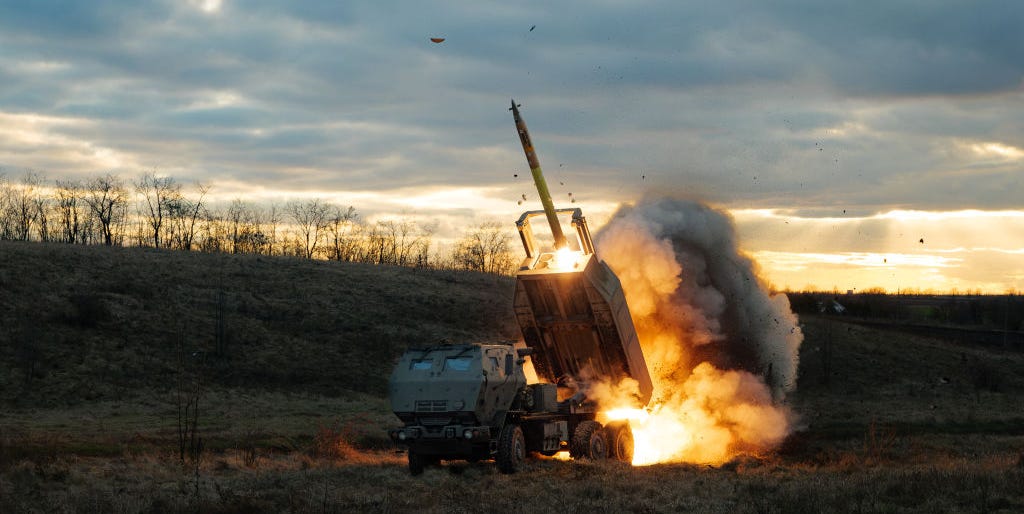
America is not literally forgetting how to build missiles. The real problem is more annoying, more bureaucratic, and therefore somehow more terrifying: the United States is running into a propulsion bottleneck in the very parts that make many missiles go whoosh on command. In defense-industry language, that usually means solid rocket motors and the stubbornly fragile supply chain behind them, not just “engines” in the everyday sense.[1]
That distinction matters. When people hear “missile engine shortage,” they may picture a single missing widget. In reality, this is a layered industrial problem involving too few qualified manufacturers, a thin base of chemical and materials suppliers, long certification timelines, and years of Pentagon buying patterns that swung between feast and famine. Then wars in Ukraine and the Middle East, plus a renewed focus on deterring China, shoved demand through the roof. Suddenly, America needed more interceptors, more long-range munitions, more replacement stocks, and more surge capacity than the system was built to deliver.[2]
So yes, the headline is dramatic. But the substance is real. If the United States cannot produce propulsion systems fast enough, it does not matter how elegant the war plan looks on a briefing slide. A missile that exists only in PowerPoint is just a very expensive idea. And right now, the supply chain behind many missile families is still too narrow, too slow, and too easy to stress.[3]
What Shortage Are We Actually Talking About?
The cleanest way to explain the issue is this: America has a missile propulsion capacity problem. For many tactical missiles, air-defense interceptors, and long-range strike weapons, the choke point is the solid rocket motor, the propulsion unit that provides thrust after launch. These motors are used across a wide range of systems, which means the same industrial base can get squeezed from multiple directions at once. One line is feeding one program, another line is feeding another, and soon everyone is standing in the same checkout lane with a full cart and a bad attitude.[1]
The problem is not limited to one famous missile. It shows up in different ways across air-defense interceptors, air-to-air missiles, artillery rockets, and other precision-guided munitions. That is why executives and analysts keep talking less about one broken program and more about a broader defense industrial base problem. The issue is systemic: a small number of suppliers are trying to serve a large number of urgent programs at the same time.[2]
Why Did This Happen?
1. The industry consolidated until “resilience” became a polite fiction
Over the last few decades, America’s solid rocket motor business shrank dramatically. Government reviews have noted that the number of major U.S. producers fell from six to two, while the lower-tier ecosystem of raw-material, component, and subsystem suppliers also thinned out. That may look efficient on a spreadsheet, but it creates obvious strategic risk. Fewer companies mean fewer fallback options, fewer alternate production lines, and fewer ways to absorb shocks when demand suddenly spikes.[1]
And once that capacity disappears, rebuilding it is not like ordering extra office chairs. Missile propulsion manufacturing requires specialized facilities, trained labor, chemical handling capability, testing infrastructure, and lengthy qualification work. In other words, America spent years optimizing for peacetime cost control and then acted surprised when wartime-style demand did not fit inside the peacetime factory footprint. Classic.[3]
2. The shortage runs deeper than the motor itself
One of the most important facts about this story is that the bottleneck is often buried in the sub-tier supply chain. It is not only about the final producer assembling a motor. It is also about binders, propellants, energetics, specialty materials, mixers, casting capacity, testing infrastructure, and chemicals that are easy to ignore until one of them goes missing and ruins everyone’s quarter.[4]
Recent reporting has highlighted concerns around ingredients and subcomponents such as HTPB binders and other critical chemical inputs. Defense watchdogs have also pointed to the need to restore or expand domestic sourcing for chemicals tied to “kinetic capabilities.” That phrase sounds cold and clinical, but its meaning is straightforward: if the chemistry is fragile, the missile pipeline is fragile too.[4]
3. Qualification takes time, and time is exactly what demand is not offering
Even when new suppliers appear, they cannot simply roll a truck up to the loading dock and announce they are now part of the national arsenal. Missile components must be tested, qualified, validated, and integrated into existing programs. Executives have repeatedly said this process can take years, especially where safety, performance, and program-specific certification requirements are involved. So the phrase “we need a third supplier” sounds simple, but the calendar hears that phrase and starts laughing.[2]
This is why the United States can acknowledge the shortage and still feel stuck inside it. The gap between recognizing a bottleneck and meaningfully fixing it is long. Very long. Sometimes “good news” in this industry means a production line opens in 2026 so it can matter more in 2027 or 2028. That is useful, of course, but it is not the same as immediate relief.[5]
4. Demand exploded all at once
The propulsion crunch is also a demand story. The United States has been helping replenish allies, replacing weapons transferred abroad, and trying to build deeper inventories for future contingencies. Defense officials and analysts have tied current strain to the need to support Ukraine, support Israel, replenish U.S. stocks, and prepare for a more demanding Indo-Pacific environment. These are not separate math problems. They all land on the same industrial base.[6]
That is why the shortage feels so unsettling. America is not facing a propulsion crunch in a quiet era. It is facing one while trying to deter multiple adversaries, reassure allies, and restock inventories at the same time. That is a terrible moment to discover your factory network was designed for a calmer decade that no longer exists.[6]
Which Missile Programs Feel the Pain?
The burden falls unevenly, but analysts and industry executives have repeatedly pointed to missile families tied to air defense, tactical strike, and artillery rocket production. Public reporting has connected propulsion constraints to programs involving systems such as GMLRS, AMRAAM, AIM-9X, Standard Missile variants, Patriot-related interceptors, and other munitions where rocket motor supply is a known factor. CSIS has also noted that the Javelin relies on a rocket motor without a second source, a revealing example of how vulnerable certain production chains can be.[2]
That matters because these are not fringe weapons stored in a dusty warehouse behind a locked door marked “for emergencies only.” They are central to deterrence, air defense, and U.S. support for partners. When the same propulsion ecosystem feeds missiles used for homeland defense, allied support, and major-war planning, every shortage becomes a prioritization fight. Who gets the next batch? The combatant commander? The ally under threat? The training pipeline? The stockpile for a future war? The answer is never emotionally relaxing.[3]
What Are Companies and the Pentagon Doing About It?
The encouraging news is that Washington and industry are not ignoring the problem. The less encouraging news is that fixing a hollowed-out industrial base is a lot like repairing an airplane while also arguing about the budget, filing compliance paperwork, and discovering your backup wrench supplier retired in 2019.[5]
Several efforts now underway show the scale of the response. Lockheed Martin and General Dynamics announced a partnership to produce solid rocket motors for GMLRS in Camden, Arkansas. L3Harris has been expanding rocket motor facilities in Arkansas with Pentagon support, including new production buildings intended to speed manufacturing and increase output. Meanwhile, newer players such as Ursa Major and Anduril have received attention and support as the government tries to widen the supplier base. Anduril has said it became a third U.S. supplier of solid rocket motors at scale, while Ursa Major received Pentagon-backed funding to grow production and testing capacity.[5]
On top of that, recent contract actions and budget documents show the Department of Defense pursuing second-source efforts and industrial-base investments. That includes work tied to qualifying an additional source for components supporting AIM-9X production, funding for sub-tier facilitization, and requests related to second-source solid rocket motors for hypersonic systems. The Pentagon also continues to talk about onshoring critical chemicals and building resilience deeper in the supply chain.[4]
In plain English: the government has finally decided that “hope the two main suppliers somehow do more with the same ecosystem” is not a strategy. It is trying to expand capacity, diversify sources, and reduce the chance that one broken input can slow half the missile portfolio.[4]
Why This Shortage Is Genuinely Scary
The scary part is not that America has zero missiles. It is that a great power can look militarily dominant on paper while still struggling with reload economics. In a prolonged crisis or conflict, what matters is not only how many munitions you have at the start. It is how fast you can replenish them, how flexibly you can shift production, and how resilient the supply chain remains when the pressure rises.[3]
If propulsion capacity is tight, then every assumption about sustained operations becomes shakier. A shortage can reduce surge capacity, delay replacement of transferred weapons, complicate allied sales, and force ugly tradeoffs between readiness today and inventory tomorrow. It can also weaken deterrence. Adversaries do not need to defeat America’s entire arsenal if they believe America will struggle to regenerate it at speed.[6]
There is also a signaling problem. The United States is trying to convince allies that it can support them and convince rivals that it can fight at scale. A narrow rocket motor base makes both messages less comfortable. Even when the final outcome would still favor the United States, visible industrial strain invites questions. And questions, in deterrence, are never free.[6]
What a Real Fix Would Look Like
A serious solution requires more than emergency cash and a few ribbon cuttings. First, the Pentagon needs stable long-term demand signals so companies will invest without fearing the next budget dip. Second, it needs more qualified second sources, not just polite interest in them. Third, it needs to strengthen the lower tiers: chemicals, materials, tooling, testing, and workforce pipelines. Fourth, it needs better visibility across shared components so leaders can see where multiple missile programs are fighting over the same scarce industrial inputs.[3]
Just as important, the government has to think in terms of ecosystems rather than individual programs. A missile is not merely a line item. It is a network of suppliers, facilities, certifications, transport steps, and materials dependencies. If the United States treats each weapon as a stand-alone purchase instead of a node in a shared industrial system, it will keep rediscovering the same shortage with slightly different acronyms.[3]
That does not mean panic is the right response. The United States still has deep technological and industrial advantages, and current investments could improve the picture over time. But it does mean the problem should be taken seriously. Missile production is now a test of industrial stamina as much as engineering talent. And stamina is built before the emergency, not during it.[5]
Experiences From Inside the Shortage
What does a missile engine shortage actually feel like in practice? It does not always look dramatic. Often it looks like a meeting that keeps getting moved, a forecast that keeps being revised, a delivery date that slides by one quarter, then another. For program managers, the experience is living inside a giant puzzle where every piece is stamped “urgent.” They are not just buying a missile. They are negotiating for motor slots, test capacity, supplier attention, and a place in a queue that never seems to get shorter.[2]
For military planners, the shortage feels like uncertainty sneaking into places where certainty is expensive and essential. A war plan may assume inventory levels that exist today, but planners also need confidence that stocks can be replenished tomorrow. If motor supply is constrained, then the conversation quietly shifts from “What do we want to buy?” to “What can the industrial base actually regenerate under pressure?” That is a colder, harder question, and it forces strategy to become more honest.[3]
For allies and partners, the experience is often frustration mixed with dependence. They may want American systems because those systems work, integrate well with U.S. forces, and bring political reassurance. But when U.S. inventories are tight and American factories are strained, foreign customers can end up watching delays ripple through contracts, approvals, and delivery schedules. Nobody loves being told a critical air-defense capability is delayed because the propulsion ecosystem is having a rough year. It is the international-relations version of “your package is out for delivery,” except the package is national security.[6]
For industry workers, the story is not abstract at all. Expanding missile propulsion means new buildings, new safety procedures, new equipment, long training cycles, and the pressure of producing highly specialized hardware without cutting corners. You cannot simply hire a few extra people on Monday and expect certified output by Friday. This is precision manufacturing tied to national defense, so the workforce challenge is real: recruiting, retaining, training, and scaling without losing quality. The country needs more capacity, but capacity is people and process, not magic dust.[5]
And for taxpayers, the experience should be a lesson in how national power really works. It is easy to assume military superiority is mostly about advanced designs and big budgets. In reality, it is also about boring things that are not boring at all: chemical supply, machine uptime, industrial policy, second-source contracts, and whether a sub-tier supplier survives lean years. The missile engine shortage is a reminder that deterrence lives partly in factories, spreadsheets, and procurement choices made years before the crisis arrives.[4]
That is why this story matters beyond defense nerd circles. It reveals something fundamental about modern power: the contest is not only over who has better weapons, but who can produce, replenish, and adapt faster when the world gets ugly. America’s missile propulsion shortage is alarming because it exposes the gap between strategic ambition and industrial readiness. The good news is that the gap is finally being taken seriously. The bad news is that it existed in the first place.[5]