Trying to rank Pixar is like trying to choose the best fry from a loaded basket: technically possible, emotionally reckless. Fans have spent years voting, rating, debating, rewatching, and politely losing their minds over Pixar movies and shorts, and one thing is clear: this studio has not just made hits. It has made memories. Some titles feel nearly untouchable, some are lovable underdogs, and some inspire spirited arguments that could last longer than a road trip with Mater.
That is why a fan-driven look at Pixar feels so different from a critic-only ranking. Fans do not just reward innovation or polish. They reward comfort, quotability, nostalgia, emotional payoff, and that strange Pixar superpower of making you care deeply about toys, monsters, fish, robots, emotions, and occasionally a dumpling. So if the goal is to understand all Pixar movies and shorts by fans, the best approach is not a stiff scoreboard. It is a wide-angle view of what audiences actually adore, defend, revisit, and recommend.
Why Pixar Still Has Such a Grip on Fans
Pixar has always understood a simple truth: spectacle gets attention, but emotional clarity gets loyalty. The studio’s best stories take a playful concept and sneak in something honest about family, fear, grief, friendship, purpose, or growing up. Toy Story is not really just about toys. Finding Nemo is not really just about a fish. Ratatouille is not really just about a rat with suspiciously excellent taste in food. Fans keep coming back because Pixar’s world-building is fun, but its emotional targeting system is terrifyingly accurate.
The shorts are part of that legacy, not an optional side quest. In many cases, the shorts are Pixar in its purest form: no filler, no wasted motion, and no fear of hitting you directly in the feelings within a few minutes. Fans often remember a Pixar short as vividly as a full feature because the best ones arrive fast, land hard, and never overstay their welcome. That is a rare skill, and Pixar has turned it into an art form.
What Fans Usually Put at the Top of the Pixar Mountain
The consensus masterpieces
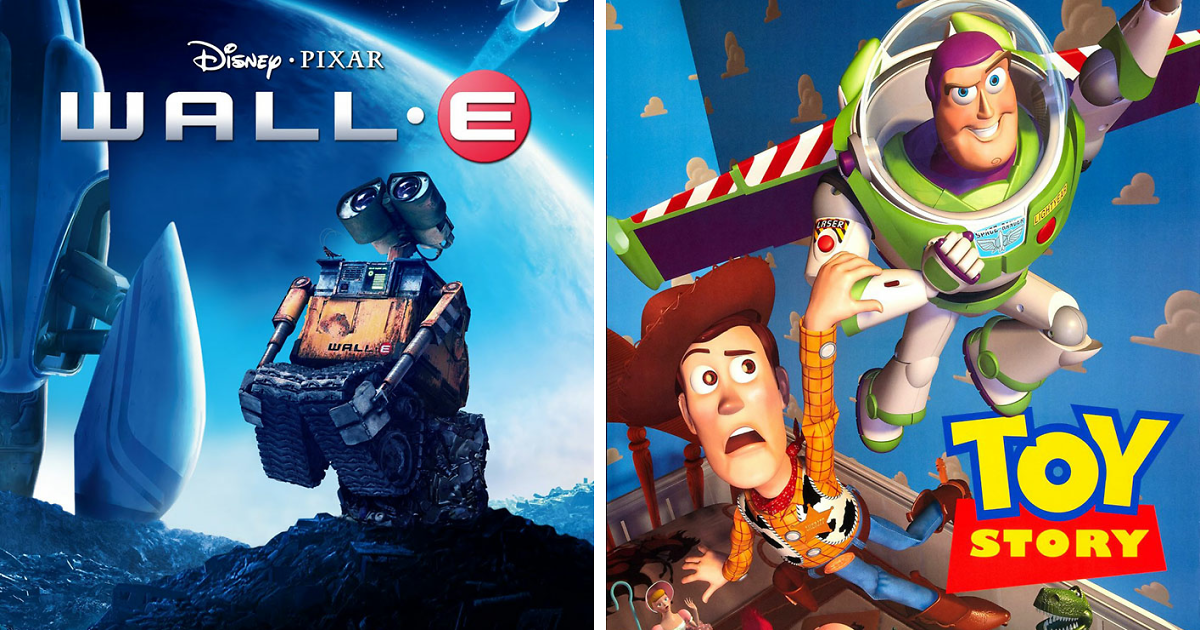
If you look across fan polls, audience scores, public rankings, and general rewatch culture, a few feature films almost always rise to the top. Toy Story, Toy Story 2, Finding Nemo, Monsters, Inc., The Incredibles, Ratatouille, WALL-E, Up, Inside Out, and Coco live in that elite neighborhood. The order changes depending on who is making the list and whether they have recently watched the opening montage of Up and lost all emotional stability, but these movies almost never leave the top tier.
Fans love these titles for slightly different reasons, but they share the same core strengths. Toy Story still feels historic without becoming homework. Toy Story 2 is the sequel that made audiences wonder whether Pixar had casually solved storytelling. Finding Nemo is endlessly rewatchable and balances comedy with real parental panic. The Incredibles feels like a great family drama wearing a superhero cape. WALL-E remains one of Pixar’s boldest films because it trusts visual storytelling and quiet emotion. Coco wins fans through music, family, color, and one of Pixar’s most satisfying emotional crescendos. These are not just admired movies. They are beloved ones.
The underrated favorites fans love defending
Pixar fandom has another trait that makes it fun: people love a so-called underrated favorite. Onward has become a deeply personal film for many viewers who connected with its brotherly bond and bittersweet payoff. Luca has fans who cherish its gentle summer tone and easy warmth. Turning Red inspires fierce loyalty because it feels specific, energetic, and gloriously unafraid of teenage chaos. Soul gets singled out by viewers who want something more reflective than action-heavy. These films may not dominate every ranking, but they often matter intensely to the people who love them.
That is one reason Pixar ages so well with fans. A movie can arrive to a solid reaction and then slowly grow into a full-blown favorite. Rewatching changes things. A story that seemed simple at first might reveal more nuance later, especially once life hands you more experience. Pixar fans know this better than almost anyone. Today’s “nice movie” can absolutely become tomorrow’s “actually, this is one of their best and I will now explain why in 14 paragraphs.”
The titles that split the room
No fan ranking would be honest without mentioning the divisive entries. Cars 2 is usually the lightning rod because it swerves so hard into spy-comedy mayhem that some viewers still look at it like it escaped from another franchise. Lightyear divided audiences because some admired its ambition while others never fully bought the setup. The Good Dinosaur has its admirers, but it rarely sits near the top in fan conversation. Then there are films like Toy Story 4, Incredibles 2, Finding Dory, and Elemental, which have plenty of supporters but also tend to spark the “good, but where does it really rank?” debate.
Still, even Pixar’s most disputed movies have defenders, and that matters. One fan’s middle-tier pick is another fan’s emotional comfort watch. That is the beauty of ranking by fans instead of pretending there is one final answer carved into animation law. Personal connection counts. Nostalgia counts. Timing counts. Sometimes the movie you needed at the right moment becomes untouchable forever.
Shorts Included Means the Shorts Are Essential
A Pixar conversation without the shorts is incomplete. The short films are where Pixar has repeatedly shown off its wit, visual elegance, and ability to create instant emotional investment. Fans have long treated Luxo Jr., Tin Toy, Geri’s Game, and For the Birds as classics, but later standouts like Presto, Partly Cloudy, La Luna, Piper, Lou, and Bao are every bit as cherished. In some fan discussions, these shorts are not supporting material at all. They are miniature masterpieces.
Some are loved because they are hilarious. For the Birds is tiny, mean, and perfect. Presto is chaotic comic precision. Jack-Jack Attack feels like superhero domestic life filtered through a sugar rush. Others are adored because they are emotional sneak attacks. Partly Cloudy turns cloud-building into a sweet loyalty story. Piper is a gorgeous lesson in courage. Bao packs family, culture, and letting go into a short that can leave viewers staring into the middle distance.
Then came SparkShorts, which expanded the fan conversation. Purl, Kitbull, Smash and Grab, Wind, Float, Loop, Out, Burrow, Twenty Something, Nona, and Self showed audiences a more experimental Pixar. These shorts often feel looser, more personal, and more intimate. Fans responded well to that shift because it reminded everyone that Pixar is not only a prestige hit machine. It can still get weird, small, and beautifully specific.
A Fan-Friendly Walk Through the Full Pixar Canon
The early building blocks
Before the feature empire fully arrived, Pixar’s short work laid the groundwork: Andre & Wally B., Luxo Jr., Red’s Dream, Tin Toy, and Knick Knack. Then came the first features: Toy Story, A Bug’s Life, and Toy Story 2. Fans look back on this period with enormous affection because it feels like the moment computer animation stopped being a novelty and started feeling alive. Add Geri’s Game and For the Birds, and the Pixar identity is already there: technical ambition paired with storytelling charm.
The legendary run fans still talk about with reverence
For many viewers, Pixar’s most mythic stretch runs from the early 2000s into 2010: Monsters, Inc., Finding Nemo, The Incredibles, Cars, Ratatouille, WALL-E, Up, and Toy Story 3. This is the era people cite when they describe Pixar as unstoppable. The companion shorts from this broader period helped reinforce that reputation: Mike’s New Car, Boundin’, Jack-Jack Attack, One Man Band, Mater and the Ghostlight, Lifted, Your Friend the Rat, Presto, BURN-E, Partly Cloudy, Dug’s Special Mission, and Day & Night. Fans do not remember this era as merely successful. They remember it as absurdly rich.
The era of sequels, risks, and mixed reputations
The next major stretch includes Cars 2, Brave, Monsters University, Inside Out, The Good Dinosaur, Finding Dory, Cars 3, Coco, Incredibles 2, and Toy Story 4. Fans tend to see this period as a tug-of-war between franchise continuation and original inspiration. The short lineup stayed sharp: Hawaiian Vacation, Small Fry, La Luna, The Legend of Mor’du, Partysaurus Rex, The Blue Umbrella, Toy Story of TERROR!, Party Central, Lava, Riley’s First Date?, Sanjay’s Super Team, Piper, Lou, Dante’s Lunch, Bao, and Auntie Edna. Even when feature rankings get messy here, fan affection for individual shorts remains strong.
The modern Pixar conversation
More recent Pixar features include Onward, Soul, Luca, Turning Red, Lightyear, Elemental, Inside Out 2, Elio, and now Hoppers in the official Pixar feature lineup. On the short side, fans have also had Lamp Life, 22 vs Earth, Ciao Alberto, and Carl’s Date, plus the expanding SparkShorts catalog. This era is more fragmented in fan response, but also more revealing. Some viewers miss the older streak of near-total consensus. Others love that Pixar is still experimenting with culture, style, tone, and scale. Either way, the studio is still generating conversation, which is exactly what a living fandom does.
What Fans Really Mean When They Say “Best Pixar”
Fans are usually measuring several things at once. There is emotional impact, of course. Did the movie or short leave a mark? There is rewatchability. Does it hold up when the surprise is gone? There is attachment to characters. Do you actually want to spend time in this world again? And there is distinctiveness. Does the story feel like its own invention, or just a polished product? That is why films like Ratatouille, WALL-E, Inside Out, and Coco stay near the top. They do not just work. They feel singular.
The same rule applies to the shorts. Nobody remembers Piper because of runtime. They remember it because it feels alive. Nobody praises Bao because it is efficient. They praise it because it turns a tiny premise into a deeply recognizable emotional experience. Pixar fans do not divide stories into “small” and “big” very neatly. If it lands, it lands.
Final Verdict on All Pixar Movies, Shorts Included
If you ask fans to rank the entire Pixar catalog, you will not get one clean answer. You will get a glorious mess of passion, nostalgia, strong opinions, and at least one person insisting Cars is misunderstood. That is part of the charm. Pixar has built a catalog broad enough to contain consensus classics, cult favorites, complicated sequels, artistic experiments, and shorts that punch far above their size.
So the real fan verdict is not simply that Pixar has made many good movies and shorts. It is that Pixar has made stories people live with. They revisit them as kids, as adults, as parents, as siblings, as people trying to make sense of loss, ambition, love, or identity. That is a deeper achievement than a clean ranking. It is the reason Pixar still matters.
Fan Experience: What It Feels Like to Grow Up With Pixar
Watching all Pixar movies and shorts as a fan does not feel like finishing a filmography. It feels like revisiting a long emotional scrapbook with better lighting, more color, and way more talking animals than most scrapbooks typically allow. The earliest shorts carry a special kind of charm because you can see the studio discovering how much personality it can squeeze out of simple movement. A lamp hops, a toy longs to be loved, an old man outsmarts himself at chess, and somehow you already feel the spark that would define decades of storytelling. Fans tend to love these early works not just because they are historically important, but because they still play.
Then the features begin, and the relationship gets personal. Plenty of fans first saw Toy Story when imagination still felt like a physical place. They met Monsters, Inc. at the age when bedrooms were magical and a little scary. They discovered Finding Nemo as a great adventure before later realizing it was also a story about fear, trust, and learning to let people go a little farther than you want. Pixar fans often talk about these movies as markers in their lives because that is what they become. They are not just entertainment. They are memory furniture.
The rewatch factor is where Pixar really tightens its grip. A movie you loved for one reason at age 10 might become your favorite for a completely different reason at 30. The Incredibles starts as a cool superhero movie and eventually reveals itself as a razor-sharp family comedy about routine, frustration, and identity. Ratatouille shifts from “funny rat chef” to a full-blown statement about taste, talent, criticism, and the nerve it takes to create anything at all. Inside Out gets more powerful the more complicated life becomes. Coco hits harder if you have lost someone. Soul can feel like a philosophical comfort blanket or a very polite existential crisis, depending on the day.
The shorts intensify the experience because they prove how fast Pixar can connect with an audience. Fans often remember the shorts with shocking clarity. The sound of the birds in For the Birds. The seafoam texture in Piper. The ache tucked inside Bao. The gentle weirdness of La Luna. A great Pixar short can become the thing you talk about most after a theatrical screening, and that is not an accident. These films are carefully designed emotional lightning bolts.
SparkShorts added another layer to fandom by showing a more intimate, experimental Pixar. Kitbull feels tender and bruised in a way that stays with people. Loop invites patience and empathy instead of flashy payoff. Out mixes identity, humor, and family nerves with impressive lightness. Fans often become especially protective of these smaller works because they feel personal. They are the kind of films people quietly recommend with the tone of someone handing over a treasured note.
There is also a communal side to being a Pixar fan that never really fades. Ranking Pixar is half debate, half bonding ritual. One person insists WALL-E is the studio’s masterpiece. Another says Toy Story 2 is the perfect sequel. Someone else argues that Onward deserves more love, and another comes flying in to defend Cars 3 like it is a family member. That back-and-forth is not noise. It is part of the fun. Pixar’s catalog is big enough now that fans can find their own emotional lane inside it.
That is why “all Pixar movies, shorts included” feels bigger than a ranking gimmick. It is really about how a studio became a companion across different stages of life. Some days you want the huge emotional machinery of Toy Story 3. Some days you want the sunlit ease of Luca. Some days you only have time for a short, and a six-minute Pixar film somehow says exactly what you needed. Fans keep returning because Pixar understands something simple and powerful: wonder is great, but wonder that recognizes real life lasts longer.