Modernizing a historic building can be a dangerous game. Change too little, and the propertyfurniture but quietly search for a power outlet. Change too much, and centuries of character disappear beneath polished stone, oversized televisions, and enough recessed lighting to illuminate a baseball stadium.
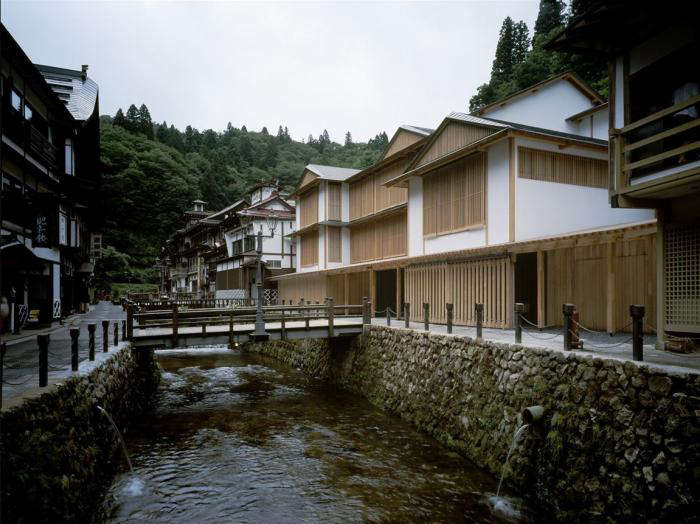
Ginzan Onsen Fujiya, a an preserves the recognizable form of its historic exterior while introducing contemporary spaces, filtered natural light, private hot spring baths, and precise architectural details. Rather than placing modern design on top of tradition, the project allows the two to speak to each other.
The result is a compelling example of modern Japanese inn design: quiet without feeling empty, luxurious without showing off, and traditional without pretending that electricity was never invented.
What Makes a Japanese Ryokan Different?
A ryokan is more than a hotel decorated with tatami mats. Traditional Japanese inns combine lodging, dining, bathing, architecture, seasonal rituals, and highly attentive hospitality into one coordinated experience. The room is not simply where guests sleep after sightseeing. It is often the main event.
Guests commonly remove their shoes at the entrance, change into a cotton yukata robe, drink tea in a tatami room, enjoy a carefully presented dinner, soak in a hot spring bath, and sleep on futons prepared later in the evening. Each stage is managed with deliberate timing, yet the experience is designed to feel natural rather than scheduled.
Rooms That Change Throughout the Day
Traditional ryokan rooms are flexible spaces. During the afternoon, a room may function as a sitting area with a low table and floor cushions. In the evening, staff move the table aside and arrange futon bedding. By morning, the bedding disappears and the room becomes open again.
This flexibility reflects a broader principle in Japanese architecture: a room does not always need one fixed purpose. Sliding screens, movable furnishings, built-in storage, and open floor areas allow a relatively compact space to support several activities. It is minimalism with a job, not minimalism that merely poses for photographs.
Hospitality as an Architectural Feature
The spirit of a ryokan is closely connected to omotenashi, a form of hospitality centered on anticipating a guest’s needs. Architecture supports that philosophy through clear transitions, calming materials, privacy, framed garden views, and careful control of sound and light.
In a successful ryokan, service and space feel inseparable. A cup of tea seems more meaningful because it is presented beside a seasonal flower arrangement. A bath becomes more restorative because the view has been carefully screened. Even the corridor encourages slower movement. The building politely asks everyone to stop rushing.
Ginzan Onsen: A Historic Setting for a Modern Ryokan
Ginzan Onsen sits in a narrow valley in Yamagata, a region of northern Honshu known for deep winter snow. Traditional multistory inns line the Ginzan River, creating one of Japan’s most recognizable hot spring townscapes. Wooden façades, small bridges, softly glowing windows, and historic street lighting give the town an atmosphere that feels cinematic without requiring artificial scenery.
The location placed an important responsibility on the renovation of Fujiya. Any dramatic exterior departure could have disrupted the visual rhythm of the town. The project therefore needed to improve the guest experience while continuing to belong to its surroundings.
Kengo Kuma’s solution was not to erase the old building. The recognizable silhouette was retained, and wood from the original structure was used in the renewed façade. Larger openings were introduced, but they were screened with vertical bamboo elements that softened the modern intervention.
From the street, the inn still participates in Ginzan Onsen’s historic character. Step inside, however, and the architecture becomes lighter, more abstract, and unmistakably contemporary.
How Kengo Kuma Made the Traditional Inn Modern
Preserving the Form, Reimagining the Interior
The most intelligent decision in the Fujiya renovation was separating the building’s cultural identity from its outdated interior configuration. The project preserved the exterior presence of the old ryokan while reorganizing the interior around a tall atrium.
This approach created openness without turning the inn into a conventional glass hotel. Guests still encounter natural wood, intimate rooms, screened views, and quiet transitions. Yet the central void allows light to move through multiple levels, giving the building a sense of depth and airiness that would have been difficult to achieve within the original layout.
The contrast is subtle but powerful. The outside communicates continuity; the inside communicates renewal.
Bamboo Screens That Filter Rather Than Divide
One of the renovation’s defining features is its use of extremely delicate bamboo screens. Arranged around the atrium and across exterior openings, the narrow bamboo elements create surfaces that are neither completely solid nor fully transparent.
This in-between condition is central to the design. A conventional wall separates one space from another. A large sheet of glass removes nearly every visual boundary. The bamboo screens do something more interesting: they reveal, conceal, soften, and frame at the same time.
During the day, sunlight passes through the slats in narrow bands. Shadows shift as the sun moves. At night, interior light turns the building into a softly glowing lantern. Privacy is maintained without creating a sealed environment, and guests remain aware of the weather, landscape, and passing hours.
Stained Glass Without the Cathedral Drama
The project also uses translucent Dalle de Verre glass to diffuse exterior light. In another setting, stained glass might introduce bold color or religious imagery. At Fujiya, it works more quietly, creating a luminous surface that complements the bamboo screens.
Instead of allowing harsh daylight to flood the interior, the materials break it apart. Light becomes textured and atmospheric. The effect is particularly appropriate for an onsen inn, where relaxation depends as much on visual calm as it does on hot water.
A Staircase That Feels Almost Weightless
Suspended stair elements bring a sharper contemporary note to the interior. Their visual lightness contrasts with the aged timber and traditional exterior form, but the composition does not feel aggressive. The staircase appears to float through the screened atrium rather than dominate it.
This is an important lesson in mixing old and new architecture. Contemporary additions do not need to imitate historical construction. In fact, obvious imitation can make a renovation feel less authentic. New elements can speak in the language of their own time, provided their scale, materials, and proportions respect the original structure.
Traditional Materials With Contemporary Precision
The modernized Japanese inn relies on a restrained palette of bamboo, wood, glass, stone, plaster, paper, and woven surfaces. These materials have long histories in Japanese architecture, but they are assembled with contemporary precision.
Natural materials also change gracefully. Wood darkens, bamboo develops variation, and stone responds to moisture. Instead of fighting age, the design allows time to contribute to the interior. That is especially valuable in hospitality spaces, where overly polished finishes can make a room feel strangely afraid of its guests.
Tatami as More Than Decoration
Tatami flooring immediately changes how a room is used. Because shoes are removed, the floor becomes a clean living surface rather than something people merely walk across. Guests sit closer to the ground, furnishings become lower, and movement becomes more deliberate.
Tatami also introduces texture, scent, rhythm, and scale. Its modular proportions have influenced room dimensions in Japanese architecture for generations. In a modern ryokan, tatami can coexist with discreet climate control, contemporary lighting, supportive bedding, and updated bathrooms without losing its cultural importance.
Hinoki Baths and the Ritual of Soaking
Japanese bathing is not primarily about washing. Guests clean themselves before entering the tub, allowing the bath to become a place for soaking and relaxation. Deep tubs made from hinoki cypress are especially valued for their warm surface, natural fragrance, and sensory connection to the forest.
Fujiya’s private baths reinterpret the onsen ritual through different materials and screened environments. Bamboo poles, wooden spouts, stone surfaces, and carefully controlled views turn each bath into a small architectural retreat. Privacy makes the experience more approachable for couples, families, and international travelers who may feel uncertain about communal bathing.
Modern Comfort Without Visual Clutter
Preserving tradition does not require preserving discomfort. Today’s travelers expect reliable heating, effective plumbing, comfortable bedding, convenient charging, strong ventilation, acoustic privacy, and bathrooms that do not require an instruction manual written by a puzzle designer.
The best modern ryokans incorporate these conveniences quietly. Technology is concealed within cabinetry, walls, floors, and ceilings. Lighting is layered rather than glaring. Mechanical systems operate in the background. Furniture supports the body while remaining visually restrained.
Modernization may also improve accessibility. Traditional floor seating and futons can be challenging for guests with limited mobility, so some contemporary inns offer raised beds, chairs with supportive backs, handrails, elevators, and private baths with easier entry. These adjustments expand the audience without requiring the inn to abandon its identity.
Kaiseki Dining Connects the Inn to Its Region
Architecture may attract guests, but food often becomes the most vivid memory of a ryokan stay. Kaiseki is a multi-course style of Japanese dining that emphasizes seasonality, balance, local ingredients, varied cooking methods, and meticulous presentation.
A meal might include a small appetizer, sashimi, a simmered dish, grilled fish, vegetables, soup, rice, pickles, and dessert. The exact sequence varies, but each plate contributes to a larger story about the season and region. A winter menu in Yamagata should not feel interchangeable with a summer menu beside the Seto Inland Sea.
Modern chefs can update this tradition through lighter preparations, new plating, carefully selected beverages, and accommodations for dietary needs. The goal is not novelty for its own sake. It is to keep the cuisine responsive while maintaining its relationship with place.
Design Lessons From a Modernized Japanese Inn
Preserve Character, Not Every Old Component
Historic renovation requires judgment. Some elements carry cultural memory; others are simply worn-out equipment. Fujiya demonstrates how a building can retain its recognizable form and original material presence while accepting a substantially different interior organization.
Use Light as a Building Material
Filtered daylight can create more emotional impact than expensive decoration. Screens, translucent glass, deep openings, and shadow allow light to change gradually. Rooms remain visually interesting without being filled with objects.
Create Meaningful Thresholds
Ryokan architecture uses transitions to prepare guests for different experiences. The movement from street to entrance, shoes to slippers, corridor to tatami, room to garden, and washing area to bath creates a sequence. Each threshold encourages a small change in behavior.
Let Craft Replace Ornament
Minimal interiors can feel cold when simplicity is achieved only by removing things. Japanese interiors often remain warm because attention shifts toward joinery, material texture, woven surfaces, handmade ceramics, paper, and natural irregularities. The construction itself becomes decoration.
Frame Nature Instead of Competing With It
A garden, river, courtyard, mountain, or patch of sky can become the strongest feature in a room. Carefully positioned windows and screens turn outdoor scenery into a living composition. This technique works even in dense urban settings, where a tiny planted courtyard may provide enough greenery to change the atmosphere.
Why Modern Ryokan Design Appeals Worldwide
The influence of the ryokan now extends far beyond Japanese hot spring towns. Hotels, spas, restaurants, and private homes around the world borrow elements such as deep soaking tubs, low furniture, timber screens, courtyard gardens, neutral materials, and flexible rooms.
The deeper attraction, however, is not a particular chair or bathtub. It is the promise of reduced distraction. Modern life is crowded with notifications, visual noise, packed schedules, and devices that chirp whenever silence begins to look comfortable. Ryokan design offers an alternative based on slower movement, seasonal awareness, and carefully limited choices.
Copying the appearance without understanding the philosophy can produce a room that feels like a themed showroom. The most successful ryokan-inspired interiors focus on proportion, sensory comfort, hospitality, craftsmanship, and a strong relationship with their location.
A 500-Word Experience: Staying in a Traditional Japanese Inn Made Modern
Imagine arriving in Ginzan Onsen late in the afternoon as snow begins to settle on the roofs. The river moves through the center of town, dark and narrow beneath small bridges. Historic wooden inns rise on either side, their windows glowing against the blue winter light. Your suitcase wheels, heroes on airport tile, immediately surrender to the snowy path.
At Fujiya, the exterior belongs naturally to the streetscape. It does not announce the presence of a famous architect with a giant sculptural entrance. The building waits quietly. Only when the door opens does the transformation become clear.
Inside, the space rises through a tall atrium. Fine bamboo screens stretch across openings like woven light. You can sense movement on another level without seeing every detail. The interior feels private but not enclosed, modern but not disconnected from the town outside.
Shoes are removed near the entrance. The change seems minor, yet it immediately alters the pace of the visit. Without heavy footwear, footsteps become softer. The floor feels more important. You stop moving like someone trying to reach the next attraction and begin paying attention to where you are.
In the guest room, the palette is quiet: tatami, pale plaster, warm wood, simple textiles, and a small arrangement selected for the season. There is no decorative stampede. A low table occupies the center of the room, accompanied by tea and a modest sweet. Through a screened opening, winter light breaks into narrow lines.
Later, you change into a yukata and walk to one of the private baths. The washing area comes first. After rinsing thoroughly, you lower yourself into the hot water. Steam softens the bamboo wall, and the scent of wet wood becomes more noticeable. The bath is deep enough to cover the shoulders. For several minutes, absolutely nothing needs to be tapped, refreshed, charged, or answered.
Dinner unfolds slowly. Small dishes arrive one at a time, each emphasizing a different ingredient or technique. A piece of fish may be grilled until its skin becomes crisp. Mountain vegetables might appear in a delicate broth. Local rice, pickles, soup, and seasonal garnishes complete the progression. The meal is generous, but it avoids the exhausting spectacle of an oversized buffet.
When you return to the room, the low table has been moved and the bedding prepared. The same space has changed function without feeling rearranged. Lying near floor level alters the view: the room seems taller, the ceiling more distant, and the light from the garden more concentrated.
Morning arrives quietly. The bamboo screens brighten before direct sunlight reaches the room. Breakfast is balanced and savory, perhaps including rice, grilled fish, soup, vegetables, and tea. Outside, the town begins to stir, but the inn still feels suspended between night and day.
The memorable part of the stay is not one dramatic object. It is the accumulation of small decisions: the softened light, the absence of shoes, the warmth of the bath, the changing room, the seasonal meal, and the way old timber meets contemporary glass. Modernization has not removed the ritual. It has made the ritual easier to enter.
Conclusion: Modernization Through Respect
A traditional Japanese inn made modern succeeds when renovation strengthens the original experience instead of replacing it. Ginzan Onsen Fujiya retains the historic presence expected within its remarkable hot spring town, yet its interior introduces new spatial openness, private bathing, contemporary comfort, and a refined vocabulary of bamboo, glass, wood, and shadow.
The project proves that heritage and innovation are not natural enemies. Old buildings do not need to be frozen in time, and modern architecture does not need to arrive carrying a wrecking ball. With careful editing, skilled craftsmanship, and respect for local culture, a historic inn can continue evolving while remaining unmistakably itself.