A modern office does not need to look like it was financed by a billionaire who accidentally ordered one of everything from a Scandinavian furniture catalog. The best startup offices often come from a much sharper equation: a strong brand, a practical floor plan, flexible furniture, and a designer who knows when to splurge, when to save, and when to say, “Yes, Ikea is absolutely invited to this meeting.”
That is why the story of Brad Sherman for Sakara Life remains such a useful case study. Sakara Life, the plant-based wellness and meal delivery brand founded by Whitney Tingle and Danielle DuBoise, needed a workspace that felt bright, natural, energetic, and unmistakably connected to its clean-eating identity. Sherman’s solution was not to drown the place in expensive custom everything. Instead, he used an all-white canvas, smart cabinetry, flexible kitchen islands, accessible materials, greenery, and a very startup-friendly philosophy: make the office work hard, look good, and grow with the team.
The result offers a blueprint for anyone trying to create a modern office on a startup budget. Whether you are building a wellness brand, a tech company, a creative studio, or a team of five people currently sharing one tragic printer, the lessons are surprisingly universal.
Why the Sakara Life Office Still Matters
Sakara Life is not just a meal delivery company; it sells a feeling. Its brand blends plant-rich nutrition, ritual, beauty, wellness, and a little bit of “I drink chlorophyll water and somehow my inbox is organized” aspiration. For a company like that, the office cannot be a beige box with fluorescent lights and one sad fern named Kevin. The physical space has to translate the brand’s promise into a daily experience.
Brad Sherman understood that. His approach to startup office design has often centered on turning a company’s personality into a place. In the Sakara Life office, that meant creating a bright, flexible loft where work, food, gatherings, photography, and culture could all happen without fighting each other. It was part office, part kitchen, part community hub, and part brand stage.
This is the first major lesson: a startup office is not only where employees answer emails. It is where the company rehearses its identity every day. The wrong space makes a young brand feel scattered. The right space makes even Monday morning feel slightly more intentional, which is no small miracle.
Who Is Brad Sherman, and Why Do Startups Like His Work?
Brad Sherman, associated with B. Sherman Workshop and later Float Studio, built a reputation designing spaces for consumer-facing startups and creative companies. His work has been linked with brands such as Casper, Food52, and Sakara Lifecompanies that understand physical space as more than square footage. For them, an office can be a recruiting tool, a showroom, a content backdrop, an event venue, and a morale booster.
Sherman’s strength is not simply making rooms attractive. It is making rooms legible. When someone walks into a space, they should understand what the company values before anyone begins the pitch deck. At Sakara Life, the message was clear: lightness, nourishment, flexibility, creativity, and warmth. No corporate fog machine required.
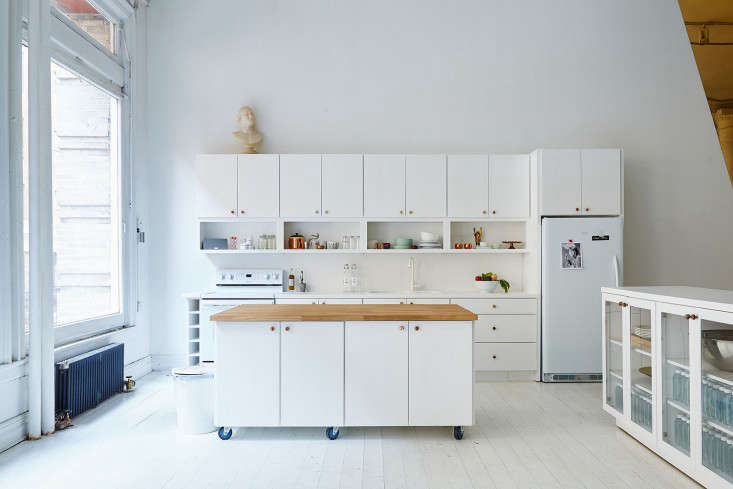
His method is also practical. Instead of treating budget limits as a tragedy, he treats them as design parameters. Paint can unify a room. Stock cabinetry can look intentional. An island on casters can become a prep station, serving counter, event surface, or emergency laptop landing zone. A white floor can make a loft feel larger and brighter. A few colorful details can do more than a wall of expensive branding graphics.
The Startup Budget Strategy: Spend Where It Works, Save Where It Shows Less
The phrase startup budget office design does not mean cheap. It means selective. Cheap design asks, “What is the lowest possible price?” Smart budget design asks, “What gives us the most function, identity, and durability for each dollar?” The Sakara Life office leaned into the second question.
1. Paint Became the Great Equalizer
One of the smartest moves in the Sakara Life office was the use of a bright white palette. White walls and painted floors created an instant canvas. This made the space feel open, clean, and visually consistent. For a wellness brand built around fresh food and vitality, white also reinforced the product story without screaming it from a neon sign.
For startups, paint is often the highest-impact, lowest-drama design decision. It can hide mismatched surfaces, brighten a narrow room, and create cohesion between donated desks, budget chairs, and that conference table someone “found” from a previous tenant. A controlled palette makes inexpensive elements look deliberate instead of accidental.
2. Flexible Furniture Did the Heavy Lifting
Flexibility is the secret ingredient in a modern startup office. Teams change. Headcount changes. Someone launches a podcast. Someone else decides the kitchen island is now a product photography station. A static office becomes obsolete quickly.
In the Sakara Life case, mobile islands and adaptable work surfaces helped the space serve multiple purposes. A prep kitchen could support food development, staff meals, events, product displays, and brand storytelling. Furniture on wheels may not sound glamorous, but neither does “quarterly budget review,” and both are essential to survival.
For a small business, flexible furniture should be prioritized over overly specific pieces. A long communal table can support lunches, meetings, packing sessions, workshops, and after-hours events. Stackable chairs can disappear when the room needs to transform. Open shelving can display products today and hold office supplies tomorrow.
3. The Kitchen Became the Heart of the Office
For Sakara Life, the kitchen was not a break room. It was the brand’s core. When your business revolves around beautiful, nourishing food, the kitchen has to feel central, not hidden behind a door with a microwave that smells like yesterday’s broccoli emergency.
This is a powerful idea for any company: identify the functional heart of the brand and design around it. For a food company, that heart may be a kitchen. For a software company, it may be a project room. For a design agency, it may be a materials wall or critique space. For a wellness company, it may be a lounge or meditation corner. The best startup offices do not copy generic office trends; they amplify what the company actually does.
Modern Office Design Is Really Brand Design in 3D
A logo sits on a screen. A workplace surrounds people. That is why office design can be one of the most persuasive forms of brand design. In the Sakara Life office, the brand showed up through brightness, greenery, natural textures, playful details, and a layout that supported gathering. These choices made the company feel human and alive.
Good brand-focused office design does not mean painting the logo color on every available surface until employees develop emotional allergies to the brand guidelines. It means asking better questions: What should people feel here? What kind of behavior should the space encourage? What parts of the company story deserve to be visible?
For Sakara Life, the answer was not a sterile wellness lab. It was an airy, bohemian, polished-but-not-stuffy office. That distinction matters. Wellness brands can easily drift into spaces that feel too precious, too clinical, or too aggressively beige. The Sakara approach balanced cleanliness with personality. It said, “We care about health,” but also, “We are not afraid of a little fun.”
How to Build a Modern Office on a Startup Budget
The Sakara Life project provides a practical roadmap for founders, office managers, and design teams. You do not need the same floor plan or the same aesthetic. You need the same discipline.
Start With the Work, Not the Furniture
Before buying anything, study how the team actually works. How many people need deep focus each day? How often do teams gather? Are calls constant? Does the company host clients, investors, creators, or community events? Do employees need storage, production space, lounge space, or quiet rooms?
Many startup offices fail because they are designed around vibes first and tasks second. The photos look great; the employees quietly suffer. An office that photographs well but makes people miserable is not design. It is a very expensive trap with pendant lighting.
Create Zones Without Building Walls Everywhere
Open offices can encourage energy, but they can also create noise, distraction, and the strange feeling that everyone is typing directly into your brain. The answer is not always more walls. A budget-conscious office can use rugs, shelving, plants, curtains, lighting, and furniture placement to create zones.
A startup might divide one room into a focus area, a collaboration table, a lounge corner, and a kitchen or coffee zone. The key is visual clarity. People should know where to go for quiet work, quick chats, team meetings, and casual breaks. Otherwise, every area becomes everything, and everything becomes chaos.
Invest in Chairs and Workstations
There are places to save, and there are places where saving too aggressively becomes a back-pain subscription plan. Chairs, desk height, monitor placement, lighting, and keyboard setup matter. A modern office should look good, but it also needs to protect the people using it eight hours a day.
Budget does not require ignoring ergonomics. It means making smart choices: adjustable chairs, monitor risers, external keyboards for laptop users, glare control, and enough desk depth for comfortable screen distance. Employees may forgive a thrifted side table. They will not forgive a chair that turns every workday into a chiropractic origin story.
Use Affordable Pieces With One or Two Custom Moments
The Sakara Life office showed how budget pieces can coexist with custom design. The trick is to choose where customization matters most. A custom island, a signature table, an unusual mirror wall, a product display shelf, or a branded entry moment can make the entire space feel designed.
Everything does not need to be custom. In fact, too much custom work can make a young office feel overbuilt before the company understands its future needs. Save custom spending for the pieces that solve a real problem or express the brand in a memorable way.
Design Details That Make a Budget Office Feel Expensive
Budget offices often fail in the details. The furniture might be fine, but the cables are rioting. The lighting is too harsh. The art is random. The storage is inadequate. The plants are either dying or fake in a way that feels emotionally suspicious.
To make a modern office feel polished, focus on visual order. Use matching storage bins. Hide cords. Choose a limited palette. Repeat materials. Add greenery where it can survive. Mix textures: wood, metal, woven rugs, ceramic pieces, linen curtains, or cork boards. Texture makes a simple space feel layered without requiring luxury spending.
Lighting is especially important. A room with only overhead lighting can make even brilliant employees look like they are being questioned by airport security. Layered lightingtask lamps, pendants, soft bulbs, and natural lightcreates comfort and helps define zones.
What Sakara Life Teaches About Wellness at Work
Wellness in office design is often reduced to a plant, a standing desk, and a sign that says “Breathe,” usually placed near a printer that has not breathed properly since 2019. Sakara Life’s office points toward a better definition. Wellness is about how the space supports energy, connection, focus, nourishment, and ease.
That does not require luxury. It requires intention. A sunny lunch table can encourage real breaks. A kitchen that feels welcoming can make people gather. A few quiet corners can reduce stress. Plants and natural textures can soften a work environment. Flexible layouts can prevent teams from feeling trapped in a plan that no longer fits.
The modern office should not try to imitate home completely, but it can borrow the best parts: warmth, comfort, personality, and places to recharge. The goal is not to trick people into staying late. The goal is to make the hours they spend together more useful, humane, and creative.
Common Mistakes to Avoid
Mistake 1: Copying Another Startup’s Aesthetic
Not every company needs white floors, hanging greenery, or bohemian accents. Sakara Life’s look worked because it matched the brand. A cybersecurity firm with the same office might look like it was hacked by a wellness influencer. Design should be authentic, not borrowed from someone else’s Instagram.
Mistake 2: Forgetting Storage
Minimal offices look wonderful until real life arrives with boxes, samples, cables, coats, snacks, mail, returns, and three mystery chargers no one can identify. Storage is not boring. Storage is what keeps the dream alive.
Mistake 3: Overdesigning Too Early
A startup office should leave room for change. Avoid locking every function into place. Use furniture and layouts that can evolve. The team you have now may not be the team you have in twelve months.
Mistake 4: Choosing Looks Over Comfort
A beautiful chair that nobody can sit in for more than twenty minutes is not a chair; it is a sculpture with HR consequences. Comfort should be part of the design brief from the beginning.
Practical Budget Plan for a Startup Office
If you are designing a startup office with limited funds, organize the budget into three tiers: essentials, identity, and delight.
Essentials include desks, chairs, lighting, Wi-Fi infrastructure, storage, safety basics, and kitchen needs. These make the office functional. Do not starve this category.
Identity includes paint, signage, display areas, materials, and one or two signature design moves. This is where the office starts to feel like your company instead of a rented room with ambition.
Delight includes art, plants, textiles, small decor, books, ceramics, scent, music, and event-ready details. These elements make people smile, linger, and remember the space.
The genius of a project like Sakara Life is that it balances all three. The space functions, expresses the brand, and creates emotional warmth. That is the real formula behind a modern office on a startup budget.
Experience-Based Notes: What This Topic Teaches Real Founders and Teams
When working with the idea of A Modern Office on a Startup Budget: Brad Sherman for Sakara Life, the biggest takeaway is that a good office is not built by buying the most expensive objects. It is built by making a series of honest decisions. What does the team need every day? What does the company want people to feel? What can be reused? What deserves investment? What can be simplified?
In real startup environments, the office often grows in awkward chapters. First there is a co-working table. Then a subleased room. Then a loft with too few outlets. Then suddenly someone is asking whether the brand needs a “hospitality moment” near the entrance, and everyone pretends to know what that means. The Sakara Life case is useful because it shows that scrappiness can become style when decisions are coherent.
One practical experience many teams discover quickly is that people use space differently from how founders imagine they will use it. The lounge meant for brainstorming becomes a quiet reading corner. The conference room becomes a podcast booth. The kitchen becomes the most important meeting room because snacks have diplomatic power. This is why flexibility matters. An office should be designed with enough structure to guide behavior and enough looseness to allow reality to participate.
Another experience is that budget constraints can actually improve design. Unlimited money can make a space bloated. Limited money forces prioritization. Paint, lighting, layout, and furniture placement become more important than expensive finishes. A founder who cannot afford marble may discover that white laminate, warm wood, and good styling do 80 percent of the job for a fraction of the cost. The office may even feel more authentic because it reflects ingenuity rather than excess.
The Sakara Life example also teaches that the best office investments are often the ones that support repeated moments. A communal table used every day is more valuable than a dramatic reception desk used for ten seconds. A flexible kitchen island that supports meals, meetings, samples, and photoshoots earns its keep. A comfortable chair used by an employee for thousands of hours is not a small purchase; it is infrastructure for focus.
There is also a cultural lesson. A modern startup office should not merely impress visitors. It should reinforce how the team wants to behave. If a company values transparency, the space should make collaboration easy. If it values wellness, breaks and nourishment should be visible. If it values creativity, there should be surfaces for ideas, not just screens for slides. If it values sustainability, reusing furniture and buying second-hand should be part of the design story, not an apology.
Finally, the most useful experience is this: people remember how a workplace makes them feel. They may not remember the cabinet brand, the exact paint color, or whether the table was custom. They remember whether the room felt energizing, whether it was easy to find a place to focus, whether lunch felt communal, whether visitors smiled, and whether the office made the company feel more real. That is why Brad Sherman’s work for Sakara Life remains relevant. It proves that a startup office can be polished without being precious, affordable without looking temporary, and practical without losing its soul.
Conclusion
A Modern Office on a Startup Budget: Brad Sherman for Sakara Life is more than a stylish design story. It is a lesson in strategic restraint. Sherman’s approach shows that a compelling workplace can come from clarity, not excess. Bright paint, flexible furniture, smart kitchen planning, greenery, affordable materials, and brand-aware details can transform a startup office into a space that supports work, culture, events, and storytelling.
For founders, the message is encouraging: you do not need a giant budget to create a modern office. You need priorities. Spend on comfort. Design for flexibility. Let the brand guide the atmosphere. Make the space useful before making it fancy. Then add just enough personality so people know they have not wandered into an accounting annex by mistake.
The best startup offices are not perfect showpieces. They are living tools. They help teams gather, focus, experiment, eat, laugh, host, sell, and grow. Sakara Life’s office did exactly thatand that is why it remains a smart model for anyone building a workplace with big ambitions and a budget that still has to answer to reality.
SEO Tags
Note: This article is written as original web-ready content in standard American English, based on publicly available information about Brad Sherman, Sakara Life, Float Studio, startup office design, workplace planning, and ergonomic best practices.