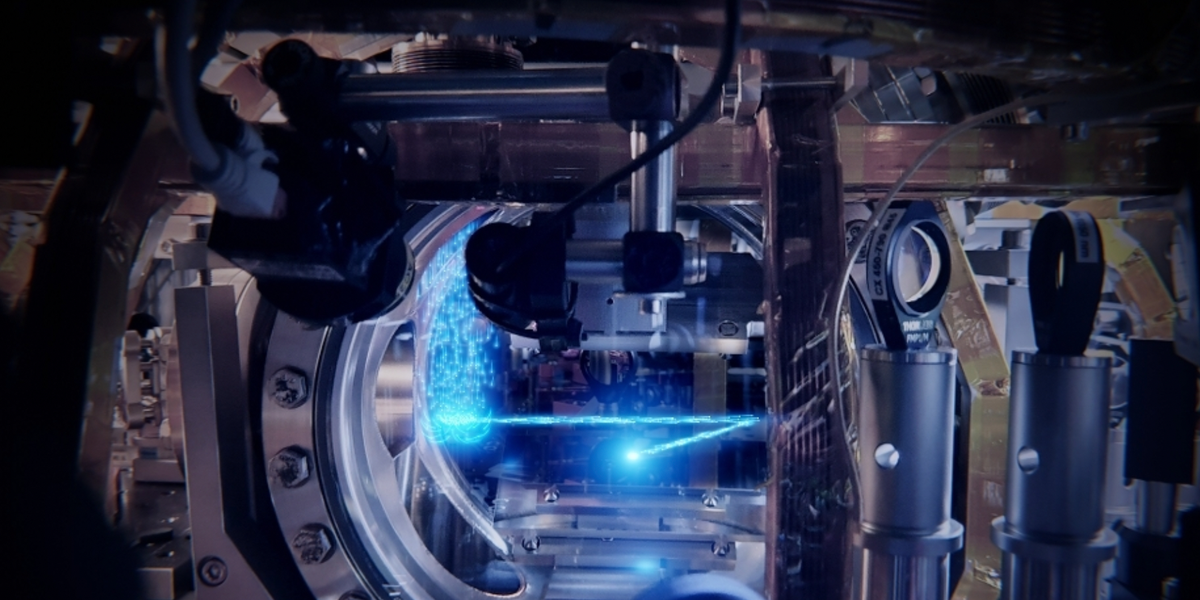
If the phrase “a laser that can run forever” made you picture a sci-fi beam slicing through a villain’s lair while an intern casually flips the ON switch and goes to lunch foreversame.
But the real story is even cooler (and yes, that pun is legally required): the “laser” here isn’t made of light. It’s made of atomsa coherent beam of matter waves that behaves like a laser beam, and it can be sustained continuously in principle.
That “in principle” matters, because physics headlines are like toddlers with frosting: enthusiastic, messy, and rarely precise. The breakthrough is a big deal, thoughone that could push quantum sensors, precision navigation, and next-gen measurements from “pulsed and finicky” toward “continuous and useful.”
What the Headline Really Means (Spoiler: It’s an Atom Laser)
Optical lasers vs. atom lasers
A traditional laser is a highly organized flood of photonslight waves marching in lockstep. An atom laser is the same idea, except the beam is made from atoms behaving like waves.
Quantum mechanics says particles have wave nature; if you line those atomic waves up so they’re coherent (phase-aligned), you can “outcouple” them as a beammatter behaving with laser-like unity.
MIT demonstrated the first atom laser in the 1990s, proving you can get atoms to “march in lockstep” the way photons do.
Why bother? Because atoms are nosy. They notice tiny gravitational changes, subtle accelerations, minute magnetic fields, and small timing shifts. A coherent beam of atoms can become a ridiculously sensitive measuring stickif you can keep it running long enough to be practical.
The Secret Sauce: Bose–Einstein Condensates
Atom lasers rely on a strange state of matter called a Bose–Einstein condensate (BEC). In a BEC, a gas of bosonic atoms is cooled to ultralow temperatures so the atoms fall into the same quantum state.
Translation: they start acting less like a chaotic crowd and more like a single, coordinated “super-wave.”
Making a BEC is not like chilling a soda. It’s more like persuading atoms to stop being hyperactive toddlers by building an elaborate obstacle course of lasers, magnetic fields, vacuum chambers, and patience.
NASA even runs a Cold Atom Lab on the International Space Station to create and study BECs in microgravity, because space is great for letting ultracold atoms drift longer without falling out of your experiment like sad quantum confetti.
Why Atom Lasers Used to “Blink” Instead of “Run”
For decades, most atom lasers were basically quantum sprinklers: they produced a pulse, then you had to rebuild the source. The issue wasn’t that scientists forgot to pay the “continuous” subscription feeit was the brutal reality of making a BEC.
Traditional hooked-up-to-reality BEC production uses multiple cooling stages (laser cooling, trapping, evaporative cooling, etc.).
After you extract atoms as a beam, the condensate depletes. Then you have to start over, often discarding lots of atoms and spending precious time re-cooling.
MIT researchers were already chasing continuous coherent atom sources in the early 2000s, underscoring how hard “continuous” is in cold-atom land.
In other words, the “laser” part was fine. The “keep the quantum source alive without it collapsing into warm, incoherent disappointment” part was the villain of the story.
The Breakthrough: A Continuous Bose–Einstein Condensate
The recent headline comes from research demonstrating continuous Bose–Einstein condensationcreating a continuous-wave (CW) condensate of strontium atoms that can be maintained indefinitely in principle, as long as the system keeps being replenished and stabilized.
So how do you keep a condensate “alive”?
The key idea is beautifully unromantic: don’t treat the condensate like a one-time soufflé that collapses if you look at it wrong.
Instead, treat it like a continuously stocked buffet.
In the Nature report, the condensate is sustained by amplification through Bose-stimulated gain from atoms supplied by a thermal bath, while that bath is steadily replenished.
That’s a fancy way of saying: “We built a system where the coherent state can keep getting fed without ruining the coherence.”
Coverage of the work explains another practical trick: rather than performing cooling steps time-sequentially in one spot, the apparatus can spread stages out in spaceatoms move through consecutive cooling regions, progressing toward condensation like they’re going down an assembly line that ends in quantum unity.
Put those together and you get something the field has wanted for ages: a continuous matter-wave source that doesn’t require constant stop-start rebuilding.
That’s the core of the “runs forever” claim.
Why This Matters: From Quantum Party Trick to Real-World Tool
A continuous atom laser isn’t just a novelty. It’s a potential upgrade to a whole toolbox of technologies built on coherent atomsespecially atom interferometry, where atoms are split and recombined like waves to measure tiny phase shifts caused by gravity, acceleration, rotation, or fields.
1) Better quantum sensors (gravity, acceleration, rotation)
Atom interferometers can act like exquisitely sensitive accelerometers and gravimeters. Reviews of portable/fieldable atom interferometers describe how laser pulses manipulate falling cold atoms to read out gravitational and inertial effects, with applications ranging from surveying to navigation.
Here’s the practical problem: pulsed sources limit duty cycle. If you can only measure in bursts, you can miss fast changes and you fight extra noise.
A more continuous source can improve data continuity, filtering, and real-time sensingespecially important outside pristine lab conditions.
2) Precision measurement and fundamental physics tests
Coherent matter waves are used in quantum metrologytesting constants, measuring forces, and probing fundamental physics.
Peer-reviewed work demonstrates compact atom interferometry with BECs and highlights how matter-wave coherence underpins precision sensing.
A continuous atom laser can also support long-integration measurements where stability and uninterrupted operation matter.
In the same way continuous optical lasers enabled whole industries, continuous matter waves could expand what’s feasible for quantum devicesespecially when paired with microgravity platforms like NASA’s Cold Atom Lab that already explores ultracold atoms in orbit.
3) “Quantum infrastructure” that doesn’t feel like a fragile art project
The long-term vision is not that everyone will keep a Bose–Einstein condensate next to their Wi-Fi router (though that would make dinner parties interesting).
It’s that continuous sources can help quantum sensing become more robust, more reliable, and easier to integrate into real systemsreducing the gap between lab demos and deployed hardware.
What It’s NOT: A Perpetual Motion Laser
Let’s be painfully clear: this is not “infinite energy” or a loophole in thermodynamics.
The atom laser can be sustained continuously by maintaining the conditions that create and feed the coherent matter wave.
That means power for lasers, magnetic fields, vacuum pumps, and control systems; plus a supply of atoms and an engineering setup that doesn’t drift out of alignment.
“Forever” here is shorthand for “not fundamentally time-limited by source depletion, the way older pulsed versions were.”
If you unplug the apparatus, it won’t keep humming out atoms in defiance of the universe. The breakthrough is about overcoming a long-standing operational bottleneckcontinuous condensation and replenishmentnot abolishing the electric bill.
What Comes Next: The Hard Part After the Cool Part
Physics history is full of breakthroughs that worked beautifully once… under the strict protection of a lab full of graduate students and warning labels.
The road from “continuous BEC achieved” to “continuous atom laser as a practical tool” includes a few chunky challenges:
-
Long-term stability: Continuous operation demands stable magnetic fields, laser frequencies, vacuum quality, and thermal control over long periods.
Small drifts add up to big coherence problems. - Beam quality and control: A usable atom laser needs controllable flux, low noise, and consistent coherenceespecially for interferometry and precision metrology.
-
Miniaturization: The dream is portability, but ultracold setups are famously “not compact” unless you work very hard (and probably invent new engineering along the way).
Fieldable interferometers are advancing, but continuous sources raise the bar for reliability.
Still, the significance is real: the Nature result explicitly frames continuous condensation as a gateway to continuous-wave atom lasers, addressing a constraint that kept many quantum gas devices stuck in pulsed mode.
Quick FAQ (Because Your Group Chat Will Ask)
Is it a “laser” if it’s not light?
In everyday speech, “laser” implies light. In physics, “laser” is a concept: a coherent, amplified beam produced by a gain mechanism.
Atom lasers apply that concept to matter waves rather than photons.
Why strontium?
Strontium has properties that make it attractive in ultracold-atom experiments, including laser-cooling transitions used in precision work.
The key point is the demonstrated continuous-wave condensate and sustained coherence mechanism.
When will this show up in real products?
Continuous atom sources are foundational tech; they’re likely to influence high-end sensing and research tools before they influence consumer gadgets.
But the pathwaybetter duty cycle, more stable sensingmatches what fieldable quantum sensors are already aiming for.
Conclusion: “Forever” With an Asterisk, But Still a Big Deal
Scientists didn’t create a magical, unplugged laser that defies time. They did something better for quantum tech: they demonstrated a way to keep a coherent matter-wave source going continuously by sustaining the underlying Bose–Einstein condensate rather than letting it run dry and restarting.
That’s the kind of unglamorous, deeply technical win that quietly unlocks a decade of practical advances.
So yes“a laser that can run forever” is headline poetry. But underneath the marketing glitter is a real physics milestone: continuous Bose–Einstein condensation and a credible path toward continuous-wave atom lasers that could make quantum sensing and precision measurement far more usable in the real world.
Experience Add-On: What It’s Like Living Near a “Forever” Laser (A Lab-Style Perspective)
Let’s talk about the human side of a “laser that can run forever,” because the experiment might be continuousbut the path to getting there is famously not.
If you’ve ever wondered what it feels like to chase an ultracold, coherent matter beam, imagine trying to host a perfectly synchronized dance party… for atoms… inside a vacuum chamber… while everything around it desperately wants to vibrate, warm up, drift, and generally ruin your day.
In a typical cold-atom workflow, the day starts with the least glamorous hero: the vacuum system.
Ultra-high vacuum is basically the “no random guests allowed” sign for atoms.
One tiny leak or outgassing component and your carefully prepared cloud collides with background gas particles and forgets its quantum manners.
You can do everything else right and still lose coherence because a screw decided it wanted to be slightly warmer than yesterday.
Next comes the laser choreography.
“Laser cooling” sounds like a contradiction until you see it work: tuned light nudges atoms into slowing down.
But those lasers don’t just turn on and behave. They drift in frequency, they misalign, and they demand constant attention like divas who only perform if the lighting is perfect.
People joke about “laser locking” like it’s a single step, but it’s more like maintaining a friendship with a temperamental metronome.
Now picture the moment you try to make the system continuous.
Pulsed experiments are forgiving in a weird way: you get your shot, measure your pulse, and reset.
Continuous operation is a different mindset. It’s not “make it work once.” It’s “make it stay working while time passes and reality pokes it with a stick.”
That means the control loops matter more. Temperature stability matters more. Magnetic field noise matters more.
Even the air conditioning becomes an unofficial coauthor.
The funniest part is how “forever” turns into “forever, as long as we keep feeding it.”
The continuous BEC idea is conceptually elegantreplenish the bath, sustain coherencebut in practice it feels like running a tiny quantum restaurant:
supply the ingredients (atoms), keep the kitchen cold, prevent contamination, and make sure your “customers” (the coherent atoms) leave in an orderly line instead of stampeding.
When it works, it’s deeply satisfying, because the signal looks less like a heartbeat and more like a steady voice.
The data becomes something you can actually build systems around, not just admire in a paper figure.
And then, inevitably, something goes wrong.
A cable gets bumped. A mirror mount settles. A frequency reference hiccups.
The “forever” laser becomes the “forever until Tuesday” laser.
But that’s also why this breakthrough matters: it’s not just a fancy demoit’s a step toward making these systems less like delicate art and more like reliable instruments.
The dream isn’t immortality. It’s dependability. And in experimental physics, dependability is the closest thing we have to magic.