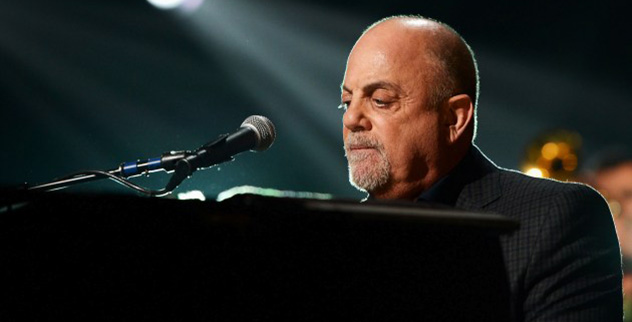
Rock music is commonly pictured with a guitar turned up to eleven, a drummer attacking the snare, and a singer making decisions that would deeply concern a vocal coach. Yet some of rock’s most unforgettable moments begin with eighty-eight keys.
The greatest piano performances in rock do more than decorate a song. They control the rhythm, establish the emotional temperature, connect wildly different sections, and occasionally challenge the electric guitar to a public duel. From Jerry Lee Lewis treating the piano like a piece of gym equipment to Freddie Mercury constructing a miniature opera around it, these performances changed what listeners expected from a rock keyboard.
This ranking considers musical influence, originality, emotional impact, technical execution, and how essential the piano is to the finished recording. It focuses primarily on acoustic piano performances rather than organ or synthesizer showcases. Rankings are naturally subjective, but every selection below earned its place by making the piano impossible to ignore.
10. “Scenes from an Italian Restaurant” Billy Joel
A complete rock drama built from the keyboard
Billy Joel’s “Scenes from an Italian Restaurant,” released on The Stranger in 1977, feels less like one song and more like an entire evening compressed into nearly eight minutes. It moves from an intimate piano ballad into Dixieland-flavored jazz, accelerates into a rock-and-roll story about Brenda and Eddie, and eventually returns to its quiet opening atmosphere.
Joel’s piano performance makes those transitions feel natural. His left hand supplies momentum while the right hand alternates among conversational chords, rhythmic accents, and melodic flourishes. The playing is technically controlled but never stiff. Every change supports the characters and their fading teenage mythology.
Many musicians could play the notes. Far fewer could make several contrasting musical styles sound like chapters of the same story. Joel does it while singing, leading the band, and presumably remembering where the imaginary bottle of red wine was placed.
9. “Sweet Home Alabama” Lynyrd Skynyrd
Billy Powell sneaks a piano into a guitar anthem
“Sweet Home Alabama” is famous for its opening guitar riff, but Billy Powell’s piano is one of the recording’s secret weapons. Throughout the track, he adds rolling fills and blues-based responses that thicken the groove without crowding the guitars.
His moment arrives near the end. Powell launches into a bright, fast-moving solo that combines blues vocabulary, gospel energy, and classic rock-and-roll rhythm. Instead of sounding pasted onto the song, the piano seems to have been waiting patiently for permission to take over.
That is what makes Powell’s work so impressive. Lynyrd Skynyrd already had enough guitarists to form a small municipal government, yet his piano remained distinctive. It brought elegance and swing to Southern rock without reducing the music’s weight. The performance proves that a piano can survive inside a dense guitar arrangementand leave with the last word.
8. “November Rain” Guns N’ Roses
Axl Rose turns a power ballad into a rock monument
By the early 1990s, the power ballad was in danger of becoming a predictable formula: soft introduction, emotional chorus, dramatic guitar solo, repeat until every lighter in the arena is raised. Axl Rose took that formula, stretched it to almost nine minutes, surrounded it with orchestral grandeur, and gave it the confidence of a Hollywood epic.
The piano part is not filled with rapid-fire virtuosity. Its power comes from pacing. Rose uses broad chords, descending movements, and carefully spaced melodic figures to create the feeling that something enormous is approaching. The restraint gives Slash’s guitar room to enter while keeping the song emotionally anchored.
“November Rain” demonstrates how a relatively accessible piano part can carry a massive arrangement. Beneath the strings, guitar solos, choir-like backing vocals, and one famously inconvenient outdoor wedding, the song remains a piano composition at heart.
7. “Jessica” The Allman Brothers Band
Chuck Leavell brings sunlight to Southern rock
Dickey Betts wrote “Jessica,” but Chuck Leavell’s piano performance helped transform it into one of the most joyful instrumentals in rock history. Released on Brothers and Sisters in 1973, the track moves with the ease of an open highway, and Leavell’s playing supplies much of its brightness.
His solo begins melodically, then develops through rhythmic variations, blues phrases, sparkling upper-register runs, and playful exchanges with the guitars. It feels carefully shaped without sounding rehearsed into submission. Leavell later associated the solo with the image of a child at play, which explains its sense of discovery: every phrase seems delighted to find the next one.
The piano does not compete with the guitar melody. It expands the emotional range of the track. “Jessica” is technically polished, but its greater achievement is making sophisticated ensemble playing feel completely carefree.
6. “Jungleland” Bruce Springsteen
Roy Bittan creates a city before the lyrics begin
Roy Bittan’s introduction to “Jungleland” is cinematic before the first character appears. The piano enters with stately chords and arpeggiated movement, creating a world of romance, danger, neon, and doomed ambition. When the strings and band join, the scene already feels enormous.
Bittan continues shaping the track beneath Springsteen’s vocal. His playing shifts between delicate accompaniment and muscular rhythmic support, linking the song’s quieter passages to its explosive peaks. The piano also helps prepare the emotional space for Clarence Clemons’ celebrated saxophone solo.
The brilliance of Bittan’s performance lies in its architectural role. Remove it, and “Jungleland” loses much of its grandeur. The piano is not merely supporting the narrative; it is building the streets on which that narrative happens. Few rock pianists have made an album feel as widescreen as Bittan did on Born to Run.
5. “Aladdin Sane” David Bowie
Mike Garson introduces avant-garde piano to glam rock
Mike Garson’s solo on “Aladdin Sane” sounds as though a sophisticated jazz pianist accidentally entered a glam-rock session, assessed the situation, and decided to set the furniture on fire.
Garson initially offered David Bowie more conventional blues- and Latin-influenced ideas. Bowie encouraged him to use his avant-garde background instead. The resulting solo is packed with dissonant clusters, unpredictable accents, chromatic lines, and dramatic leaps. It is chaotic, but it is not random. Garson controls the tension with the instincts of a player who understands exactly how far outside the harmony he can travel.
The performance changed the character of the entire song. Bowie’s glamorous, fractured persona suddenly had a musical equivalent: elegant, dangerous, unstable, and impossible to classify. It remains one of rock’s boldest examples of giving a session musician genuine creative freedom.
4. “Take Me to the Pilot” Elton John, Live on 17-11-70
Three musicians create the force of an arena band
Elton John has recorded enough classic piano performances to occupy an entire top-10 list by himself. His live version of “Take Me to the Pilot” from 17-11-70, however, captures his rock playing in especially concentrated form.
Recorded during a live radio performance at A&R Studios in New York, the arrangement features only John, bassist Dee Murray, and drummer Nigel Olsson. With no orchestra or large backing band available, the piano must function as harmony, rhythm guitar, percussion, and lead instrument.
John pounds out gospel-derived chords, adds bluesy fills between vocal phrases, and drives the trio through dynamic rises and sudden releases. His timing is aggressive but flexible, allowing the rhythm section to breathe. The performance reminds listeners that before the giant glasses, elaborate costumes, and stadium spectacle, Elton John was a ferocious rock pianist capable of making a three-piece sound enormous.
3. “Layla” Derek and the Dominos
Jim Gordon’s piano coda changes the emotional destination
The first half of “Layla” is urgent, distorted, and desperate. Then the song seems to endonly for Jim Gordon’s piano to begin a second movement that changes everything.
Gordon, best known as a drummer, plays the famous coda with a direct, unpolished quality. The repeating piano theme is not technically extravagant, but its emotional effect is immense. As slide guitars enter around it, the music shifts from obsession toward reflection. The tension does not disappear; it becomes sorrowful and strangely peaceful.
The coda was added after the primary portion of the track had already been recorded. That structural decision turned a powerful blues-rock song into something far more ambitious. Gordon’s performance demonstrates that greatness is not measured by how many notes a pianist can fit into a bar. Sometimes a simple theme, placed at exactly the right moment, can completely rewrite a song’s meaning.
2. “Great Balls of Fire” Jerry Lee Lewis
The piano becomes a dangerous rock-and-roll instrument
Before Jerry Lee Lewis, the piano could be respectable, romantic, jazzy, or rhythmically exciting. After Jerry Lee Lewis, it could also appear to require emergency medical attention.
Recorded in 1957, “Great Balls of Fire” is driven by Lewis’ pounding left-hand rhythm and bright right-hand figures. He blends boogie-woogie, country, gospel, and rhythm and blues into a performance that feels both disciplined and barely under control. The accents land with enormous physical force, yet the groove never collapses.
Lewis’ playing was inseparable from his stage presence. He stood, kicked the bench aside, played with theatrical abandon, and made the piano as visually exciting as an electric guitar. That influence reaches through Elton John, Billy Joel, and generations of keyboard-led rock acts. “Great Balls of Fire” is not simply an early rock piano classic. It is one of the recordings that established what rock piano could be.
1. “Bohemian Rhapsody” Queen
Freddie Mercury uses the piano to organize controlled chaos
“Bohemian Rhapsody” ranks first not because Freddie Mercury plays the fastest or most technically complicated solo on this list. It ranks first because his piano performance holds together one of the most audacious compositions ever released as a rock single.
The opening ballad section depends on Mercury’s spacious chord voicings, dramatic pauses, and instinctive control of dynamics. His playing supports the vocal without merely doubling it. As the song moves through its operatic section and into hard rock, the piano remains part of the structural foundation, helping a collection of seemingly incompatible ideas feel inevitable.
Mercury understood the keyboard as a composer’s instrument. At the piano, he could map harmony, vocal arrangements, rhythmic changes, and theatrical gestures before Queen added its famous layers of guitars and voices. The instrument was essentially the drafting table for the song’s architecture.
Most importantly, the performance is recognizable within seconds. Those opening piano chords do not simply introduce “Bohemian Rhapsody.” They open the door to an entire musical universe. Few piano performances have been as influential, as widely recognized, or as inseparable from the identity of a rock masterpiece.
What Makes a Great Rock Piano Performance?
The selections above reveal that there is no single formula. Jerry Lee Lewis creates excitement through rhythm and physical attack. Mike Garson uses harmonic danger. Roy Bittan builds atmosphere. Jim Gordon transforms a song through repetition. Elton John fills every available musical role, while Freddie Mercury uses the piano to organize a complex composition.
Technical skill matters, but technique alone is not enough. A great rock piano performance must serve the song while retaining a personality of its own. It should sound essential rather than ornamental. The finest parts make listeners wonder how the track could possibly exist without them.
Experiencing the Greatest Piano Performances in Rock
Listen beyond the most famous instrument
A useful way to experience these recordings is to deliberately ignore the element that first made each song famous. During “Sweet Home Alabama,” look past the opening guitar riff and follow Billy Powell’s fills. On “Jungleland,” listen beneath Springsteen’s vocal and notice how Roy Bittan guides every change in intensity. During “Layla,” compare the emotional state of the guitar-driven first section with the reflective piano coda.
This focused listening often reveals that the piano is doing several jobs simultaneously. It may strengthen the beat, outline the harmony, answer the singer, and quietly signal the next section. Once those details become audible, familiar songs feel newly constructed.
Use headphones, then use speakers
Headphones are excellent for studying articulation and placement. Chuck Leavell’s phrases in “Jessica,” for example, become easier to follow when the surrounding guitars are separated across the stereo field. Mike Garson’s accents on “Aladdin Sane” also sound more intentional when each dissonance can be heard clearly.
Large speakers provide a different experience. Jerry Lee Lewis’ left-hand rhythm feels physical, while the spacious chords of “November Rain” reveal why simple voicings can support an enormous arrangement. The best approach is to use both. Headphones expose the craftsmanship; speakers reveal the impact.
Try playing the foundations before the decorations
Pianists exploring these songs should resist the temptation to begin with the flashiest solo. Start with the rhythmic and harmonic foundation. Learn the chord pulse of “Great Balls of Fire,” the changing sections of “Scenes from an Italian Restaurant,” or the repeating theme from the “Layla” coda.
After the structure feels comfortable, add fills and melodic details. This method demonstrates why the original performances work. The decorations are exciting because the foundation underneath them is reliable. A player who races into the solo without controlling the groove may produce many impressive notes and very little rock music.
Notice the productive imperfections
Classic rock piano is not always polished to mathematical perfection. Notes may strike with uneven force, rhythms may push slightly ahead of the beat, and chord voicings may sound rougher than a conservatory teacher would recommend. These qualities are often part of the performance’s identity.
Jim Gordon’s “Layla” coda would lose intimacy if every note were mechanically equal. Elton John’s live playing would lose excitement if each accent were carefully sanitized. The lesson for musicians is not to play carelessly. It is to recognize that expression sometimes requires controlled roughness. Rock piano should breathe, sweat, and occasionally behave as though it has ignored the venue’s security deposit.
Experience the songs as complete arrangements
The piano rarely succeeds alone. Leavell’s solo in “Jessica” works because the guitars answer and support him. Bittan’s “Jungleland” performance gains power from the strings, saxophone, drums, and Springsteen’s storytelling. Mercury’s piano in “Bohemian Rhapsody” becomes monumental through its relationship with Queen’s layered vocals and Brian May’s guitar.
For bands rehearsing these songs, balance is more important than volume. The guitarist may need to play less while the pianist fills the middle register. The drummer may need to follow the keyboard’s phrasing rather than treating it as background. Great rock arrangements resemble conversations. Everyone speaks, but ideally not at maximum volume during the same sentence.
Build a listening journey rather than a random playlist
These performances become even more revealing when played chronologically. Begin with Jerry Lee Lewis in 1957, then move through Elton John, Derek and the Dominos, David Bowie, the Allman Brothers Band, Lynyrd Skynyrd, Queen, Billy Joel, Bruce Springsteen, and Guns N’ Roses.
The sequence shows how rock piano expanded over time. It began as a driving rhythmic force, absorbed gospel and blues, welcomed jazz experimentation, became a storytelling instrument, and eventually helped support symphonic arena rock. The piano never replaced the guitar. It simply demonstrated that rock music had room for more than one instrument capable of causing trouble.
Conclusion
The greatest piano performances in rock are not united by speed, complexity, or genre purity. They are united by necessity. Remove the piano from these recordings, and something fundamental disappears: the momentum of “Great Balls of Fire,” the atmosphere of “Jungleland,” the emotional transformation of “Layla,” or the architecture of “Bohemian Rhapsody.”
These performances also prove that the piano has never been a polite guest in rock music. In the right hands, it can lead a band, challenge a guitar, create a cinematic landscape, or drive a song with the force of a rhythm section. Sometimes it can do all four before the second chorus.
Editorial note: This subjective ranking was researched and fact-checked using official artist archives, institutional music collections, Recording Academy features, musician interviews, recording credits, studio histories, and established rock-piano surveys. Recording details were cross-checked against official Bruce Springsteen, Elton John, Billy Joel, and studio-history sources. Performer information was also reviewed through interviews with Chuck Leavell and Mike Garson.