Some mountain rules sound simple until you are alone in the woods after dark. Do not wander too far from the porch light. Do not answer a voice calling your name from the trees. And whatever you do, do not whistle at night in the Appalachian Mountains.
That last warning has become one of the internet’s favorite spooky bits of Appalachian folklore. It shows up in campfire stories, TikTok retellings, hiking forums, and family memories passed down with the same tone people use for hot stoves and suspicious gas-station sushi: “I’m not saying you will regret it, but I’m also not volunteering to find out.”
The legend of Appalachian Mountains whistling is not one single story with one tidy origin. It is a bundle of old beliefs, practical survival advice, spiritual caution, regional ghost lore, Native and settler traditions, and very real nighttime sounds that can make a rational adult suddenly remember they left something important back in civilization. Like their courage.
So why is whistling in the Appalachian woods considered scary? What is it supposed to attract? And is there a practical reason behind the superstition? Let’s walk carefully into the holler, keep our flashlight steady, and explain the folklore without whistling for trouble.
What Is the Appalachian Whistling Folklore?
The most common version of the belief says that whistling after dark can call something to you. Depending on the family, county, or storyteller, that “something” might be a haint, a wandering spirit, a witch, bad luck, the Devil, or an unnamed presence that is somehow worse because nobody bothered to give it a business card.
In many versions, the rule is not simply “do not whistle.” It is more specific: do not whistle in the woods at night. Do not whistle when the forest has gone silent. Do not whistle if you hear something whistle first. And definitely do not whistle back. That final part matters because folklore often treats sound as an invitation. A whistle is not just noise; it is a signal. It says, “I am here.” In a dark mountain forest, announcing your location is not always considered a winning strategy.
Appalachian families have passed down versions of this warning for generations. Some people heard it from grandparents who treated it as spiritual fact. Others heard it as a childhood rule meant to keep kids close to home after dusk. A few heard it only as a joke, usually from an older relative who said it while staring a little too long at the tree line.
Why the Appalachian Mountains Are Perfect for Scary Whistling Stories
The Appalachian region stretches across a vast part of the eastern United States, from southern New York down through Pennsylvania, West Virginia, Virginia, Kentucky, Tennessee, North Carolina, and into northern Georgia, Alabama, and Mississippi. It includes old ridges, deep valleys, dense forests, isolated hollers, coal towns, farming communities, Cherokee homelands, Scots-Irish and German settler traditions, African American spiritual practices, and one of America’s richest oral storytelling cultures.
That mix matters. Appalachian folklore is not a single locked box labeled “ghost stories.” It is a living stew of Indigenous stories, European folk beliefs, Christian ideas, African diasporic traditions, folk healing, herbal knowledge, weather signs, warnings for children, and jokes told by people who know a good pause can be scarier than a scream.
The mountains also shape the imagination. Sound behaves strangely in steep terrain. A fox scream can slide through a valley like a haunted violin. An owl can call from one ridge and seem to answer itself from another. Wind can move through hemlock, pine, and rock gaps in a way that feels almost vocal. In the dark, when your eyes are less useful, your ears take overand your brain starts doing what brains do best: making patterns, assigning meaning, and occasionally filing a formal complaint with your nervous system.
The Folklore Meaning: Whistling as an Invitation
In Appalachian superstition, whistling at night is often treated as a call. That is the heart of the fear. You are not merely making music; you are reaching into the dark and tugging on a thread you cannot see.
This idea appears in many cultures around the world. Nighttime whistling is considered unlucky in parts of East Asia, Southeast Asia, Europe, and Indigenous traditions across North America. The feared result variesghosts, snakes, spirits, storms, poverty, or bad luckbut the logic is similar: certain sounds at certain hours cross a boundary.
In the Appalachian version, that boundary is usually between the human world and the unseen world. Daytime belongs to chores, church bells, front porches, gardens, and gossip. Night belongs to owls, coyotes, mist, moonlight, and whatever your grandmother refused to name because naming it might make it feel invited.
Haints and Restless Spirits
One of the most common supernatural explanations involves haints. In Southern and Appalachian folklore, a haint is a ghost, spirit, or lingering presence. The word is related to “haunt,” and it often suggests something restless rather than peacefully departed.
Haints are not always described the same way. Some are sad. Some are mischievous. Some are dangerous. Some simply make noise, knock on walls, trouble the living, or appear where a death, injustice, or unfinished business has left a spiritual bruise. In whistling folklore, a haint may be drawn by the sound, as if the whistle tells it where warm human company can be found.
This is also why some households once used protective customs such as haint blue paint, bottle trees, charms, Bible verses, or folk prayers. Whether understood as spiritual protection or cultural tradition, these practices reflect a worldview where unseen forces are part of daily lifenot always evil, but definitely not something to poke with a metaphorical stick.
The Wampus Cat and Other Night Creatures
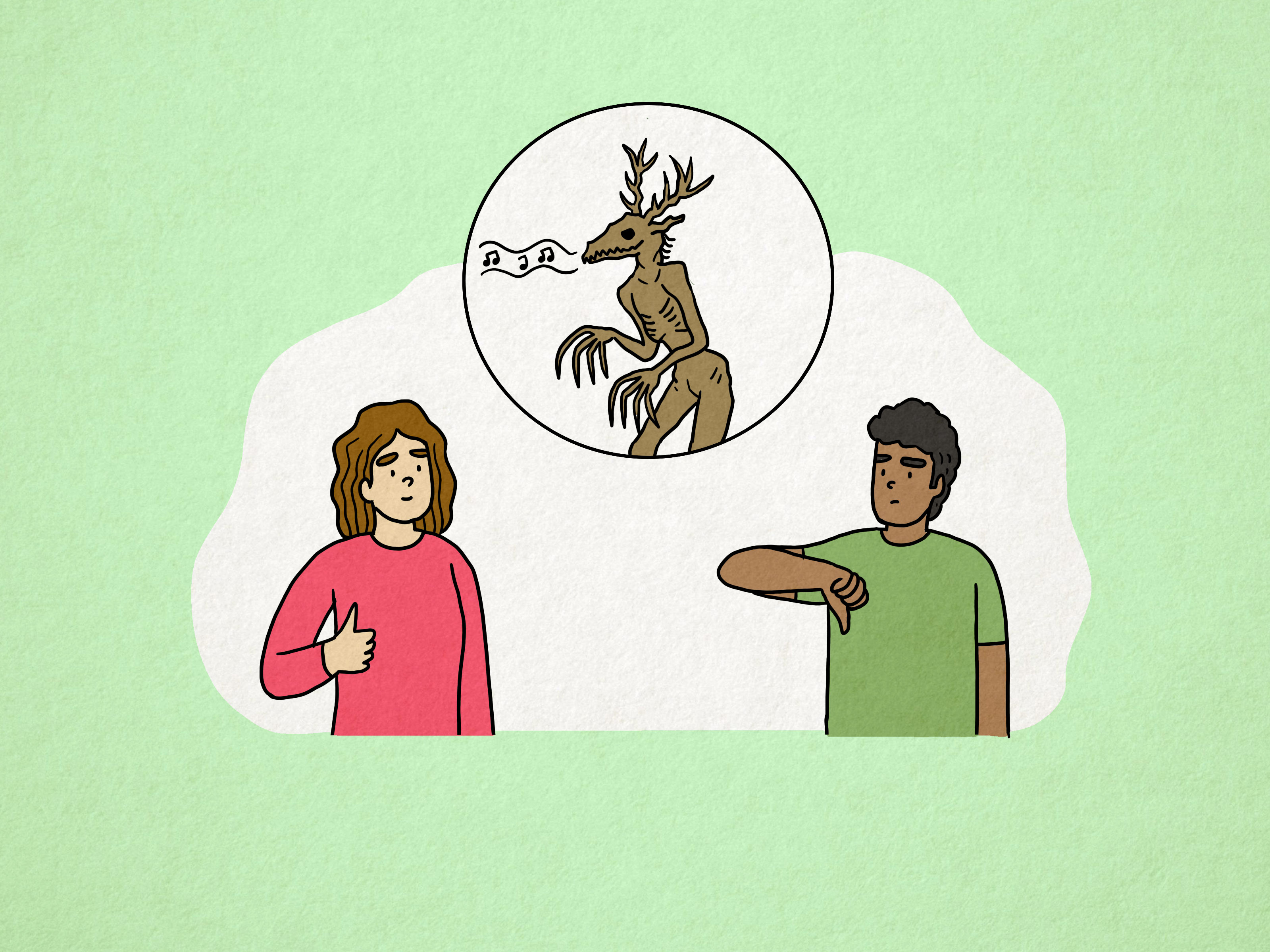
The Appalachian night is also home to creature legends, and the Wampus Cat is one of the most famous. Descriptions vary wildly, which is exactly what you want in folklore and exactly what you do not want in a police report. The Wampus Cat may be part cat, part dog, part spirit, part warning, or all bad idea. Some versions describe glowing eyes, a terrifying cry, and a habit of appearing around dusk or dawn.
In parts of American folklore, related creatures are even called “whistling” wampuses. That detail helps explain why a strange whistle in the woods feels so unnerving. If the sound is human, who is out there? If it is not human, why does it sound almost human? And if it is trying to sound human, congratulations, your evening has become a problem.
Cherokee Stories and Mountain Warnings
Any serious explanation of Appalachian folklore must acknowledge Cherokee history and culture, especially in the Southern Appalachians. The Cherokee have deep ancestral ties to the Blue Ridge and Great Smoky Mountains, and many regional stories are connected to specific landscapes, peaks, rivers, and caves.
Legends such as Spearfinger and the Raven Mocker belong to Cherokee storytelling traditions and should be treated with respect, not tossed casually into internet monster soup. They are not the same as the general “do not whistle at night” superstition, but they show how mountain stories often use sound, disguise, and the dangers of the unknown as teaching tools. The forest is not just scenery. It is a place of memory, warning, and relationship.
The Practical Side: Why “Don’t Whistle” Actually Makes Sense
Like many old superstitions, Appalachian whistling folklore may carry practical wisdom under its spooky coat. Mountain communities often lived with real risks: rough terrain, limited light, dangerous weather, wild animals, deep woods, and long distances between neighbors. A rule that kept children quiet, close, and alert after dark was useful.
Whistling can carry a long way, especially in valleys and hollers. It may alert wildlife, confuse companions, or make it harder to hear important sounds. In a world before smartphones, GPS, and headlamps bright enough to signal passing aircraft, listening carefully could matter. A snapped branch, a rushing creek, a rattlesnake, a loose dog, or an approaching stranger might be heard before it was seen.
There is also a social reason. In isolated communities, making unnecessary noise at night could be considered rude, foolish, or suspicious. A whistle outside someone’s house after dark might not be interpreted as cheerful. It might mean trouble, courtship, trespassing, mischief, or a person who had better explain themselves quickly.
Natural Sounds That May Have Inspired the Legend
The Appalachian Mountains are full of animals that sound like they have been hired by a horror movie studio. Barred owls make calls that carry through old forests. Eastern screech-owls can produce eerie whinnies and sharp cries. Coyotes yip, bark, and howl in a chorus that can seem much larger than the actual group. Foxes scream. Bobcats can make unsettling calls. Frogs, insects, and night birds create layers of sound that shift with temperature, season, and weather.
Then there is the forest itself. Wind can whistle through gaps in rocks, cabin boards, hollow trees, and narrow valleys. When air moves across a ridge, it may create tones that rise and fall like a distant human whistle. Add fog, moonlight, and the knowledge that you are a long walk from your car, and suddenly science and superstition are sitting at the same campfire, sharing marshmallows.
Importantly, explaining the sounds does not ruin the folklore. It makes it richer. People did not invent these stories because they were silly. They listened closely to their environment. They noticed patterns. They taught caution through memorable warnings. A scary story is easier to remember than a safety lecture, especially for a child who thinks “be careful” is adult language for “please ignore me.”
Why You Should Not Whistle Back
The creepiest version of Appalachian Mountains whistling folklore says that if you hear a whistle in the woods at night, you should not answer it. This is where the legend becomes especially effective. It turns a simple sound into a test.
Folklore loves tests. Do not open the door. Do not look behind you. Do not answer your name. Do not count the footsteps. Do not accept food from strangers in the woods, even if they seem charming and have excellent cheekbones. These rules create suspense because humans are curious. We want to know. We want to respond. We want to prove there is nothing there.
The warning not to whistle back works because it tells you curiosity can be dangerous. If the whistle is human, answering reveals your location. If it is an animal, answering may draw attention. If it is supernatural, answering may grant permission. Folklore does not need the courtroom standard of proof. It only needs enough doubt to make you keep your lips shut.
Modern Internet Folklore vs. Older Appalachian Tradition
Online, Appalachian whistling stories often get mixed with unrelated legends, especially “skinwalker” stories. That is a problem. Skinwalker beliefs come from Navajo tradition and should not be casually relocated to Appalachia for spooky flavor. The Appalachian Mountains have plenty of their own folklore without borrowing sacred or culturally specific figures from elsewhere.
Modern retellings also tend to make every mountain rule sound like a horror-movie commandment. In real families, these warnings were often quieter. A grandmother might say, “Don’t whistle after dark,” then go right back to snapping beans. An uncle might say, “You hear something call you from the woods, no you didn’t,” then laugh just enough to make the laugh unhelpful.
That plain delivery is part of the power. Appalachian folklore is often scary because it feels practical. It is not always dramatic. It sounds like advice from someone who has lived long enough to stop explaining everything.
How the Legend Reflects Appalachian Culture
The whistling superstition reflects several important themes in Appalachian culture: respect for the land, awareness of isolation, belief in inherited wisdom, and the power of oral storytelling. It also shows how mountain communities turned uncertainty into usable knowledge.
A rule like “don’t whistle in the woods at night” teaches humility. It says the mountain is not your stage. The forest does not owe you an answer. Darkness changes the rules. Sometimes the wisest thing you can do is listen, stay calm, and avoid acting like the main character in a movie where the main character makes famously poor decisions.
The legend also preserves atmosphere. Even people who do not literally believe in haints or Wampus Cats may still feel the rule working on them. That is the beauty of folklore. It does not require full belief to influence behavior. It only has to whisper, “Maybe don’t.”
Is Appalachian Whistling Folklore Real?
It is real as folklore, real as family tradition, and real as a cultural warning. That does not mean a whistle will definitely summon a ghost with poor boundaries. It means the belief has lived in stories, memories, and local customs because it expresses something true about nighttime in the mountains.
The Appalachian woods can feel mysterious because they are old, biodiverse, and acoustically strange. People have lived, hunted, farmed, prayed, grieved, and told stories there for centuries. A whistle at night cuts through all of that like a question. The folklore answers with another question: Are you sure you want something to answer back?
Conclusion: The Scary Wisdom Behind the Whistle
Appalachian Mountains whistling folklore is scary because it blends the supernatural with the sensible. On one level, it warns of haints, spirits, witches, strange creatures, and unseen forces. On another level, it teaches practical caution: be quiet after dark, respect the woods, listen before you act, and do not invite attention when you cannot see what is listening.
That is why the legend endures. It is spooky, memorable, and strangely useful. It belongs to a broader Appalachian tradition where stories are not just entertainment. They are maps, manners, safety rules, spiritual reminders, and occasionally a very effective way to stop children from making bird noises at bedtime.
So if you find yourself in a dark Appalachian holler and hear a whistle from somewhere beyond the trees, you can choose the scientific explanation. Maybe it is an owl. Maybe it is wind. Maybe it is a fox with theatrical ambitions. But if you decide not to whistle back, nobody with mountain sense is going to call you a coward. They may simply nod and say, “Good.”
Field Experiences: What Appalachian Whistling Feels Like After Dark
The first thing people often notice about the Appalachian woods at night is not the darkness. It is the way sound changes. During the day, the forest feels busy and layered. Leaves move, birds call, hikers talk, and water chatters over stone. After sunset, the same place becomes more selective. Every sound steps forward like it has something to prove.
Imagine standing near a cabin porch in western North Carolina after the last orange light has drained from the ridge. The trees are not black all at once; they become silhouettes slowly, like someone dimming a theater. A barred owl calls from somewhere high and hidden. A dog barks far down the road. Then the wind slips through a gap in the boards of an old shed and makes a thin, wavering note. It is not quite a whistle, but it is close enough to make conversation stop.
That is how the folklore works in real life. It does not need a monster to leap from the rhododendron. It only needs a sound that lands wrong. A whistle is familiar when it comes from a person washing dishes or walking to the mailbox. In the woods at night, the same sound feels misplaced. It has no face. It gives you no explanation. Your mind starts filling in the blank, and frankly, your mind should not be allowed to work unsupervised after 10 p.m.
Hikers describe similar moments on quiet sections of the Appalachian Trail. You set up camp, eat dinner, hang your food, and crawl into your tent feeling reasonably brave. Then something calls from the dark. Maybe it is a screech-owl. Maybe a coyote yips and the valley throws the sound back in pieces. Maybe another camper whistles for a friend. But inside a tent, wrapped in nylon and imagination, every sound becomes personal. You remember the old rule: do not answer. Suddenly, that rule feels less like superstition and more like excellent customer service from your ancestors.
Families from the region often tell the story differently. For some, the warning came from a grandmother who believed in haints. For others, it came from a father who had no patience for ghost talk but still said not to whistle outside at night. That split is important. Appalachian folklore can be spiritual and practical at the same time. One person may say, “It calls spirits.” Another may say, “It calls trouble.” Both are saying, in their own way, “Keep your wits about you.”
There are also porch experiences, the kind that become family stories. Someone steps outside after supper. The air smells like damp leaves, woodsmoke, and cold creek water. A child whistles a tune just to hear it bounce off the trees. An older relative says, sharply, “Don’t do that.” The child asks why. The adult pauses, looks toward the woods, and says, “Because something might whistle back.” That is not a full explanation. It is much better than a full explanation. It leaves room for the imagination to move in and start paying rent.
In truth, the most powerful experience connected to Appalachian Mountains whistling is the feeling of being reminded that humans are not the only audience in the dark. Whether you believe in spirits or not, the mountains encourage respect. They are beautiful, but they are not tame. They can make a person feel small in the healthiest possible way. The old whistling rule captures that feeling perfectly: enjoy the mountains, listen to them, learn from them, but do not assume every silence needs your soundtrack.
That is why this piece of scary Appalachian folklore continues to travel. It is easy to repeat, easy to remember, and hard to completely dismiss once you have stood under those trees at night. The next time the wind makes a high note in the branches, you may know all the logical explanations. You may even laugh at yourself. But you probably will not whistle back. And somewhere, every mountain grandmother in history will approve.
SEO Tags
Note: This article is written as an original, web-ready synthesis based on Appalachian cultural history, regional folklore, oral storytelling traditions, and documented natural sound explanations.