Note: This article is an original, fully rewritten analysis based on public online reporting about the keyboard dispute and reputable relationship research on gratitude, entitlement, boundaries, communication, and red flags. Source links are intentionally not included, as requested.
Sometimes a relationship does not end with a dramatic confession, a secret second phone, or a rain-soaked argument outside an airport. Sometimes, apparently, it ends with a keyboard. Not even a fancy one glowing like a tiny Las Vegas casino. Just a spare keyboard. A man lent his girlfriend an extra keyboard after hers stopped working, expecting a basic “thank you.” Instead, her reaction reportedly made him rethink the entire relationship and eventually dump her.
At first glance, the story sounds almost too small to matter. A keyboard? Really? People survive long-distance relationships, meddling in-laws, bad credit scores, and couples’ IKEA trips. Surely a simple computer accessory should not have the emotional power of a medieval sword. But that is exactly why the story went viral. The keyboard was not the true issue. The real issue was gratitude, entitlement, respect, and the way small moments reveal big patterns.
For readers searching for “man lends girlfriend a spare keyboard,” “girlfriend angry over cheap keyboard,” “relationship red flags,” or “entitled girlfriend story,” this situation offers more than internet drama. It is a surprisingly useful case study in how ordinary favors can expose whether two people are building a partnership or quietly auditioning for a future argument podcast.
The Keyboard Incident: What Reportedly Happened
According to the online story, the man was a programmer who cared about his work setup. His personal keyboard was not just a plastic rectangle with letters on it; it was part of his daily workflow. Anyone who types all day knows the difference between a decent keyboard and a soul-crushing office plank that sounds like a drawer full of crackers. He had a higher-end keyboard he used regularly and a cheaper spare keyboard available at home.
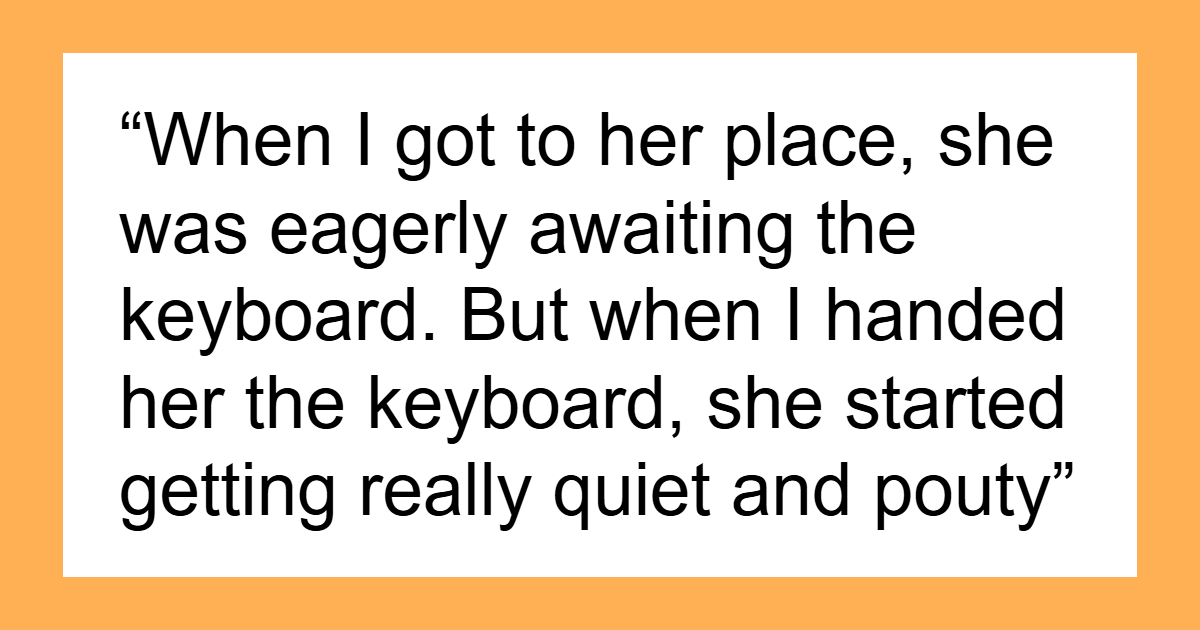
When his girlfriend’s keyboard stopped working, he offered her the spare. It was functional, available, and solved the immediate problem. In normal relationship math, that equals “helpful boyfriend behavior.” But instead of appreciating the gesture, she reportedly became upset because the keyboard was inexpensive. She wanted the better one, the one he personally used, and interpreted the spare as a sign that he did not value her enough.
That is where the situation shifted from “minor inconvenience” to “relationship weather alert.” The argument was not really about a keyboard. It was about what each person believed a partner owed the other. He saw himself as helping. She seemed to see the gesture as insufficient, perhaps even insulting. The emotional gap between those two interpretations was wide enough to park a moving truck in it.
Why The Internet Reacted So Strongly
Online readers tend to love stories where the conflict is simple enough to understand in ten seconds but messy enough to debate for ten hours. This one fits perfectly. One person lends an item. The other complains. The first person wonders, “Wait, did I just discover something important?” Cue thousands of people forming emotional juries from their couches.
Many readers sided with the boyfriend because they viewed the girlfriend’s reaction as ungrateful. In their eyes, a borrowed spare keyboard was still a favor, and attacking the quality of a free temporary solution seemed entitled. Others wondered whether she felt emotionally insecure and expressed it badly. Maybe she did not really care about the keyboard’s price; maybe she wanted reassurance and chose the world’s clunkiest delivery method.
Both interpretations can exist, but one point remains clear: in healthy relationships, disappointment should not automatically become accusation. A person can say, “I appreciate the spare, but could I try the other one for an hour?” without making the other person feel like they failed a loyalty exam administered by Office Depot.
The Real Relationship Problem Was Not The Keyboard
The reason this story resonates is that almost everyone has lived through a tiny argument that was not tiny at all. The dishes were not about dishes. The late reply was not about the text. The forgotten coffee order was not about oat milk versus almond milk, though let us be honest, oat milk has caused international-level tension in some households.
Small moments become big when they reveal a pattern. If a partner regularly treats your help as the bare minimum, criticizes your choices, or reacts harshly when they do not get the best version of everything, resentment can build quickly. One disappointing reaction may be fixable. A repeated habit of entitlement is a different keyboard shortcut entirely: Ctrl + Alt + Leave.
In this case, the man reportedly felt that his girlfriend did not apologize or take responsibility after the conflict escalated. That detail matters. Couples can survive awkward reactions, hurt feelings, and even weird arguments over electronics. What they often cannot survive is a refusal to repair. A sincere apology can turn a blowup into a learning moment. No apology can turn a small crack into a canyon.
Gratitude: The Tiny Habit That Saves Big Trouble
Gratitude in relationships is not about throwing a parade every time someone refills the water filter. It is about noticing effort. When a partner cooks, drives, listens, repairs, lends, waits, or helps, appreciation tells them, “I see what you did, and it matters.” That emotional recognition is a kind of relationship glue. It is not flashy, but it holds the structure together.
Research on romantic relationships consistently highlights appreciation as a protective factor. Partners who feel valued are often more motivated to keep investing in the relationship. They tend to feel safer, more connected, and less like unpaid interns in the Department of Emotional Labor. A simple “thank you” does not solve every problem, but it prevents many problems from mutating into resentment monsters.
That is why the keyboard story hit a nerve. The boyfriend’s favor was practical, not glamorous. He did not buy a diamond necklace or write her name in fireworks. He gave her a working tool when she needed one. The appropriate first response was not necessarily eternal gratitude, but at minimum, basic appreciation. “Thanks, this helps” would have changed the whole story.
Entitlement In Dating: When Expectations Become Demands
Entitlement can sneak into relationships wearing normal clothes. At first, it sounds like “I deserve to be treated well,” which is true. Everyone deserves respect, kindness, and honesty. But entitlement crosses the line when “I deserve care” turns into “I deserve whatever I want, exactly when I want it, and your needs are evidence against your love.” That is not romance. That is customer service with kissing.
In dating, entitlement may show up as expecting expensive gifts, demanding constant availability, dismissing a partner’s boundaries, or interpreting every “no” as rejection. It can also appear in smaller moments, like assuming a partner should hand over their favorite item because love supposedly means having no personal preferences. But healthy love does not erase individuality. It makes room for two people, two sets of needs, and yes, sometimes two keyboards.
The boyfriend’s good keyboard was part of his work setup. If he depended on it professionally, keeping it for himself was reasonable. Lending the spare did not mean he valued his girlfriend less. It meant he offered a solution that did not disrupt his own responsibilities. In adult relationships, that is not cruelty. That is balance.
Boundaries Are Not Insults
One of the most useful lessons from this story is that boundaries often get mistaken for a lack of love. A partner may say, “I need this for work,” and the other hears, “You are not important.” That misunderstanding can become explosive if both people do not slow down and clarify what is actually happening.
A boundary is not always a wall. Often, it is a door with a handle. It says, “Here is what I can offer, and here is what I need to keep functioning.” The boyfriend’s boundary was simple: he could lend a spare keyboard, but he did not want to give away the one he used. That is fair. A person should not have to sacrifice essential tools to prove affection.
Boundaries become especially important when personal items have daily value. A chef may not want to lend their best knife. A musician may not want someone borrowing their primary instrument. A writer may guard their favorite notebook with the intensity of a dragon guarding gold. These preferences are not automatically selfish. They reflect the practical reality that some objects support a person’s work, comfort, or routine.
Communication Could Have Changed The Outcome
The tragedy of many viral relationship stories is how fixable they seem from the outside. If the girlfriend felt hurt, she could have said, “I know this might sound silly, but I felt like you gave me the cheap one because I am not important to you. Can we talk about that?” That sentence would not be perfect, but it would open a conversation instead of launching a courtroom drama.
The boyfriend, too, could explain calmly: “I use my main keyboard for work, but I wanted to help right away. The spare is not a statement about your value.” A healthy partner might then say, “Okay, I get it. I was stressed and overreacted.” Boom. Conflict resolved. Nobody needs to pack a breakup suitcase next to a USB cable.
But communication only works when both people want understanding more than victory. If one partner insists on being the injured party no matter what, the conversation becomes a maze with no exit. That seems to be what frustrated many readers. The issue was not only the initial reaction; it was the reported unwillingness to apologize or recognize the boyfriend’s perspective.
When A Small Argument Becomes A Dealbreaker
Some people mocked the idea of ending a relationship over a keyboard, but that misses the point. People rarely end healthy relationships over one object. They end relationships when one object reveals a pattern they can no longer ignore. A spare keyboard can be the final straw if the haystack is already wobbling.
Dealbreakers are deeply personal. For one person, the issue might be dishonesty. For another, it might be cruelty under stress. For someone else, it might be constant entitlement or the inability to say, “I was wrong.” The man in this story reportedly decided that the conflict showed him something fundamental about compatibility. He did not want a relationship where generosity was treated as failure.
That does not mean every awkward reaction deserves a breakup. Everyone has bad days. People get stressed, insecure, embarrassed, or dramatic. We are humans, not customer support bots with perfect emotional firmware. The key question is what happens next. Does the person reflect? Do they apologize? Do they care about the impact of their behavior? If not, the small issue may be warning you about the big future.
What This Story Teaches About Healthy Relationships
1. Appreciation Should Be Automatic, Not Optional
When someone helps, start with thanks. You can still ask for something different later, but appreciation sets a respectful tone. Without it, even generous acts can feel like obligations.
2. A Partner’s Tools And Belongings Matter
Being in love does not give anyone unlimited access to another person’s best stuff. Personal belongings, especially work tools, deserve respect. Sharing is kind; demanding is not.
3. Insecurity Needs Honesty, Not Accusation
If a gesture triggers insecurity, name the feeling instead of attacking the partner. “I felt unimportant” is much easier to solve than “You are cheap and do not care about me.”
4. Apologies Are Relationship Maintenance
A good apology is like updating software. It fixes bugs before the whole system crashes. Refusing to apologize after hurting someone can make the original problem much worse.
5. Small Conflicts Reveal Big Values
Arguments over ordinary things often show how people handle disappointment, boundaries, and repair. That is why a keyboard can become a compatibility test no one planned to take.
The Bigger Cultural Conversation: Why We Love Stories Like This
Viral relationship stories give people a safe way to debate values. Readers are not just judging two strangers. They are asking themselves: What do partners owe each other? What counts as selfish? When is walking away reasonable? Is gratitude a basic expectation or a bonus feature?
This particular story also speaks to a modern dating frustration: the fear of being taken for granted. Many people have experienced giving more than they received, whether emotionally, financially, or practically. So when they read about someone lending a useful item and getting criticized for it, they see more than a keyboard. They see every time they planned the date, drove across town, bought the groceries, fixed the Wi-Fi, or listened patiently while their own effort went unnoticed.
The humor of the story makes it memorable, but the emotional lesson makes it stick. A relationship does not need luxury treatment every day. It needs respect in ordinary moments. It needs partners who can receive help without turning it into a status test. And yes, it needs people who understand that a spare keyboard is still better than typing an essay with the on-screen keyboard like a medieval monk.
Experience-Based Reflections: What The Spare Keyboard Story Reminds Us Of
Most people have a “spare keyboard” story, even if no keyboard was involved. Maybe it was lending a hoodie and hearing complaints that it was not the nicer one. Maybe it was cooking dinner and being told the sauce was not as good as a restaurant’s. Maybe it was picking someone up from the airport and getting criticized for arriving in the “wrong” car. These moments sting because the helper expected connection and instead received evaluation.
One common experience in relationships is the slow discovery of how a partner handles inconvenience. Anyone can be charming when the reservation is perfect, the playlist is vibing, and nobody’s laptop accessories have betrayed them. Character shows up when something breaks. Does the person become collaborative, or do they look for someone to blame? Do they say, “Thanks for helping,” or “Why didn’t you help better?” That difference matters.
Another relatable angle is the emotional attachment people have to tools. A keyboard may look silly to outsiders, but for a programmer, writer, gamer, designer, or student, the right setup can affect comfort and productivity. People who work on computers often choose specific keyboards for speed, feel, sound, wrist comfort, or habit. Asking them to hand over their main keyboard may feel like asking a chef to lend out their favorite pan during dinner rush. It is not impossible, but it is not a casual request either.
Many couples also learn the hard way that generosity without boundaries can become resentment. At first, giving feels romantic. You lend the good charger. You share your streaming password. You drive an extra hour. You let them borrow your favorite sweater, which mysteriously becomes their favorite sweater, and now you visit it on weekends. But if giving is met with criticism instead of gratitude, the generous partner may eventually pull back. Not because they stopped caring, but because caring began to feel like losing.
The healthiest couples usually develop a rhythm of mutual consideration. One person might say, “I can lend you the spare tonight, and tomorrow we can order one you like.” The other might respond, “Thank you, I appreciate it. I was stressed because mine broke.” That conversation is not glamorous, but it is mature. It turns a problem into teamwork.
The keyboard story also reminds us that breakups do not always need a villain. Sometimes one person reacts poorly, another person reaches a limit, and the relationship ends because their expectations are incompatible. Still, the lesson is clear: when someone offers help, treat the gesture with care. You do not have to worship the spare keyboard. You do not have to compose a ballad called “Ode to the Budget Peripheral.” But a sincere thank you can keep a small inconvenience from becoming the headline of your breakup.
Conclusion: The Keyboard Was Cheap, But The Lesson Was Valuable
The story of a man lending his girlfriend a spare keyboard and then dumping her after her reaction is funny on the surface, but surprisingly serious underneath. It shows how everyday conflicts can expose deeper questions about gratitude, entitlement, boundaries, and emotional maturity. A cheap keyboard did not end the relationship by itself. The meaning attached to it did.
In a healthy relationship, help should be appreciated, boundaries should be respected, and disappointment should be communicated without contempt. If a partner feels hurt, they should be able to talk about it without turning a favor into evidence of neglect. If a partner offers a practical solution, they should not be punished for failing to provide the premium edition.
Ultimately, this viral relationship story is a reminder that love is not proven only through grand sacrifices. Often, it is built in tiny exchanges: lending what you can, saying thank you, explaining your needs, and apologizing when you overreact. The spare keyboard may have been inexpensive, but the lesson is worth much more than the fanciest mechanical keys money can buy.