Note: This article synthesizes information from design-history sources, auction records, museum references, and manufacturer materials about Jean Prouvé, the Marcoule site commission, and the bench’s construction, provenance, and collecting value.
A Bench With Better Posture Than Most Executives
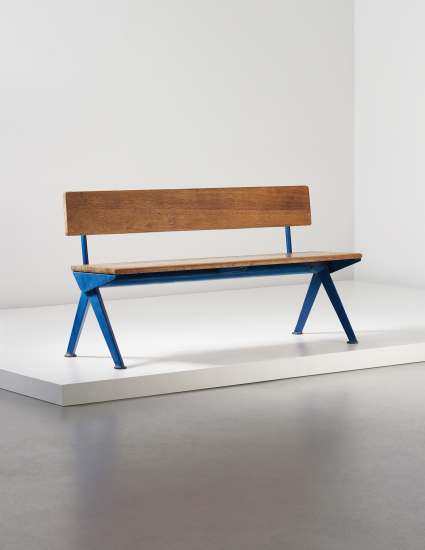
The Jean Prouvé “Marcoule” Bench is one of those rare pieces of modern furniture that looks simple until you try to explain why it is so good. At first glance, it is a bench: oak seat, oak backrest, black lacquered steel structure, no decorative tap dancing. But sit with it for a momentpreferably not with a sandwich balanced on your kneeand the story starts to unfold. This is not a bench designed to whisper, “Look at me.” It is a bench designed to say, “I have work to do, and I will look excellent doing it.”
Created in the mid-1950s for the Marcoule nuclear research site in southern France, the bench reflects Prouvé’s lifelong belief that furniture should be engineered with the same honesty as architecture. Every angle, bracket, plane, and joint feels like it has passed through a very strict committee of physics, utility, and quiet elegance. The result is a piece that belongs equally in a design museum, an architect’s loft, a serious collector’s home, or a dining area where people pretend not to worry about red wine near oak.
For collectors searching for Jean Prouvé furniture, the Marcoule Bench occupies a fascinating niche. It is not as widely recognized as the Standard Chair, Antony Chair, or Potence lamp, yet it contains many of the same ideas that made Prouvé one of the great modernist designers of the twentieth century: industrial logic, structural clarity, durable materials, and a refusal to add ornament unless the ornament also knows how to carry weight.
Who Was Jean Prouvé?
Jean Prouvé was born in France in 1901 and became one of the most influential figures in modern architecture and furniture design. He trained as a metalworker, which matters enormously because Prouvé did not approach design as a stylist sitting in front of a mood board. He approached it like a builder. He understood resistance, tension, compression, sheet metal, bolts, welds, and the small practical dramas that happen when an idea must become a real object.
Prouvé often described himself less as a designer and more as a constructor. That distinction is important. A designer might sketch a beautiful chair. A constructor asks whether the chair can be made efficiently, transported without a nervous breakdown, repaired by ordinary people, and used for decades without becoming a wobbling apology. This is why his best work feels so direct. It does not decorate structure; it reveals it.
His workshops in Nancy produced furniture, doors, windows, façade systems, prefabricated buildings, school furniture, office pieces, and architectural components. His work moved freely between the scale of a chair and the scale of a building. In Prouvé’s world, a bench and a house were not enemies living in separate design departments. They were relatives, both governed by construction, material economy, and human need.
The Marcoule Commission: Modern Furniture for a Modern Site
The Marcoule Bench was designed around 1955 for the Marcoule atomic research center, a major French postwar industrial and scientific site near Bagnols-sur-Cèze. This setting gives the bench much of its character. It was not conceived as a precious collectible for a white-walled gallery. It was made for a real institutional environment, where furniture had to be practical, strong, repeatable, and dignified.
In the 1950s, France was rebuilding, modernizing, and investing heavily in public infrastructure. Prouvé’s furniture fit naturally into this world because it combined technological optimism with practical discipline. The Marcoule Bench was part of a larger approach to furnishing collective spacesdining areas, communal rooms, and institutional interiors where durability mattered as much as appearance.
What makes the bench especially interesting is its relationship to other Prouvé designs. The structure adapts ideas used in his Cafétéria table, particularly the steel base. This was classic Prouvé: instead of inventing a new visual trick for every object, he refined structural solutions and applied them intelligently across different uses. In modern terms, he was building a design system before “design system” became something people put into pitch decks with twelve icons and a gradient.
Design Analysis: Why the Marcoule Bench Works
1. The Steel Frame Does the Talking
The black lacquered steel base is the heart of the bench. It gives the piece its architectural posture and visual rhythm. The steel does not pretend to be delicate. It is bent, shaped, and positioned to handle load with confidence. This is one reason the bench feels so stable: it looks like it knows exactly where the stress goes.
Prouvé’s metal structures often have a legible honesty. You can look at them and understand the forces at work. The Marcoule Bench carries that same language. The frame creates a strong visual foundation without making the object feel bulky. In profile, the bench has a directness that feels almost diagrammatic, as if the final design kept the best parts of the engineering drawing and politely dismissed the rest.
2. Oak Adds Warmth Without Getting Sentimental
The oak seat and backrest soften the industrial structure. This pairingwood and metalis one of the reasons Prouvé’s furniture remains so livable. The steel provides precision and strength, while the oak brings warmth, texture, and human scale. It is modern, but not cold. Functional, but not joyless.
Unlike upholstered seating, the oak panels also reinforce the bench’s public-sector identity. They are durable, clean-lined, and easy to maintain. In a dining or communal setting, that matters. Upholstery may be comfortable, but in a high-traffic institutional environment it can quickly become a crime scene for soup, ink, coffee, and mysterious cafeteria substances no one wishes to identify.
3. The Proportions Are Quietly Excellent
Most examples of the Marcoule Bench measure approximately 56 to 58 inches wide, with a height around 29.5 inches and a depth under 20 inches. These proportions make it compact enough for interiors yet substantial enough to hold visual authority. It can seat two people comfortably, three people if they are either close friends or trapped in a very polite waiting room.
The backrest is upright, the seat is straightforward, and the bench’s silhouette is crisp. It does not lounge. It does not slouch. It belongs to a category of furniture that expects the sitter to participate in civilization. That disciplined posture is part of its charm.
Materials and Construction
The original Jean Prouvé Marcoule Bench is typically described as being made from oak and lacquered or painted bent steel. This material combination reflects Prouvé’s practical modernism. Oak was strong, familiar, and tactile. Steel was efficient, industrial, and structurally expressive. Together, they created a bench that could handle heavy use while still looking refined.
The steel frame is especially important for authentication and value. Collectors pay close attention to the shape of the legs, the finish, the joinery, the relationship between wood and metal, and the overall integrity of the construction. Because Prouvé’s work was often made for public commissions, many surviving examples show signs of age. Scratches, patina, old finish wear, and minor repairs may be acceptable, even desirable, when they are consistent with honest use. What collectors do not love is bad restoration pretending to be youthfulness. Furniture, like people, should be allowed to have a history.
Condition matters, but originality matters more. An original Marcoule Bench with documented provenance from the CEA Marcoule site carries a different level of significance from a later reproduction or an undocumented bench “in the style of” Prouvé. Those three words“in the style of”can do a lot of heavy lifting in the furniture market, often while wearing suspiciously shiny shoes.
Originals, Reissues, and the Vitra Connection
Jean Prouvé’s legacy has been carefully maintained through museum collections, specialist galleries, auction houses, and authorized reissues. Vitra has played a major role in bringing Prouvé’s designs to contemporary audiences, producing authorized editions of several classic pieces. The Marcoule Bench has also appeared in the context of the Prouvé RAW collaboration involving Vitra and G-Star RAW, a project that reinterpreted Prouvé designs for a modern audience.
For buyers and enthusiasts, this creates two main categories to understand: original mid-century Marcoule benches and later authorized editions. Originals from the 1950s are collectible historical objects. They are linked to a specific commission, a specific site, and Prouvé’s active production period. Authorized editions, by contrast, offer access to the form and function of the design without the same historical provenance.
Neither category should be casually dismissed. A well-made authorized edition can be beautiful, usable, and faithful to the spirit of the design. But if the conversation is about investment, rarity, and historical importance, original examples remain in a class of their own. In other words: both can be good benches, but only one may come with the kind of provenance that makes auction specialists adjust their glasses with interest.
Why Collectors Care About the Marcoule Bench
The Marcoule Bench appeals to collectors for several reasons. First, it is authentically tied to Prouvé’s public and institutional work. Many of his greatest furniture designs came from commissions for schools, universities, offices, and public buildings. These were not fantasy objects. They were designed for use, and that use gives them cultural depth.
Second, the bench shows Prouvé’s method of adapting structural solutions. The connection to the Cafétéria table base demonstrates how he thought in families of components. This makes the bench more than a seating object; it is a piece of Prouvé’s broader construction logic.
Third, the Marcoule Bench is visually versatile. It can sit in a modernist interior, a minimalist apartment, a gallery-like living room, a refined entryway, or a dining nook that wants to become more intellectual without buying a turtleneck. Its combination of oak and black steel gives it enough warmth for domestic use and enough rigor for architectural spaces.
Finally, rarity plays a role. Compared with more widely circulated Prouvé pieces, Marcoule benches appear less frequently. Auction records and gallery listings often emphasize provenance, date, materials, and manufacturer because those details help distinguish serious examples from casual attributions.
How to Style a Jean Prouvé Marcoule Bench
In an Entryway
The Marcoule Bench works beautifully in an entryway because it is narrow, strong, and visually clear. It gives guests a place to sit while removing shoes, dropping a bag, or pretending they did not arrive ten minutes late. Pair it with a simple wall hook, a ceramic bowl for keys, and a framed print. Avoid over-accessorizing. This bench does not need six pillows and a motivational sign.
At a Dining Table
Because the bench was originally connected to collective dining environments, using it at a dining table feels historically appropriate. It pairs well with modern wood tables, industrial steel bases, or simple rectangular forms. The key is to give the bench breathing room. Its silhouette deserves to be visible.
In a Living Room
Placed behind a sofa or along a wall, the bench becomes a sculptural accent. It can hold books, art objects, or the occasional guest who insists they are “fine standing” but clearly is not. Its oak surfaces introduce warmth, while the steel frame adds a crisp architectural line.
In an Office or Studio
The bench feels especially at home in creative workspaces. Architects, designers, and collectors appreciate it because it communicates taste without shouting. It has that rare quality of looking both serious and useful. It is furniture with a résumé.
What to Check Before Buying
If you are considering a Jean Prouvé Marcoule Bench for sale, start with provenance. Was the bench originally from the CEA Marcoule site? Does the seller provide documentation, previous auction records, gallery history, or expert authentication? Strong provenance can significantly influence value.
Next, examine the materials. Original examples should show appropriate oak and steel construction, with proportions consistent with known Marcoule benches. Look at the finish, fasteners, frame geometry, and signs of age. Perfect condition is not always realistic for institutional furniture from the 1950s, but restoration should be disclosed clearly.
Also review dimensions carefully. Known examples often fall around 56 inches wide, though small variations may appear in listings. Measurements help confirm whether the bench corresponds to documented examples or later interpretations.
Finally, buy from reputable sources: established auction houses, recognized design galleries, or dealers with experience in twentieth-century French modernism. Prouvé’s market is serious, and serious markets attract enthusiastic storytelling. A good seller should welcome questions, not respond as if provenance is a spiritual mystery.
The Marcoule Bench in Today’s Design World
The reason the Marcoule Bench still feels current is that it solves problems contemporary design continues to discuss: durability, material honesty, efficient production, adaptability, and sustainability. Prouvé’s work was not “green” in the modern marketing sense, but his best designs were economical and long-lasting. They used materials intelligently. They avoided wasteful decoration. They were built to serve.
In a world full of disposable furniture, the Marcoule Bench feels almost rebellious. It does not chase trend cycles. It does not require a seasonal color story. It simply exists with confidence, reminding us that good design often comes from asking better questions: What does this object need to do? How should it be made? Can it last? Can structure become beauty?
This is why Prouvé remains so influential among architects, industrial designers, furniture collectors, and modern homeowners. His work bridges utility and elegance without making either one apologize. The Marcoule Bench may have been born in a technical environment, but it has aged into a poetic objectproof that even cafeteria furniture can become collectible when designed by someone who understands both metal and humanity.
Experience Notes: Living With the Idea of the Jean Prouvé “Marcoule” Bench
Experiencing the Jean Prouvé “Marcoule” Bench is not like encountering a plush lounge chair that begs you to collapse into it with a bowl of popcorn. The bench offers a different kind of pleasure. It asks you to notice construction. It makes you aware of proportion, edge, material, and line. It is the kind of object that improves the room by refusing to perform tricks.
Imagine entering a quiet interior where the Marcoule Bench sits against a pale wall. The oak catches the light softly. The black steel frame creates a crisp graphic shadow beneath it. Nothing about the bench feels accidental. The backrest is plain, but not boring. The seat is flat, but not crude. The legs are practical, yet they have a sculptural presence. You begin to understand that Prouvé’s genius was not about making furniture look complicated. It was about making complexity disappear into clarity.
Sitting on the bench is an honest experience. It does not pretend to be a cloud. It supports you firmly, like a well-made public object should. There is something refreshing about that. Many contemporary pieces overpromise comfort and underdeliver durability. The Marcoule Bench does the opposite: it promises structure, and then gives you structure beautifully. It is comfortable enough for conversation, dining, waiting, reading, or tying your shoes, but it keeps the body alert. This is not nap furniture. This is think-better furniture.
In a home, the bench changes the mood of a space. Put it near the entrance and suddenly the entry feels curated. Place it beside a dining table and the room gains architectural discipline. Use it in a studio and it feels like a working object, not a prop. The bench also plays well with other materials: concrete floors, wool rugs, linen curtains, ceramic lamps, exposed brick, or white plaster. It has enough character to stand alone and enough restraint to support a larger interior composition.
One of the best experiences related to the Marcoule Bench is the slow realization that it belongs to a larger design philosophy. You start by admiring a bench, then you find yourself reading about Prouvé’s metalwork, prefabricated houses, school furniture, and collaborations with modernist architects. The bench becomes a doorway into a world where design is not decoration added at the end, but intelligence built in from the beginning.
For collectors, handling or viewing an original example can feel almost archival. The wear on the oak, the slight aging of the steel, and the marks of use are not flaws in the ordinary sense. They are evidence. They tell you the object lived in a real place, served real people, and survived long enough to become admired by a new generation. That is a rare emotional quality. Many luxury objects feel protected from life; the Marcoule Bench feels shaped by it.
Even if you never own one, studying the Marcoule Bench can improve how you evaluate furniture. It teaches you to look for structural honesty, not just surface beauty. It encourages you to ask whether an object’s form comes from purpose or from styling. It reminds you that materials have personalities: oak warms, steel disciplines, and good proportions quietly do more than any decorative flourish. In that sense, the bench is not only a collectible design object. It is a lesson in how to see.
The funny thing is that the Marcoule Bench began as practical furniture for a scientific-industrial setting, not as a celebrity collectible. That may be exactly why it feels so strong today. It was not trying to become iconic. It was trying to work. And like many of Prouvé’s best designs, it worked so well that history eventually looked back and said, “Actually, that’s art too.”
Conclusion: Why the Marcoule Bench Still Matters
The Jean Prouvé “Marcoule” Bench is a masterpiece of disciplined modern design. It combines oak and lacquered steel with a clarity that feels both industrial and deeply human. Its origins at the Marcoule research site connect it to postwar French modernization, while its construction reveals Prouvé’s lifelong commitment to honest materials, efficient engineering, and practical beauty.
For collectors, the bench offers rarity, provenance, and architectural presence. For designers, it offers a lesson in restraint. For homeowners, it offers a way to bring museum-level modernism into daily life without turning the living room into a glass box of anxiety. Above all, the Marcoule Bench reminds us that great design does not always need drama. Sometimes it needs oak, steel, proportion, and a designer who understands that the simplest object in the room can also be the smartest.