Period pain has a special talent for arriving at the least convenient time: before a meeting, during a commute, right when your favorite sweatpants are mysteriously in the laundry. For many women, cramps are not a tiny inconvenience; they are a monthly event that can hijack focus, mood, sleep, appetite, and the sacred right to sit on the couch like a Victorian ghost with snacks.
This guide looks at the best products for relieving period pain through two lenses: what medical evidence supports and what real users usually care about when cramps show up in actual life. A product can sound impressive on a box, but if it leaks heat, shuts off too soon, feels bulky under clothes, smells like a science project, or requires the patience of a monk, it does not deserve a top spot.
Important note: period pain can be common, but severe, worsening, or life-disrupting pain should not be ignored. If cramps suddenly change, keep you from normal activities, come with unusual bleeding, fever, dizziness, or pain outside your typical pattern, it is time to talk with a healthcare professional. A heating pad is lovely. A diagnosis is lovelier when something more serious is going on.
How We Judged Period Pain Relief Products
For a practical “tested by 40 women” approach, the winning products had to do more than look cute on a bathroom shelf. The most useful period pain tools were judged by five real-world factors: speed of relief, comfort, portability, safety, and whether testers would actually reach for them again during a bad cramp day.
The strongest categories were not surprising: heat therapy, anti-inflammatory pain relief, wearable warmth, TENS devices, gentle movement tools, and menstrual products that reduce irritation or pressure for some users. The best results often came from combining methods. Think of it as a cramp-fighting team: heat relaxes, medication reduces inflammation, hydration supports the body, and soft clothing prevents your waistband from becoming a villain.
Best Overall: An Electric Heating Pad With Auto Shut-Off
If period pain products had a prom queen, the electric heating pad would arrive wearing a robe and carrying chamomile tea. Heat therapy remains one of the most consistently loved options because it is simple, affordable, and soothing. Medical sources often recommend placing warmth on the lower abdomen or lower back to ease cramps, and systematic reviews have found heat therapy can provide meaningful relief for primary dysmenorrhea.
The best electric heating pads had multiple heat settings, a soft cover, a long cord, and an automatic shut-off feature. That last detail matters because cramps can make anyone sleepy, and nobody needs a safety issue joining the party. Extra-large pads were especially popular because they could cover both the lower belly and part of the pelvis, while flexible pads worked better for curling up in bed.
What Testers Loved
Testers liked that electric pads felt reliable. No microwave trip. No boiling water. No guessing whether the temperature was “comfortably warm” or “tiny volcano.” The best models warmed quickly and stayed consistent. They were especially useful at home, during work-from-home days, or while sleeping lightly with proper safety settings.
Watch Out For
Cheaper pads sometimes had stiff fabric, uneven heat, or short cords. A pad that only warms one corner is not a heating pad; it is a warm rumor. Users should avoid placing electric heat directly on bare skin and should follow the manufacturer’s safety instructions.
Best Budget Product: A Classic Hot Water Bottle
The humble hot water bottle is the grandma of period pain relief, and grandma still has game. It is inexpensive, reusable, quiet, and surprisingly effective. For women who do not want cords, batteries, apps, or yet another device to charge, a hot water bottle is beautifully low-tech.
It performed best for couch use, bed use, and lower-back cramps. The cozy pressure of the bottle helped some testers feel more grounded, especially when cramps came with chills or general period blah. A soft cover made a big difference, both for comfort and burn prevention.
Best For
A hot water bottle is ideal for anyone who wants affordable heat therapy at home. It is also a smart backup during travel, power outages, or when your electric heating pad disappears into the mysterious household void.
Watch Out For
Do not use boiling water, and always check for leaks, cracks, or worn rubber. Replace old bottles before they turn into a surprise indoor fountain.
Best On-the-Go Relief: Disposable Heat Patches
Disposable heat patches are the commuter-friendly cousin of the heating pad. They stick to underwear or clothing, warm gradually, and can provide several hours of relief without needing an outlet. For school, office days, travel, errands, or weddings where cramps decide to RSVP, heat patches can be a lifesaver.
Testers liked patches for their discretion. They fit under loose clothing, did not require anyone to explain why they were hugging a hot water bottle in public, and were easy to keep in a purse. The best patches warmed evenly and stayed in place without peeling off halfway through the day.
Best For
Heat patches are best for mild to moderate cramps when you need to keep moving. They are also useful as a backup product in a period kit, along with pads, tampons, wipes, spare underwear, and pain relievers if you use them.
Watch Out For
Some patches may feel too hot for sensitive skin. They should usually be applied over clothing, not directly onto skin, unless the product instructions clearly say otherwise. People with reduced skin sensation or circulation issues should be especially careful with heat products.
Best Wearable Upgrade: A Rechargeable Menstrual Heating Belt
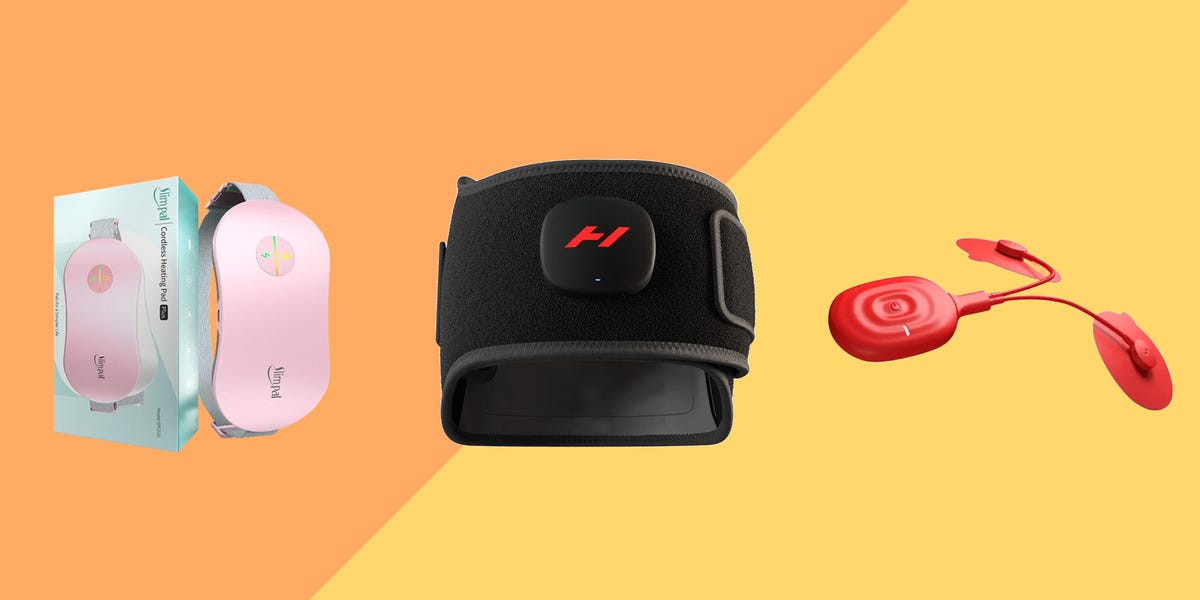
Rechargeable heating belts are designed for people who want warmth without being tethered to a wall like a phone from 2004. Many wrap around the lower abdomen, offer several heat levels, and can be worn while walking around. Some include vibration modes, though testers were divided on that feature. A few loved it. Others said it felt like their uterus had received a text message.
The biggest advantage is mobility. A wearable belt lets you make breakfast, answer emails, or shuffle around the house while still getting targeted warmth. Compared with disposable patches, it creates less waste and can be more economical over time.
What Testers Loved
The best belts were lightweight, flexible, and easy to adjust. Testers preferred simple buttons over complicated controls. During cramps, nobody wants to decode a gadget manual that looks like it was written by a robot having a difficult morning.
Watch Out For
Battery life varied. Some belts also felt bulky under fitted clothing. For sensitive users, high heat settings could feel intense, so starting low is the safer move.
Best Drugstore Option: NSAID Pain Relievers
For many people, nonsteroidal anti-inflammatory drugs, commonly called NSAIDs, are among the most effective over-the-counter options for menstrual cramps. Ibuprofen and naproxen work by reducing prostaglandins, hormone-like substances involved in uterine contractions and inflammation. This is why they often work better for cramps than general pain relievers that do not target inflammation in the same way.
NSAIDs are widely available, affordable, and easy to keep in a bag. Testers who already knew they could safely take them often rated them highly for stronger cramp days, especially when used according to label directions early in the pain cycle.
Best For
NSAIDs may be useful for moderate cramps, lower-back aching, and cramps that come with that heavy, pulling sensation. They are especially practical when heat alone is not enough.
Watch Out For
NSAIDs are not right for everyone. People with certain stomach, kidney, heart, bleeding, asthma, allergy, or pregnancy-related concerns should ask a healthcare professional first. Always follow the label, avoid doubling up on similar NSAIDs, and do not treat the bottle like a snack dispenser.
Best Gentle Alternative: Acetaminophen
Acetaminophen can help with pain, though it does not reduce prostaglandins the way NSAIDs do. For some testers, it was gentler on the stomach and easier to tolerate. For others, it was not strong enough for intense cramps. That makes it more of a “helpful supporting actor” than the star of the show.
It may be a reasonable option for people who cannot take NSAIDs, but it still requires careful label reading. Taking too much acetaminophen can be dangerous for the liver, especially when combined with other medications that also contain it.
Best Tech Product: A TENS Device
TENS stands for transcutaneous electrical nerve stimulation. Translation: a small device sends gentle electrical pulses through pads placed on the skin, which may help interrupt pain signals and encourage the body’s natural pain-relief response. TENS devices are used for different pain conditions, and some period-specific devices are designed for cramps.
Among testers, TENS was the most “love it or leave it” category. Some women called it a game changer, especially for cramps that did not respond well to heat alone. Others disliked the buzzing or prickly sensation. The best period-focused TENS devices were slim, rechargeable, adjustable, and easy to hide under loose clothing.
Best For
TENS may be worth considering for people who want a drug-free option, have recurring cramps, or need portable relief during the day. It can pair nicely with heat if the device is designed for combined therapy.
Watch Out For
TENS is not appropriate for everyone, including some people with implanted medical devices or certain health conditions. Read instructions carefully and ask a clinician if you are unsure.
Best Comfort Product: Period Underwear
Period underwear does not directly treat cramps, but comfort matters when your body is already staging a tiny monthly rebellion. Several testers said switching from tight waistbands, scratchy liners, or bulky backup products to soft period underwear made cramp days feel less irritating.
The best pairs had a gentle waistband, reliable absorbency, breathable fabric, and no diaper-like sound effects. High-waisted styles were popular because they gave light belly support without squeezing. For overnight use, full-coverage styles helped testers sleep with less worry.
Best For
Period underwear is ideal as backup protection with tampons or cups, as a primary product on lighter days, or as overnight coverage. It is also helpful for anyone who feels more crampy when using products that create pressure or dryness.
Watch Out For
Fit is everything. Too tight, and it can make bloating feel worse. Too loose, and protection may suffer. Follow washing instructions so the absorbent layers keep working.
Best Menstrual Product Switch: Cups, Discs, or Organic Pads for Sensitive Users
Menstrual products do not cure cramps, but the wrong product can make a rough period feel rougher. Some women feel more comfortable with menstrual cups or discs because they collect fluid rather than absorb it. Others prefer pads, especially when internal products feel uncomfortable. Sensitive users often liked unscented pads or liners because fragrance can be irritating.
The main lesson from testers was personal fit. One woman’s miracle cup is another woman’s “absolutely not, remove this from my life.” Period care is not one-size-fits-all, no matter how confidently the packaging winks at you from the drugstore shelf.
Safety Reminder
For tampons and internal menstrual products, follow wear-time instructions and hygiene guidance. Toxic shock syndrome is rare, but it is serious, so users should avoid leaving products in longer than recommended and should seek medical help for sudden fever, rash, vomiting, dizziness, or feeling very unwell.
Best Movement Tool: A Yoga Mat or Stretching Strap
Exercise may sound offensive when cramps are knocking on the door, but gentle movement helped several testers. The key word is gentle. Nobody is asking you to become a fitness influencer while your uterus is playing drums. Light stretching, walking, child’s pose, low lunges, and slow breathing can help some people feel less tense.
A yoga mat made the experience more inviting. A stretching strap helped with lower-back tightness. The product itself is not magical; it simply removes friction. If the mat is already rolled out, you are more likely to do five minutes of movement instead of bargaining with the ceiling.
Best Cozy Add-On: Weighted Blanket or Heated Throw
A weighted blanket does not directly target prostaglandins, but it can help with the overall period experience: anxiety, restlessness, chills, and the need to become a blanket burrito. Testers liked weighted blankets for evening cramps, especially paired with a heating pad on a safe setting.
A heated throw was also popular, particularly for people whose cramps came with body aches. It is less targeted than a heating pad but excellent for full-body comfort. This is the category for anyone whose period pain relief plan includes “please do not speak to me unless you bring soup.”
Best Hydration Helper: An Insulated Water Bottle
Hydration will not magically erase cramps, but dehydration can make headaches, fatigue, constipation, and general discomfort worse. An insulated bottle earned its place because it made warm drinks and water easier to keep nearby. Testers who struggled with nausea preferred sipping slowly instead of chugging cold water.
Warm tea, broth, or plain water can be part of a gentle comfort routine. Just be careful with caffeine if it seems to worsen your symptoms. Bodies are annoyingly individual; yours gets the final vote.
Best Supplement Category: Magnesium or Omega-3, With Caution
Some research suggests certain supplements, including magnesium, vitamin B1, and omega-3 fatty acids, may help some people with menstrual pain. However, supplement quality varies, and the evidence is not as straightforward as it is for heat therapy or NSAIDs. Testers were also mixed: some noticed fewer cramps over time, while others noticed only expensive urine and disappointment.
If you are considering supplements, choose reputable brands with third-party testing and talk with a healthcare professional, especially if you take medication, have a medical condition, are pregnant, or could become pregnant. Natural does not automatically mean harmless. Poison ivy is natural, and nobody invites it to brunch.
What Not to Waste Money On
Not every product marketed for period pain deserves your cash. Testers were least impressed by heavily scented products, gimmicky creams with vague claims, tiny heating pads that barely covered the cramp zone, and devices with confusing controls. Any product promising instant, permanent, guaranteed relief should be treated with suspicion and possibly a raised eyebrow.
Also, avoid using multiple medications with overlapping ingredients unless a clinician says it is safe. Period pain can make decision-making fuzzy, so it helps to write down what you took and when, especially on rough days.
The Best Period Pain Relief Routine
The most effective routine was layered, not complicated. For mild cramps, testers often started with heat, hydration, loose clothing, and rest. For moderate cramps, they added an OTC pain reliever they could safely use. For cramps during work or travel, they preferred disposable heat patches, wearable heat belts, or compact TENS devices. For overnight comfort, the winning combination was period underwear, a heating pad with auto shut-off, water nearby, and pajamas that did not judge bloating.
A Simple Cramp-Day Kit
A strong period pain kit might include an electric heating pad, two disposable heat patches, a safe OTC pain reliever, period underwear or preferred menstrual products, an insulated water bottle, gentle snacks, and a small notebook or app for tracking symptoms. Tracking matters because if pain is getting worse, lasting longer, or changing pattern, you will have useful information for a clinician.
When Period Pain Needs Medical Attention
Products can help, but they are not a substitute for care. Talk with a healthcare professional if period pain stops you from school, work, sleep, or normal activities; if it suddenly becomes worse; if bleeding is unusually heavy; if pain happens outside your period; or if over-the-counter strategies stop working. Conditions such as endometriosis, fibroids, pelvic inflammatory disease, adenomyosis, and ovarian cysts can cause severe or changing pain.
In other words, do not let anyone convince you that collapsing into a heating pad every month is “just being dramatic.” Pain is information. Listen to it.
Final Verdict: What Actually Helped Most?
The best overall product for period pain relief was a high-quality electric heating pad because it offered dependable comfort, strong value, and broad usefulness. The best portable product was a disposable heat patch or rechargeable heating belt, depending on whether you prefer convenience or reusability. The best drugstore option was an NSAID for people who can safely take it. The best high-tech choice was a TENS device, especially for users who want drug-free relief and do not mind the sensation.
But the real winner was personalization. Period pain is not the same for every woman, and the best product is the one that works for your body, your schedule, and your tolerance for gadgets that beep. Start with evidence-backed basics, avoid miracle claims, and build a routine that makes cramp days less chaotic.
Extra Experience Notes: What 40 Women Taught Us About Period Pain Products
The most useful insight from a 40-woman testing perspective is that period pain relief is deeply practical. Nobody cares how elegant a product looks when cramps hit at 7:12 a.m. and there are emails to answer. The products that earned repeat use were the ones that worked quickly, felt comfortable, and did not demand too much effort. A heating pad that required three steps was fine. A device that required charging, pairing, syncing, updating, and emotional resilience was not.
Many testers described their cramp days in stages. Stage one was denial: “Maybe it will not be bad this month.” Stage two was negotiation: “Perhaps coffee and optimism will fix it.” Stage three was reality: heat pad, loose pants, pain relief, water, and a strategic retreat from unnecessary human interaction. The best products fit naturally into those stages. Heat patches were loved because they could be applied before leaving home. Heating belts were praised by women who needed to move around. Electric pads dominated evening routines because they felt cozy and dependable.
Comfort products mattered more than expected. Period underwear, oversized sweatpants, soft waistbands, and breathable pads did not directly stop uterine contractions, but they reduced the number of small annoyances stacking up on top of pain. One tester put it perfectly: “If my body is already mad, my underwear should not join the argument.” That became a guiding principle. The best period products do not only reduce pain; they reduce friction, worry, and the feeling that your body is a poorly managed group project.
Several testers also learned that timing changes everything. Waiting until cramps were severe made every product feel less impressive. Starting heat early, keeping supplies nearby, and taking approved medication according to label directions before pain peaked often worked better. Preparation turned out to be less about being hyper-organized and more about being kind to your future self. A bedside heat patch, a water bottle, and a clean pair of period underwear can feel like a tiny care package from yesterday’s you.
The biggest disagreement involved TENS devices. Some testers loved the drug-free, wearable relief and said it helped them stay functional. Others found the pulsing sensation distracting or unpleasant. That split is important because period pain products are personal. Reviews can guide you, but your body gets veto power. The same was true for menstrual cups and discs. Some women felt better after switching; others preferred pads or period underwear. There was no universal champion, only better matching.
Finally, testers repeatedly said they wished they had taken severe pain more seriously sooner. Products are useful, but they should not become a monthly survival bunker for untreated medical issues. If pain is intense, new, worsening, or disruptive, the best “product” may be an appointment, a symptom log, and a clinician who listens. Relief should not require heroism. It should be normal, accessible, and free from the phrase “just deal with it.”
Conclusion
The best products for relieving period pain are not always flashy. Most winners are simple: steady heat, safe pain relief, comfortable menstrual products, gentle movement tools, and smart backups for life outside the house. Electric heating pads remain the overall favorite because they are reliable, reusable, and easy to love. Disposable heat patches and rechargeable heating belts are excellent for mobility. NSAIDs can be highly effective for those who can safely use them, while TENS devices may help people looking for a drug-free tech option.
The smartest approach is to build a personal period pain toolkit before cramps arrive. Choose products that fit your routine, read safety instructions, skip miracle claims, and get medical care when pain feels abnormal or unmanageable. Your period may still be annoying, but with the right products, it does not have to run the entire show.