Some homes introduce themselves with a grand staircase, a marble foyer, and lighting so dramatic it looks like it has its own agent. Whisper Wood Cottage does something quieter, warmer, and frankly more dangerous to your weekend schedule: it makes you want to repaint your cabinets, hunt for antique doors, and casually tell your family, “I’ll just reorganize one corner.” Famous last words.
The charm of the Whisper Wood Cottage home tour is not that everything looks brand-new, perfectly polished, or professionally staged into submission. Its appeal comes from the opposite: a slow, thoughtful, personality-filled approach to cottage decorating. This is a home where white paint brightens dark pine ceilings, beadboard adds texture without shouting, salvaged doors become statement pieces, and vintage finds do the kind of storytelling no big-box catalog can fake.
At the heart of this tour are two standout spaces: the cottage kitchen and the master bedroom. Both rooms show how a home can feel fresh and airy while still being grounded in wood, history, texture, and a little bit of “Where did you find that?” magic. Whisper Wood Cottage is a reminder that cottage style is not about pretending to live in an English storybook while balancing a teacup near a window. It is about comfort, resourcefulness, patina, and creating rooms that feel collected rather than conquered.
The Soul of Whisper Wood Cottage
Whisper Wood Cottage was described as a work in progress, and that may be the most honest sentence in home design. Real homes rarely become “finished.” They evolve. They acquire lamps, lose rugs, gain hooks, survive paint experiments, and sometimes hide a closet that is “functional” in the same way a junk drawer is technically a filing system.
The cottage had inherited pine ceilings in the main living areas, which brought warmth but also made some spaces feel darker than desired. Instead of fighting the architecture, the homeowners leaned into contrast. They used light colors, reflective surfaces, white cabinetry, trim, and thoughtful lighting to balance the wood’s natural weight. The result is classic cottage decorating: not erasing history, but giving it better manners.
This is one reason the tour still feels relevant. Cottage design has never been about chasing a single trend. It blends old and new, polished and imperfect, sentimental and useful. A cottage room should feel like it has lived a little. If every surface looks like it was delivered yesterday by a truck named “Minimalism,” it may be pretty, but it probably will not have the heart that makes cottage interiors so lovable.
The Kitchen: Light, Texture, and Collected Character
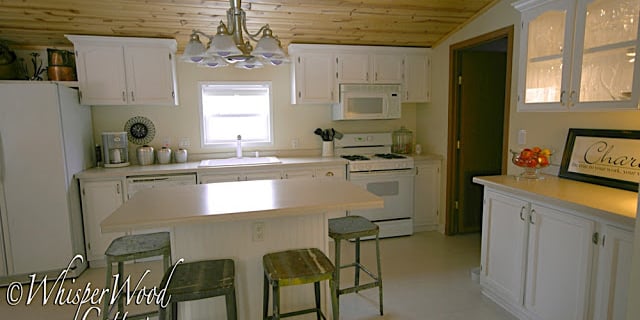
The Whisper Wood Cottage kitchen is the kind of space that proves white paint deserves its own fan club. The homeowners used Behr’s Swiss Coffee, a warm white shade, across cabinetry and trim to bring a lighter, fresher feeling into the home. In a room where natural wood could easily dominate, this choice helped bounce light around and soften the heavier ceiling tones.
The kitchen did not rely on one dramatic move. Instead, it layered multiple cottage-style details: painted cabinetry, lighted upper cabinets, beadboard backing, beadboard around the center island, industrial stools, vintage accents, and a sense of casual usefulness. This is important because cottage kitchens work best when they feel assembled over time. A single “cottage kit” rarely works. The magic is in the mix.
Why Beadboard Works So Well
Beadboard is one of those design elements that quietly earns its keep. It adds architectural texture without overwhelming the room. In the Whisper Wood Cottage kitchen, beadboard behind the lighted cabinets and around the island creates depth and charm. It gives flat surfaces a handcrafted feel, the visual equivalent of adding a good crust to homemade bread.
For readers looking to borrow the idea, beadboard can be used on cabinet backs, islands, walls, ceilings, mudroom benches, or even small breakfast nooks. It works especially well in cottage interiors because it feels traditional but not stuffy. Paint it warm white for a light and airy look, soft sage for a garden-inspired mood, or muted blue for a coastal cottage direction.
Lighting That Does More Than Prevent Toe Injuries
One of the most effective kitchen updates in the tour was adding lighting inside the upper cabinets. This small detail helped brighten the room and highlight the cabinet interiors. In cottage design, lighting should feel layered and friendly. Overhead fixtures are useful, but they should not be forced to do all the emotional labor.
Under-cabinet lighting, cabinet interior lights, sconces, pendants, and table lamps in nearby eating areas can make a kitchen feel warmer and more lived-in. Good cottage lighting says, “Come in, make tea, stay too long.” Bad lighting says, “Welcome to the interrogation portion of dinner.” Choose wisely.
Vintage and Salvaged Pieces: The Cottage Secret Weapon
Whisper Wood Cottage shines because it uses old pieces with purpose. The home incorporated rescued doors from a university renovation, salvaged flat track and trolley hardware from an 1800s barn, antique storefront doors from downtown Duluth, Minnesota, industrial stools, a large letter “I,” and a vintage brass school bell. These are not random objects tossed into a room for “character.” They are pieces with shape, age, and memory.
That is the secret to decorating with antiques and salvage: they should feel intentional. Cottage style welcomes imperfection, but it still needs editing. A vintage bell on its own is charming. A vintage bell next to seven unrelated rusty objects, three mystery baskets, and a chipped goose figurine named Harold may start to look like a flea market sneezed.
The best salvaged pieces usually do at least one of three things. They solve a practical problem, create a focal point, or tell a story. In Whisper Wood Cottage, the antique doors are not just decorative. They shape the room’s identity. The industrial stools make the kitchen more casual and functional. The school bell adds personality and a wink of nostalgia.
The Master Bedroom: Calm, White, and Quietly Dramatic
The master bedroom continues the home’s lightened cottage approach. The same warm white used elsewhere appears on the walls, creating a peaceful backdrop. White crown molding and baseboards sharpen the room’s edges, while horizontal plank wall treatment on the closets adds subtle structure. The room feels calm without being blank, which is the difference between cottage serenity and “Did we forget to decorate?”
One of the most memorable features is the use of salvaged doors. The walk-in closet and master bath door treatments included rescued doors and barn track hardware, while another closet was built around antique storefront doors. This is exactly the kind of design move that makes a bedroom feel personal. Instead of choosing a standard door and moving on, the homeowners turned functional elements into the room’s main story.
The Canopy Bed Moment
The homeowner wanted a canopy bed for the master bedroom, and the timing worked out when the right bed went on sale during the makeover. That detail may sound small, but it says a lot about smart decorating. The best cottage rooms are not rushed. They are built through patience, timing, and the ability to wait until the right piece appears.
A canopy bed can bring gentle drama to a cottage bedroom. It adds height, romance, and structure without needing a loud color or oversized artwork. In a light room, it can act as an anchor. In a smaller room, a simple canopy frame can make the space feel intentional rather than cramped. The trick is to keep bedding relaxed and layered, not overly formal. Cottage bedrooms should invite naps, not require a reservation.
The Power of Warm White Paint
One major lesson from the Whisper Wood Cottage home tour is the impact of warm white paint. The homeowners used Swiss Coffee from Behr to brighten cabinetry, trim, and bedroom walls. Warm whites are especially useful in cottage homes because they soften natural wood, flatter vintage pieces, and create a flexible background for changing accessories.
Cool, stark whites can sometimes feel too clinical, especially in older homes with rustic materials. Warm white has a gentler personality. It works with pine, brass, linen, wicker, old books, iron hardware, and weathered wood. It also allows texture to become the star. In a cottage, texture matters just as much as color: beadboard, planks, woven baskets, cotton bedding, old doors, painted trim, and imperfect finishes all need room to breathe.
Why the “Work in Progress” Mindset Works
The homeowners openly described the cottage as unfinished. The kitchen still needed flooring. The closet needed better organization. Other projects were underway, including a guest bath makeover and fireplace remodel. This honesty makes the tour more useful than a fantasy home reveal where every room appears complete, styled, and suspiciously free of phone chargers.
Real cottage decorating benefits from time. Living in a space helps reveal what it actually needs. Maybe the kitchen needs better light before it needs new tile. Maybe the bedroom needs storage before it needs wallpaper. Maybe the porch needs seating before anyone buys another decorative lantern. Taking time prevents expensive regrets and helps the home develop a more natural personality.
How to Bring Whisper Wood Cottage Style Into Your Own Home
You do not need a named cottage, antique barn hardware, or a kitchen with pine ceilings to borrow the look. The principles behind Whisper Wood Cottage can work in apartments, suburban homes, cabins, bungalows, and even that one rental kitchen with cabinets that have seen things.
Start With Light, Then Add Warmth
If a room feels heavy, begin by improving light. Use warm white paint, mirrors, glass-front cabinets, lighter window treatments, and layered lamps. Then add warmth back through wood, woven textures, aged metal, linen, and vintage artwork. Cottage style should not feel sterile. It should feel bright enough to breathe and warm enough to stay.
Add One Architectural Detail
Beadboard, plank walls, crown molding, oversized baseboards, or a vintage-style door can transform a plain room. You do not have to remodel everything. One well-chosen architectural layer can make a room feel older, richer, and more intentional.
Use Vintage Pieces With a Job
Choose antiques and salvaged items that serve a role. A vintage cabinet can store dishes. Old doors can become sliders. A schoolhouse light can brighten a breakfast nook. A weathered bench can hold shoes in the entry. Cottage style is sentimental, yes, but it is also practical. It likes pretty things that work for a living.
Let Collections Stay Small
Cottage homes often feature collections: ironstone, old books, baskets, plates, bells, framed prints, quilts, or pottery. The key is restraint. A focused collection looks charming. Too many unrelated objects can make a room feel nervous. Give pieces space so each one can be noticed.
Design Lessons From the Whisper Wood Cottage Home Tour
The biggest lesson from this cottage tour is that charm comes from decisions, not dollars. The homeowners spent money where it mattered: counters, paint, trim, lighting, wall treatment, flooring, and the bed. Many other elements came from antique finds, junk pieces, or items already owned. That mix is why the rooms feel personal rather than packaged.
The second lesson is patience. The antique storefront doors were found years before they inspired a closet design. The sliding doors were discovered after the makeover had already begun. This willingness to adapt gave the room more character than a rigid plan would have.
The third lesson is that cottage style welcomes contrast. Fresh white paint and old wood. Industrial stools and soft cottage cabinetry. Clean trim and rescued doors. Light rooms and antique hardware. These combinations prevent the space from becoming too sweet, too rustic, or too predictable.
Common Mistakes to Avoid
The first mistake is making everything too precious. A cottage should feel comfortable. If guests are afraid to sit down, the room has lost the plot. Choose washable slipcovers, durable rugs, practical storage, and finishes that can handle daily life.
The second mistake is using only new decor that imitates age. Reproduction pieces can be useful, but cottage style needs at least a few items with real patina. A thrifted mirror, vintage stool, antique door, inherited quilt, or old brass fixture can give a room depth.
The third mistake is forgetting function. Pretty open shelving is lovely until it becomes a dusty museum of mugs no one uses. A charming closet door is wonderful, but the closet still needs to work. Whisper Wood Cottage succeeds because its beauty is tied to real living.
of Experience: Living With the Whisper Wood Cottage Mindset
The experience of creating a home like Whisper Wood Cottage is less like ordering a complete room online and more like cooking soup without a strict recipe. You start with what you have, add what you love, adjust slowly, and occasionally wonder if you have made a terrible mistake. Then, one day, the room suddenly tastes right.
A practical way to begin is by walking through your home and identifying the spaces that feel emotionally heavy. Not ugly, necessarilyjust tired. Maybe the kitchen feels dark by midafternoon. Maybe the bedroom has good furniture but no softness. Maybe the entryway is where shoes, bags, mail, and human hope go to collapse. Choose one area and ask what would make it feel lighter, calmer, and more useful.
In a Whisper Wood Cottage-inspired home, paint is often the first friendly intervention. A warm white on trim, cabinets, or walls can create an instant reset. But the experience should not stop at paint. Once the room has a lighter foundation, begin layering texture. Add a woven basket for blankets. Hang a small vintage mirror. Replace one basic knob with aged brass or iron. Put a lamp in a corner that has been living in darkness like a Victorian orphan.
Shopping for cottage style is also an experience in patience. The best pieces rarely appear when you demand them. Antique stores, estate sales, salvage shops, Facebook Marketplace, thrift stores, and family storage rooms can all become sources. The trick is to shop with measurements, a rough palette, and a willingness to walk away. Not every old thing is charming. Some old things are just dusty with confidence.
The most rewarding part is when a found object changes the direction of a room. A pair of old doors may inspire a closet makeover. A chipped cabinet may become bathroom storage. A brass bell may become the quirky detail everyone notices. These pieces create emotional connection because they were chosen, rescued, and placed with care.
Living with this style also teaches flexibility. A room may not be finished this month. Or this year. That is not failure; it is how layered homes are made. Whisper Wood Cottage proves that a home can be beautiful while still becoming. There can be future flooring plans, closet problems, unfinished corners, and still plenty of charm.
The best experience is the quiet daily pleasure: morning light on white cabinets, a favorite mug on an open shelf, the soft slide of an old door, a bedroom that feels restful at the end of a long day. Cottage style is not about impressing strangers on the internet, although compliments are accepted and may be stored for later emotional support. It is about making a home that feels like it knows you, welcomes you, and forgives the occasional laundry pile.
Conclusion: Why Whisper Wood Cottage Still Inspires
The Whisper Wood Cottage home tour remains inspiring because it captures what people love most about cottage interiors: warmth, personality, patience, and practical beauty. The kitchen shows how white paint, beadboard, lighting, and vintage details can brighten a room without stripping away its soul. The master bedroom shows how salvaged doors, plank treatments, trim, and a carefully chosen bed can create calm with character.
More than anything, this home tour reminds us that good design does not have to arrive all at once. It can be collected, adjusted, rescued, painted, repurposed, and improved over time. Whisper Wood Cottage is not perfect, and that is exactly why it works. It feels human. It feels loved. And like every good cottage, it quietly suggests that maybejust maybeyou do need that antique door after all.
Note: This article is an original, publication-ready rewrite based on real cottage home tour and cottage design information, with no external source links inserted into the HTML body.