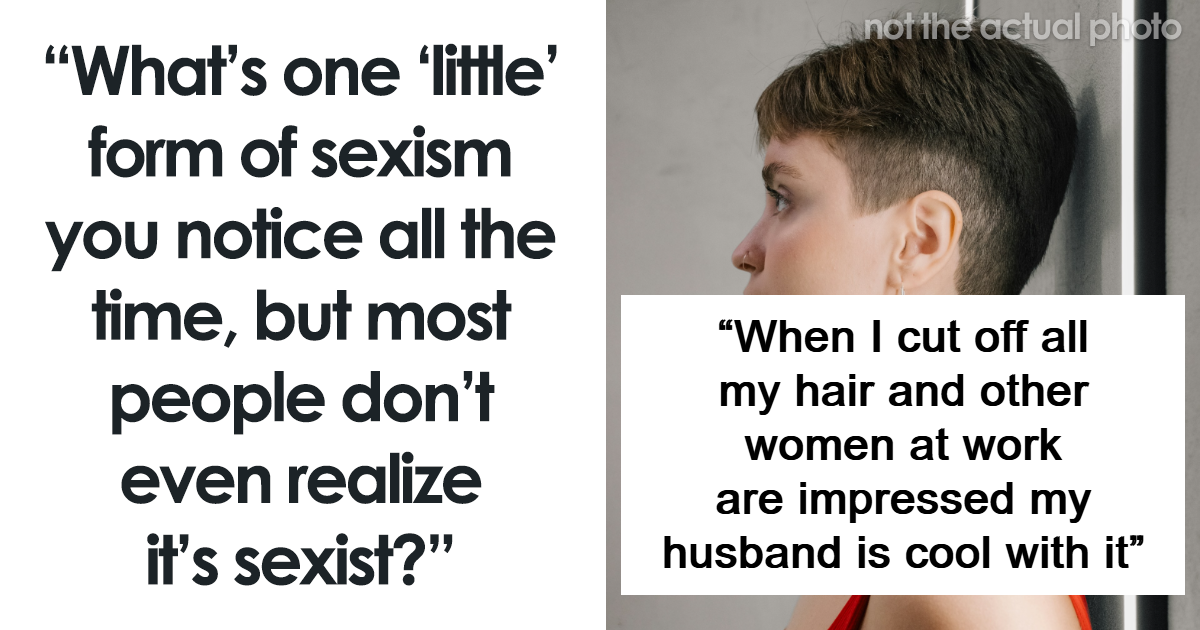
Some sexist behavior arrives wearing a neon sign. It is loud, obvious, and about as subtle as a marching band in a library. But the trickier kind is the tiny, ordinary, “wait, is that actually a problem?” kindthe comments, assumptions, jokes, compliments, expectations, and double standards that slip into daily life like crumbs in a couch.
That is why the phrase “the bar is on the floor for men” hits a nerve. It is not saying every man is bad, lazy, or clueless. It is pointing out how often men are praised for doing the bare minimum while women are expected to perform competence, patience, beauty, emotional maturity, domestic labor, career ambition, and social grace without applause. A dad packs a lunch and becomes Father of the Year. A mom packs 412 lunches, remembers the field trip form, buys the socks, schedules the dentist, and still gets asked why the house is messy.
Everyday sexism works because it feels normal. It hides in “just kidding,” “that’s how it’s always been,” and “you’re being too sensitive.” But small things add up. They shape who gets heard in meetings, who is expected to clean up, who is believed, who is promoted, who feels safe, and who gets to exist without carrying an invisible clipboard of everyone else’s needs.
What Is Everyday Sexism?
Everyday sexism refers to the routine assumptions, behaviors, and social habits that treat people differently based on gender. It may not always be intentional, but impact matters. A person can mean well and still reinforce a sexist pattern. That is the whole annoying magic trick.
Some examples are obvious: sexual comments at work, dismissing women’s expertise, or saying certain jobs are “not for women.” Others are more polished. Calling a grown woman “sweetheart” in a professional setting. Assuming the man in a heterosexual couple is the decision-maker. Complimenting a father for “babysitting” his own children. Asking a woman how she balances work and family while asking a man about his vision, strategy, and leadership.
Sexism also affects men. Rigid gender roles can pressure men to suppress emotion, avoid caregiving, treat vulnerability like a software bug, and believe their worth depends on dominance or income. But the phrase “the bar is on the floor for men” usually critiques a specific imbalance: men often receive praise for basic participation while women are judged for not doing everything flawlessly.
Why “The Bar Is On The Floor For Men” Resonates
The phrase is funny because it is exaggerated, but it lands because many people recognize the pattern instantly. A man remembers one anniversary and gets treated like a romance novelist with a pulse. A woman manages birthdays, groceries, school schedules, family group chats, holiday gifts, and emotional temperature checks, and people call it “natural.” Natural? So is mold. That does not mean we should build a social system around it.
The low bar appears in three main places: relationships, workplaces, and public life. In relationships, women are often treated as household managers while men are “helpers.” At work, women can be penalized for being too assertive or too quiet, too ambitious or not ambitious enough, too warm or not warm enough. In public life, women are judged by appearance, age, voice, tone, clothing, facial expression, and whether they smiled at the correct angle under fluorescent lighting.
These little habits are not little to the person living under them every day. They are like phone notifications from patriarchy: individually dismissible, collectively exhausting.
44 Little Things People Often Don’t Even Realize Are Sexist
Here are 44 common examples of everyday sexism that many people overlook. Some are tiny. Some are painfully familiar. All are worth noticing.
- Calling fathers “babysitters.” A dad watching his own child is parenting, not running a temporary daycare franchise.
- Praising men for basic chores. Doing dishes does not require a parade, a documentary, or a limited-edition trophy.
- Assuming women are naturally better at cleaning. Nobody is born with a sacred biological bond to the vacuum.
- Expecting women to remember every family birthday. Mental load is work, even when it lives in a calendar app.
- Asking women to take notes in meetings. Administrative tasks often quietly follow women, even when they are not admins.
- Interrupting women more often. Cutting someone off repeatedly sends the message that her thoughts are optional background music.
- Explaining a woman’s own field to her. Helpful explanation is great. Automatic correction from a less-informed person is not.
- Calling assertive women “bossy.” The same behavior is often labeled “leadership” when it comes from a man.
- Calling emotional men “weak.” This harms men and reinforces the idea that care, grief, and softness are feminine defects.
- Assuming women want children. Motherhood is not a universal software update.
- Assuming men do not want to be caregivers. Fathers, brothers, sons, and husbands can be nurturing without losing masculinity points.
- Complimenting little girls only on appearance. “Pretty” is fine, but girls also deserve to hear that they are brave, funny, smart, and creative.
- Telling boys not to cry. Congratulations, you have taught emotional constipation.
- Using “like a girl” as an insult. It turns half the population into a punchline.
- Assuming the man pays on dates. Generosity is lovely. Gendered financial obligation is not.
- Judging women for having multiple partners while praising men. Same behavior, different scoreboard: classic double standard.
- Calling women “high maintenance” for having standards. Wanting respect is not a luxury package.
- Expecting women to smile at strangers. A woman’s face is not a public mood lamp.
- Commenting on women’s bodies as casual conversation. Bodies are not community bulletin boards.
- Assuming women are bad drivers. Stereotypes are not statistics, and jokes can keep bias alive.
- Assuming men are incompetent at childcare. Low expectations become excuses.
- Calling single dads heroic but single moms irresponsible. The same parenting load should not be judged through two different moral lenses.
- Expecting women to organize office celebrations. Cake logistics are not encoded on the X chromosome.
- Assigning women “office housework.” Cleaning, scheduling, greeting guests, and remembering snacks can quietly drain career time.
- Penalizing mothers at work. Parenthood is often treated as proof of responsibility for men and reduced commitment for women.
- Assuming women in technical roles are nontechnical. The engineer might be the woman in the room, not the man standing next to the projector.
- Calling women “girls” at work. Adult professionals deserve adult language.
- Using pet names for women in serious settings. “Honey” is great from your grandmother, not from the guy questioning your quarterly report.
- Questioning women’s expertise more aggressively. Asking for evidence is fine. Treating women as guilty until proven competent is not.
- Complimenting men for “helping” at home. If you live there, it is not help. It is shared responsibility.
- Expecting women to manage men’s emotions. Support is mutual. Women are not unpaid emotional IT departments.
- Calling women dramatic for reacting to disrespect. Sometimes the issue is not her tone. Sometimes the issue is the disrespect.
- Mocking men for liking “feminine” hobbies. Cooking, fashion, skincare, dance, or childcare do not make anyone less of a man.
- Making women prove they are “cool girls.” A woman does not need to laugh at sexist jokes to earn social approval.
- Judging women’s aging more harshly. Men become “distinguished.” Women are told to buy seven serums and apologize to time.
- Calling women “too ambitious.” Ambition is not a gender violation.
- Assuming leadership should look masculine. Calm, collaborative, empathetic leadership is still leadership.
- Dismissing sexism as “just a joke.” Jokes can reveal what a culture excuses.
- Expecting women to be grateful for basic respect. Respect is the floor, not the chandelier.
- Blaming women for men’s behavior. Clothing, friendliness, silence, politeness, or rejection does not cause harassment.
- Assuming women are responsible for contraception. Reproductive responsibility should not be a one-person group project.
- Calling men “whipped” for respecting partners. Listening to your partner is not captivity.
- Expecting women to soften every message. “Just,” “maybe,” “sorry,” and three smiley faces should not be required for basic requests.
- Treating sexism as solved because women can vote and work. Legal rights matter, but culture can still lag behind like a printer from 2004.
How Tiny Sexist Habits Become Big Problems
Everyday sexism is powerful because it trains people slowly. A girl who is constantly praised for being pretty may learn that being observed matters more than being heard. A boy who is mocked for crying may learn that anger is the only acceptable emotion. A woman interrupted in meetings may stop offering ideas. A man praised for “helping” at home may never learn to take full ownership of shared responsibilities.
These patterns also affect money and opportunity. If women are expected to do more unpaid labor at home, they have less time for rest, career development, networking, or simply staring into space like a healthy human potato. If women at work are assigned more invisible tasks, they may produce less visible workthe kind that leads to promotions, raises, and leadership roles.
Sexism also survives by pretending to be politeness. Benevolent sexism can sound sweet: “Women should be protected,” “men should handle the hard things,” “she is too delicate for that role.” But the velvet glove still holds the same old message: women are less capable, men are less nurturing, and everyone must stay inside a tiny cardboard box labeled “normal.”
Why Calling It Out Feels So Awkward
Calling out everyday sexism can feel dramatic because the incident itself may seem small. Nobody wants to stop dinner and deliver a TED Talk because Uncle Gary said women are “naturally better at multitasking.” But silence is how little things become wallpaper.
The goal is not to turn every conversation into a courtroom. The goal is to make the invisible visible. A simple “Why do you assume she’ll take notes?” or “He’s not babysitting; he’s parenting” can reset the room without launching a social grenade. Humor can help too: “Wow, the bar really packed a shovel and went underground today.”
The key is consistency. One correction may feel tiny, but repeated corrections change norms. People learn what gets laughed off, what gets challenged, and what no longer gets a free pass.
How Men Can Raise The Bar Without Expecting A Medal
Men who want to push back against sexism do not need to begin with a grand speech or a dramatic podcast rebrand. They can start with ownership. Learn the pediatrician’s name. Know where the cleaning supplies are. Do not wait to be asked. Notice who is doing the invisible work. Share it.
At work, men can pay attention to who gets interrupted, who gets credit, who gets assigned support tasks, and who is expected to be endlessly pleasant. If a woman’s idea is ignored and then praised when a man repeats it, name the original source. If a woman is asked to plan the team lunch again, suggest rotating the task. If a sexist joke lands in the room, do not leave women to be the only buzzkill. Be the buzzkill. Buzzkills are underrated; they are the smoke alarms of social progress.
In relationships, raising the bar means being a full adult partner. Not “helping.” Not “babysitting.” Not waiting for instructions like a Roomba with commitment issues. It means noticing, planning, following through, and treating emotional labor as real labor.
How Women Are Expected To Carry The Social Clipboard
One of the most overlooked forms of sexism is the expectation that women will manage everyone’s comfort. Women are often expected to remember names, soothe tension, write thank-you notes, calm angry relatives, smooth over awkward moments, and phrase criticism like a scented candle.
This does not mean women are naturally better at emotional labor. It often means they have been trained longer and punished harder for refusing. A woman who stops managing the room may be called cold. A man who does the same may be called focused. A woman who asks directly may be rude. A man who asks directly may be efficient. Same behavior, different subtitles.
The social clipboard is exhausting because it rarely looks like work. It looks like personality. But when one group is expected to keep relationships, households, and workplaces emotionally lubricated, that group pays a hidden tax.
Experiences Related To “The Bar Is On The Floor For Men”
Many people first notice everyday sexism not in a dramatic confrontation, but in a tiny moment that keeps echoing. For example, imagine a family dinner where a mother cooks, serves, checks who needs water, remembers the vegetarian cousin, wipes the counter, packs leftovers, and starts the dishwasher. Then the father carries one plate to the sink and someone says, “Wow, he’s so helpful.” Helpful? He has moved ceramic six feet. NASA can stand down.
Or picture a workplace meeting. A woman proposes an idea. The room moves on. Ten minutes later, a male colleague repeats the same idea with a deeper voice and perhaps a slightly more confident pen gesture. Suddenly, everyone loves it. The woman sits there wondering if she briefly became invisible or if the conference table is powered by selective hearing. This kind of moment may not appear in a formal complaint, but it shapes confidence, credit, and opportunity.
There is also the dating version. A woman tells her friends that the man she is seeing remembers her coffee order, texts back, and owns bedsheets. Everyone cheers like civilization has been restored. The praise is funny, but it also reveals a sad expectation: basic attentiveness has become impressive because too many people have experienced the opposite. The bar is not merely low; it is somewhere beneath the carpet, waving politely from the subfloor.
Parents experience this imbalance constantly. A father takes his child to the playground and strangers beam at him like he invented tenderness. A mother takes her child to the same playground and is silently evaluated for snacks, outfit, discipline style, phone usage, tone of voice, and whether the child’s socks match. When a dad is present, he may be praised. When a mom is present, she is often audited.
Women in customer-facing jobs often describe another version: being told to smile, being called “sweetheart,” or having anger directed at them because people assume women should absorb frustration gracefully. A male employee may be seen as firm; a female employee may be labeled difficult. Over time, women learn to add cushions to every sentence: “Sorry, just checking,” “Maybe we could,” “No worries if not.” The words become armor, but armor is heavy.
Men can feel trapped by the same system, too. A man who wants to be a stay-at-home parent may be treated as strange. A man who admits loneliness may be told to toughen up. A man who enjoys fashion, caregiving, or emotional honesty may become the target of jokes. Sexism gives men a bargain: power in exchange for emotional confinement. That is not freedom; it is a room with nicer furniture and locked windows.
The most useful experiences are the ones that lead to small corrections. Someone says, “He’s babysitting,” and another person replies, “You mean parenting.” A manager notices that women keep planning office parties and creates a rotating system. A partner stops asking, “What do you need me to do?” and starts noticing what needs doing. These moments do not solve sexism overnight, but they raise the bar one ordinary act at a time. And honestly, the bar could use the exercise.
How To Respond To Everyday Sexism Without Losing Your Mind
Not every sexist comment deserves a full debate, especially when you are tired, busy, or simply trying to buy cereal in peace. But when you do want to respond, keep it simple and direct.
Ask A Clarifying Question
Questions make people explain the assumption behind the comment. Try: “What do you mean by that?” or “Why would that be different for a woman?” It is amazing how many bad takes wilt under mild sunlight.
Name The Pattern
Sometimes the best response is calm and plain: “That is a double standard,” “She was speaking,” or “He is not helping; he lives here too.” Naming the pattern keeps the focus on behavior, not personal attack.
Change The System
For workplaces and families, systems beat vibes. Rotate note-taking. Split household tasks by ownership, not favors. Track invisible labor. Make pay, promotion, and responsibility decisions transparent. Good intentions are nice; structure is better.
Conclusion: Raise The Bar, Then Keep Raising It
Everyday sexism is not always dramatic, but it is durable. It survives in compliments, jokes, traditions, assumptions, and expectations that seem harmless until you count how often they happen and who benefits from them.
The phrase “the bar is on the floor for men” is not an invitation to hate men. It is an invitation to expect more from everyone: more accountability, more care, more self-awareness, more shared labor, and more respect. Men are capable of much more than being applauded for locating the laundry basket. Women deserve much more than being assigned the role of household manager, office mom, emotional translator, and smiling background character.
Raising the bar does not require perfection. It requires noticing. It requires asking who is doing the unpaid work, who is getting credit, who is being interrupted, who is being praised for the minimum, and who is being judged for not performing the impossible.
Once you see the little things, you cannot unsee them. That may be uncomfortable, but it is also useful. Discomfort is often the sound of an old assumption packing its bags.