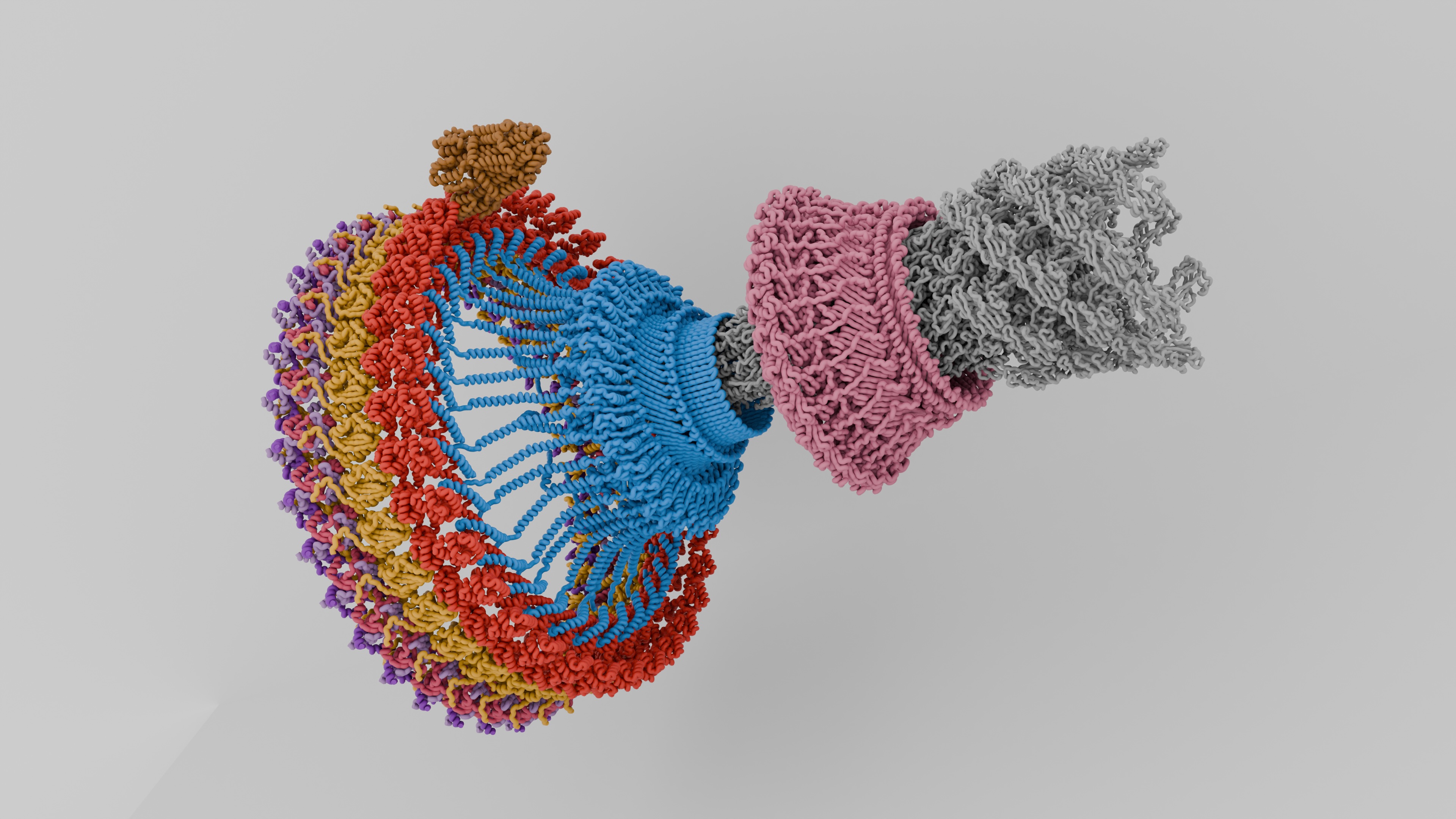
Every second you are alive, tiny machines are working inside you with the dedication of a microscopic pit crew. They haul cargo, pull muscle fibers, separate DNA strands, spin like turbines, and keep your cells organized enough to prevent biological chaos from turning into a full-blown office meeting. These machines are called biological motors, or molecular motors, and they are among the most astonishing inventions nature never patented.
Unlike the motors in cars or blenders, biological motors do not run on gasoline, electricity from a wall outlet, or the desperate energy of a Monday morning coffee. Most of them are powered by ATP, the cell’s main energy currency. Others use ion gradients, especially the flow of protons across membranes. Together, these nanoscale engines help explain how your heart beats, your muscles move, your cells divide, your neurons communicate, and your mitochondria produce usable energy.
In other words, your body is not just alive. It is mechanically busy. Very busy.
What Are Biological Motors?
Biological motors are protein-based machines that convert chemical energy into mechanical work. That may sound like something printed on the back of a graduate-level biochemistry textbook, but the idea is beautifully simple: a molecule captures energy, changes shape, and uses that shape change to move something.
Some biological motors “walk” along cellular tracks. Some rotate. Some pull. Some push. Some unzip genetic material. Their scale is almost impossible to imagine. A kinesin motor, for example, can carry cellular cargo along microtubules like a delivery worker crossing a city made of protein scaffolding. Myosin motors slide along actin filaments to help muscles contract. Dynein motors move cargo in the opposite direction along microtubules and help power the beating of cilia and flagella.
These motors are not optional decorative accessories. Cells depend on them for movement, transport, division, and survival. If the cell is a city, biological motors are the trucks, cranes, forklifts, conveyor belts, rowers, and emergency maintenance crews.
The Fuel: ATP, Proton Gradients, and Cellular Energy
Most motor proteins use ATP, short for adenosine triphosphate. ATP stores energy in chemical bonds. When a motor protein breaks ATP into ADP and phosphate, that energy can trigger a structural shift in the protein. The shift becomes motion.
This is not motion in the dramatic Hollywood sense. No explosion. No soundtrack. Just a tiny change in shape that becomes a step, a pull, a twist, or a rotation. Repeat this cycle millions or billions of times, and suddenly you have muscle contraction, nerve cell transport, DNA replication, and cellular organization.
Another major power source is the electrochemical gradient. In mitochondria, protons are pumped across the inner mitochondrial membrane, creating stored energy. ATP synthase, one of biology’s most famous rotary motors, uses the flow of protons back across the membrane to spin part of its structure and manufacture ATP. Yes, inside your cells there is essentially a tiny turbine making the fuel that powers other tiny machines. Biology is not subtle. It is just very, very small.
Myosin: The Motor Behind Muscle Movement
When people think of body power, they usually think of biceps, legs, abs, or that one friend who insists on carrying all the grocery bags in one trip. At the molecular level, muscle power comes largely from myosin.
Myosin motors interact with actin filaments. In skeletal and cardiac muscle, actin and myosin are organized into repeating units called sarcomeres. During contraction, myosin heads bind to actin, pull, release, reset, and pull again. This repeated action causes filaments to slide past each other, shortening the sarcomere and producing muscle contraction.
The Sliding Filament Model
The sliding filament model explains how muscles shorten without the individual filaments themselves shrinking. Imagine two combs sliding into each other. The teeth do not get shorter; they simply overlap more. In muscle, actin and myosin filaments slide in a coordinated way, turning molecular motion into visible movement.
This process powers obvious actions like running, jumping, lifting, blinking, smiling, and chewing. It also powers actions you rarely think about, such as breathing and maintaining posture. Even when you are sitting still, your body is not truly still. Muscles are making small adjustments all the time, like a biological stage crew keeping the whole show upright.
Kinesin: The Cellular Delivery Service
Kinesin is often described as a walking motor protein, and once you see an animation of it, the nickname makes sense. Kinesin has two “heads” that alternately bind to microtubules, allowing it to step forward while carrying cargo. Its movement is directional, purposeful, and surprisingly adorable for a molecule that has no idea it is adorable.
Kinesins usually move cargo toward the plus end of microtubules. This matters because cells are highly organized. Materials must reach the right place at the right time. Vesicles, proteins, organelles, and signaling molecules cannot simply drift around and hope for the best. Cells are crowded environments, not lazy rivers.
Why Neurons Depend on Kinesin
Neurons are especially dependent on motor proteins because they can be extremely long compared with most cells. Some nerve cells stretch from the spinal cord toward the feet. That is a gigantic commute on a cellular scale. Materials made near the cell body must travel down long axons, and waste or signaling materials often need to travel back.
Kinesin helps move cargo outward along axons. Without reliable transport, neurons cannot maintain healthy communication. This is one reason molecular motors are so important in neuroscience. A traffic jam inside a neuron may not sound dramatic, but for the nervous system, bad logistics can become a major biological problem.
Dynein: The Heavy-Lifting Return Route
Dynein is another microtubule motor, but it often travels in the opposite direction from kinesin. While kinesin commonly moves toward the plus end, cytoplasmic dynein generally moves toward the minus end of microtubules. This makes dynein essential for returning cargo toward the cell center.
Dynein is large, complex, and powerful. It participates in intracellular transport, cell division, positioning of organelles, and the movement of cilia and flagella. If kinesin is the delivery truck heading out to the suburbs, dynein is the return truck bringing packages back downtown, while also moonlighting as a construction crane during cell division.
Cilia, Flagella, and Tiny Oars
Dynein also powers the bending motion of cilia and eukaryotic flagella. Cilia are hair-like structures found on the surface of certain cells. In the respiratory tract, motile cilia help move mucus and trapped particles. In reproductive biology, flagellar motion helps sperm cells swim. These movements depend on coordinated dynein activity that causes microtubules to slide against each other, producing bending.
It is easy to overlook cilia because they are tiny, but they perform the kind of maintenance work that keeps larger systems functioning. They are like street sweepers, rowboats, and metronomes rolled into one microscopic tool.
ATP Synthase: The Rotary Motor That Makes Energy
If molecular biology had a greatest-hits album, ATP synthase would be on the cover wearing sunglasses. This enzyme is one of the most elegant biological motors known. It sits in the inner membrane of mitochondria and uses a proton gradient to produce ATP.
ATP synthase has two major functional regions: one embedded in the membrane and one projecting into the mitochondrial matrix. As protons flow through the membrane portion, part of the enzyme rotates. That rotation drives changes in the catalytic region, allowing ADP and phosphate to become ATP.
The result is a stunning example of energy conversion: electrochemical potential becomes mechanical rotation, and mechanical rotation becomes chemical energy. Your cells then spend that ATP on thousands of tasks, including powering other biological motors. It is a cellular economy, except the currency is molecules and the central bank is shaped like a spinning nano-turbine.
DNA Helicases: Motors That Unzip Life’s Instructions
Not all biological motors walk along protein tracks or spin in membranes. Some move along nucleic acids. DNA helicases are motor enzymes that use ATP to separate the two strands of DNA. This unwinding is essential for DNA replication, repair, recombination, and transcription-related processes.
DNA is stable by design. That stability is wonderful when your cells need to protect genetic information, but inconvenient when the information must be copied or read. Helicases solve the problem by moving along DNA and breaking the interactions that hold the two strands together.
Think of helicase as the careful zipper operator of the genome. It opens the double helix just enough for other molecular machines to do their work. Without helicases, cells would struggle to copy and maintain genetic information accurately. That would be a bit like owning a library where none of the books can be opened.
Biological Motors and Cell Division
Cell division is one of the most choreography-heavy events in biology. Chromosomes must be copied, lined up, separated, and delivered into daughter cells. Microtubules form the mitotic spindle, a dynamic structure that helps organize and pull chromosomes apart. Motor proteins, including kinesins and dyneins, help assemble the spindle, position chromosomes, and generate forces needed for separation.
This process has to be accurate. A cell cannot simply shrug and say, “Close enough.” Mistakes in chromosome segregation can lead to serious cellular dysfunction. Biological motors help bring order to a process that would otherwise look like a molecular traffic circle with no signs, no lanes, and one very confused chromosome honking in the middle.
Why These Tiny Motors Matter for Health
Because biological motors are involved in so many essential processes, problems with them can affect health. Defects in ciliary movement can contribute to respiratory and fertility issues. Disrupted intracellular transport is studied in relation to neurodegenerative disease. Problems in mitochondrial energy production can affect tissues with high energy demands, such as muscle, brain, and heart tissue.
Motor proteins are also important in biomedical research because they reveal how cells move, divide, communicate, and respond to stress. Scientists study these molecular machines using structural biology, single-molecule imaging, biochemistry, genetics, and computational modeling. The more researchers understand how motors work, the better they can understand what happens when cellular logistics break down.
These motors are also inspiring nanotechnology. Engineers and biophysicists study them not only to understand life but also to imagine human-made nanoscale systems that can transport materials, respond to signals, or convert energy with remarkable efficiency.
The Beauty of Biological Efficiency
One of the most impressive things about biological motors is not just that they work, but that they work in warm, wet, noisy, crowded cellular environments. A car engine has metal parts, lubricants, controlled fuel delivery, and enough size to be repaired by someone holding a wrench. A biological motor has atoms, water, thermal motion, and no mechanic on call.
Yet these motors are reliable enough to support life. They use random molecular collisions, binding events, and energy changes to create directed motion. In a world where everything at the molecular scale is constantly jiggling, biological motors manage to get things done. They are proof that life does not eliminate chaos; it organizes chaos into useful work.
Everyday Experiences That Reveal the Motors Inside Us
You do not need a microscope to appreciate biological motors. You can notice their effects every time your body does something ordinary. The trick is to look at normal life with molecular imagination.
Take walking up a flight of stairs. At the human scale, it is simple: foot up, push, lift, repeat. At the molecular scale, myosin motors are cycling through countless interactions with actin filaments. Calcium signals tell muscle fibers when to contract. ATP is spent rapidly and replenished constantly. Your mitochondria are working like tiny power plants, and ATP synthase is spinning away to keep the energy supply moving. By the time you reach the top step, your legs may complain, but your molecular motors have performed a microscopic symphony.
Or consider typing a message. Your fingers move with impressive speed and precision. Each tap depends on nerve signals, muscle contractions, tendon movement, and cellular energy. Kinesin and dynein help maintain the neurons that send those signals. Myosin handles the contraction. ATP synthase helps make the ATP that fuels the process. Your keyboard gets the credit, but your cells did the heavy lifting.
Even a deep breath is a motor-powered event. The diaphragm contracts, the rib cage shifts, air flows in, and cilia in the respiratory tract continue their quiet work of moving mucus and trapped particles. These tiny cilia do not ask for applause. They simply beat in coordinated waves, like microscopic fans cleaning the hallway of your lungs.
Exercise makes biological motors easier to feel. During a run, your heart beats faster, skeletal muscles demand more ATP, breathing increases, and mitochondria work harder. The burn in your muscles is not your biological motors failing; it is your body adjusting to increased energy demand, chemical changes, and metabolic pressure. The motors keep cycling as long as fuel, oxygen, and cellular conditions allow. In that sense, endurance is partly a story of supply chains: can your body deliver enough oxygen, nutrients, and ATP to keep the molecular workforce paid?
Fatigue also becomes more interesting when viewed through this lens. Feeling tired after a long day is not simply a dramatic complaint from your brain, although the brain is certainly talented in that department. Your cells have used energy, managed waste, repaired damage, transported molecules, and maintained gradients all day. Biological motors helped keep everything moving. Rest gives your body time to restore balance, rebuild resources, and prepare the motors for another round.
Food connects to the story too. A meal is not just “fuel” in the vague motivational-poster sense. Nutrients are broken down through metabolism, electrons move through the respiratory chain, proton gradients form, and ATP synthase helps convert that stored energy into ATP. Later, ATP powers myosin in your muscles, kinesin in your neurons, helicases in your dividing cells, and countless other molecular tasks. A sandwich may look humble, but after digestion and metabolism, parts of it may help power a blink, a heartbeat, or a thought.
Sleep is another everyday reminder. While you are unconscious to the outside world, your cells remain busy. Repair processes continue. Proteins are moved. Cellular components are recycled. The brain manages essential maintenance. Molecular motors do not clock out just because you are wearing pajamas.
Perhaps the most humbling experience is realizing that the body’s grand abilities are built from small, repeated actions. A marathon stride, a piano performance, a laugh, a heartbeat, and a healing wound all depend on molecular events too small to see directly. Biological motors turn chemistry into motion, and motion into life. They are tiny, tireless, and completely uninterested in your excuses for skipping leg day.
Conclusion
The biological motors that power our bodies are among the most remarkable systems in nature. Myosin helps muscles contract. Kinesin and dynein move cargo through cells. Dynein drives cilia and flagella. ATP synthase spins to make cellular fuel. Helicases unzip DNA so life’s instructions can be copied and maintained. Together, these molecular machines show that the body is not just a collection of organs. It is a universe of moving parts, powered by chemistry and refined by evolution.
The next time you walk, breathe, stretch, blink, type, think, or recover from a long day, remember the invisible workforce inside you. Your body is powered by motors so small they cannot be seen with ordinary eyes, yet so important that life depends on their motion. Not bad for machines that never need an oil change.
Note: This article is written for general educational and web publishing purposes. It is based on established biological concepts from reputable scientific and medical references, rewritten in original language without source-link insertion.