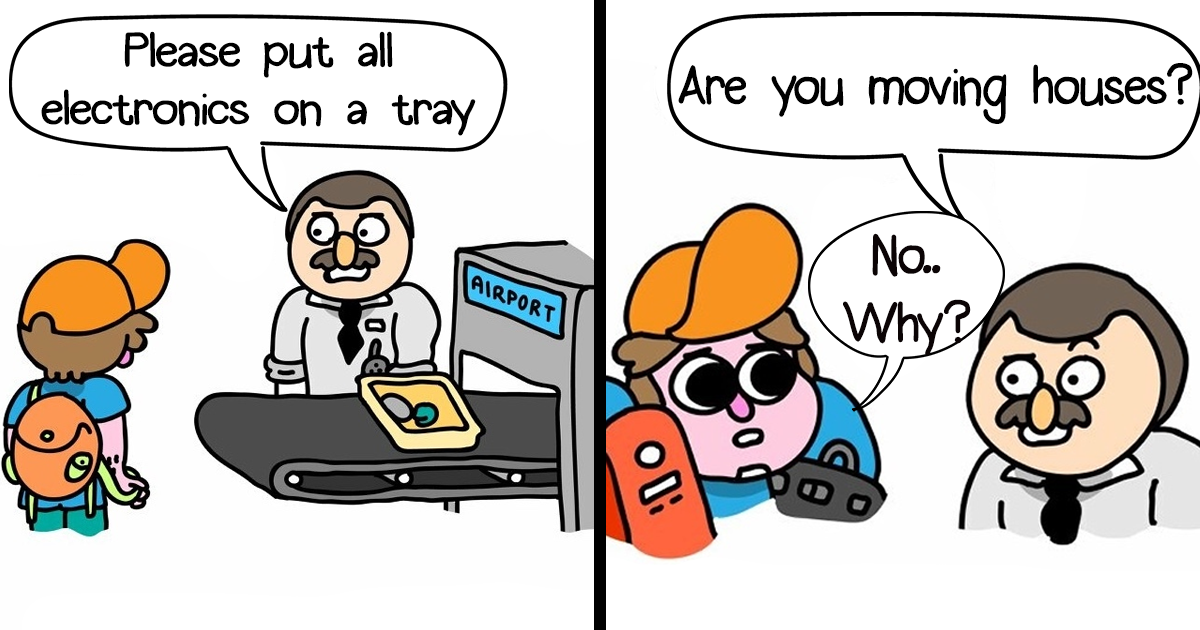
Some comics need dragons, spaceships, or mysterious villains with excellent cheekbones. Others only need a full phone storage warning, a suspiciously empty fridge, a sneeze that feels like a farewell speech, or the tiny emotional earthquake of wanting attention from a pet that has clearly chosen independence. “My 43 Comics About Hilariously Relatable Everyday Situations” belongs to the second groupthe kind of comics that look at ordinary life, point at the mess, and say, “Yes, this is ridiculous, and yes, we are all doing it.”
That is the charm of relatable comics. They do not try to impress readers with complicated plot twists. Instead, they sneak into the everyday routine and turn small human habits into punchlines. The funniest part is not that the situations are rare. It is that they are almost too familiar. We laugh because we have been there: dramatically suffering through a mild cold, checking the refrigerator five times as if snacks might magically spawn, or telling ourselves we are mature adults while doing something wildly childish two minutes later.
These 43 comics capture those tiny, silly, deeply human moments that make daily life feel less lonely. They are simple, expressive, and easy to digestlike comfort food, but with speech bubbles. More importantly, they show why everyday humor works so well online: it gives readers a quick hit of recognition. In a busy digital world, one panel can say what a whole diary entry might struggle to explain.
Why Everyday Situation Comics Are So Addictive
Relatable comics work because they transform ordinary inconvenience into shared entertainment. A person battling a cold, feeling hungry again right after eating, or refusing to let go of childish comforts may not sound like headline material. Yet in comic form, these moments become wonderfully dramatic. The artist exaggerates just enough to make the familiar feel fresh.
Humor researchers often explain comedy as a mix of surprise and safety. Something feels a little “off,” but not dangerous. A tiny social failure, an overreaction, or a daily frustration becomes funny when readers can recognize it without feeling threatened by it. That is exactly where these comics shine. The situations are not catastrophic. They are pocket-sized disasters: the kind that ruin ten minutes, not a lifetime.
The comedy of recognition
Recognition is the secret sauce. When readers see a comic about pretending to be on the edge of death because of the flu, they are not just laughing at the character. They are laughing at themselves, their siblings, their partner, or that one friend who turns a runny nose into a Shakespearean tragedy. This kind of humor creates instant connection because it says, “Your weird little habits are not yours alone.”
That is why online comics about everyday situations are so shareable. People tag friends because the comic becomes a playful accusation. “This is you,” they say, usually with too many laughing emojis. And because the comic is gentle rather than cruel, everyone can enjoy being exposed.
The Appeal of “My 43 Comics About Hilariously Relatable Everyday Situations”
The title promises exactly what readers want: a collection of quick, funny, highly recognizable slices of life. The number 43 also creates curiosity. It suggests variety, momentum, and a scroll-friendly experience. Instead of one joke, readers get a buffet of miniature observations. Some comics may touch on laziness, food cravings, social awkwardness, technology problems, relationships, pets, or the strange logic our brains use when nobody is watching.
The best everyday comics are not only funny; they are honest. They admit that humans are inconsistent creatures. We want to be productive, but we also want a nap. We want to eat healthy, but we have formed a meaningful emotional bond with fries. We want to clear storage on our phone, but apparently every blurry screenshot from 2018 is historically important.
Small problems become big punchlines
A strong relatable comic often starts with a very small problem. The phone says storage is full. The body says it is hungry. The weather says, “Surprise, discomfort!” The brain says, “Let us overthink a harmless comment for the next six business days.” These moments are tiny in real life, but comics give them a stage.
By enlarging everyday inconveniences, the artist lets readers enjoy their own frustrations from a safe distance. A bad day becomes a joke. A personal habit becomes a character trait. A minor embarrassment becomes a shared human ritual. Suddenly, the ordinary is not boringit is comedy material wearing sweatpants.
How Simple Art Makes Relatable Comics Stronger
One reason webcomics about daily life work so well is their simplicity. Expressive faces, clean panels, and direct setups allow readers to understand the joke quickly. The art does not need to be hyper-detailed. In fact, too much detail can slow the punchline down. Relatable comics often benefit from visual clarity because the reader’s brain fills in the rest.
Think of a character staring into a fridge. The background does not need a perfect kitchen layout, hand-painted tile, or museum-quality lighting. The important thing is the posture: the blank stare, the hope, the disappointment, the belief that maybe the cheese moved since the last inspection. That is where the humor lives.
Facial expressions carry the joke
In comics, a raised eyebrow can do the work of an entire paragraph. A tiny frown can reveal defeat. A giant smile can expose chaotic confidence. The funniest everyday comics often rely on expressions because readers instantly understand emotional exaggeration. We know the face of someone who found one clean spoon left. We know the heroic expression of someone canceling plans and choosing pajamas. We know the horror of seeing “low battery” when the charger is in another room, a distance scientists call “basically impossible.”
This is why simple comic art can feel so personal. It strips the scene down to the emotion: hunger, laziness, embarrassment, stubbornness, joy, panic, and the deeply modern fear of accidentally opening the front camera.
Relatable Humor and the Internet: A Perfect Match
The internet loves fast emotional recognition. People scroll quickly, but they pause when something feels like it was stolen from their private thoughts. That makes relatable comics a natural fit for social media, humor sites, and online communities. A comic can be consumed in seconds, shared in one tap, and understood across different backgrounds because everyday frustrations are surprisingly universal.
There is also something comforting about seeing ordinary life turned into art. Online spaces can feel polished and performative. People post perfect vacations, perfect meals, perfect outfits, and suspiciously clean desks. Relatable comics offer the opposite: a cheerful admission that most of us are just trying to survive laundry, snacks, awkward conversations, and the emotional betrayal of autocorrect.
Why readers share comics about daily struggles
People share relatable comics for three big reasons. First, they are funny. Second, they communicate a feeling quickly. Third, they help people bond. Sending a comic about being always hungry is easier than writing, “I too experience snack-based existential urgency.” Tagging a friend under a comic about childish habits is a love language, especially if the friend deserves it.
That social function is important. Humor is not just entertainment; it is a connection tool. When someone laughs at the same tiny inconvenience, it creates a feeling of belonging. The comic becomes a digital nod across the room: “You too? Excellent. We are both disasters.”
Common Themes in Hilariously Relatable Everyday Comics
While every artist has a unique voice, everyday situation comics often circle around themes that readers instantly understand. These themes are popular because they are emotionally low-stakes but highly recognizable.
1. Food, hunger, and snack logic
Food humor is unbeatable because hunger makes philosophers of us all. A comic about being “always hungry” taps into a truth most readers know too well: sometimes the stomach behaves like it is crowdfunding for survival even after a full meal. Snack logic is not rational, and that is what makes it funny. We open the fridge repeatedly, hoping the contents have upgraded themselves. We say we want “just one bite” and then accidentally perform a full excavation of someone else’s dessert.
2. Sickness and dramatic suffering
Being mildly sick can turn even the most reasonable person into a tragic Victorian poet. Relatable comics exaggerate this perfectly. A cold becomes a final battle. A cough becomes a public announcement. A blanket becomes a medical device. Readers laugh because they know the performance, whether they are the actor or the exhausted audience member.
3. Childish habits in adult packaging
Many of the funniest everyday comics expose the child still hiding inside the adult. We may pay bills and answer emails, but we also want cute things, silly rewards, and occasional emotional support from cartoons, snacks, or soft blankets. The humor comes from contrast. The character knows they are supposed to be grown-up, but the inner child has already grabbed the steering wheel and requested ice cream.
4. Technology annoyances
Technology gives comic artists endless material. Full storage, dying batteries, unread messages, accidental screenshots, frozen apps, and mysterious updates all create tiny modern tragedies. A comic about clearing storage is funny because everyone knows the pain of deleting one video and gaining approximately three seconds of digital breathing room.
5. Social awkwardness and overthinking
Everyday comics often capture the invisible drama of social life. Did that message sound rude? Was that wave meant for someone else? Why did the brain replay a conversation from nine years ago at 1:13 a.m.? These jokes work because they reveal the private theater of overthinking. On the outside, nothing is happening. On the inside, a full committee meeting is taking place, and nobody brought snacks.
Why These Comics Feel Personal Without Being Too Specific
The magic of relatable comics is balance. A comic needs to be specific enough to feel real but broad enough for many readers to see themselves in it. “I am hungry” is universal. “I checked the fridge again even though nothing changed” is specific. Put them together, and the comic becomes instantly recognizable.
This balance is also what keeps the humor friendly. The comics are not mocking people from a distance; they feel like they are laughing with readers. That difference matters. The tone is playful, not mean. The artist is part of the joke too, which makes the work warmer and more inviting.
Self-deprecating humor done right
Self-deprecating humor can be powerful when it is light, honest, and not overly harsh. These comics often use self-deprecation as a mirror rather than a weapon. They say, “Look at this silly thing we do,” not “Look how terrible we are.” That makes the humor easier to enjoy and easier to share.
The result is a collection that feels cozy even when it jokes about frustration. It is the emotional equivalent of laughing at yourself after tripping on absolutely nothing and then pretending the floor personally challenged you.
The Role of Visual Storytelling in Everyday Humor
Comics are uniquely suited to everyday humor because they combine timing, expression, text, and silence. A good panel can pause before the punchline. A character’s blank stare can create a beat. A simple repeated actionlike opening the fridge againcan become funnier each time because the reader anticipates the failure.
Unlike a written joke, a comic can show contradiction instantly. A character says, “I am fine,” while looking like a haunted house with legs. A character promises to be productive while already horizontal under a blanket. The humor appears in the gap between what is said and what is shown.
Panels create rhythm
Comedy depends on timing, and comic panels are excellent timing machines. The first panel sets up the situation. The second builds expectation. The final panel twists the scene, exaggerates the reaction, or reveals the character’s true motive. Even in short comics, that rhythm gives readers a satisfying miniature story.
In a collection of 43 comics, this rhythm becomes especially enjoyable. Each comic delivers a quick emotional reset. Readers move from one small laugh to another, building a sense of momentum. It is not unlike scrolling through a playlist of tiny human confessions.
What Creators Can Learn From These 43 Relatable Comics
For artists, writers, and content creators, the success of everyday situation comics offers a useful lesson: you do not need a huge concept to create strong content. You need observation. The ordinary world is full of material if you pay attention to the small moments people usually ignore.
A good relatable comic often begins with a question: “What did I do today that was a little ridiculous?” Maybe you argued with a fitted sheet. Maybe you treated one unread email like a cursed object. Maybe you bought a planner to become organized and then immediately lost the planner. These are not failures. They are drafts.
Observe first, exaggerate second
The best everyday humor starts with truth. Exaggeration comes later. If the situation is recognizable, readers will follow the joke even when it becomes absurd. A phone storage problem can become an emotional crisis. A pet ignoring you can become a full betrayal arc. A snack craving can become a heroic quest through the pantry.
Creators should also remember that relatability does not mean blandness. The strongest comics have a point of view. They show how the artist sees the world: amused, dramatic, tender, sarcastic, chaotic, or all of the above before breakfast.
Why Readers Keep Coming Back to Everyday Comics
Readers return to relatable comics because they offer relief. Life is full of pressure to be efficient, impressive, attractive, calm, and organized. Everyday comics give us permission to be wonderfully imperfect. They celebrate the person who wants to eat again, nap again, complain again, and still somehow continue being lovable.
They also remind us that humor can make ordinary life feel lighter. A frustrating moment may still be frustrating, but once it becomes a comic, it also becomes a story. And once it becomes a story, it becomes easier to carry.
Experience Section: What These Comics Teach Us About Laughing at Real Life
Reading a collection like “My 43 Comics About Hilariously Relatable Everyday Situations” feels a bit like sitting with a friend who notices everything. Not the big dramatic thingsthe tiny things. The weird face people make when they are thinking about food. The exaggerated misery of catching a cold. The panic of realizing your phone storage is full right when you need to capture something important. The quiet joy of acting childish for no reason other than the fact that adulthood is expensive and snacks still help.
One experience that many readers can relate to is the strange ritual of checking the refrigerator. You open it once, find nothing exciting, close it, walk away, and somehow return three minutes later with renewed hope. Nothing has changed. The carrots are still carrots. The leftovers still look emotionally complicated. Yet the second visit feels necessary. A comic about that moment works because it respects the absurdity without judging it. It turns a private habit into a public laugh.
Another familiar experience is getting sick and immediately becoming dramatic. A sore throat appears, and suddenly the couch becomes a recovery island. The blanket becomes a royal cape. The person with the cold begins issuing updates like a weather service: “Condition worsening. Soup required. Morale low.” In real life, this can be annoying. In comics, it is hilarious because the exaggeration reveals a truth: when we feel bad, we all want a little extra care.
There is also the experience of being an adult who still has childish needs. Many people pretend maturity means being serious all the time, but that is suspicious and probably bad for the soul. Sometimes you want a cute sticker, a silly joke, a comfort show, or the last cookie. Relatable comics make room for that softer side. They remind readers that adulthood does not erase playfulness; it just hides it behind passwords, calendars, and grocery lists.
Technology adds another layer of comedy to everyday life. Clearing phone storage can feel like negotiating with a tiny digital landlord. You delete three apps, 47 duplicate photos, and one video of your lunch, only for the phone to announce that storage is still full. At that point, the device is not a tool. It is a villain with rounded corners. Comics capture this frustration beautifully because they can turn a technical annoyance into a personality conflict.
The most meaningful experience behind these comics is the comfort of recognition. When readers laugh at a relatable comic, they are not only enjoying a joke. They are feeling seen. A small part of life that once felt silly, embarrassing, or too minor to mention suddenly becomes worthy of art. That is a lovely thing. It means our ordinary routines are not empty. They are full of tiny stories waiting for someone to draw them.
In that sense, these 43 comics are more than a funny collection. They are a reminder to pay attention. The next time your pet ignores you, your phone rebels, your snack cravings become theatrical, or your brain overreacts to a harmless situation, there may be a comic hiding inside the moment. Real life is already writing the jokes. We just need to notice the punchlines before they wander off to check the fridge again.
Conclusion
“My 43 Comics About Hilariously Relatable Everyday Situations” proves that daily life does not need to be extraordinary to be entertaining. Sometimes the funniest stories are hiding in the smallest habits: eating, waiting, overthinking, getting sick, clearing storage, craving attention, or acting like a child in an adult-shaped outfit. These comics work because they are honest, simple, expressive, and warm. They turn ordinary situations into shared laughter, and that is why readers connect with them so quickly.
In a world full of polished content, relatable comics feel refreshingly human. They do not ask us to be perfect. They invite us to laugh at the weird little patterns that make us who we are. And honestly, if a comic can make us feel less alone while also roasting our fridge-checking habits, that is a public service.