Owning a home is a little like adopting a very large, very opinionated pet. It squeaks, leaks, shifts, settles, clogs, blinks lights at you, and occasionally demands attention at the least convenient moment. The good news? You do not need a contractor’s truck, a garage full of mystery gadgets, or a superhero cape to handle everyday fixes. You just need a smart starter toolkit.
This guide breaks down the 14 handy tools every homeowner needs for common home repairs, maintenance, furniture assembly, wall hanging, small plumbing fixes, measuring, safety, and basic DIY projects. The goal is not to turn your weekend into a renovation reality show. It is to help you tighten the loose handle, hang the shelf straight, unclog the sink, patch the tiny wall ding, and avoid saying, “Where is that thingy that turns the other thingy?”
Why Every Homeowner Needs a Basic Tool Kit
A basic home tool kit saves time, money, and frustration. Small repairs often cost more in service-call fees than in materials, especially when the job takes five minutes and one tool. A loose cabinet knob, a wobbly chair leg, a crooked picture frame, or a stuck drain can usually be handled safely with the right equipment and a little patience.
The best tools for homeowners are versatile, durable, easy to store, and useful across many situations. You do not need to buy everything at once. Start with the essentials, then add specialty tools as your confidence and project list grow. Think of your tool kit like a pantry: begin with salt, oil, and flour before buying the truffle shaver.
14 Handy Tools Every Homeowner Needs
1. Cordless Drill and Driver
A cordless drill is the MVP of homeowner tools. It drills pilot holes, drives screws, assembles furniture, installs curtain rods, mounts shelves, and saves your wrist from manual screwdriver marathons. For most homeowners, a compact 12-volt or 18/20-volt drill-driver is more than enough for everyday tasks.
Look for a model with adjustable clutch settings, variable speed, a comfortable grip, and a rechargeable lithium-ion battery. A keyless chuck makes changing bits easier. Keep a basic bit set nearby with Phillips, flathead, square, hex, and drill bits in common sizes. When hanging anything heavy, pair your drill with a stud finder and proper anchors. Drywall alone is not a personality trait; it needs support.
2. Multi-Bit Screwdriver
Even if you own a cordless drill, a multi-bit screwdriver deserves a spot in your home tool kit. It is quieter, more precise, and easier to control for delicate work such as outlet covers, cabinet hinges, battery compartments, door hardware, and furniture adjustments.
A good multi-bit screwdriver includes Phillips, slotted, square, and Torx bits. Magnetic bit holders are especially helpful because they keep tiny screws from vanishing into another dimension. For tighter spaces, consider adding a stubby screwdriver. It is small, unimpressive-looking, and surprisingly heroic under sinks and inside cabinets.
3. Hammer
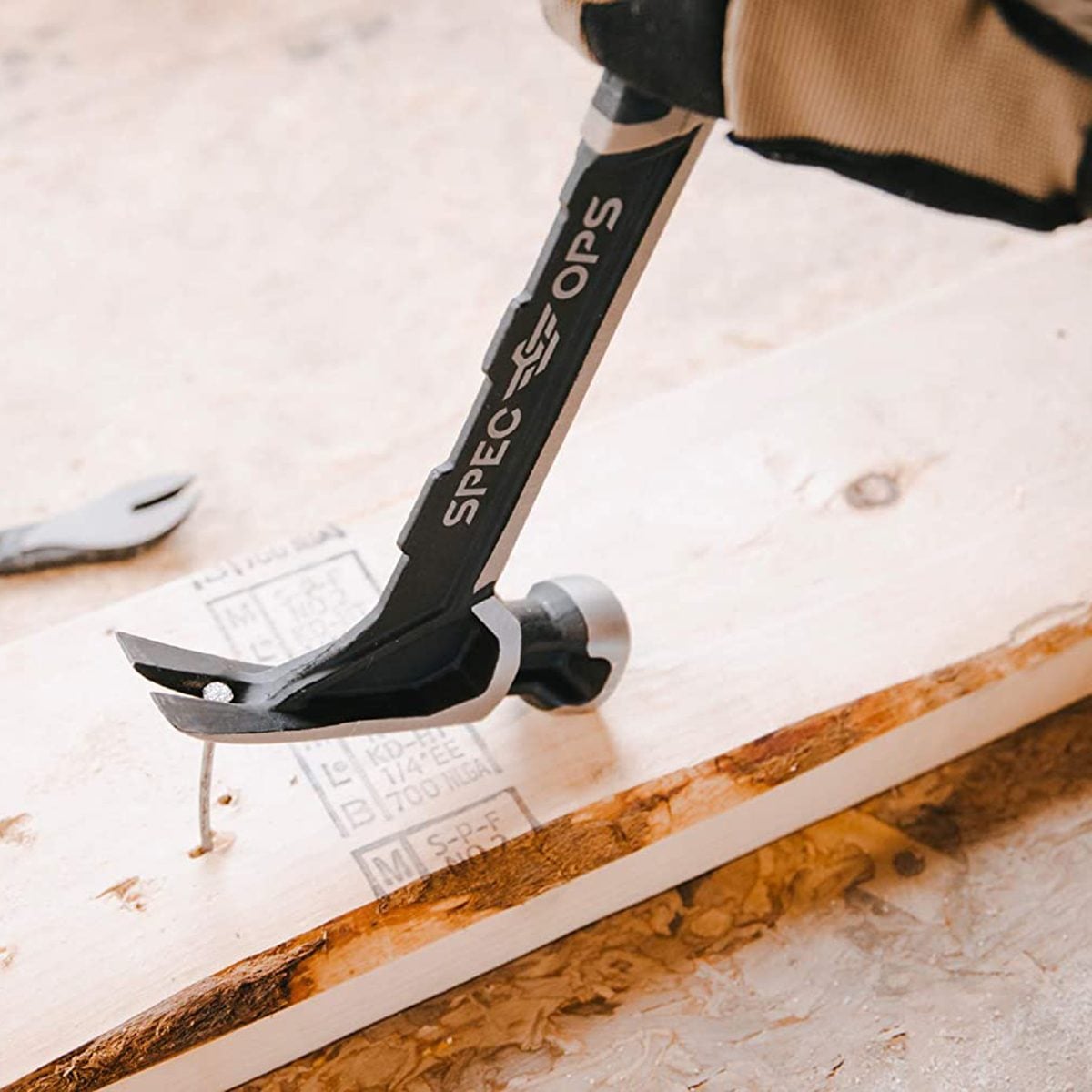
A hammer is one of the most basic tools every homeowner should own, but “basic” does not mean optional. You will use it for hanging pictures, tapping parts into place, removing small nails, assembling pieces, and light demolition. A 16-ounce curved-claw hammer is a reliable choice for most homes.
Choose a hammer that feels balanced in your hand. A smooth face is better for general household use because it is less likely to leave waffle marks on wood or trim. The claw should remove nails cleanly without bending like a sad fork. Also, please do not use your shoe as a hammer. Your wall, your thumb, and your dignity deserve better.
4. Tape Measure
A tape measure prevents many classic homeowner mistakes, including buying furniture that almost fits, hanging art slightly off-center, and discovering that “eyeballing it” is not a recognized engineering method. A 25-foot tape measure is ideal for most homes because it handles rooms, walls, furniture, windows, and lumber.
Look for a tape with clear markings, a strong lock, and a blade that extends several feet without collapsing. Measure twice before drilling, cutting, ordering blinds, or deciding a sofa will “probably make it through the doorway.” Your future self will applaud politely.
5. Level
A level keeps shelves, pictures, mirrors, towel bars, and curtain rods from looking like they were installed during an earthquake. A torpedo level is compact and easy to store, while a 24-inch level is better for longer surfaces. Many homeowners eventually keep both.
For simple decorating, a bubble level works beautifully. For repeated layout work, a laser level can be useful, especially when installing gallery walls, cabinets, tile, or shelving. Straight lines make a home feel more polished, and they also keep guests from tilting their heads at your wall art like confused museum critics.
6. Adjustable Wrench
An adjustable wrench grips nuts and bolts of different sizes, making it one of the most practical hand tools for homeowners. It is useful for plumbing connections, furniture bolts, bicycle adjustments, outdoor equipment, and appliance fittings.
Choose a medium-size adjustable wrench with a smooth jaw adjustment and a comfortable handle. Do not use it when a socket or fixed wrench would fit better, because adjustable jaws can slip if used carelessly. Still, for quick household repairs, it is the “one wrench to rule many nuts,” which sounds silly but is mechanically true.
7. Pliers Set
A basic pliers set should include slip-joint pliers, needle-nose pliers, and tongue-and-groove pliers. Together, they can grip, bend, pull, twist, hold, tighten, loosen, and rescue objects from places your fingers should not enter.
Needle-nose pliers are great for small spaces and delicate tasks. Tongue-and-groove pliers are excellent for plumbing fixtures, larger fasteners, and gripping awkward shapes. Slip-joint pliers handle general household jobs. Choose pliers with comfortable non-slip handles and strong jaws. Cheap pliers that flex under pressure are not a bargain; they are a future swear jar contribution.
8. Utility Knife
A sharp utility knife is essential for opening boxes, trimming carpet, cutting caulk, scoring drywall, slicing packaging, sharpening pencils, and making clean cuts in many materials. It is one of the most frequently used DIY tools in a homeowner’s kit.
Look for a retractable utility knife with replaceable blades and solid blade storage. Dull blades are more dangerous than sharp ones because they require extra force and can slip. Replace blades often, cut away from your body, and use a proper surface underneath. The kitchen counter is not a cutting mat, no matter how brave it looks.
9. Stud Finder
A stud finder helps locate framing behind drywall so you can safely hang heavy items such as shelves, large mirrors, cabinets, TVs, and wall-mounted storage. For light décor, drywall anchors may be enough. For heavier loads, studs are your best friends hiding behind paint.
Basic magnetic stud finders detect screws or nails in studs. Electronic stud finders can identify changes in density behind the wall. Some advanced models detect live wires or metal, which adds an extra layer of safety. Always read the manual and scan the wall more than once before drilling. The best hole in your wall is the one you meant to make.
10. Flashlight or Headlamp
Every homeowner needs reliable lighting for power outages, attic checks, crawl spaces, under-sink repairs, breaker panels, and nighttime mystery noises that are usually the ice maker but still somehow terrifying. A flashlight is essential; a headlamp is even better when you need both hands free.
Keep fresh batteries or rechargeable lights in easy-to-access locations. A compact LED work light is also useful because it can stand, hang, or magnetically attach while you work. Store one near the main electrical panel, one in your tool kit, and one where you can find it without using your phone as a candle like a modern cave explorer.
11. Caulk Gun
A caulk gun helps seal gaps around tubs, sinks, windows, doors, trim, backsplashes, and exterior joints. Proper caulking can improve appearance, reduce drafts, block moisture, and prevent small gaps from becoming expensive problems.
Choose a smooth-rod dripless caulk gun for better control. Pair it with the right caulk for the job: silicone for wet areas, paintable acrylic latex for trim, and exterior-rated sealants for outdoor gaps. Before applying new caulk, remove old loose material and clean the surface. The secret to a neat bead is steady pressure, a small opening, and not panicking halfway through like the tube is chasing you.
12. Putty Knife
A putty knife is simple, inexpensive, and surprisingly versatile. Use it for patching nail holes, spreading spackle, scraping loose paint, removing stickers, cleaning edges, applying wood filler, and gently prying small trim pieces.
A flexible 1.5-inch or 2-inch putty knife is great for patching and spreading. A stiffer blade works better for scraping. For drywall repairs, pair your putty knife with spackle, sanding sponge, primer, and touch-up paint. Small wall holes are normal in a lived-in home. Fixing them is satisfying, like erasing evidence of a shelf experiment that did not believe in gravity.
13. Plunger and Drain Snake
Plumbing problems are where homeowners learn humility. A good plunger and a basic drain snake can solve many minor clogs before they become dramatic. For toilets, use a flange plunger. For sinks and tubs, a cup plunger or small hand auger can help clear common blockages.
A plastic drain snake is useful for removing hair from bathroom drains. A hand-crank auger can reach deeper clogs, but use it carefully to avoid damaging pipes. Avoid mixing chemical drain cleaners, and never use harsh products immediately before plunging, because splashes can be dangerous. When water is rising, the humble plunger becomes royalty.
14. Safety Gear
Safety gear is not the exciting part of a tool kit, but it is the part that keeps projects from becoming regrettable stories. Every homeowner should own safety glasses, work gloves, hearing protection, dust masks or respirators when appropriate, and a sturdy step ladder.
Safety glasses protect your eyes while drilling, cutting, sanding, scraping, and working overhead. Gloves protect against splinters, sharp edges, and rough materials. Hearing protection matters when using power tools. A proper step ladder is safer than balancing on a chair, countertop, laundry basket, or whatever questionable tower your brain designs at 9 p.m.
Helpful Extras Worth Adding Later
Once you have the 14 essential homeowner tools, consider adding a few helpful extras based on your home and lifestyle. A socket set is useful for furniture, bikes, appliances, and outdoor equipment. Hex keys are must-haves for flat-pack furniture. A shop vacuum helps with garage messes, sawdust, water cleanup, and renovation debris. An extension cord, painter’s tape, hardware organizer, clamps, and a small handsaw can also make common projects easier.
Outdoor homeowners may eventually need pruning shears, a rake, hose repair parts, a shovel, and a leaf blower. Apartment or condo owners may prioritize compact storage, noise-friendly hand tools, and small repair kits. The best homeowner toolkit is not the biggest one; it is the one that matches the problems your home actually creates.
How to Choose Quality Tools Without Overspending
Good tools do not always have to be expensive, but they should feel solid, balanced, and safe. For hand tools, check the grip, moving parts, blade quality, and overall construction. A screwdriver should not twist under pressure. Pliers should close evenly. A tape measure should lock firmly. A level should be easy to read.
For power tools, consider battery platform compatibility. If you buy a cordless drill, choosing a brand with batteries that also work in other tools can save money later. However, do not buy a giant power tool combo kit just because it looks impressive. If you only hang curtains and assemble bookcases, you probably do not need a demolition-grade collection that could intimidate a bridge.
Tool sets can be a good value for beginners, especially when they include a case and common hand tools. Still, some sets pad the count with dozens of tiny bits you may rarely use. Focus on quality and usefulness, not the biggest number printed on the box.
Tool Storage: Because “Somewhere in the Garage” Is Not a System
A tool is only handy if you can find it. Store your basic tools in a portable toolbox, tool bag, drawer system, pegboard, or wall-mounted organizer. Keep frequently used items together: screwdriver, tape measure, utility knife, pliers, flashlight, level, and safety glasses.
Label small bins for screws, nails, wall anchors, batteries, drill bits, and picture-hanging hardware. Put sharp tools away safely and keep batteries charged. If you live in a multi-story home, consider a small secondary kit upstairs with a screwdriver, tape measure, flashlight, and pliers. It prevents the classic homeowner workout: one repair, twelve trips to the garage.
Common Home Repairs These Tools Can Handle
With these 14 handy tools, most homeowners can tackle a wide range of basic tasks. You can tighten loose cabinet pulls, hang art, mount lightweight shelves, assemble furniture, patch nail holes, recaulk a bathroom seam, unclog a slow drain, replace a door handle, adjust hinges, install curtain rods, measure for blinds, change smoke detector batteries, and fix minor trim issues.
That does not mean every repair should be DIY. Call a qualified professional for major electrical work, gas lines, structural repairs, serious plumbing leaks, roof work, asbestos concerns, complex HVAC issues, and anything that feels unsafe or outside your skill level. Confidence is good. Overconfidence is how people end up explaining a ceiling hole to their insurance company.
of Real-World Homeowner Tool Experience
The first lesson of homeownership is that small problems rarely schedule appointments. A loose doorknob appears when guests are arriving. A dripping faucet begins its tiny percussion concert at bedtime. A picture frame falls slightly crooked the moment you finish cleaning. In these moments, a basic home tool kit feels less like a luxury and more like emotional support with handles.
One of the most useful habits is keeping your tools in one predictable place. Many homeowners buy the right tools, then scatter them across drawers, closets, garages, kitchen junk zones, and “temporary” spots that become permanent archaeological sites. A simple toolbox solves half the battle. When the tape measure, screwdriver, and drill bits live together, a five-minute repair stays a five-minute repair.
Another practical experience: buy the right fasteners before you start. Tools do the work, but screws, anchors, nails, washers, and bolts make the repair last. If you are hanging something on drywall, check the weight rating of your anchors. If you are mounting into studs, use screws long enough to bite securely into wood. Nothing humbles a homeowner faster than a shelf that exits the wall like it has somewhere better to be.
Measuring also deserves more respect than it gets. A tape measure and level can prevent expensive mistakes, especially with furniture, shelving, blinds, rugs, and wall décor. Measure the space, measure the item, measure the path into the room, and then measure again because door frames enjoy surprising people. For wall projects, mark lightly with a pencil and use painter’s tape to preview placement before drilling.
Safety gear is another lesson people often learn late. Safety glasses feel unnecessary until dust, metal shavings, or old paint chips drop from above. Gloves feel optional until you meet a splinter with ambition. A sturdy ladder feels boring until you compare it with standing on a rolling chair, which is less a plan and more a physics demonstration waiting to happen.
Start small and build skill gradually. Tighten hardware. Patch a nail hole. Recaulk a simple seam. Replace a cabinet pull. Install a small hook. Each project teaches control, patience, and tool feel. Over time, you learn when a screw is biting properly, when a drill is working too hard, when a wrench is slipping, and when a job needs professional help. That judgment is just as valuable as the tools themselves.
The best homeowner tools are not the fanciest tools. They are the ones you reach for again and again because they solve real problems. A hammer, drill, screwdriver, tape measure, level, pliers, wrench, utility knife, stud finder, flashlight, caulk gun, putty knife, plunger, and safety gear form a practical foundation. With those nearby, your home can still be dramatic, but at least you will be ready for its next little performance.
Conclusion: Build a Tool Kit Before You Need It
The best time to build a homeowner tool kit is before something breaks, leaks, loosens, clogs, or falls off the wall. These 14 handy tools every homeowner needs cover the majority of everyday maintenance and small DIY repairs. They help you act quickly, work safely, and avoid paying for simple fixes you can confidently handle yourself.
Start with the basics: cordless drill, screwdriver, hammer, tape measure, level, wrench, pliers, utility knife, stud finder, flashlight, caulk gun, putty knife, plunger, and safety gear. Store them well, learn how to use them properly, and add specialty tools only when your projects require them. Your home will still surprise you, but with the right tools, at least you can surprise it back.
Note: This article was created by synthesizing practical guidance from reputable U.S. home improvement, consumer, retail, and DIY education resources. Always follow tool manuals, product labels, safety instructions, and local building codes.