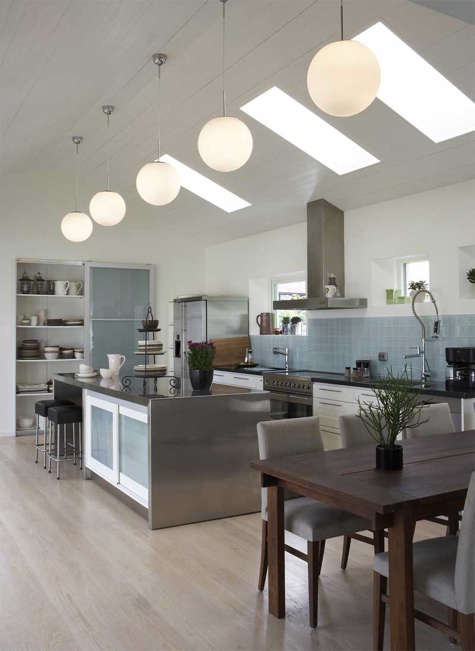
Globe pendant lights in multiples are one of those kitchen design choices that look effortlessuntil you actually try to hang them. Then suddenly you are standing under the ceiling with a tape measure, wondering whether three globes say “elegant modern kitchen” or “airport runway, but make it domestic.” The good news? When chosen and spaced correctly, multiple globe pendant lights can transform a kitchen island, breakfast bar, or open-plan cooking space into a warm, balanced, magazine-worthy focal point.
The beauty of globe pendants is their simplicity. A sphere is clean, timeless, and surprisingly flexible. It works in modern kitchens, mid-century spaces, Scandinavian interiors, coastal homes, farmhouse kitchens, and even transitional rooms where the cabinets say “classic” but the homeowner says “I still read design blogs at midnight.” Used in multiples, globe pendants create rhythm, symmetry, and visual softness above hard-working kitchen surfaces.
This guide explores how to use globe pendant lights in multiples, how many to choose, where to place them, what size works best, and how to avoid common mistakes that can make a kitchen feel cluttered, dim, or oddly theatrical.
Why Globe Pendant Lights Work So Well in Kitchens
Kitchen lighting needs to do several jobs at once. It must help you chop vegetables safely, find the cinnamon without interrogating every spice jar, create a welcoming mood for guests, and look good even when the sink contains evidence of last night’s ambitious pasta project. Globe pendant lights check many of those boxes because they combine task lighting, ambient glow, and decorative impact.
The rounded shape softens the straight lines commonly found in kitchens: rectangular islands, cabinet doors, tile backsplashes, countertops, and appliance fronts. A row of globe pendants introduces curves without feeling fussy. That contrast is especially effective over long islands, where a series of spheres can break up the horizontal stretch and create a pleasing visual beat.
Another advantage is versatility. Clear glass globes feel light and modern. Frosted or opal glass globes diffuse light more gently. Smoked glass adds mood and drama. Brass fittings lean warm and classic, black hardware feels graphic and contemporary, and polished nickel can bridge traditional and modern details. In other words, globe pendants are like the little black dress of kitchen lightingexcept they hang from your ceiling and never ask why you bought another cutting board.
How Many Globe Pendants Should You Use?
The right number of globe pendant lights depends on the length of your island or counter, the diameter of the fixtures, ceiling height, and the visual weight of the design. In many kitchens, two or three globe pendants are the sweet spot. Two larger globes can look calm and intentional over a medium island, while three smaller globes create a more classic repeated rhythm over a longer island.
Two Globe Pendants
Two globe pendants work beautifully over islands around 5 to 7 feet long, especially when the fixtures are medium to large. This arrangement feels clean, balanced, and less busy than a row of three. It is also a smart choice if your kitchen already has strong design elements, such as bold stone veining, colorful cabinetry, open shelving, or a statement range hood.
Three Globe Pendants
Three globe pendants are popular for islands around 7 to 10 feet long. The trio creates a strong design statement and provides more even light across the counter. Three globes also feel naturally pleasing because odd numbers often look more dynamic in interior design. Just make sure the fixtures are not so wide that they crowd each other. A kitchen island should not look like it is wearing a pearl necklace two sizes too small.
Four or More Globe Pendants
Four or more globe pendants can work over very long islands, commercial-style kitchens, or open-plan spaces with generous ceiling height. The key is restraint. Smaller globes, slim stems, and simple finishes help keep the row from feeling heavy. If the island is extremely long, another option is to use two pairs of pendants or a linear fixture with globe shades for a more structured look.
Ideal Height for Globe Pendant Lights Over a Kitchen Island
A common guideline is to hang kitchen island pendants so the bottom of the fixture sits about 30 to 36 inches above the countertop. This range usually provides enough light for tasks while keeping the globes above eye level for most people seated or standing at the island.
However, the best height is not just a number; it is a conversation between the fixture, the ceiling, the people using the kitchen, and the view across the room. If the pendants hang too low, they may block sightlines or make guests feel like they are being questioned under stylish glass moons. If they hang too high, they may lose their purpose as task lighting and become decorative ceiling jewelry.
For an 8-foot ceiling, stay closer to the lower end only if the globes are small and do not obstruct the view. For 9- or 10-foot ceilings, you may raise the pendants slightly while keeping them visually connected to the island. Adjustable rods or cords are helpful because they allow fine-tuning during installation.
Spacing Multiple Globe Pendants Correctly
Spacing is where good design quietly proves itself. Multiple globe pendants should look evenly distributed across the island, not randomly dropped from the ceiling like beautiful accidents. A common approach is to leave about 24 to 32 inches between pendant centers, depending on fixture diameter and island length.
Also leave breathing room at the ends of the island. A practical rule is to keep the outer pendants about 6 to 12 inches in from each end of the island. Larger globes may need more space so they do not appear to hang over the edge. This helps the lighting feel centered over the work surface and keeps the arrangement visually grounded.
Before installation, use painter’s tape on the island to mark the fixture centers. You can also hang balloons or paper spheres from temporary string to preview the size and position. It may look ridiculous for ten minutes, but it is far better than installing three expensive pendants and realizing they make your kitchen feel like a planetarium.
Choosing the Right Globe Pendant Size
Globe pendants come in many diameters, from petite 6-inch mini pendants to dramatic 18-inch or larger fixtures. The best size depends on scale. Small globes can disappear over a large island, while oversized globes can overwhelm a compact kitchen.
Small Globes
Small globe pendants, usually around 6 to 8 inches wide, work well in tight kitchens, over narrow counters, or in groups of three or more. They are also useful when the kitchen has a lower ceiling or when you want the lighting to feel subtle rather than dominant.
Medium Globes
Medium globes, around 10 to 14 inches wide, are the most versatile choice for many kitchens. They have enough presence to make a design statement without shouting at the backsplash. Two or three medium globes over an island can feel polished, balanced, and practical.
Large Globes
Large globe pendants, around 15 to 20 inches or more, work best in spacious kitchens with high ceilings and wide islands. They can look stunning in pairs. The larger the globe, the more important it is to keep the design simple and the spacing generous.
Clear Glass, Frosted Glass, or Opal Glass?
The globe material affects both style and comfort. Clear glass globes look airy and elegant, especially in kitchens where you want the pendants to feel light. They are ideal for showing off decorative bulbs, but they can also create glare if the bulb is too bright or exposed. If you choose clear glass, consider soft white bulbs, lower-lumen bulbs, or bulbs designed to be attractive from every angle.
Frosted and opal glass globes are excellent for kitchens because they diffuse light more evenly. They reduce glare, soften shadows, and create a pleasant glow. Opal glass is particularly popular in modern and mid-century-inspired kitchens because it feels clean, warm, and timeless.
Smoked, ribbed, or seeded glass adds texture and personality. These options can be beautiful, but they may reduce light output or create patterned shadows. They are best when paired with under-cabinet lighting or recessed lighting so the kitchen remains functional.
Best Finishes for Multiple Globe Pendants
The finish of your globe pendant hardware should relate to other elements in the kitchen, but it does not have to match everything perfectly. In fact, a thoughtful mix of metals often looks more collected and interesting than a room where every handle, faucet, and light fixture appears to have joined the same marching band.
Brass and Aged Brass
Brass globe pendants add warmth and elegance. They work especially well with white cabinets, navy cabinets, green cabinetry, walnut wood, marble-style counters, and warm neutral palettes. Aged brass feels softer and more timeless than very shiny yellow brass.
Matte Black
Black globe pendant hardware creates contrast and definition. It is a strong choice for modern farmhouse, industrial, Scandinavian, and contemporary kitchens. Black stems or frames can visually outline the globes and connect with black cabinet pulls, faucets, or window frames.
Polished Nickel and Chrome
Polished nickel and chrome finishes feel crisp, clean, and classic. They pair well with stainless steel appliances and cooler color palettes. Polished nickel has a slightly warmer tone than chrome, making it a good bridge between traditional and modern design.
Globe Pendants and Layered Kitchen Lighting
Multiple globe pendants should not be the only light source in the kitchen. They are important, but they are not superheroes. Even the prettiest pendants cannot light every drawer, corner, and cutting board by themselves. A well-designed kitchen uses layered lighting: ambient lighting, task lighting, accent lighting, and decorative lighting.
Globe pendants usually serve as decorative task lights over the island. Recessed ceiling lights can provide general illumination. Under-cabinet lights help with food prep and reduce shadows on countertops. Toe-kick lighting, shelf lighting, or sconces can add atmosphere. When all these layers work together, the kitchen becomes flexible enough for cooking, homework, entertaining, late-night snacks, and standing in front of the fridge while pretending to make a decision.
Color Temperature: Warm, Neutral, or Cool?
Color temperature has a major impact on how globe pendants feel. Warm white bulbs around 2700K to 3000K create a cozy, flattering glow that works well for dining, entertaining, and relaxed kitchens. Neutral white around 3500K to 4000K can feel cleaner and brighter, which may suit modern kitchens and task-heavy spaces.
For most homes, warm white or soft neutral bulbs are the safest choice for globe pendants because they make the kitchen feel inviting. If you need brighter task lighting, support the pendants with under-cabinet lighting instead of turning the island into a dentist’s office. Dimmers are highly recommended because they allow the same pendants to shift from “chop the onions safely” to “serve dessert and pretend the kitchen is always this clean.”
Common Mistakes to Avoid
Choosing Fixtures That Are Too Small
Small pendants can look underwhelming over a large island. If your kitchen has a generous footprint, tiny globes may feel like punctuation marks instead of design features. Scale up slightly or use more pendants to create proper balance.
Hanging Pendants Too Low
Pendants that hang too low can block conversation, views, and movement. They can also make the island feel crowded. Always test the height before finalizing installation.
Ignoring Glare
Clear glass globes with bright exposed bulbs can be uncomfortable, especially when seated at the island. Frosted bulbs, opal glass, or dimmable controls can help reduce glare.
Using Pendants as the Only Kitchen Lighting
Multiple globe pendants may look gorgeous, but they should be part of a complete lighting plan. Add recessed lighting, under-cabinet lighting, or other task lights to prevent shadows and dark corners.
Overcrowding the Island
Too many large globes can make the ceiling feel busy. The goal is rhythm, not a solar system. When in doubt, choose fewer larger fixtures or smaller pendants with more space between them.
Design Ideas for Globe Pendant Lights in Multiples
For a modern kitchen, try three opal glass globes with slim black stems over a waterfall island. The look is crisp, graphic, and balanced. For a warm transitional kitchen, pair two large clear glass globes with aged brass hardware above a white oak island. For a coastal kitchen, choose milk glass or frosted globes with polished nickel or soft brass details. For a mid-century-inspired space, use globe pendants with simple stems, warm metal finishes, and rounded cabinet hardware.
If your kitchen opens into a dining or living area, consider how the pendants relate to nearby fixtures. The globe shape can repeat subtly in a dining chandelier, wall sconces, or cabinet knobs. Repetition creates connection without making everything match too perfectly. A home should feel designed, not cloned.
Maintenance and Cleaning Tips
Globe pendant lights, especially glass ones, collect dust, steam residue, and the occasional mysterious kitchen film that appears after frying anything delicious. Clear glass shows smudges more than frosted or opal glass, so it may need more frequent cleaning.
Turn off the light and let bulbs cool before cleaning. Use a soft microfiber cloth for routine dusting. For glass shades, a gentle glass cleaner or mild dish soap solution can work well. Avoid harsh abrasives that may scratch the surface or damage finishes. If the globe is removable, handle it carefully with both hands. Nothing ruins a Saturday faster than learning how expensive replacement glass can be.
Experience-Based Tips for Using Globe Pendant Lights in Multiples
After looking at many kitchen layouts and real-life design choices, one lesson becomes clear: globe pendants look best when they are planned with the entire room in mind. It is easy to fall in love with a fixture online, order three of them, and assume the kitchen will politely adapt. Unfortunately, kitchens have opinions. Ceiling height, island width, cabinet color, natural light, and sightlines all influence whether multiple globe pendants feel elegant or excessive.
A practical experience is to start with the island, not the fixture. Measure the island length and width, then think about how the island is actually used. If it is mainly for prep work, choose globes that provide comfortable downward light and avoid heavy tinting. If it is mostly a gathering place, softer opal glass and dimmable bulbs may matter more. If children do homework there, glare control becomes a real issue because nobody wants math made harder by a shiny bulb reflecting off a worksheet.
Another useful tip is to mock up the pendants before buying. This can be done with cardboard circles, balloons, paper lanterns, or even mixing bowls held at the expected height. It may feel silly, but scale is hard to judge from product photos. A 14-inch globe can look modest in a showroom and surprisingly bold in a compact kitchen. Seeing the volume in the room helps prevent expensive surprises.
In kitchens with open shelving, decorative tile, or dramatic stone, simpler globe pendants often work better than ornate ones. The pendants should support the design, not compete with every other feature for attention. In quieter kitchens with plain cabinets and simple counters, the pendants can take on more personality through finish, size, or glass texture.
For multiple pendants, consistency is usually your friend. Matching globes create order and calm. However, you can still add character through subtle details: a warm brass socket, a black cord, a ribbed glass texture, or a slightly oversized diameter. The best kitchens often have one strong lighting idea, not five different lighting ideas arguing above the island.
One of the most underrated decisions is the bulb. The wrong bulb can make an expensive globe pendant look cheap, harsh, or oddly blue. For clear globes, decorative LED bulbs with a warm tone are usually more attractive. For frosted globes, the bulb shape matters less, but brightness and dimming quality still matter. Always check whether the bulb and dimmer are compatible. Flickering pendants are charming only if you are decorating a haunted house.
Finally, think about cleaning before choosing the most delicate glass on the planet. Kitchens are active spaces. Steam, oil, dust, and fingerprints happen. Clear globes are beautiful, but they reveal more. Frosted or opal globes are more forgiving. If the pendants are above a busy cooking island, easy-to-remove shades can make maintenance much less annoying.
The best experience-based advice is simple: use globe pendant lights in multiples when you want rhythm, softness, and a strong focal point. Measure carefully, choose the right scale, prioritize comfortable light, and install dimmers. Done well, multiple globe pendants can make a kitchen feel finished in that quietly expensive wayeven if dinner is frozen pizza and the “tablescape” is a roll of paper towels.
Conclusion
Globe pendant lights in multiples are a smart, stylish way to bring balance, warmth, and visual rhythm to a kitchen. Whether you choose two oversized opal globes or three clear glass pendants with brass details, the secret is proportion. Pay attention to fixture size, spacing, hanging height, glass type, bulb temperature, and the rest of your lighting layers. A beautiful pendant arrangement should make the kitchen easier to use and more enjoyable to live in.
When done thoughtfully, multiple globe pendants do more than illuminate an island. They define the room, soften hard surfaces, and create a focal point that feels both current and timeless. In other words, they make the kitchen look like you planned everythingeven if the junk drawer says otherwise.