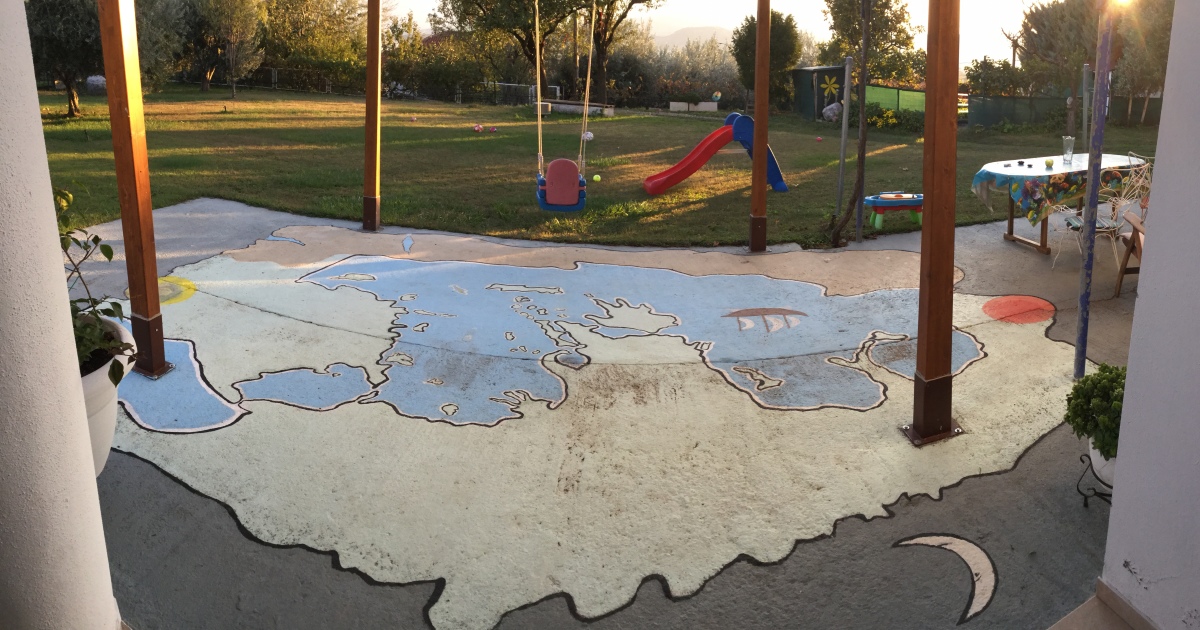
There are two kinds of people in this world: people who look at an empty courtyard and see a place for a chair, and people who look at it and think, “This needs a continent.” I am, proudly and perhaps dangerously, the second kind.
Painting a huge map on my courtyard started as a casual home improvement idea and quickly became a full-blown outdoor mural project involving chalk lines, concrete paint, weather checks, sore knees, and at least one moment where Europe looked suspiciously like a spilled pancake. But in the end, the courtyard became more than a painted surface. It became a conversation starter, an outdoor classroom, a geography game board, and a daily reminder that even plain concrete can have a passport.
This article walks through the process, lessons, mistakes, and surprisingly joyful chaos of creating a large courtyard map. Whether you are planning a world map mural, a U.S. map, a fantasy map, or a backyard geography project for kids, the same basic rules apply: plan carefully, prep the surface like your future happiness depends on it, choose durable materials, and accept that islands are tiny little troublemakers.
Why Paint A Huge Map On A Courtyard?
A courtyard map is part art project, part educational tool, and part “my neighbors now think I own a small airport.” Unlike a framed map inside the house, a painted outdoor map becomes part of the landscape. Children can walk across countries, adults can argue about where to place labels, and guests suddenly remember they are “pretty sure” they once knew where Madagascar was.
The appeal is simple: maps invite curiosity. A good map has structure, direction, scale, symbols, and a story. When painted on a courtyard, those elements become physical. North is not just printed at the top of a page; it points across your yard. The equator is not just a line in a textbook; it runs beneath your shoes. A legend, compass rose, and grid can turn a decorative mural into a playful learning space.
For families, a courtyard map can help kids learn continents, oceans, states, countries, capitals, latitude, longitude, and basic navigation. For design lovers, it adds personality to an outdoor area without requiring expensive landscaping. For DIY enthusiasts, it offers the delicious combination of ambition and mild regret that fuels all memorable weekend projects.
Choosing The Right Map Design
The first major decision is what kind of map to paint. A world map is dramatic and instantly recognizable, but it also comes with complicated coastlines, tiny islands, and the eternal problem of map projection. A United States map is easier to label and more useful for state geography. A local neighborhood map can feel personal and charming. A fantasy map, meanwhile, frees you from accuracy, which is wonderful if your artistic style tends to create continents that look like potatoes wearing hats.
World Map, Country Map, Or Custom Map?
A world map works beautifully on a large rectangular courtyard because it fills space well and gives you a natural balance between land and ocean. A U.S. map is excellent for schools, homeschool patios, or families who want to teach state names and regions. A custom map of your town, favorite travel route, family ancestry, or dream destinations can be more meaningful than a standard design.
Before sketching anything on concrete, choose a reference map from a reliable source. Public map collections, educational geography resources, and government mapping platforms are useful starting points because they help you avoid accidental errors. A courtyard mural does not need surveyor-level precision, but it should not put Florida in the Great Lakes unless you are creating modern art and enjoy angry comments from geography teachers.
Map Elements That Make The Design Feel Real
A map becomes easier to understand when it includes classic elements such as a title, compass rose, scale, legend, labels, and grid lines. The title tells viewers what they are looking at. The compass rose gives direction. The scale explains distance. The legend defines symbols and colors. Grid lines, including latitude and longitude, add structure and make the map feel more authentic.
For my courtyard, I used soft grid lines so the map did not become visually crowded. The compass rose went in one corner like a proud little captain. The legend explained the colors for land, water, mountains, major routes, and “places I painted slightly wrong but decided to call stylistic.”
Planning The Courtyard Layout
Large outdoor murals succeed or fail before the first brush touches the ground. The planning stage matters because concrete is not forgiving. Paper allows erasers. Concrete allows sighing.
Start by measuring the courtyard. Record the length, width, major cracks, drains, slopes, steps, doors, furniture placement, and areas that receive heavy foot traffic. If the courtyard has a drain, avoid painting important labels directly around it. If water collects in one corner, do not put your most delicate detail there unless you enjoy watching tiny islands disappear after storms.
Using A Grid To Scale The Map
The easiest way to enlarge a map is to use the grid method. Draw a grid over your reference image, then create a larger matching grid on the courtyard with chalk, painter’s tape, or string lines. Each small square on paper becomes a larger square on concrete. Instead of trying to draw an entire continent at once, you only copy one square at a time.
This method keeps the design proportional and prevents the classic beginner mistake of starting with a confident North America and ending with an Asia that needs its own parking permit. A grid also helps when multiple people are painting together because each person can work on a section without drifting wildly out of scale.
Testing The View From Different Angles
Because a courtyard map is viewed from above, from doorways, from windows, and while walking, it should look good from several angles. Stand at the entrance and imagine the first impression. Look from the second floor if you have one. Check whether furniture will cover important areas. A table leg on the equator is survivable; a grill on Greenland is a tragedy.
Preparing The Concrete Surface
Concrete painting is not just painting. It is cleaning, repairing, drying, priming, and then painting. The glamorous part arrives late, usually after your knees have filed a formal complaint.
Outdoor concrete needs serious preparation because paint must bond to a surface that faces sun, moisture, dirt, temperature changes, and foot traffic. Skipping prep may save a day, but it can cost the whole project when paint begins peeling like a bad sunburn.
Clean First, Paint Later
Sweep away leaves, dust, and loose debris. Wash the courtyard thoroughly with a concrete cleaner or mild detergent, depending on the condition of the surface. Remove grease, mildew, old flaking paint, and anything that could block adhesion. A pressure washer can help, but the surface must dry completely before painting.
Concrete holds moisture, so patience matters. If the courtyard looks dry on top but still feels cool and damp, wait longer. Painting over trapped moisture is one of the fastest ways to create bubbles, peeling, and language unfit for a family-friendly DIY blog.
Repair Cracks And Rough Spots
Small cracks can be filled with a concrete repair compound. Larger damaged areas may need patching or professional advice. A map mural does not require a perfect slab, but it does need a stable one. Cracks can be incorporated creatively as rivers, borders, mountain ranges, or “historic trade routes” if you are feeling optimistic.
After repairs dry, lightly sand or smooth rough patches if needed. The goal is not to create a polished indoor floor; the goal is to make a clean, sound surface that accepts primer and paint evenly.
Choosing Paint For An Outdoor Map Mural
For a courtyard map, ordinary wall paint is not the best choice. Outdoor horizontal surfaces take more abuse than walls because people walk on them, water sits on them, and sunlight bakes them. Look for concrete-specific porch and patio paint, exterior floor paint, masonry paint rated for horizontal surfaces, or outdoor acrylic mural products compatible with concrete.
Acrylic porch and patio paints are popular because they are easier to apply than many industrial coatings and come in a wide range of colors. Epoxy and garage-floor coatings can be tougher, but they may have stricter preparation rules and less artistic flexibility. If the courtyard gets heavy use, strong sunlight, or frequent rain, durability should matter more than finding the exact shade of “romantic ocean blue.”
Color Palette Tips
Keep the palette practical. A huge map can become visually noisy if every country or state gets a different color. For a clean courtyard mural, use one or two water tones, two or three land tones, and accent colors for borders, labels, mountains, rivers, and special markers.
High-contrast colors help labels stand out, but extremely dark surfaces can become hot in direct sunlight. Light colors may show dirt faster. A mid-tone ocean with warm land colors often works well outdoors. It feels cheerful without turning the courtyard into a giant board game from 1987, though honestly, that has its own charm.
Do Not Forget Slip Resistance
If people will walk on the map, especially after rain, consider a slip-resistant additive or textured floor coating. A beautiful courtyard is less impressive if guests must cross it like penguins on ice. Safety matters most near steps, pool areas, wet zones, and entryways.
Drawing The Map On Concrete
Once the surface is clean, repaired, dry, and ready, transfer the map. Use chalk for temporary lines because it can be adjusted. Painter’s tape helps with straight borders, scale bars, and clean rectangular areas. For curved coastlines, flexible chalk lines and freehand sketching work better than tape.
I recommend sketching the largest shapes first: continents, oceans, state outlines, or major landmasses. Then add secondary details such as rivers, mountain ranges, islands, labels, routes, and symbols. Do not start with tiny details. If you begin by lovingly painting the Aleutian Islands before placing the Pacific Ocean, you are emotionally ready but strategically doomed.
Work From Big To Small
Paint the background first, usually the ocean or base color. Then add major land shapes. After that, add borders, details, labels, and decorative elements. This order keeps the design cleaner and reduces the number of times you must repaint edges.
Thin coats usually perform better than one thick coat. Let each layer dry according to the paint manufacturer’s directions. Outdoor conditions affect drying time, so humidity, temperature, shade, and airflow all matter. A coat that dries quickly in warm, dry weather may stay tacky much longer on a cool, damp day.
Labeling Without Losing Your Mind
Labels can make or break the map. Too many labels create clutter. Too few make the map feel unfinished. Choose a readable lettering style and keep it consistent. Use stencils if you want crisp text, or hand-letter labels if you prefer a relaxed mural look.
For a world map, label the continents and oceans first. Add selected countries, major cities, mountain ranges, or travel markers only if space allows. For a U.S. map, state abbreviations may work better than full state names. For a fantasy map, label everything dramatically. “The Marshes of Mild Inconvenience” deserves proper typography.
Adding Educational And Decorative Details
The best part of painting a huge courtyard map is adding details that make people stop and explore. A compass rose gives the mural a classic cartographic look. A scale bar makes it feel official. Latitude and longitude lines add educational value. Small icons can mark family trips, favorite parks, birthplaces, dream destinations, or historical landmarks.
You can also create interactive features. Paint stepping stones across oceans to represent travel routes. Add quiz prompts along the border: “Find the equator,” “Stand on the Pacific Ocean,” or “Hop from state to state without falling into Canada.” Children love these details, and adults pretend they are only participating to encourage the children. We know the truth.
Using Texture And Symbols
Mountains can be shown with small triangle symbols or shaded ridges. Rivers can be thin blue lines. Cities can be dots or stars. National parks, family vacation spots, or “places we want to visit next” can have custom icons. A simple legend keeps these symbols understandable.
For extra depth, use subtle shading around coastlines or a lighter highlight on one side of landmasses. Outdoor murals benefit from bold, readable design because tiny details fade visually when viewed from standing height.
Sealing And Protecting The Finished Map
After the painting is complete, the map needs protection. A compatible clear exterior concrete sealer can help guard against moisture, abrasion, dirt, fading, and everyday foot traffic. Always check that the sealer works with the type of paint used. Some sealers can change the sheen or slightly deepen colors, so test a small area first if possible.
Apply sealer in thin, even coats and follow the product instructions for drying and curing. Many floor coatings need time before normal use, and full cure can take much longer than touch-dry time. This is the hard part because once the map is done, everyone wants to walk on it immediately. Resist. Put up chairs, caution tape, a polite sign, or a cardboard dragon. Whatever works.
Maintenance Tips
Clean the map gently with a mild, non-abrasive cleaner after the coating has fully cured. Avoid harsh scrubbing tools that can scratch the surface. Reseal as needed based on wear, weather, and the type of coating. Touch up labels and high-traffic areas when they begin to fade.
A courtyard map is not a museum object. It will age. It will collect footprints, leaves, chalk dust, and maybe barbecue sauce. That is part of its charm. The goal is not eternal perfection; the goal is a durable, useful, joyful outdoor feature that can be refreshed when needed.
Common Mistakes To Avoid
The biggest mistake is rushing the preparation. Paint needs a clean, dry, stable surface. Another mistake is choosing paint that is not designed for outdoor concrete floors. A third mistake is painting in poor weather. Rain, high humidity, extreme heat, or cold temperatures can affect adhesion and drying.
Design mistakes happen too. Overcrowding the map with labels can make it hard to read. Using too many colors can make the surface look chaotic. Ignoring scale can create funny results, like a tiny South America and a suspiciously muscular Iceland. Some distortion is normal, but planning keeps it under control.
Finally, do not forget how people will use the space. If chairs scrape across the map daily, add furniture pads. If kids run across it after rain, consider texture. If the sun is intense, choose fade-resistant paints and expect occasional touch-ups. Outdoor art is a relationship, not a one-time event.
What The Courtyard Map Changed
Before the project, the courtyard was just a flat space between walls. Useful, yes. Inspiring, not exactly. After the map, the space felt alive. People paused when they entered. Kids asked questions. Guests pointed to places they had visited. Someone stood on Italy and announced they wanted pasta, which felt geographically appropriate.
The map turned an ordinary surface into a shared experience. It made geography physical, playful, and social. It also made the courtyard feel bigger, as if the space had expanded beyond its square footage. That is the quiet magic of maps: they make us think about distance, direction, memory, and possibility.
Experiences From Painting A Huge Map On My Courtyard
The first thing I learned is that confidence arrives early and accuracy arrives late. On the first morning, I stood in the courtyard with my reference map, chalk, tape measure, and a heroic amount of optimism. I thought the hardest part would be choosing colors. Ten minutes later, I was crouched over a chalk grid wondering why my coastline looked like a melted zipper.
Scaling the map was the most humbling part. On paper, everything looked neat. On concrete, every curve became a journey. A tiny wiggle on the reference image became a two-foot bend on the courtyard. Islands were especially dramatic. Some were so small that painting them felt like performing surgery with a house brush. I eventually accepted that not every island needed to appear. This was a courtyard mural, not a maritime navigation system.
The second lesson was that surface preparation is where the project is really won. Cleaning the concrete was not glamorous, but it made the paint behave. Areas I scrubbed carefully looked smoother and held color better. Spots I rushed reminded me later with uneven texture. Concrete is honest that way. It keeps receipts.
Weather also became part of the story. I checked the forecast more often than a picnic planner with trust issues. Painting outdoors means working with the sun, wind, humidity, and surprise leaves that appear from nowhere and land directly in wet paint like tiny botanical vandals. I learned to paint early enough to avoid the hottest part of the day and to stop before evening moisture settled in.
The most enjoyable moments came when the design started becoming recognizable. At first, the courtyard looked like a crime scene made of chalk lines. Then the ocean went down. Then the land shapes appeared. Suddenly people could identify continents, oceans, and familiar outlines. The project shifted from “Are you sure about this?” to “Wait, this is actually cool.” That is a very satisfying sentence to hear when your hands are covered in blue paint.
Adding personal markers made the map feel less like a school diagram and more like a family story. I painted small stars for places we had visited, tiny dots for dream destinations, and a route line for a road trip that everyone remembers differently depending on who was in charge of snacks. Those details gave the map warmth. It was no longer just geography; it was memory.
There were mistakes, of course. A label went crooked. A border line needed repainting. One section dried slightly darker because clouds rolled in at the wrong time. But the funny thing about a large outdoor mural is that small flaws disappear when the whole design comes together. Nobody walks into the courtyard and says, “That coastline has a questionable curve.” They say, “You painted a giant map?” And then they smile.
That reaction is the best part. The courtyard map makes people curious. Children hop from country to country. Adults tell travel stories. Friends ask how long it took, then immediately ask whether I would do it again. The honest answer is yes, but with better knee pads, more snacks, and a stricter policy regarding tiny islands.
Conclusion
Painting a huge map on my courtyard was more than a DIY painting project. It was a lesson in planning, patience, geography, outdoor design, and the emotional strength required to draw coastlines on concrete. With the right preparation, concrete-safe paint, thoughtful map design, and a protective sealer, a plain courtyard can become a durable, beautiful, and educational outdoor mural.
The project works because it blends creativity with usefulness. It gives children a reason to explore geography, gives adults a reason to talk about travel, and gives the courtyard a personality that no plain gray slab can match. It is bold, playful, practical, and just unusual enough to make visitors stop in their tracks.
If you have an empty courtyard, patio, schoolyard, or outdoor concrete area, a painted map can transform it into something memorable. Start with a good reference, scale it carefully, prep the surface properly, and protect the finished mural. And when one tiny island refuses to cooperate, remember: cartographers have been arguing with coastlines for centuries. You are in excellent company.
Note: This article is written for web publication and synthesizes practical guidance from reputable U.S. resources on map education, outdoor murals, concrete coatings, patio painting, and surface protection without inserting source links.