Every few years, the technology world gathers around a fresh bonfire and tosses in a business model. This year, the unlucky marshmallow is SaaS. “Is SaaS dead?” has become the kind of question that appears in boardrooms, investor memos, LinkedIn debates, and late-night founder panic spirals. The short answer is no. The more useful answer is: old SaaS is being aggressively renovated, and nobody should stand under the scaffolding without a helmet.
Software as a Service is not disappearing. Companies still need payroll systems, customer databases, accounting platforms, collaboration tools, cybersecurity dashboards, analytics suites, and industry-specific systems that keep the lights on. What is changing is how buyers define value. The old promise was simple: pay a monthly subscription, give every employee a login, and enjoy modern software without running servers in a broom closet. That model worked beautifully for two decades. But artificial intelligence, automation, tighter budgets, and tool fatigue are forcing SaaS vendors to prove they do more than add another tab to someone’s already crowded browser.
The real story is not the death of SaaS. It is the death of lazy SaaS: generic dashboards, thin workflow wrappers, copycat tools, confusing pricing pages, and products that require ten meetings before anyone remembers why the company bought them. SaaS is entering its “show me the outcome” era. And frankly, it was overdue.
What SaaS Actually Means Today
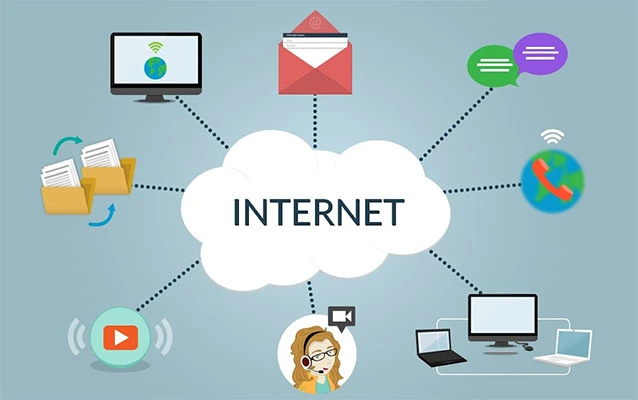
SaaS, or Software as a Service, refers to cloud-based software delivered through a subscription model. Instead of installing software locally, customers access applications through a browser or connected device. Salesforce, Microsoft 365, Workday, Zoom, ServiceNow, HubSpot, Shopify, Slack, and countless vertical software platforms helped turn SaaS into the default operating system for modern business.
For customers, the appeal was obvious: faster deployment, lower upfront cost, automatic updates, easier remote access, and less technical maintenance. For vendors, SaaS created recurring revenue, better customer data, predictable expansion opportunities, and higher lifetime value. Wall Street loved it. Startups copied it. Procurement departments eventually complained about it, but only after buying 147 different tools with overlapping features.
Today, SaaS is no longer just “software in the cloud.” It is becoming the workflow layer of business. The strongest SaaS products are not simply places where employees click buttons; they are systems of record, automation engines, data platforms, AI interfaces, and decision-support tools. The weakest ones are still trying to charge $49 per user per month for a feature that an AI assistant can now reproduce before lunch.
Why People Think SaaS Is Dead
AI Agents Are Challenging the Interface
The biggest reason people are asking whether SaaS is dead is the rise of AI agents. Traditional SaaS asks humans to log in, navigate menus, fill fields, move tickets, update records, and generate reports. Agentic AI promises to do more of that work automatically. Instead of clicking through a CRM, a sales manager may ask an AI assistant to summarize pipeline risk, draft follow-up emails, update deal stages, and recommend the next best action.
That sounds threatening because many SaaS tools were designed around human labor. If AI can perform the workflow directly, why pay for a seat for every person? Why should a company buy five disconnected applications when one intelligent system can coordinate the process?
This is where the “SaaS is dead” argument becomes tempting. AI agents may reduce the importance of the classic software interface. They may also weaken the per-seat pricing model, especially when fewer humans need daily access to a tool. But that does not mean SaaS disappears. It means SaaS must become more intelligent, more integrated, and more accountable for results.
Customers Are Tired of SaaS Sprawl
Another reason SaaS is under pressure is simple exhaustion. Many companies now have too many subscriptions, too many logins, too many dashboards, and too many vendors promising “one source of truth” while creating five new sources of confusion. SaaS sprawl is the digital version of buying organizers for a messy closet and somehow ending up with a messier closet.
Finance teams are reviewing contracts more carefully. CIOs are consolidating vendors. Department leaders are asking whether tools are actually used. In a high-growth market, companies often bought software quickly to solve immediate problems. In a more efficiency-focused market, every renewal has to defend itself.
This hurts weak SaaS products. It helps strong platforms. Buyers are not trying to eliminate software; they are trying to eliminate waste. Products that sit close to revenue, compliance, operations, customer experience, or core data have a much better chance of surviving than “nice-to-have” tools with unclear ROI.
Per-Seat Pricing Is Under Attack
For years, SaaS pricing was built around users. More employees meant more seats, and more seats meant more revenue. AI complicates that model. If one employee with AI can do the work of three, should the company still pay for three seats? If an AI agent completes thousands of support tasks, should pricing be based on human users, completed resolutions, usage volume, or business outcomes?
This pricing shift is already underway. Companies are experimenting with consumption pricing, workflow-based pricing, credit systems, automation-based pricing, and outcome-linked models. The future of SaaS pricing will likely be more hybrid. Some products will still charge by seat because human access matters. Others will charge by usage, processed data, completed tasks, managed assets, or generated value.
Why SaaS Is Not Dead
Enterprise Software Is Deeply Embedded
Anyone declaring SaaS dead should spend a week inside a large company’s operations department. Core software is not a decorative plant. It is connected to contracts, customer records, security permissions, financial reporting, employee data, compliance workflows, audit trails, and executive dashboards. Replacing it is not like switching music apps. It is more like replacing the plumbing while the building is full of people drinking coffee.
Systems such as ERP, CRM, HCM, IT service management, finance, healthcare records, and supply chain platforms are deeply embedded. They contain years of configuration, integrations, permissions, historical data, and process knowledge. AI agents need these systems because they provide context, structure, and reliable data. Without that foundation, an agent is just a very confident intern wandering through the company with a clipboard.
The best SaaS platforms are becoming the “brain” and memory layer for AI-enabled businesses. They store the information, enforce the rules, and provide the workflow boundaries that AI needs to act safely. That gives durable SaaS companies an advantage, especially when they own trusted data and mission-critical processes.
The Market Is Still Growing
The SaaS market is not behaving like a dead market. Cloud spending remains large, software budgets continue to grow, and businesses are still investing in digital systems. What has changed is the standard for growth. Investors no longer reward every subscription company as if recurring revenue automatically equals magic. Buyers no longer tolerate software that creates more work than it removes.
This is healthy. A mature market should separate essential platforms from glorified feature bundles. The winners will be SaaS companies that embed AI deeply, connect to important workflows, improve measurable outcomes, and help customers reduce complexity. The losers will be vendors selling generic functionality with weak differentiation and a pricing model that feels like a tollbooth on the information highway.
AI Needs Software More Than Software Fears AI
AI agents sound powerful, but they still need somewhere to work. They need data access, permission controls, APIs, workflow rules, event logs, user identity, compliance policies, and human approval paths. SaaS platforms provide much of that infrastructure. In many cases, AI does not replace SaaS; it changes how users interact with SaaS.
Think of the shift from command-line tools to graphical interfaces, or from desktop software to cloud apps. The interface changed, but the need for software did not disappear. AI may become the new interface for many business tasks. Employees may ask questions instead of clicking menus. Agents may complete processes instead of merely displaying forms. But underneath, companies still need reliable systems to store, secure, and execute the work.
What Kind of SaaS Is in Trouble?
Horizontal Point Solutions With Weak Moats
The most vulnerable SaaS companies are horizontal point solutions that solve narrow problems, have low switching costs, and lack proprietary data. If a product is basically “a dashboard plus notifications,” it is in danger. If an AI assistant can perform the same task inside a broader platform, the standalone tool will struggle to justify its contract.
Examples include basic content helpers, lightweight reporting tools, simple workflow trackers, generic meeting note apps, and narrow productivity utilities. Some will survive by becoming excellent at a specific job. Others will be acquired, bundled, or quietly forgotten like that one project management tool your team used for three months in 2021.
Products That Do Not Own the Workflow
SaaS products that sit outside the main flow of work are also at risk. If users must leave their normal environment, manually transfer data, and update records in multiple places, adoption suffers. AI raises the bar because it promises fewer steps. A tool that creates more tabs, more training, and more manual cleanup will feel outdated fast.
Winning SaaS products will either own the workflow or integrate so deeply that they become invisible infrastructure. The software that survives will not ask, “How do we get more daily active users?” It will ask, “How do we remove unnecessary work while improving the business result?”
What Kind of SaaS Will Thrive?
Vertical SaaS With Industry Expertise
Vertical SaaS is one of the strongest categories in the AI era. Healthcare, construction, legal, insurance, logistics, manufacturing, education, real estate, and financial services all have complex rules, specialized data, compliance needs, and industry-specific workflows. Generic AI tools may impress in a demo, but regulated industries usually require more than a clever chatbot with good posture.
Vertical SaaS vendors can build deep domain knowledge into their products. They understand the forms, approvals, exceptions, terminology, and risks of a particular market. That gives them a defensible position. AI can enhance these platforms by automating documentation, summarizing records, predicting risk, routing work, and improving customer service. But the foundation is still specialized software.
Systems of Record and Systems of Action
Systems of record are platforms where critical business data lives. Systems of action are platforms where work actually gets done. The future belongs to SaaS companies that combine both. A CRM that stores customer data is useful. A CRM that recommends actions, drafts communications, updates records, forecasts revenue, and triggers workflows is much more valuable.
The same pattern applies across HR, finance, support, IT, marketing, and operations. SaaS products that move from passive storage to intelligent execution will remain central. They will not merely display information; they will help teams make decisions and complete work.
AI-Native SaaS and Services-as-Software
A major shift is the rise of “services-as-software.” Traditional SaaS gave people tools to do work. AI-native companies increasingly promise to do parts of the work itself. Instead of selling customer support software, a vendor may sell resolved support tickets. Instead of selling sales engagement tools, it may sell qualified meetings. Instead of selling legal workflow software, it may sell completed document review.
This does not kill SaaS. It expands the category. The boundary between software and service is blurring. Customers care less about whether a solution is called SaaS, AI software, automation, managed service, or digital labor. They care whether it solves the problem reliably, securely, and economically.
How SaaS Companies Should Adapt
Build AI Into the Core, Not as Confetti
Adding an AI button is not a strategy. Customers can smell cosmetic AI from across the demo room. To compete, SaaS companies need to embed AI into core workflows. That means using AI to reduce manual steps, improve decisions, automate repetitive work, personalize experiences, and create measurable business value.
The strongest products will redesign workflows around AI rather than sprinkling generative features on top of old screens. A support platform should not merely summarize a ticket; it should classify the issue, suggest the fix, check policy, draft the response, update the knowledge base, and escalate when confidence is low. A finance tool should not only generate a report; it should flag anomalies, explain drivers, recommend action, and preserve an audit trail.
Prove ROI With Better Metrics
In the next phase of SaaS, vague value claims will not be enough. Buyers want proof. They want to know how many hours were saved, how many cases were resolved, how much churn was reduced, how many errors were prevented, and how quickly teams reached outcomes.
This means SaaS vendors need stronger analytics around value realization. Customer success teams must evolve from “Are you using the product?” to “Are you getting the outcome you bought?” Usage still matters, but business impact matters more. A product with modest login frequency but huge operational value may be far healthier than a product everyone opens daily because it keeps creating problems.
Rethink Pricing Before Customers Force the Issue
Per-seat pricing will not vanish overnight, but it will become less universal. SaaS companies should test pricing models that align with customer value. That may include usage tiers, automation credits, transaction fees, performance-based components, or pricing tied to managed workflows.
The danger is charging customers more because AI costs more to run while giving them no clear value story. The opportunity is to charge based on outcomes customers already care about. If a product helps resolve more support cases, close more deals, reduce compliance risk, or accelerate hiring, the pricing model should reflect that value in a transparent way.
What Buyers Should Do Now
Businesses should not respond to the “SaaS is dead” debate by canceling everything and handing the company to a chatbot named Kevin. A smarter approach is to audit the software stack. Identify which tools are mission-critical, which are redundant, which are underused, and which are becoming more valuable because of AI.
Buyers should ask vendors direct questions: What is your AI roadmap? How do your agents access data? What guardrails prevent mistakes? Can we measure ROI? How does pricing change as automation increases? What integrations matter most? How do you protect customer data? If the vendor answers every question with “We use AI to unlock productivity,” keep asking. Buzzwords are not a security policy.
Companies should also prioritize data quality. AI performs poorly when business data is fragmented, outdated, or trapped in disconnected tools. The winners in the next era will not simply buy more AI. They will clean up systems, standardize workflows, improve governance, and decide where automation truly belongs.
Practical Experiences: What the SaaS Shift Feels Like in the Real World
For founders, the question “Is SaaS dead?” feels less like a philosophical debate and more like a Monday morning sales call where the buyer asks, “Can AI do this cheaper?” That question changes everything. A few years ago, a founder could win attention by offering a cleaner interface, faster onboarding, or a clever workflow improvement. Today, the buyer wants to know whether the product can remove work, not just organize it. The experience is humbling. It forces teams to stop polishing dashboards and start proving outcomes.
For SaaS customers, the shift often begins with a messy spreadsheet of subscriptions. Someone in finance notices that three departments are paying for similar tools. Someone in operations admits nobody has logged into one platform since the last offsite. Someone in IT points out that every tool wants admin access, customer data, and “just a quick integration.” Suddenly, SaaS feels less like innovation and more like a buffet where everyone grabbed too many plates. The experience is not anti-software. It is anti-waste.
For employees, AI-enabled SaaS can feel both helpful and awkward. A support agent may love automatic ticket summaries but distrust suggested responses until the system proves itself. A salesperson may appreciate AI-generated account research but still want control over the final message. A finance manager may welcome anomaly detection but demand clear explanations before acting. In practice, adoption depends on trust. People do not reject automation because they enjoy repetitive work. They reject automation when it creates mystery, risk, or cleanup duty.
For executives, the experience is more strategic. The old SaaS buying question was, “Which tool helps this team work better?” The new question is, “Which platform helps the business operate differently?” That is a much bigger decision. It involves data architecture, vendor consolidation, compliance, employee training, workflow redesign, and budget reallocation. Executives are learning that AI does not magically fix broken processes. It often exposes them. If approvals are chaotic, data is messy, or ownership is unclear, AI will not create a miracle. It will create a faster mess, which is impressive only in the way a raccoon driving a forklift is impressive.
For marketers and content teams, the SaaS transition is especially visible. Tools that once helped schedule, draft, optimize, and report are being bundled into larger AI platforms. Teams are asking whether they need separate apps for keyword research, social posting, email testing, analytics, and content briefs. The answer may still be yes for specialized work, but each tool must earn its place. The best SaaS products become creative partners and performance engines. The weaker ones become monthly charges people discover during budget season and cancel with surprising emotional relief.
The most important experience across all groups is this: software value is becoming more tangible. SaaS used to win by promising access. Modern SaaS must win by delivering results. That is a better deal for customers and a tougher challenge for vendors. It rewards products that are deeply useful, responsibly automated, and connected to real business outcomes. It punishes shallow tools, vague promises, and subscription models built on inertia. In other words, SaaS is not dead. It is being forced to grow up, wear a tailored suit, and bring receipts.
Conclusion: SaaS Is Not Dead, But the Old Playbook Is
So, is SaaS dead? No. But the easy version of SaaS is fading. The market no longer rewards software simply because it lives in the cloud and charges monthly. Customers expect intelligence, integration, automation, security, measurable ROI, and pricing that matches value. AI agents are not eliminating SaaS; they are pressuring SaaS to become more useful.
The future of SaaS will be more vertical, more outcome-driven, more AI-native, and more deeply connected to business workflows. Some products will disappear. Some will be acquired. Some will become invisible infrastructure. Others will become smarter platforms that coordinate people, data, and digital workers. The winners will not ask customers to do more clicking. They will help customers do better work.
The obituary for SaaS is premature. The category is not dead; it is molting. And like anything molting, it may look a little alarming for a while. But underneath the old shell is a faster, smarter, more demanding software economy. SaaS survived the cloud transition because it made software easier to buy and use. It will survive the AI transition if it makes work easier to complete and value easier to prove.
Note: This article is written as an original SEO-ready synthesis based on current public SaaS, cloud, enterprise AI, and software market information. It contains no inserted source links or content reference markers.