Every quarter begins with a familiar sales-team ritual: fresh goals, fresh dashboards, fresh optimism, and at least one spreadsheet that looks like it survived a small natural disaster. The pressure to “get more leads” usually shows up fast. More ads. More forms. More webinars. More caffeine. But before you chase a shiny new lead source, there is a quieter question worth asking: what about the leads you already have?
Your CRM may be sitting on warm prospects, half-finished conversations, missed follow-ups, old demo requests, sleepy newsletter subscribers, and “not right now” contacts who might actually be “yes, now” with the right message. Improving lead performance this quarter does not always require a bigger budget. Sometimes it requires better timing, cleaner data, sharper segmentation, and a less robotic follow-up plan. In other words, fewer fireworks, more flashlight.
This guide shares 10 simple tips to improve lead management, lead nurturing, sales follow-up, and conversion rates using the leads already in your pipeline. No magic wand required. A decent CRM, a clear process, and a team willing to stop treating every lead like a mystery burrito will do just fine.
1. Clean Up Your CRM Before You Add More Leads
A messy CRM is like a messy refrigerator: technically, there is food in there, but nobody wants to investigate too deeply. Before launching another lead generation campaign, audit what you already have. Look for duplicate contacts, missing job titles, outdated company names, old lifecycle stages, bounced emails, inactive deals, and leads with no next step.
Start with a simple quarterly cleanup sprint. Assign owners to review open leads, remove obvious junk, merge duplicates, and update lead status. Create clear categories such as “new,” “working,” “nurture,” “re-engaged,” “disqualified,” and “customer opportunity.” This makes your sales pipeline easier to read and your marketing automation less likely to send wildly irrelevant messages.
Example
If a lead downloaded a pricing guide six months ago, opened three emails, and then disappeared, do not leave them floating in CRM outer space. Move them into a nurture segment with a useful comparison guide or a “still evaluating?” check-in. The goal is not to make the database look pretty. The goal is to make it usable.
2. Re-Segment Leads by Intent, Not Just Source
Many teams segment leads by where they came from: webinar, paid search, organic search, referral, trade show, or content download. That is helpful, but it is not enough. Source tells you how someone arrived. Intent tells you what they might need next.
Group leads by behavior and buying signals. Did they visit a pricing page? Request a demo? Download a beginner guide? Attend a product webinar? Compare features? Revisit your site after a long break? These signals help you separate casual researchers from serious buyers.
For example, someone who downloaded a broad educational checklist may need nurturing, while someone who viewed implementation pages twice this week may need a sales conversation. Treating both people the same is how good leads end up receiving emails that say, “Have you heard of our company?” when they are already one step away from asking for a contract.
3. Speed Up Follow-Up on High-Intent Leads
Speed matters. When someone fills out a demo form, asks for pricing, replies to a sales email, or returns to your website after weeks of silence, the clock starts ticking. A lead’s interest is warmest when their problem is actively on their mind. Wait too long, and your competitor may become the “quick, helpful one.” Nobody wants to lose a deal because the rival team had faster fingers.
Create a response-time rule for high-intent actions. For example, demo requests should trigger a sales alert immediately. Pricing-page visits from target accounts should create a same-day task. Replies from dormant leads should get priority over cold prospecting. This does not mean reps should sprint through the office every time someone clicks a link. It means your system should clearly show which leads deserve urgent attention.
Practical Move
Build a “hot leads this week” dashboard that includes recent demo requests, pricing-page visits, reply activity, and re-engaged contacts. Review it daily. The best leads often do not shout. They tap politely on the window. Your job is to notice.
4. Write Follow-Up Messages That Sound Human
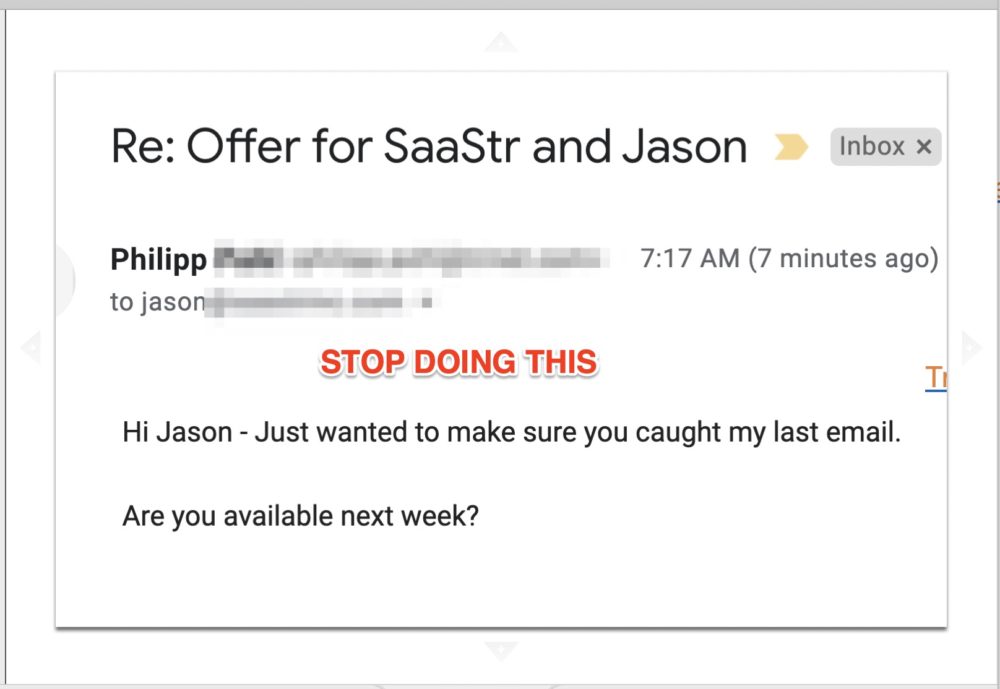
Lead follow-up fails when it sounds like it was assembled by a printer. “Just checking in” is not a strategy. Neither is “bumping this to the top of your inbox,” which mainly confirms that your email has learned how to levitate but not how to help.
Better follow-up should be short, specific, and useful. Mention the lead’s actual behavior or likely problem. Offer one next step. Avoid asking for “15 minutes to connect” before giving a reason worth 15 minutes.
Weak Follow-Up
“Hi, just checking in to see if you had any questions.”
Better Follow-Up
“Hi Jordan, I noticed your team looked at our implementation guide. A common question at this stage is how long setup takes with a small sales team. For most teams under 10 reps, the first useful workflow is live in about two weeks. Would a simple rollout checklist help?”
The second message gives context, answers a likely concern, and offers value without sounding like a sales robot wearing a name tag.
5. Revive “Not Now” Leads With a Reason to Re-Engage
“Not now” does not always mean “never.” It may mean budget was frozen, leadership changed, the timing was awkward, the problem was not painful yet, or the lead had twelve tabs open and a dog chewing a shoe in the background. Business timing is messy.
Review leads marked as “not now,” “nurture,” “closed-lost,” or “future interest.” Look for contacts who had genuine fit but paused because of timing. Then build a re-engagement campaign around a useful reason to return: a new case study, updated pricing model, product improvement, industry benchmark, checklist, calculator, or customer story.
A good reactivation message should acknowledge the previous conversation without guilt-tripping the lead. Try something like: “When we last spoke, timing was the main blocker. Since then, we put together a short guide on how teams solve this before budget planning. Thought it might be useful as Q2 priorities get finalized.”
6. Use Lead Scoring, But Keep It Simple Enough to Trust
Lead scoring can help teams prioritize, but only if the score reflects reality. Some companies create scoring models so complicated they need a decoder ring and a full moon. Start simpler.
Use two basic categories: fit and engagement. Fit includes company size, industry, role, location, budget range, and whether the lead matches your ideal customer profile. Engagement includes page visits, email clicks, form fills, webinar attendance, content downloads, replies, and repeat visits.
A great lead is usually high-fit and high-engagement. A nurture lead may be high-fit but low-engagement. A curious student, competitor, or vendor may be high-engagement but low-fit. Without this distinction, sales reps waste time chasing people who love your content but will never buy. That is flattering, but flattery does not pay the invoice.
7. Give Sales and Marketing One Shared Definition of a Good Lead
Sales and marketing alignment is easy to praise and hard to practice. Marketing may celebrate a campaign that generated 500 leads. Sales may respond, “Great, 497 of them appear to be raccoons with Gmail accounts.” The truth is usually somewhere in the middle.
This quarter, create a shared definition of a qualified lead. Decide what makes a lead sales-ready. Is it company size? Job title? Specific pain point? Recent high-intent behavior? Budget timing? A combination of fit and action?
Then agree on what happens next. Which leads go straight to sales? Which enter nurture? Which need more education? Which should be disqualified? Clear definitions reduce finger-pointing and help both teams improve. Marketing can create better campaigns, and sales can follow up with more confidence.
Simple Alignment Question
Ask both teams: “What five signals make a lead worth immediate sales attention?” If sales and marketing give completely different answers, congratulations. You found the leak.
8. Build a Nurture Path for Leads That Are Interested but Not Ready
Not every lead should be pushed into a sales call right away. Some need education. Some need internal buy-in. Some need proof that your product will not create more problems than it solves. A nurture path keeps these leads engaged without forcing your reps to manually babysit every contact.
Create nurture sequences around buyer questions. Early-stage leads may need educational content: “How to identify the problem,” “Common mistakes,” or “What to compare before buying.” Mid-stage leads may need case studies, ROI examples, product explainers, or implementation guides. Late-stage leads may need pricing support, security information, stakeholder decks, or competitive comparisons.
The best lead nurturing feels like a helpful trail of breadcrumbs, not a marching band in the inbox. Use email, retargeting, webinars, social proof, and sales touches carefully. The goal is to stay relevant until the buyer is ready, not to become the reason they discover the unsubscribe button.
9. Learn From Disqualified and Lost Leads
Disqualified leads are not trash. They are feedback with a frown. Every “bad lead” can teach you something about targeting, messaging, qualification, pricing, product fit, or timing.
Create clear disqualification reasons in your CRM: no budget, too small, wrong industry, student/researcher, duplicate, competitor, no authority, not a fit, timing, geography, or unresponsive. Review these reasons monthly. If many leads are disqualified because they are too small, your ads may be attracting the wrong audience. If leads love the product but disappear at pricing, your value story may need work. If leads are interested but lack authority, you may need content for decision-makers.
Lost leads deserve the same attention. Was the deal lost to a competitor, no decision, budget freeze, missing feature, slow follow-up, or weak business case? Patterns reveal where your process can improve this quarter.
10. Focus on One Quarterly Conversion Goal
Trying to fix everything at once is how teams end up with fourteen dashboards, six new automations, three abandoned spreadsheets, and one very tired revenue leader. Choose one primary conversion goal for the quarter.
Examples include increasing demo-booking rates from existing marketing-qualified leads, improving response time on inbound leads, reactivating closed-lost opportunities, reducing unworked leads, improving email reply rates, or converting more nurture leads into sales conversations.
Once you choose the goal, define the metric, owner, weekly review process, and action plan. If the goal is to reduce unworked leads, measure how many leads have no task, no owner, or no activity after seven days. If the goal is to reactivate old leads, track replies, meetings booked, opportunities created, and revenue influenced.
A focused quarter beats a frantic quarter. Revenue teams do not need more random activity. They need better activity aimed at a clear outcome.
How to Put These Tips Into a Simple 30-Day Plan
If you want better results this quarter, do not turn this article into a 48-slide internal presentation titled “Lead Optimization Transformation Initiative.” That sounds impressive, but your leads may age into retirement while everyone debates the font.
Instead, use a simple 30-day plan. During week one, clean the CRM and identify your highest-value existing lead segments. During week two, define sales-ready criteria and build a hot-lead dashboard. During week three, rewrite follow-up templates and launch a re-engagement campaign for “not now” leads. During week four, review results, collect sales feedback, and adjust scoring or nurture paths.
This approach keeps the work practical. It also creates momentum. By the end of 30 days, your team should know which existing leads are worth immediate attention, which need nurturing, which should be removed, and which process gaps are costing opportunities.
Experience Notes: What Actually Happens When You Work the Leads You Already Have
In real sales environments, the biggest wins often come from boring improvements. That may not sound exciting, but neither does brushing your teeth, and dentists seem pretty committed to the idea. The same is true for lead management. Clean data, consistent follow-up, and relevant messaging rarely produce dramatic movie-trailer moments. They produce better conversations.
One common experience is discovering that the team does not have a lead shortage. It has an attention shortage. A company may complain that paid campaigns are not producing enough pipeline, only to find hundreds of older leads with no owner, no follow-up task, or no recent nurture activity. Once those leads are sorted, a surprising number turn out to be useful. Some were never contacted. Some replied once and slipped through the cracks. Some were marked “bad fit” because a rep could not reach them during a busy week. The CRM was not empty; it was just badly organized.
Another pattern is that small language changes can improve reply quality. When follow-up emails become more specific, leads respond differently. Instead of saying, “Do you want to schedule a call?” a rep might say, “You mentioned improving response time across your sales team. I found two workflow ideas that usually help teams reduce missed leads without adding headcount.” That message gives the prospect a reason to continue. It respects their problem instead of demanding their calendar.
Teams also learn that re-engagement works best when it is tied to timing. A random “checking in” email to a six-month-old lead may be ignored. But a message connected to budget planning, a new quarter, a product update, a regulatory change, a seasonal challenge, or a relevant case study feels more natural. The difference is context. Leads are people with changing priorities, not canned goods with permanent expiration dates.
One of the most useful habits is reviewing lost and disqualified leads together. Sales might say leads are poor quality. Marketing might say sales is too slow. When both teams look at actual examples, the conversation becomes less dramatic and more useful. Maybe the wrong job titles are coming in. Maybe the form asks too little. Maybe sales waits too long after demo requests. Maybe the nurture emails educate beginners but do not help serious buyers build a business case. The fix becomes clearer when everyone studies the same evidence.
The best experience, though, is seeing a team become calmer. When leads are segmented, scored, assigned, and nurtured properly, sales reps stop treating every morning like a scavenger hunt. Marketing stops celebrating volume alone and starts improving quality. Managers stop guessing and start coaching from real pipeline behavior. The quarter may still be challenging, because sales is sales and the universe enjoys plot twists. But the team operates with more control. And sometimes, that is the difference between chasing more leads and finally converting the ones already waiting.
Conclusion: Better Leads May Already Be in Your Pipeline
Doing better this quarter does not have to start with a bigger ad budget or a brand-new lead generation machine. The fastest path may be inside your existing CRM. Clean the data. Segment by intent. Respond faster. Write better follow-ups. Re-engage old opportunities. Use simple lead scoring. Align sales and marketing. Build nurture paths. Study lost leads. Pick one quarterly conversion goal and stay focused.
The leads you already have represent time, money, interest, and opportunity. Some are not ready. Some are not right. But some are waiting for a better next step. Give them one. Your future pipeline may thank you politely, possibly with revenue.