Note: Source links are intentionally omitted for clean web publishing copy.
If your landscape starts looking a little sleepy by midsummer, Rose of Sharon is here to save the day like a garden superhero in a flowered cape. This long-blooming shrub, botanically known as Hibiscus syriacus, brings big, tropical-looking flowers just when many spring and early-summer favorites are clocking out. It is tough, heat-tolerant, adaptable, and surprisingly versatile, which explains why gardeners keep finding new ways to use it in borders, hedges, foundation plantings, and small-space designs.
The best part is that modern Rose of Sharon varieties are not all giant, floppy shrubs that take over the yard and scatter seedlings like confetti. Today’s lineup includes dwarf selections for containers, narrow columnar forms for tight spaces, seedless types for lower maintenance, and elegant doubles that look like they dressed up for a wedding. In other words, there is a Rose of Sharon for almost every landscape style, from cottage garden to polished suburban front walk.
Below, you will find 15 standout Rose of Sharon varieties, along with ideas for where each one fits best. Whether you want a bold privacy screen, a pollinator-friendly specimen, or a compact shrub that behaves itself near the patio, this list can help you choose the right plant without turning your yard into a botanical guessing game.
Why Rose of Sharon Still Earns Its Place in the Landscape
Rose of Sharon is popular for good reason. It blooms from midsummer into fall, thrives in full sun, tolerates heat and humidity, and adapts to many well-drained soils. Once established, it can also handle short dry spells better than many flowering shrubs. That makes it a strong choice for busy gardeners who want color without a daily emotional support session with the hose.
It also offers real design flexibility. Traditional forms are upright and vase-shaped, making them useful as flowering screens or back-of-the-border anchors. Newer compact cultivars fit smaller gardens and containers. Pollinators love many single-flowered varieties, while double and semi-double forms add a more romantic or formal look. One practical note, though: older seed-producing types can self-sow freely, so gardeners who want less cleanup should lean toward sterile or nearly seedless cultivars.
15 Rose of Sharon Varieties Worth Planting
1. Azurri Blue Satin
If you love blue flowers and understand that “true blue” in the plant world can sometimes be a dramatic exaggeration, Azurri Blue Satin is refreshingly honest. This variety is prized for its rich blue blooms and low-seed habit, which makes it easier to manage than older self-sowing forms. It flowers over a long season and works beautifully as a specimen shrub, in mixed borders, or as part of a flowering screen. Pair it with silver foliage or white perennials if you want that cool-toned, polished garden look.
2. Blue Chiffon
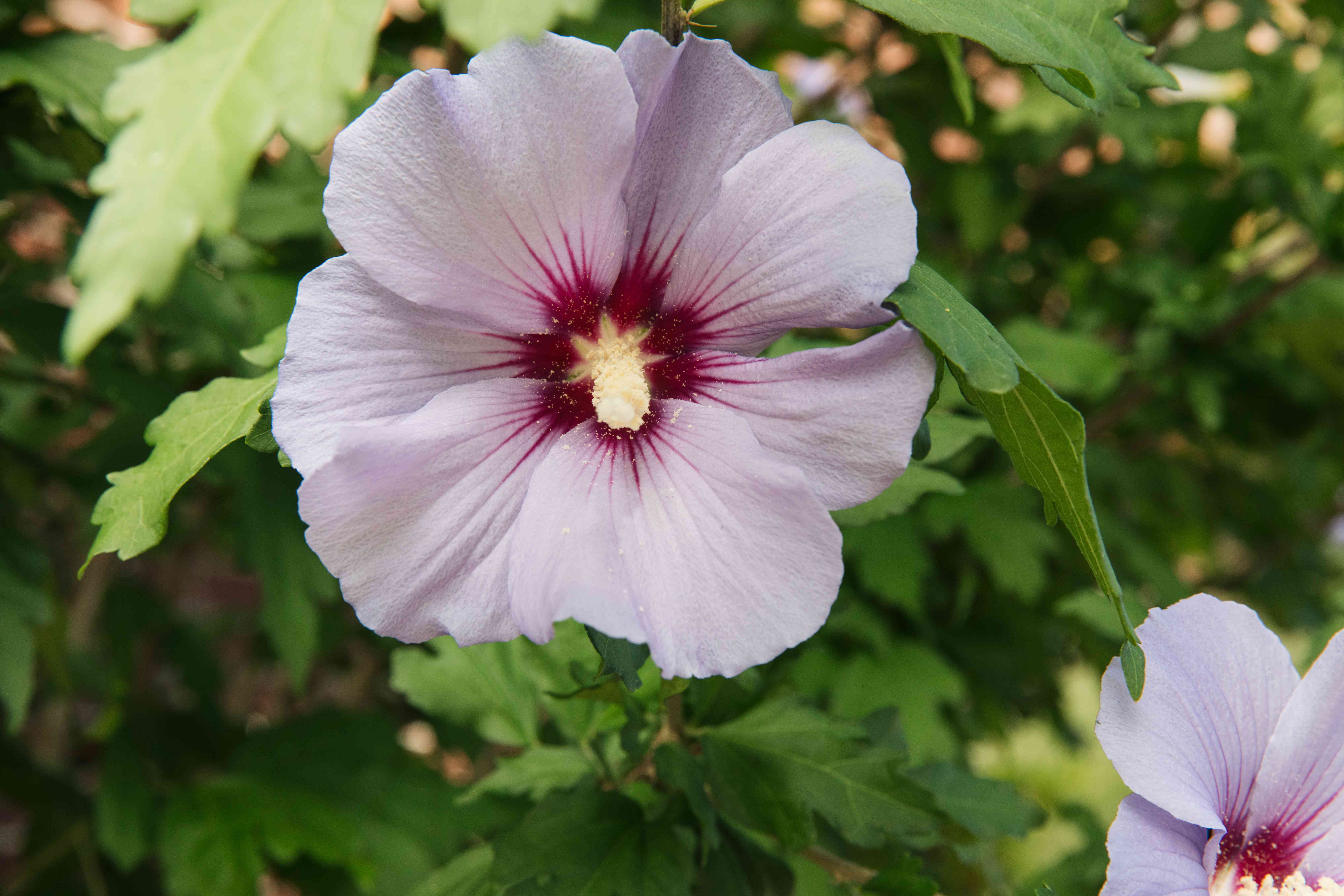
Blue Chiffon is one of the best-known Rose of Sharon cultivars for a reason. Its soft blue-lavender flowers have lacy, fluffy centers that give them an almost anemone-like look. The overall effect is elegant rather than loud, which is perfect if your landscape style leans refined instead of flashy. Use Blue Chiffon where you want late-season color with a graceful habit, such as along a fence, near a patio, or in a mixed shrub border that needs a little midsummer sparkle.
3. White Chiffon
White Chiffon is the clean white shirt of the Rose of Sharon world: crisp, classic, and never out of place. Its extra-large white flowers with ruffled centers look bright in daylight and almost luminous at dusk, making this variety especially effective near seating areas and walkways used in the evening. It also blends easily with nearly any color palette, which means you can tuck it into a cottage garden, a moon garden, or a more formal foundation planting without creating visual chaos.
4. Pink Chiffon
Pink Chiffon offers soft pink blooms with a romantic, airy look that feels right at home in cottage-style landscapes. It has that same graceful Chiffon-series form gardeners like, but with a warmer, sweeter color that plays nicely with coneflowers, salvias, Russian sage, and ornamental grasses. If your goal is “lush but not messy,” Pink Chiffon is a smart pick. It adds charm without looking sugary, and it helps carry the garden from summer into early fall with reliable color.
5. Purple Pillar
Purple Pillar changed how many gardeners think about Rose of Sharon because it grows as a narrow column instead of a broad shrub. That upright habit makes it excellent for tight side yards, narrow beds, entryways, or privacy screens where width is limited. The pale lavender-purple blooms, often marked by a deeper center, line the stems and give the whole plant a vertical ribbon-of-flowers effect. If you have a small landscape but still want height and drama, Purple Pillar is the overachiever you invite first.
6. White Pillar
White Pillar offers the same narrow, space-saving habit as Purple Pillar but with elegant white semi-double flowers. It is especially useful in modern or formal landscapes where clean lines matter. Plant it in pairs to frame an entrance, use it as a narrow hedge, or tuck it beside taller evergreens for contrast. Because it takes up less horizontal room than traditional Rose of Sharon varieties, it is a smart answer for gardeners who want the flower power of a large shrub without sacrificing the entire sidewalk.
7. Sugar Tip
Sugar Tip is the show-off of the group, and honestly, it earns the attention. This cultivar combines double pink flowers with white-and-green variegated foliage, so it looks decorative even when it is not blooming. It also has a reputation for being better behaved than older seed-heavy selections, which makes it especially appealing in residential landscapes. Use Sugar Tip as a focal point, a specimen near the front walk, or in a mixed border where its variegated leaves can brighten darker shrubs nearby. It is basically the shrub equivalent of arriving dressed correctly and bringing dessert.
8. Lil’ Kim
Lil’ Kim is one of the most useful compact Rose of Sharon varieties on the market. It stays much smaller than traditional forms, usually around 3 to 5 feet tall, and bears white flowers with a bold red eye. That compact size makes it ideal for patios, courtyards, containers, and small urban lots where a full-size shrub would be way too much. It also tends to produce fewer unwanted seedlings than many older cultivars, which is good news for gardeners who prefer flowers over volunteer cleanup duty.
9. Lil’ Kim Red
Want the same compact habit but with richer color? Lil’ Kim Red delivers deep rosy-red blooms on a tidy plant that fits easily into smaller landscapes. It is a strong choice for container gardens, foundation beds, and sunny mixed borders that need a pop of bold color late in the season. Because the plant stays relatively neat and manageable, it works well where you want structure without constant pruning. Think of it as a compact shrub with extrovert energy.
10. Lil’ Kim Violet
Lil’ Kim Violet takes the dwarf Rose of Sharon concept and dresses it in vivid violet flowers with a red eye. The dark glossy foliage and strong stems help the flowers stand out, giving this variety a slightly more dramatic personality than the original Lil’ Kim. It is especially useful in containers, near patios, or in small pollinator gardens where you want bold color without giant shrub proportions. If your design style leans jewel-toned, this one deserves a serious look.
11. Diana
Diana is a classic white Rose of Sharon that still holds its own in modern landscapes. It produces large, pure white flowers and is valued for heavy blooming and low seed production compared with older types. The dark green foliage gives the blooms great contrast, and the clean white flowers feel fresh in both traditional and contemporary gardens. Use Diana as a specimen shrub, in a flowering hedge, or against a darker evergreen backdrop where the blooms can really glow.
12. Helene
Helene is a beautiful choice for gardeners who like a little contrast in their flowers. Its white blooms are marked by a rich reddish-purple eye, which gives them more visual punch than plain white forms. This variety is a reliable landscape performer and works nicely in mixed borders, informal hedges, or pollinator-friendly planting schemes. Helene also looks especially good when repeated through a border, where those dark eyes create a sense of rhythm instead of random color scatter.
13. Minerva
Minerva is a beloved cultivar because it packs plenty of flower power onto a somewhat more compact, manageable plant. Its blooms are typically lavender-pink with a reddish center, and the plant is known for a long flowering season and little to no seed production. That makes it a practical choice for gardeners who love classic Rose of Sharon looks but not the extra seedlings. Minerva works well in medium-size borders, suburban foundation plantings, and sunny cottage gardens where it can mingle with other warm-toned bloomers.
14. Lucy
Lucy is one of those old-school varieties that never really left the party. It is known for lush double pink blooms and a vigorous upright habit, which gives it lots of presence in the landscape. If you love romantic, full flowers and have enough room for a more traditional-sized shrub, Lucy is still a great pick. Plant it where its abundant blooms can be admired up close, such as near a patio, along a fence, or as a flowering anchor in a large bed.
15. Blue Bird
Blue Bird is a classic blue-flowering Rose of Sharon with a large, upright form and a long bloom period from summer into fall. Its blooms lean violet-blue and can create a beautiful cooling effect in hot-weather landscapes. This is a good choice for gardeners who want a more traditional shrub form with dependable height and presence. Blue Bird works especially well in larger yards, screening plantings, and mixed borders that need a vertical element with a softer color story.
How to Choose the Right Rose of Sharon for Your Yard
The smartest way to choose a Rose of Sharon is to start with space. If you have a large yard and want a flowering screen, traditional forms like Lucy, Blue Bird, Diana, or Helene can handle the job. If your space is tighter, look to Lil’ Kim, Lil’ Kim Red, Lil’ Kim Violet, Purple Pillar, or White Pillar. Those varieties give you the bloom season without the “why is this shrub now blocking my mailbox?” problem.
Next, think about maintenance. If you want fewer volunteer seedlings, prioritize seedless or low-seed cultivars such as Azurri Blue Satin, Sugar Tip, Minerva, Diana, and many of the newer named introductions. If pollinator support is a top priority, single-flowered forms are often easier for bees and other visitors to use than the heavily doubled types. If appearance is king and you love a lush, ruffled look, the Chiffon series and Lucy are hard to resist.
Color matters too, of course. White varieties feel cooling and sophisticated. Blue and violet selections bring a rarer flower color that looks terrific in modern planting palettes. Pink and red-eyed types feel warmer, more cheerful, and often more cottage-garden friendly. The nice thing about Rose of Sharon is that the choices are broad enough to suit almost any mood, from subtle elegance to full summer drama.
Simple Landscape Ideas Using Rose of Sharon
One of the easiest ways to use Rose of Sharon is as a late-season anchor shrub in a mixed border. Let spring and early-summer plants carry the first half of the year, then allow Rose of Sharon to take the stage when temperatures rise and other bloomers begin to tire. It pairs especially well with ornamental grasses, black-eyed Susans, coneflowers, salvias, sedums, and dwarf spireas.
For privacy, columnar and upright varieties can be planted in rows to make a flowering screen that feels softer and more decorative than a plain evergreen hedge. For patios and decks, compact cultivars like Lil’ Kim and Lil’ Kim Violet bring manageable size and a long bloom season. And if you want a focal point, a standout variegated form like Sugar Tip can do the heavy visual lifting without needing much help from neighboring plants.
What Gardeners Often Experience With Rose of Sharon
Living with Rose of Sharon in the landscape tends to be a little like discovering that the quiet neighbor down the street is secretly the life of the block party. For weeks, sometimes months, the plant just stands there with tidy green leaves, looking pleasant but not particularly theatrical. Then midsummer hits, the heat settles in, and suddenly the shrub starts pumping out bloom after bloom like it has been saving up all year for this exact moment.
One of the most common experiences gardeners describe is surprise at how useful Rose of Sharon becomes when other shrubs are fading. In June, it may feel like the supporting cast. By August, it has stolen the whole show. That timing can completely change how a yard feels. A border that looked good in spring but flat in late summer suddenly regains energy, movement, and color. It is one of the reasons many gardeners who plant one Rose of Sharon end up circling back for another. Or three. Shrub math is real.
Another frequent experience is learning that variety choice matters more than people expect. Gardeners who remember older, self-sowing Rose of Sharon shrubs sometimes assume every variety behaves like an overenthusiastic aunt handing out seedlings to the whole neighborhood. Then they try a newer seedless or compact cultivar and realize the modern options are much easier to fit into contemporary landscapes. That can be a pleasant surprise, especially in smaller suburban yards where every square foot has to earn its keep.
There is also a visual experience that is hard to explain until you have seen it in person. The flowers do not just add color; they add seasonality. They make the garden feel alive in that stretch of summer when heat can flatten everything. White forms can seem to glow in the evening. Blue and violet varieties cool down a hot border. Pink and red-eyed cultivars give a space a cheerful, high-summer personality. Even people who say they are “not really shrub people” tend to soften after watching a healthy Rose of Sharon bloom for weeks.
Gardeners with pollinator-focused landscapes often notice increased activity too, especially on single-flowered types. Bees, butterflies, and hummingbirds show up when many other nectar sources are slowing down. That makes Rose of Sharon feel less like a decorative extra and more like part of the ecosystem. It is not just pretty; it is useful. And in a good landscape, that combination is gold.
Of course, Rose of Sharon also teaches patience. It can be a little late to leaf out in spring, which has caused more than one gardener to stare at a bare shrub and whisper, “Well, this seems bad.” Then, just when panic shopping for a replacement becomes tempting, new growth appears and the plant carries on like nothing happened. By late summer, it usually looks so full and floriferous that the spring worry feels mildly embarrassing.
Perhaps the most relatable experience is how easily this shrub slides into real life. It does not demand perfect soil, constant pruning, or endless pampering. It fits the way most people actually garden: with good intentions, limited time, and a sincere hope that the plants can meet them halfway. Rose of Sharon often does exactly that. And that is why it continues to earn a place in landscapes across the country.
Final Thoughts
Rose of Sharon remains one of the most practical and rewarding flowering shrubs for American landscapes, especially when you choose the right cultivar for your space and style. From compact Lil’ Kim types to elegant Chiffon selections and narrow Pillar forms, today’s options are far more versatile than the old one-size-fits-all shrubs many gardeners remember. Whether you want late-season color, pollinator support, privacy, or just a little tropical drama without tropical fuss, there is a Rose of Sharon variety ready to clock in and make your yard look better.
If you are planning a new border or refreshing a tired planting bed, start with the bloom color, mature size, and seed habit that best fit your goals. Pick wisely, place it in sun, give it room to mature, and let it handle the glamorous part from midsummer into fall.