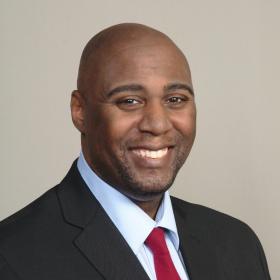
Zachary Scott Robbins is an American educator, author, speaker, and school leader best known for his work in restorative justice, student belonging, educational equity, and teacher wellbeing. His career sits at the busy intersection of public-school leadership, social justice education, and the very real question every school eventually faces: How do we help students grow without turning discipline into a revolving door?
Who Is Zachary Scott Robbins?
Zachary Scott Robbins, often known professionally as Dr. Zachary Robbins or Zac Robbins, has built a public profile around improving school culture. He has served as a principal, superintendent, author, consultant, and speaker, with experience connected to schools in Boston, Las Vegas, and Washington State. His work is especially associated with restorative practices, which focus on accountability, repair, relationship-building, and keeping students meaningfully connected to school.
That may sound like the kind of phrase that belongs on a conference banner next to a sad fruit tray, but Robbins’ message is practical: schools cannot punish their way into belonging. When discipline systems remove students from learning again and again, the result is often not better behavior. It is more disconnection, more frustration, and sometimes a student who decides school is simply not a place where they are wanted.
Robbins’ public writing and professional materials repeatedly return to that tension. He argues that educators need tools that help students repair harm, reflect on choices, and remain part of the learning community whenever possible. At the same time, he places teacher wellbeing near the center of school transformation, because a burnt-out educator is not exactly running on superhero fuel. More often, they are running on cold coffee, three tabs open in their brain, and a copier that has chosen violence.
A Career Built Around Equity and School Transformation
The story commonly told about Zachary Scott Robbins begins with his own experience of being overlooked in school. His official biography describes a young person shaped by racial tension, financial scarcity, and the feeling that institutions did not always see his full potential. That background matters because Robbins’ later work focuses on students who are underestimated, disciplined disproportionately, or treated as problems before they are treated as people.
Robbins was educated at Howard University in Washington, D.C., and earned a Ph.D. in Education Administration from the Boston College Lynch School of Education. Those academic credentials are important, but his public reputation comes less from degrees on a wall and more from the way he applies leadership theory to actual school hallways, actual student behavior, and actual adults trying to make good decisions before lunch duty.
Leadership in Boston, Las Vegas, and Washington
Professional profiles describe Robbins as having helped turn around schools in Boston and Las Vegas. In Nevada, he became widely associated with Cheyenne High School in North Las Vegas, where his restorative justice work received attention from education publications. Later, he became superintendent of the Marysville School District in Washington State, beginning that role in 2022. Public reporting later documented that his service there ended in October 2024, and the district moved through additional leadership changes afterward.
This timeline gives a fuller picture of Robbins as a public education figure: not simply a writer with theories, and not simply an administrator with meeting minutes, but someone whose career has moved through different school systems, political climates, financial pressures, and community expectations. Anyone who has worked around public education knows that school leadership is not a quiet desk job. It is more like trying to change a tire while the bus is moving, the passengers are debating policy, and someone just asked whether the Wi-Fi works.
Restorative Justice Tribunal: Robbins’ Signature Idea
One of the clearest reasons people search for Zachary Scott Robbins is his book Restorative Justice Tribunal: And Ways to Derail Jim Crow Discipline in Schools. Published by Routledge, the book examines school discipline systems that produce high rates of suspension and expulsion, especially for African American students. Rather than treating discipline as a simple matter of rule-breaking and punishment, Robbins frames it as a question of equity, accountability, and institutional design.
The central idea, the Restorative Justice Tribunal, is a school-based process designed to divert students away from out-of-school consequences. In Robbins’ model, students who cause harm are guided through a structured conversation that helps them explain what happened, understand the impact, and agree to repair the harm. The point is not to excuse behavior. The point is to avoid pretending that sending a student home automatically teaches responsibility. Spoiler alert: it often teaches them how to miss algebra.
Why the Tribunal Model Stands Out
Robbins’ approach gained attention because it emphasized two unglamorous but essential factors: time and cost. Many school improvement ideas sound lovely until someone asks, “Who is paying for this?” or “When exactly will we do it?” The Restorative Justice Tribunal model was designed to be efficient enough to fit into a real school day and affordable enough to survive budget stress.
Education coverage has described how the model used trained adults and student peer advocates to support the process. Peer advocates helped bring student voice into the conversation, while facilitators guided reflection and repair. In a traditional system, the student may leave with a suspension notice. In a restorative system, the student is asked to stay connected, take responsibility, and participate in making things right. That is harder than punishment in some ways, because accountability with reflection requires more emotional work than simply sitting at home.
For schools wrestling with discipline gaps, the model offers a practical example: change does not always begin with a giant new department. Sometimes it begins with a better process, trained people, clear expectations, and a refusal to accept “that is just how discipline works” as a final answer.
Books by Zachary Scott Robbins
Zachary Scott Robbins has expanded his influence through books and professional resources for educators. His work generally falls into three overlapping categories: restorative justice, social justice education, and teacher wellness. Taken together, these themes make his writing useful for principals, teachers, district leaders, counselors, and anyone who has ever looked at a school policy and thought, “There has to be a more human way to do this.”
Restorative Justice Tribunal
Restorative Justice Tribunal is Robbins’ most directly discipline-focused work. It looks at the assumptions behind exclusionary discipline and challenges schools to rethink how they respond to student behavior. The book’s subtitle references “Jim Crow discipline,” pointing to the historical and structural patterns that can shape unequal school experiences for Black students.
Becoming a Social Justice Educator
Becoming a Social Justice Educator: A Guide With Practice, co-authored with Dominique Smith, Sarah Ortega, Oscar Corrigan, and Bryan Dale, focuses on helping educators build inclusive learning cultures. The book encourages teachers to examine bias, strengthen relationships, reflect on classroom routines, and turn equity from a slogan into daily practice. In other words, it asks educators to move beyond “I care about all students” and into “Here is how my grading, feedback, discipline, and classroom materials prove it.”
The Teachers Black Students Need
The Teachers Black Students Need: A Guide to Help Students Thrive in School examines the conditions Black students need in order to experience school as academically useful, psychologically safe, and personally affirming. Robbins writes from the perspective of an educator and parent, addressing topics such as teacher belief, microaggressions, racial trauma, grading bias, school policing, and advocacy.
Teacher Wellness Toolkit Series
Robbins has also created resources focused on educator burnout and emotional resilience. His wellness materials emphasize boundaries, stress recovery, nervous system regulation, purpose, and sustainable teaching. This is an important shift because many school reform conversations treat teachers like endless batteries. They are not. They are human beings, not rechargeable classroom appliances with lanyards.
Why Zachary Scott Robbins Matters in Modern Education
The importance of Zachary Scott Robbins’ work lies in how it connects multiple problems that are too often discussed separately. School discipline is not separate from race. Student achievement is not separate from belonging. Teacher wellness is not separate from school culture. Leadership is not separate from trust. Robbins’ public body of work keeps pulling those threads together.
His ideas matter because American schools are still debating how to balance safety, accountability, fairness, and compassion. Traditional discipline systems often promise order, but they can also create patterns where the same students are removed again and again. Restorative practices promise connection, but they require training, consistency, and courage. Robbins’ contribution is not that he invented the need for better discipline. His contribution is that he offered a concrete model and a language for discussing it without pretending the issue is simple.
A Practical Message for Educators
For teachers, Robbins’ work can be read as a reminder that relationships are not soft extras. They are infrastructure. A student who feels invisible may not respond to the same correction as a student who feels valued. A student who has experienced repeated bias may interpret adult authority differently from a student who has always been given the benefit of the doubt. This does not mean expectations disappear. It means expectations are delivered through trust, clarity, and fairness.
For administrators, Robbins’ work raises a leadership challenge: if discipline data shows disparities, the answer cannot be a shrug wearing a blazer. Leaders must ask which policies, habits, training gaps, and adult assumptions are producing those results. A restorative approach requires adults to examine the system, not just the student sitting in the office.
Teacher Wellbeing: The Other Side of School Reform
A major theme in Robbins’ more recent public work is teacher wellbeing. This matters because even the best school initiative can collapse if educators are emotionally exhausted, unsupported, or asked to perform impossible work with inspirational posters instead of resources. Teacher burnout is not solved by telling teachers to “remember their why” while adding twelve new tasks to their Monday.
Robbins’ wellness-oriented materials focus on practical recovery: setting boundaries, managing stress, using short resets, reconnecting with purpose, and protecting energy. The tone of this work fits a post-pandemic education landscape in which many teachers have reported feeling stretched thin. The central message is that caring for educators is not a luxury. It is part of caring for students.
Why Wellness Belongs Beside Equity
Equity work asks educators to reflect deeply, change habits, build trust, and respond to students with both firmness and empathy. That requires emotional capacity. A teacher who is constantly depleted may struggle to pause, listen, repair, or respond thoughtfully. Robbins’ combined focus on restorative justice and teacher wellness suggests that schools need both justice and sustainability. One without the other can become a beautifully worded plan that no one has the energy to implement.
Public Recognition and Professional Influence
Zachary Scott Robbins has been publicly recognized in education circles. Publisher biographies and district announcements identify him as the 2022 Nevada High School Principal of the Year and the 2021 City of Las Vegas African-American Trailblazer in Education Award recipient. He has also been connected with professional leadership organizations and speaking engagements for education audiences.
His speaking and consulting profile includes topics such as restorative practices, school transformation, equity, family engagement, and teacher development. These are areas where schools often need outside support because the work is complex. It involves policy, adult learning, data analysis, community trust, and classroom practice. Also, it involves meetings. So many meetings. Education reform may be the only field where a solution can require four committees and a shared Google Doc named “final-final-revised.”
Robbins’ influence is especially visible among educators searching for practical ways to reduce exclusionary discipline while still maintaining high expectations. His work appeals to readers who want more than abstract inspiration. They want tools, routines, scripts, structures, and examples that can survive contact with the morning bell.
Balanced View: Leadership, Complexity, and Public Education
No profile of a public education leader should pretend that school leadership happens in a vacuum. Robbins’ superintendent period in Marysville occurred during a difficult era for the district, which later reporting connected to financial strain, leadership transitions, and state-level monitoring. Public education leadership is often judged under conditions where the budget, politics, community expectations, enrollment patterns, staffing pressures, and student needs all collide at once.
That does not mean leaders are beyond criticism. It means responsible writing should separate verified facts from noise. Robbins’ verified public record includes school leadership, published books, restorative justice advocacy, educator wellness resources, and professional recognition. It also includes a superintendent role that later ended amid a period of district instability. Both realities can be true at the same time, because public leadership is rarely a neat little trophy shelf. It is more like a backpack full of lesson plans, hard decisions, unfinished reforms, and a granola bar from 2021.
The most useful way to understand Zachary Scott Robbins is not as a flawless hero or a one-line headline. He is a complex education figure whose work reflects some of the biggest debates in American schooling: how to support Black students, how to discipline without exclusion, how to build inclusive classrooms, how to care for teachers, and how to lead systems under pressure.
Experience-Based Reflections Related to Zachary Scott Robbins
When educators encounter the ideas associated with Zachary Scott Robbins, the first reaction is often recognition. Many teachers and school leaders have seen the same pattern: a student makes a poor choice, the school applies a consequence, the student leaves class, and everyone hopes the problem has been solved. Then the student returns, the relationship is colder, the missed instruction has piled up, and the underlying issue is still sitting there like an unopened email marked urgent.
In real school environments, restorative practices feel different because they require conversation before closure. A student may need to explain what happened. A teacher may need to describe the impact. A peer may help the student understand how the behavior affected the classroom community. The agreement that follows is not magic. It is not a glitter wand for discipline. But it can create a path where the student remains responsible and connected at the same time.
One experience many schools report during restorative implementation is adult discomfort. This is normal. Adults who were trained in traditional discipline may worry that restorative justice means “no consequences.” That misunderstanding can derail the work before it begins. The better explanation is that restorative discipline changes the shape of consequences. Instead of asking only, “What rule was broken and what punishment follows?” it also asks, “Who was affected, what needs to be repaired, and what must change next time?” That is not soft. In many cases, it is more demanding than a suspension.
Another experience related to Robbins’ work is the importance of student voice. When students are included as peer advocates or community participants, the process becomes less of an adult lecture and more of a shared school norm. Students often know which solutions are realistic. They know when an apology sounds fake. They know when a peer needs support rather than another label. Giving them a structured role does not mean handing over authority; it means recognizing that school culture is built by everyone in the building.
Teacher wellbeing also becomes obvious through experience. A school cannot ask teachers to be calm, reflective, culturally responsive, trauma-informed, academically rigorous, emotionally available, data-driven, and cheerful during hallway duty without supporting them. That is not a job description; that is a Marvel origin story. Robbins’ teacher wellness focus is relevant because restorative and equity-centered work requires adults who have enough capacity to respond thoughtfully. Boundaries, recovery routines, and emotional resilience are not selfish. They are part of professional sustainability.
For school leaders, the practical lesson is that implementation matters more than slogans. A restorative justice poster on the wall does not change discipline. Training, schedules, facilitator roles, student preparation, data review, family communication, and consistent follow-through do. The same is true for equity work. A school can say it believes in every student, but students experience belief through grading policies, classroom materials, feedback, discipline decisions, and whether adults learn how to pronounce their names correctly.
The deeper experience connected to Zachary Scott Robbins’ topic is this: better schools are built through relationships strong enough to survive mistakes. Students will make mistakes. Adults will too. Policies will need revision. Programs will need adjustment. But when a school commits to accountability, dignity, and repair, it gives everyone a better chance to grow. That is the heart of Robbins’ public work, and it is why his name continues to appear in conversations about restorative justice, educator wellness, and the future of school leadership.
Conclusion: The Lasting Conversation Around Zachary Scott Robbins
Zachary Scott Robbins represents a modern type of education leader: part administrator, part author, part speaker, part reform advocate, and part translator between big ideas and school-day reality. His work asks educators to reconsider how students are disciplined, how Black students are supported, how teachers protect their wellbeing, and how schools can become more humane without lowering expectations.
For readers searching for “Zachary Scott Robbins,” the most important takeaway is that his career is not tied to one job title alone. His public identity is built around a set of ideas: restorative justice should be practical, equity should be visible in daily teaching, and teacher wellbeing should be treated as essential infrastructure. Whether one approaches his work as a school leader, classroom teacher, parent, or education observer, the conversation he contributes to is timely and necessary.
Schools do not improve because someone writes a perfect mission statement and laminates it. They improve when adults change systems, students are seen more clearly, harm is repaired more thoughtfully, and teachers have enough support to keep doing meaningful work. That is the educational lane where Zachary Scott Robbins has made his name.
SEO Tags
Note: This article is written for informational and editorial publishing purposes. It synthesizes publicly available information about Zachary Scott Robbins while avoiding unsupported rumors, copied text, and unnecessary source-code artifacts.