Introduction
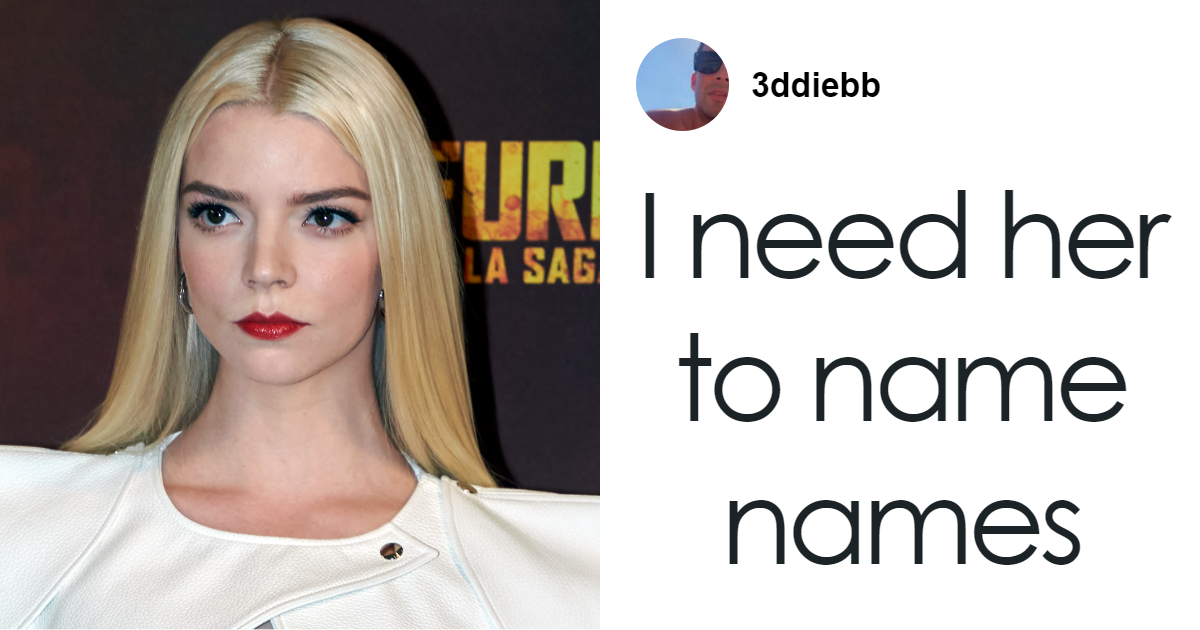
Hollywood loves to sell chaos as glamour. A little dust in the trailer, a little grease on the costume, one dramatic behind-the-scenes anecdote, and suddenly an actor is being marketed as a warrior-poet with cheekbones. But Anya Taylor-Joy’s comments about making Furiosa: A Mad Max Saga cut through that polished myth with the force of a War Rig smashing through a barricade. When she said, “Everything I thought was going to be easy was hard,” she was not delivering a cute promo-tour sound bite. She was pulling back the curtain on a production that sounded isolating, physically punishing, creatively demanding, and deeply strange in the most Mad Max way possible.
Her remarks instantly caught fire because they were not framed like ordinary “the stunt training was intense” publicity chatter. They felt raw. She described the experience as lonely. She hinted that the challenge went beyond sweat and sand. She also refused to fully unpack it, which somehow made the whole thing feel even more revealing. In true wasteland fashion, she gave the audience just enough water to survive and then drove off in a cloud of dust.
Still, the story here is not that Taylor-Joy was denouncing the film or launching a scorched-earth attack on director George Miller. Quite the opposite. Again and again, she has made it clear that she respects Miller, trusted his vision, and threw herself into the role with total commitment. What she exposed was something more interesting than scandal: the hard truth that making a movie like Furiosa is not just action-heavy. It is psychologically weird, artistically restrictive, physically exhausting, and emotionally demanding in ways that audiences rarely see.
What Anya Taylor-Joy Actually Revealed About the Mad Max Set
The line that grabbed headlines was the brutally simple one: everything she thought would be easy turned out to be hard. That statement landed because it flipped the usual movie-star narrative on its head. Actors often talk about the obvious challenges first: dangerous stunts, massive costumes, harsh weather, long shooting days. Taylor-Joy was hinting at something more slippery. She seemed to suggest that even the areas she assumed would come naturally to her became difficult once she was fully inside George Miller’s wasteland machine.
Part of that challenge came from how little Furiosa actually speaks. For a lead performance in a large-scale studio film, Taylor-Joy had astonishingly little dialogue. That meant she could not rely on verbal rhythm, emotional speeches, or character exposition to do the heavy lifting. Instead, much of the performance had to live in stillness, posture, silence, and eyes. If that sounds elegant on paper, imagine doing it day after day under desert conditions while enormous action choreography unfolds around you. Suddenly “quiet acting” starts to sound less like an indie-film luxury and more like emotional weightlifting.
Taylor-Joy also explained that Miller had a very specific idea about how Furiosa should hold her face and communicate pain, focus, and fury. That kind of directorial precision can produce iconic work. It can also be unsettling for a performer, especially one known for emotionally expressive roles. In this case, the challenge was not overacting. It was surviving inside restraint. Furiosa could not spill her feelings all over the sand. She had to trap them in her body until they hardened into resolve.
That is likely one reason Taylor-Joy’s comments about loneliness hit so hard. There is a special kind of isolation that comes from being the center of a movie while being denied many of the usual tools actors use to connect, release, and shape a performance. No big speeches. Limited verbal interaction. Endless repetition. A face under control. A body in combat. If ordinary movie acting is conversation, this sounds more like a long stare-down with the apocalypse.
Why the Role Was Tougher Than It Looked
1. Silence Became the Job
One of the most fascinating things about Taylor-Joy’s performance is that its difficulty is almost invisible. Viewers can watch Furiosa and think, “Wow, she’s cool and controlled.” What they may not realize is that control itself was the challenge. Miller wanted a character who communicated through the smallest shifts in her gaze and body language. For an actor, that is terrifyingly precise work. There is almost nowhere to hide. If the emotion is too big, the spell breaks. If it is too small, the audience feels nothing.
That kind of role can be harder than a big monologue because the margin for error is microscopic. Silence is not emptiness. Silence is architecture. Taylor-Joy had to build an entire emotional world out of withheld reaction. No pressure.
2. The Environment Was Not Exactly Spa-Like
Then there was the setting itself. Furiosa was shot in the Australian desert, and Taylor-Joy joked that one of her first concerns was the complete lack of shade. Funny? Yes. Also revealing. The environment was not some mildly warm outdoor location with a fruit tray waiting nearby. It was a place where cast and crew had to live inside brutal elements for long stretches. A Mad Max movie does not just pretend to be dusty. It seems determined to make sure everyone earns their dust the old-fashioned way.
And because this is the Mad Max universe, the practical reality of the set matters. Vehicles matter. Costumes matter. physical presence matters. The wasteland does not work if everyone looks like they stepped out of a climate-controlled vanity van with perfect hydration and emotional balance. The film’s texture comes partly from the fact that the production itself appears to have been a beast.
3. Action at This Scale Is a Monster
The film’s action was not just ambitious. It was absurdly ambitious. One major sequence reportedly took 78 days to shoot and involved around 200 stunt performers. That is not a regular action scene. That is an engineering problem with eyeliner. Long set pieces like that demand repetition, patience, physical endurance, and a very weird relationship with time. A performer can spend hours getting ready to execute a few seconds of chaos, then do it again, then again, then again, until adrenaline turns into routine and routine turns into exhaustion.
Taylor-Joy said she put her whole body into the role, and that sounds less like hyperbole than simple accounting. You do not survive a production like this by showing up with vibes and a protein bar.
This Was Not a Takedown of George Miller
The internet, which enjoys subtlety about as much as a flamethrower guitar enjoys quiet jazz, quickly tried to turn Taylor-Joy’s remarks into a simple “bad set” narrative. But that misses the most important part of the story. She has repeatedly spoken with admiration about George Miller. She trusted his control over the material. She clearly understood that if you are going to make a Mad Max movie, you want the person who invented the road rules in charge of the chaos.
In fact, the complexity of her comments is what makes them interesting. She did not say, “This was awful and meaningless.” She essentially said, “This was hard in ways I am not even ready to fully explain yet.” That difference matters. It points to a production that was artistically valuable and personally draining at the same time. Those two things are not mutually exclusive. Some of cinema’s most unforgettable performances come from environments that demand everything. The result may be brilliant. The process may still leave people looking like they’ve stared into the engine of a dying civilization.
Miller’s own comments about physical and psychological safety also add context. After the famously tense Fury Road production, he appears to have been conscious of the need for a steadier atmosphere. That does not mean Furiosa was easy. It means the production likely recognized that hard filmmaking and safe filmmaking are not supposed to be opposites.
Why These Comments Resonated So Strongly
Taylor-Joy’s remarks landed because they poked a hole in a fantasy many viewers still carry about blockbuster filmmaking. Audiences know, on some level, that giant action movies are exhausting to make. But there is still a tendency to imagine stars as superhuman creatures who glide through production on charisma and custom leather. Taylor-Joy reminded people that even a performer at the top of her game can be rattled by the demands of a role.
There is also something uniquely compelling about hearing a glamorous, poised actor describe a process that made her feel profoundly alone. That contrast is powerful. Taylor-Joy often comes across in interviews as witty, articulate, and a little magical, like someone who might casually own a haunted chessboard. So when a person with that kind of self-possession hints that a shoot got under her skin, people pay attention.
It also helps that the role itself is a fan favorite. Furiosa is not just another action hero. She is one of the most admired modern blockbuster characters, and taking over from Charlize Theron was always going to carry a certain amount of pressure. Taylor-Joy was not only entering a beloved franchise. She was stepping into a role already stamped into movie history with chrome, fire, and fury. No big deal. Just cinematic sacred ground.
How Furiosa Fits the Larger Mad Max Legacy
The funny thing about Taylor-Joy’s comments is that they also make perfect sense if you know anything about the Mad Max franchise. These movies have never felt soft, safe, or overly polished. George Miller’s world is built on motion, damage, survival, and primal instinct. The franchise does not ask actors to simply hit marks and recite plot. It asks them to become part of a machine made of metal, myth, and momentum.
That helps explain why Miller reportedly wanted a younger Furiosa played by someone with discipline, athletic ability, and total commitment. Taylor-Joy was not cast just because she is famous. She seems to have been cast because Miller saw rigor in her. He needed someone who could survive the demands of a film where the character’s inner life had to be projected through near-silent intensity while chaos exploded all around her.
In that sense, Taylor-Joy did not just “expose” the set. She exposed what Mad Max really asks of its actors. Not vanity. Not smooth heroics. Not a neat action-star template. It asks for endurance, imagination, restraint, and the willingness to look a little spiritually sandblasted by the end of the journey.
The Real Takeaway: Hard Does Not Mean Wrong
There is a temptation to sort all production stories into tidy categories: either the set was a dream or it was a nightmare, either the movie was worth it or it was not, either the actor is grateful or they are secretly miserable. Taylor-Joy’s reflections reject that tidy framing. They suggest a more adult truth. Sometimes a project is meaningful because it is hard. Sometimes the difficulty is part of the art. Sometimes you can love what you made and still need years to process what it took to make it.
That may be the most revealing thing about her now-famous quote. It was not a complaint designed for easy outrage. It was the language of someone who had gone through an unusually intense creative experience and was still carrying it in her body. In other words, she sounded exactly like someone who had just made a Mad Max movie.
And maybe that is the simplest summary of the whole situation: Anya Taylor-Joy did not expose a scandal so much as she exposed the cost of creating something ferocious. The set of Furiosa was hard because the movie demanded hardness. The silence was hard. The scale was hard. The desert was hard. The expectations were hard. Even the supposedly easy parts were hard. Welcome to the wasteland. Complimentary umbrella not included.
Related Experiences: Why Giant Action Productions So Often Feel Harder Than They Look
If Taylor-Joy’s comments struck a nerve, it is partly because they point to a broader truth about action filmmaking. Movies like Furiosa are sold as entertainment, but they are built through a strange combination of athletic training, emotional regulation, technical precision, and controlled discomfort. On the screen, it looks thrilling. On the set, it can feel like a marathon being run in fragments, with sand in your boots and a director asking for one more take because your eyebrow moved 2% too much.
Actors in these productions often face a double burden. They must perform physical toughness while also preserving the emotional logic of the character. That is difficult enough when the role has lots of dialogue. It becomes much harder when the performance depends on silence, compression, and reaction shots. In those situations, an actor can spend a whole day doing what appears to be “almost nothing,” while actually maintaining a highly specific state of tension. That kind of stillness is exhausting. It is the cinematic equivalent of holding a plank while making eye contact with destiny.
Then there is the scale of the machinery around them. Big stunt films rely on crews, vehicles, rigs, safety teams, coordinators, camera setups, and endless resets. For the audience, a sequence may feel immediate and explosive. For the people filming it, the process is repetitive and painstaking. They are creating danger without losing control of it. Every second that feels spontaneous on screen is usually the result of obsessive planning. That is why performers often describe these shoots as both exhilarating and draining. The body gets the adrenaline, but the brain gets the math.
Desert filming adds another layer. Harsh light, heat, dust, and remote locations do not just affect comfort. They affect concentration, patience, mood, and stamina. Glamorous press-tour photos rarely mention the simple psychological effect of waking up every day to a landscape that feels designed by someone who hates moisture. There is a reason Taylor-Joy’s joke about needing shade sounded funny and believable at the same time.
Another common experience on demanding productions is delayed processing. Cast members sometimes do not fully understand what a role cost them until months or even years later. During filming, they are too busy surviving the schedule. During promotion, they are expected to sound polished and excited. Only later do they have the distance to say, “Actually, that changed me.” Taylor-Joy’s unwillingness to fully unpack the experience right away fits that pattern. It sounded like someone speaking from the middle of the dust storm, not the comfort of hindsight.
That is why her comments feel bigger than one headline. They capture something universal about creative work at the highest level. The finished product may look seamless. The process rarely is. The audience sees myth. The cast and crew remember the grind. And every once in a while, an actor says one perfectly sharp sentence that reminds everyone the engine of spectacle runs on real human effort. In this case, that sentence was basically: the easy parts were not easy at all.
Conclusion
Anya Taylor-Joy’s reflections on making Furiosa: A Mad Max Saga turned a promotional cycle into something more revealing: a conversation about what blockbuster acting actually demands. Her “everything I thought was going to be easy was hard” quote resonated because it sounded honest, unfinished, and deeply human. It did not flatten the film into gossip. It made the movie feel even more impressive.
What she exposed was not just a difficult set, but the hidden cost of crafting a character like Furiosa. The performance required silence, discipline, endurance, and trust. The production demanded scale, grit, and long-haul focus. And the result is a reminder that the best action films are not built on noise alone. They are built on pressure, restraint, and people willing to drive straight through the hard parts. In the wasteland, apparently, “easy” is just another mirage.