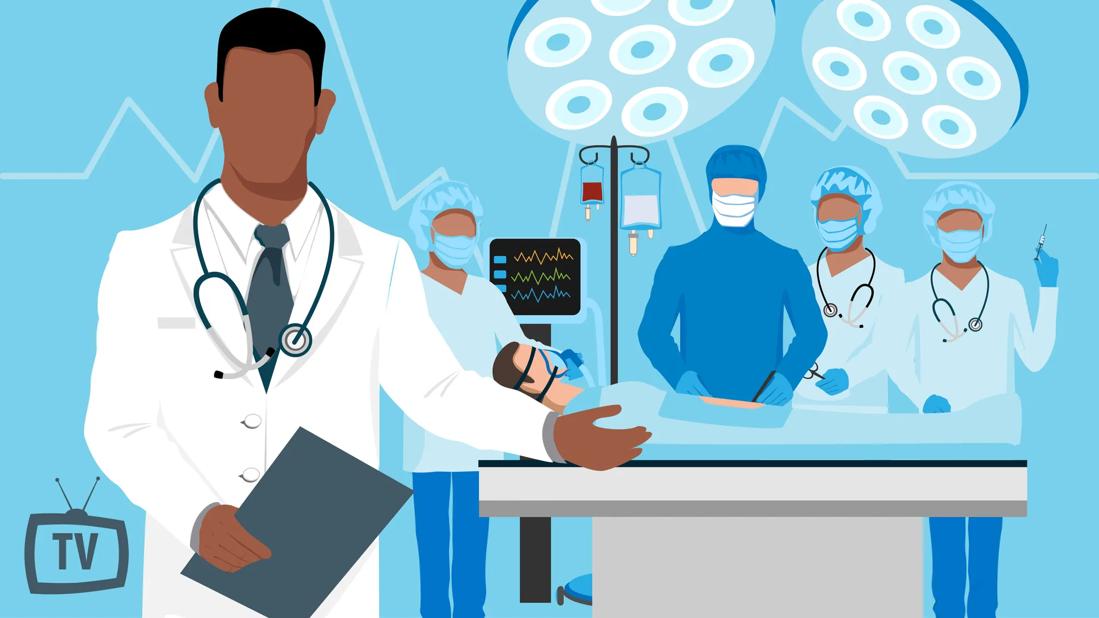
If you have ever watched a surgeon diagnose a mystery illness, sprint a patient to the OR, perform a heroic procedure, crack a joke, break hospital policy, fall in love, and still make it to a dramatic rooftop conversation before the credits roll, you may have asked the obvious question: are medical TV shows accurate?
The honest answer is both yes and absolutely not. Medical dramas often get just enough right to feel believable. The jargon sounds real. The tools look real. The panic in a trauma bay can feel real. But then TV grabs the steering wheel, floors it, and drives straight through reality’s guardrail. In other words, medical shows are usually accurate in texture, but not always in process, timing, or outcomes.
That is why these series are so addictive. They mix real medicine with entertainment logic. You get a recognizable hospital world, but with faster diagnoses, hotter lighting, shorter recoveries, and a suspiciously high number of people who both save lives and have time for scandal. It is healthcare with better cheekbones and worse staffing ratios.
So, are medical TV shows accurate? Let’s break down what they get right, what they get hilariously wrong, and why the answer matters for viewers, patients, families, and even future doctors.
The Short Answer: Accurate in Details, Inaccurate in Reality
Most medical TV shows are not pure fantasy. Writers often borrow real diseases, real procedures, real ethical dilemmas, and real hospital terminology. Many productions also consult physicians, nurses, and medical advisers to make scenes sound and look convincing. That is why a lot of shows feel medically smart, even when they are bending the truth into a pretzel.
But accuracy in medicine is not just about using the correct name for a condition. It is also about how care unfolds over time, who delivers that care, what recovery actually looks like, and how often miracles really happen. This is where television starts coloring outside the lines. A show may correctly mention sepsis, pulmonary embolism, organ donation, or an emergency C-section, but still portray the diagnosis, treatment, and outcome in a way that is far more dramatic than what happens in a real hospital.
Think of it this way: medical dramas often know the vocabulary, but they are less faithful to the grammar of real healthcare.
Why Medical Dramas Feel So Convincing
Real Medical Language Goes a Long Way
One reason medical drama realism lands so well is that the language is often legitimate. Terms like code blue, appendectomy, intubation, hemorrhage, and differential diagnosis are not made-up TV words. They are part of real clinical practice. When actors deliver that language confidently, viewers assume the whole scene must be accurate. That is a clever illusion. If the vocabulary sounds right, the audience is more likely to forgive everything else, including the part where a single doctor somehow acts as emergency physician, radiologist, surgeon, ethicist, social worker, and miracle worker before lunch.
Consultants Make the World Feel Real
Another reason these shows feel believable is that many of them really do use medical consultants. Some series work with practicing doctors to review scripts, refine cases, or keep procedures at least feasible. That means the bones of a story may come from authentic clinical experience, even when the flesh on those bones is pure TV melodrama. A show can be carefully advised and still wildly compressed, because realism has to compete with pacing, cliffhangers, and the network’s desire to avoid a twelve-episode arc about waiting for lab results.
Emotional Truth Can Be More Powerful Than Literal Truth
This is where medical dramas earn some respect. Even when a case is exaggerated, the emotional experience can still ring true. Fatigue, grief, dark humor, guilt, hierarchy, burnout, interrupted meals, and the weird whiplash of going from tragedy to routine paperwork are all real parts of healthcare work. A show may absolutely mangle the timing of a CT scan while still accurately capturing what it feels like to carry bad news into a room full of family members.
That emotional truth is a big reason viewers connect so deeply with medical TV. It is not always factually correct, but it can still feel humanly correct.
What Medical TV Shows Get Right
1. The Pressure of High-Stakes Decision-Making
Good medical dramas are excellent at showing pressure. Doctors, nurses, and support staff often work in environments where information is incomplete, time is short, and consequences are serious. That sense of urgency is real. Hospitals may not be dramatic every minute, but when emergencies happen, decisions do need to be made quickly and calmly. TV exaggerates the frequency of those moments, yet the emotional intensity itself is not invented.
2. Medicine Is Full of Ethical Messiness
Another thing medical shows get right is that healthcare is not just science. It is ethics, communication, consent, privacy, money, bias, culture, grief, and uncertainty all piled into one job. Real clinicians do wrestle with end-of-life decisions, family conflict, informed consent, patient autonomy, addiction, mental health crises, and limited resources. Medical dramas often build entire episodes around those issues, and that part is not made up. In fact, one reason these shows are still useful in classrooms is that they make ethical dilemmas memorable.
3. Healthcare Workers Are Not Machines
Medical shows also get something important right when they show healthcare workers as people instead of spotless medical robots. Clinicians get attached to patients. They make mistakes. They feel guilt. They use humor to survive hard days. They go home carrying stories they cannot quite shake off. Real medicine is full of professionalism, but it is also full of emotion. The best medical dramas understand that those two things are not opposites.
4. Some System Problems Are Very Real
When a medical series touches on overcrowded emergency rooms, insurance frustrations, staffing shortages, delayed discharges, housing instability, addiction, or the mental health crisis, it is often closer to reality than viewers realize. Hospitals are not isolated islands of pure science. They are where social problems show up wearing hospital gowns. A strong medical drama can be surprisingly sharp when it connects illness to the larger system around it.
What Medical TV Shows Get Wrong
1. CPR Looks Way Too Successful
If television were your only CPR teacher, you would probably assume chest compressions almost always work, everyone wakes up with movie-star timing, and a defibrillator can solve nearly anything. Real life is much less cinematic. CPR is physically exhausting, outcomes are often poor, and survival with full recovery is nowhere near as clean or common as TV suggests.
Medical dramas also love outdated or sloppy CPR technique. They may show unnecessary steps, dramatic pauses, or defibrillator use that is more about suspense than science. This is one of the most important ways TV can mislead viewers, because CPR is not just entertainment trivia. It is one of the few emergency skills ordinary people may need in real life.
2. Trauma Recovery Is Far Too Fast
Television loves the “major accident, emergency surgery, quick tearful goodbye, and then home by Thursday” model. Real trauma care does not work like that. Recovery is often slow, uncertain, painful, and full of rehabilitation, complications, and follow-up care. Patients do not simply bounce back because the script needs room for the next disaster.
This is one of the biggest distortions in hospital accuracy on TV. The injury may be realistic, but the aftermath often is not. And that matters, because it can shape what patients and families expect after a serious event.
3. One Doctor Does Everything
In real hospitals, care is deeply team-based. The emergency physician does not usually follow the patient through every stage of care while also reading scans, assisting surgery, managing the ICU, and delivering a perfectly timed emotional speech at discharge. Television collapses entire teams into a handful of recognizable characters because viewers need continuity and faces they know.
That makes sense for storytelling, but it creates a distorted picture of medicine. Real care involves nurses, techs, pharmacists, respiratory therapists, radiologists, social workers, therapists, transport staff, consultants, case managers, and many others. TV often reduces that orchestra to one violinist playing very dramatically in the hallway.
4. Diagnoses Arrive at Lightning Speed
On TV, the mystery illness is solved just after someone stares meaningfully through a window and whispers, “Wait. It’s not lupus.” In reality, diagnosis is usually slower, more uncertain, and much less glamorous. It may require repeated tests, specialist input, observation, trial-and-error treatment, and a whole lot of “we need more information.”
Diagnostic medicine can be fascinating, but it is rarely neat. Real doctors do not get a dramatic music cue when the answer appears in a flash of brilliance. Mostly, they get more charting.
5. Ethics and Professional Behavior Are Frequently Bent for Drama
Medical TV loves boundary-crossing behavior because it creates tension fast. Confidentiality gets shaky. Rules get broken. Romantic entanglements somehow survive in environments where people should barely have time to drink lukewarm coffee. Sometimes a character disobeys policy and is rewarded with a life-saving breakthrough instead of a stern meeting with HR and several legal consequences.
To be fair, real medicine includes gray areas and difficult judgment calls. But television often treats ethical violations as personality quirks when, in reality, some of those choices could end careers.
6. Rare Cases Appear Constantly
If every hospital had the daily volume of bizarre illnesses, elevator surgeries, explosive traumas, and once-in-a-career diagnoses seen on TV, the entire healthcare system would need a nap. Real clinicians absolutely encounter unusual cases, but not at the frequency television suggests. Everyday medicine is full of common conditions, routine monitoring, paperwork, medication reconciliation, waiting, and incremental decisions. Those things are essential in real life and not especially great for sweeps week.
Do Medical TV Shows Influence Real-Life Beliefs?
Yes, and that is where the conversation gets more interesting than simple fact-checking. Medical dramas do not just entertain. They help shape how viewers imagine hospitals, doctors, nurses, emergencies, and recovery. When people repeatedly watch stories where trauma patients are rushed to surgery in minutes, rare rescues succeed, and difficult diagnoses are solved in one shift, it can affect what they expect from real care.
That influence can cut in two directions. On the negative side, viewers may overestimate survival, misunderstand CPR, fear hidden medical errors, or expect faster answers than medicine can realistically provide. On the positive side, medical shows can spark curiosity, encourage empathy, introduce public health topics, and even inspire careers in medicine. Plenty of future clinicians first became interested in healthcare because a TV series made the profession look intense, meaningful, and weirdly well-lit.
So the real question is not whether medical shows influence people. They do. The better question is whether viewers recognize that influence for what it is: entertainment filtered through storytelling, not a substitute for actual medical knowledge.
Which Shows Tend to Feel More Realistic?
Not all medical dramas miss reality by the same distance. Some lean hard into romance, spectacle, and miracle diagnoses. Others try to capture workflow, pressure, interruptions, and institutional dysfunction more honestly. Generally speaking, shows that focus on team dynamics, ambiguity, and the grind of care tend to feel more authentic than shows built around one dazzling genius who solves everything while ignoring three policies and half the chain of command.
That does not mean the “most accurate” show becomes a documentary. It just means some series understand that realism is not about making every episode bigger. Often, it is about making medicine messier, slower, more collaborative, and less cleanly resolved. The more a show can tolerate uncertainty, the more believable it usually becomes.
So, Are Medical TV Shows Accurate?
Yes, in pieces. No, as a full picture.
Medical TV shows are often accurate enough to sound smart and emotionally convincing, but not accurate enough to be trusted as a guide to real healthcare. They get terminology, some procedures, ethical tensions, and the emotional strain of medicine more right than critics sometimes admit. But they also exaggerate survival, compress time, simplify diagnosis, shrink team-based care into a few photogenic heroes, and skip the boring but crucial realities of recovery, documentation, and follow-through.
That does not make them worthless. It just means viewers should treat them the same way they treat courtroom dramas, detective shows, and action movies: enjoy the ride, admire the craftsmanship, and maybe do not use them as your operating manual for real life.
Watch for the stories. Stay for the characters. But when a doctor on screen shocks a patient into instant consciousness, solves a mystery disease in eight minutes, and then kisses a colleague in a supply closet, remember this simple truth: you are watching television, not a treatment plan.
What It Feels Like When Real Life Meets Medical TV
One of the most fascinating parts of the “Are medical TV shows accurate?” debate is not just what appears on screen, but what happens after viewers absorb it. The experience of carrying TV medicine into real life can be subtle, funny, awkward, and sometimes surprisingly emotional.
For patients and families, medical TV often creates a strange mix of comfort and false confidence. A hospital setting looks familiar because they have seen it a hundred times on screen. They recognize the monitors, the scrubs, the code language, the urgent walk-and-talk conversations. That familiarity can reduce fear at first. But it can also create unrealistic expectations. Some people expect answers immediately, dramatic interventions constantly, and clear resolutions by the end of the day. Real medicine is often slower, quieter, and more uncertain. There are stretches of waiting, repeat questions, more waiting, and then a conversation that starts with, “We still don’t know for sure.” To someone raised on TV pacing, that can feel frustrating, even when it is completely normal.
For medical students and trainees, the experience can be even stranger. Many enter the field after growing up with doctor shows, whether they admit it or not. Then clinical training begins, and the contrast hits hard. Real hospitals are less glamorous, more fluorescent, and full of jobs that television politely ignores. You discover that medicine involves not just saving lives, but documenting, coordinating, revising, double-checking, explaining, apologizing, and trying to find a computer that actually works. Yet some parts of TV still echo in surprising ways. The first time a student sees a real emergency, they may realize the adrenaline is real, the teamwork is real, and the emotional intensity is very real. It is just wrapped in less music and more protocol.
For practicing clinicians, watching medical dramas can become its own odd ritual. Some love them. Some cannot stand them. Some yell at the screen when a surgeon does the work of six departments before the first commercial break. Others forgive the inaccuracies because the emotional arc feels familiar. Many clinicians say the most unbelievable thing on TV is not the rare disease. It is the free time. Nobody on screen seems buried in charting. Nobody spends fifteen minutes trying to call the right consult service. Nobody is trapped in the timeless purgatory of a frozen login page. Frankly, that might be the most unrealistic special effect in the genre.
And then there are the viewers who learn just enough from medical dramas to become boldly incorrect at family gatherings. These are the people who confidently explain a diagnosis because they “saw something like this on TV once.” They are usually wrong, but you have to admire the commitment. Medical television creates that powerful illusion of familiarity: enough knowledge to feel informed, not always enough to be accurate.
That is why the experience of watching these shows is so memorable. They do not just tell stories about medicine. They shape how medicine feels in the imagination. They make hospitals seem dramatic, intimate, fast, heroic, tragic, sexy, and solvable. Real healthcare is often dramatic and tragic, yes. But it is also procedural, collaborative, unfinished, and stubbornly human. TV gives us the myth. Real life gives us the process.