A foyer is the handshake of your home. It is the first “hello,” the first impression, and sometimes the first place where shoes, keys, mail, backpacks, dog leashes, and mysterious receipts gather to form a tiny domestic rebellion. A great foyer makeover does not simply make the entryway prettier; it makes daily life smoother, brighter, and far less likely to involve tripping over a sneaker while carrying groceries.
This foyer makeover focuses on two powerful upgrades: new lighting and furniture. Why those two? Because lighting changes how a space feels, while furniture changes how it functions. Together, they can turn a dull entryway into a welcoming, organized, stylish transition zone. Think of it as giving your home a firm handshake, a warm smile, and a place to put the mail that is not “somewhere on the floor.”
Why the Foyer Deserves More Attention
The foyer is often treated like a pass-through space, but it works harder than many rooms with larger square footage and better public relations. It welcomes guests, catches clutter, introduces your design style, and supports the rush of everyday routines. A well-planned entryway can make a small home feel more polished and a large home feel more personal.
Designers often recommend starting with three essentials: a surface, a mirror, and a light source. From there, you can build in storage, seating, artwork, rugs, and decorative accents. The goal is not to stuff the foyer with furniture like it is auditioning to become a storage unit. The goal is to choose pieces that look intentional and solve real problems.
Step One: Start With the Lighting Plan
Lighting is the quickest way to change the mood of a foyer. A builder-grade flush mount may technically illuminate the space, but so does opening the refrigerator at midnight. That does not mean it is flattering. A foyer needs layered lighting: overhead lighting for general brightness, accent lighting for warmth, and task lighting near a console or mirror.
Choose a Statement Fixture
The main light fixture should match the scale of the entryway. In a small foyer, a semi-flush mount, lantern, or compact pendant can add character without overwhelming the ceiling. In a tall or two-story foyer, a chandelier can create drama and fill vertical space. The fixture should feel like part of the architecture, not like a confused spaceship hovering near the door.
For sizing, a helpful rule is to add the foyer’s length and width in feet, then use that number in inches as a guide for fixture diameter. For example, a 10-by-8-foot foyer can often handle a fixture around 18 inches wide. Clearance matters too. In walk-through spaces, the bottom of a hanging fixture should generally sit high enough that people can pass beneath it comfortably.
Add Warm Secondary Lighting
Overhead lighting does the heavy lifting, but secondary lighting brings charm. A pair of wall sconces can frame a mirror or artwork beautifully. A table lamp on a console adds a soft evening glow and makes the foyer feel lived-in rather than staged for a catalog photo where nobody owns keys.
Warm white bulbs usually work best in an entryway because they flatter wood tones, wall color, and faces. Bright, cool bulbs can make a foyer feel like a dentist’s lobby, which is rarely the desired aesthetic unless your design concept is “root canal chic.”
Step Two: Pick Furniture That Earns Its Keep
Furniture is where the makeover becomes practical. The best foyer furniture looks good, fits the space, and solves a problem. Before buying anything, ask what the entryway needs most. Is it a place to drop keys? A bench for putting on shoes? Closed storage for bags and seasonal gear? A narrow console for flowers and mail? A cabinet to hide the evidence of real life?
The Console Table: A Classic Foyer Anchor
A console table is one of the most useful pieces for a foyer makeover. It creates a landing zone for keys, sunglasses, mail, and decorative objects. In narrow entries, choose a slim console with a shallow depth so traffic can flow easily. If the foyer is wider, a larger console or chest can add weight and storage.
Style the console in layers. Start with a mirror or artwork above it. Add a lamp, a tray for small items, and one sculptural piece such as a vase, bowl, or stack of books. The key is restraint. A console should not look like a yard sale had a nervous breakdown. Leave breathing room between objects so each item looks intentional.
The Bench: Practical, Friendly, and Always Useful
A bench is ideal if your household regularly takes shoes on and off near the door. Choose one with hidden storage, open cubbies, or room underneath for baskets. Upholstered benches add softness, while wood or metal benches are easier to clean. In a small foyer, even a compact stool can provide the same function without crowding the space.
For families, a bench can become the daily command center. Shoes go below, bags go beside it, and hooks above can hold coats or hats. It is not glamorous in theory, but in practice, it is the difference between “welcome home” and “why is there a soccer cleat in the hallway again?”
Closed Storage Keeps the Peace
Open storage looks beautiful when every basket is perfectly arranged and nobody in the home has ever returned from school, work, or a rainy dog walk. For real life, closed storage is often the hero. A small cabinet, vintage dresser, or shoe cupboard can hide clutter while adding character.
If your foyer is tiny, use vertical space. Wall hooks, slim shelves, and tall shoe cabinets can provide organization without taking over the floor. The best furniture pieces make the room feel calmer, not more crowded.
Step Three: Use a Mirror to Brighten and Expand the Space
A mirror is almost mandatory in a foyer makeover because it performs three jobs at once. It reflects light, makes the space feel larger, and lets you check whether you have spinach in your teeth before answering the door. That is interior design and public service combined.
For a console table, a mirror that is roughly two-thirds the width of the table often feels balanced. A round mirror softens sharp furniture lines, while a rectangular mirror can make the wall feel taller. In a narrow foyer, a large mirror can bounce light around and keep the space from feeling like a hallway with commitment issues.
Step Four: Ground the Makeover With a Rug
A foyer rug adds warmth, color, and pattern, but it must also survive foot traffic. Choose a low-pile rug that allows the front door to open freely. Natural fibers, indoor-outdoor materials, washable rugs, and vintage-style patterned rugs are popular because they disguise dirt better than solid pale rugs. White shag in an entryway may look dreamy for three minutes, then immediately begin documenting every outdoor adventure.
For small foyers, a 3-by-5-foot rug often works well. Long entryways may need a runner. Leave a visible border of flooring around the rug so the space feels balanced. A rug pad is also important because sliding dramatically across the foyer is only fun in cartoons.
Step Five: Create a Color and Material Story
Lighting and furniture should connect to the rest of the home. If your living room features warm woods, brass accents, and soft neutrals, repeat those materials in the foyer. If your style leans modern, try black metal lighting, a clean-lined console, and a simple mirror. For traditional homes, consider a lantern-style chandelier, antique-inspired chest, patterned rug, and framed artwork.
The foyer is also a smart place to try bolder design choices. Wallpaper, rich paint color, dramatic lighting, or a patterned rug can feel exciting in a smaller space without overwhelming the entire home. It is the design equivalent of wearing great shoes with a simple outfit.
Before-and-After Makeover Example
Imagine a plain foyer with beige walls, a dated dome light, scattered shoes, and a tiny table that looks like it wandered in from another room. The space is functional only in the sense that people can technically walk through it. The makeover begins by replacing the old ceiling light with a warm brass lantern fixture. Suddenly, the room has a focal point.
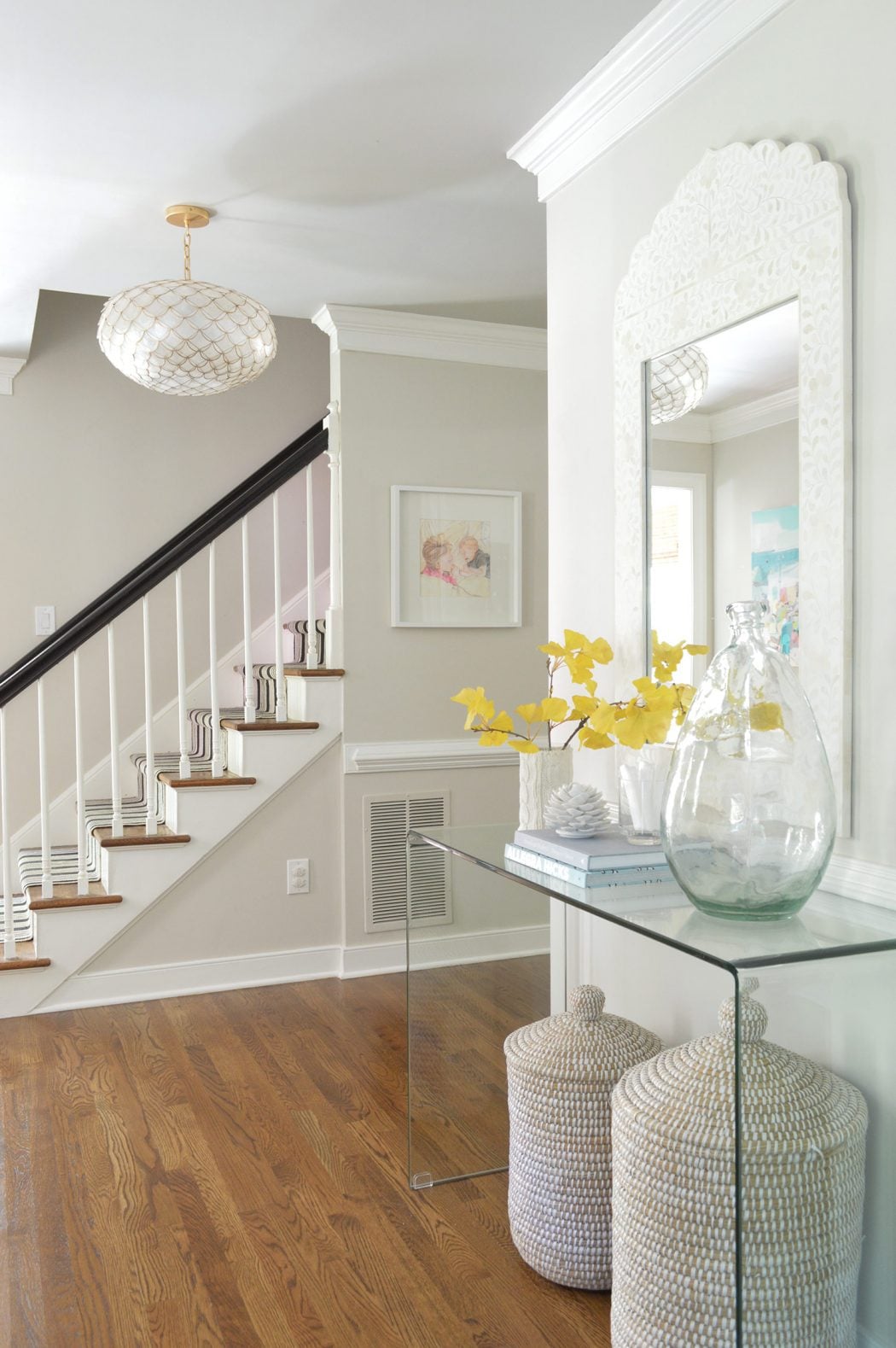
Next, a narrow wood console is added along the longest wall. Above it goes a round mirror with a simple frame. A ceramic lamp sits on one side of the table, balanced by a tall vase with branches on the other. A small tray collects keys and mail. Underneath the console, two woven baskets hold scarves, pet supplies, or shoes.
A washable vintage-style runner brings in color and pattern. The walls are painted a soft greige, warm white, muted blue, or earthy green depending on the home’s palette. Finally, a piece of art, a small bowl, and seasonal greenery make the foyer feel personal. The result is not just prettier. It is calmer, brighter, and far more useful.
Common Foyer Makeover Mistakes to Avoid
Choosing a Light Fixture That Is Too Small
A tiny ceiling light in a foyer can make the room feel unfinished. The fixture does not need to be enormous, but it should have enough presence to anchor the space. When in doubt, measure carefully and choose a piece that feels proportional to the room’s width, height, and style.
Forgetting About Daily Habits
A beautiful foyer that ignores your real life will fail quickly. If everyone drops shoes by the door, add shoe storage. If mail piles up, add a tray or wall pocket. If bags land on the floor, add hooks or a bench. Design should gently guide behavior, not require everyone in the house to become a museum curator.
Overdecorating the Console
A console table should be styled, not buried. Too many candles, frames, bowls, books, faux plants, and decorative birds can create visual clutter. Choose a few strong pieces and let them breathe. Negative space is not empty; it is what makes the good stuff visible.
Ignoring Scale
Scale is everything in a foyer. A huge cabinet can choke a narrow entry, while a tiny table can look lost in a grand foyer. Measure the wall, walkway, ceiling height, and door swing before buying furniture. Blue painter’s tape on the floor can help you visualize the footprint before committing.
Budget-Friendly Ways to Refresh a Foyer
A foyer makeover does not have to become a financial event that requires a spreadsheet and emotional support snacks. Start with the highest-impact changes. Replacing the light fixture, adding a mirror, painting the walls, and upgrading the rug can make the space feel completely new.
Secondhand furniture is especially useful in foyers. A vintage chest, thrifted mirror, or refinished console can add soul that brand-new pieces sometimes lack. You can also update existing furniture with new hardware, paint, or stain. Even a simple bench becomes more stylish with a cushion and baskets underneath.
If the budget is tight, focus on organization first. A tray, hooks, baskets, and better lighting can dramatically improve the entryway without replacing every piece. The goal is not perfection. The goal is a foyer that works beautifully and makes you happy when you walk in.
How New Lighting and Furniture Change the Feeling of Home
The most surprising part of a foyer makeover is how much it affects the rest of the house. When the entryway is bright and organized, you feel calmer the moment you step inside. Guests feel welcomed before they even reach the living room. The home feels more finished because the first impression finally matches the care you put into the rooms beyond it.
New lighting adds atmosphere. New furniture adds purpose. Together, they create a foyer that says, “We are stylish, organized, and absolutely not hiding three umbrellas behind the door.” Even if that last part is only mostly true, the improvement is real.
Personal Experience: What a Foyer Makeover Really Teaches You
After working through a foyer makeover, the biggest lesson is that small spaces are brutally honest. A living room can hide a bad chair in the corner. A bedroom can forgive a temporary laundry pile. A foyer, however, reveals everything immediately. If the lighting is harsh, you feel it. If the furniture is too deep, you bump into it. If there is no storage, the clutter announces itself like it has a microphone.
The first experience many people have during an entryway makeover is the shock of measurement. Furniture that looked modest online suddenly feels like a grand piano in the hallway. This is why measuring is not optional. Measure the wall width, the walking path, the depth of the furniture, and the door swing. Then measure again, because future you deserves fewer returns.
Another practical lesson is that lighting can completely change your opinion of your own decor. A dark foyer may make furniture look heavy and wall color look flat. Once a better fixture and a warm lamp are added, the same space can feel softer and more expensive. Lighting is not just decoration; it is mood management. It can make wood look richer, mirrors look brighter, and guests look slightly more glamorous, which is always polite.
Furniture choices also reveal daily habits. A household that tosses keys on the nearest surface needs a tray. A family with kids needs baskets or cubbies. A dog owner needs a leash hook near the door. A person who changes shoes before leaving needs a seat. The best foyer makeover is not the one that copies a magazine image exactly. It is the one that quietly supports the way people actually live.
There is also an emotional benefit. Coming home to a finished foyer feels different. Instead of entering through clutter and dim light, you step into a space that feels calm and intentional. That small moment matters. It sets the tone for dinner, homework, relaxing, hosting, or simply dropping your bag after a long day. A good foyer does not solve every household problem, but it can reduce the tiny daily irritations that make a home feel chaotic.
The final lesson is that personality belongs in the foyer. A pretty lamp is nice, but a lamp beside a travel photo, a favorite bowl, or a vintage mirror tells a better story. Guests do not need to see a perfect showroom. They need to feel welcomed into a real home. The best foyer makeovers balance polish with personality, function with charm, and storage with style. In other words, let the foyer be useful, but do not make it boring. Life is too short for sad entryways.
Conclusion
A foyer makeover with new lighting and furniture is one of the smartest ways to upgrade a home without renovating every room. The right light fixture creates a warm first impression, while the right furniture turns the entry into a functional landing zone. Add a mirror, rug, storage, and a few personal details, and the foyer becomes more than a pass-through. It becomes a welcome.
Whether your entryway is a grand two-story foyer or a tiny wall beside the front door, the same principles apply: brighten it, organize it, scale the furniture properly, and give the space a little personality. Your foyer does not need to be fancy. It needs to feel intentional, useful, and inviting. Bonus points if it also stops everyone from throwing shoes into a decorative mountain.
Note: This article is fully original and synthesized from current U.S. home design, lighting, decorating, and organizing best practices for publication-ready use.