Most restaurant signs perform one noble duty: they tell hungry people where the food is. El Arroyo’s marquee does considerably more. It makes drivers slow down, passengers reach for their phones, locals debate the joke, and social media users share a restaurant sign from Austin with friends who may live thousands of miles from Texas.
That is an impressive workload for a rectangular board with black plastic letters.
El Arroyo, a long-running Tex-Mex restaurant on West Fifth Street in Austin, has transformed its roadside marquee into one of the most recognizable examples of funny restaurant signage in America. Its messages mix puns, food jokes, pop-culture observations, Texas weather complaints, current events, and the kind of self-deprecating humor normally heard after someone orders a second margarita.
The restaurant is not merely participating in the funny sign game. It has turned the game into a brand, a community tradition, a publishing business, a merchandise line, and a daily social media event.
Meet the Restaurant Behind the Famous Funny Signs
El Arroyo opened in Austin in 1975 and has spent decades serving oversized plates of Tex-Mex food, cold drinks, and unapologetically casual hospitality. Its now-famous marquee has stood outside the restaurant since the late 1980s, although its rise from local curiosity to internet celebrity happened gradually.
For years, employees used the sign to entertain commuters traveling along West Fifth Street. The messages commented on college life, traffic, politics, sports, weather, dating, work, tacos, queso, and practically every other subject capable of surviving a one-line punchline.
The sign was never polished corporate copy. That was the point. Its personality felt spontaneous, local, and slightly mischievous. It sounded less like an advertisement and more like the funniest person at the table whispering something just loud enough for everyone to hear.
Owners Paige and Ellis Winstanley, who took over the restaurant in 2012, helped refine that personality. They worked to keep the humor timely without making the sign unnecessarily cruel. The goal became a recognizable balance: uplifting, sarcastic, relevant, and unmistakably Austin.
How a Roadside Marquee Became a Cultural Landmark
The Sign Gives People a Reason to Look Again
Most outdoor advertisements are static. Once commuters have seen the same steak special or happy-hour promotion five times, the message becomes part of the scenery. El Arroyo avoids that problem by changing its sign frequently, often daily.
That simple habit creates anticipation. A person who passed the restaurant yesterday may still glance toward the marquee today because the joke will probably be different. The restaurant has effectively turned a roadside sign into a recurring content series.
The format is low-tech, but the strategy is surprisingly modern. New material appears regularly. Each post has a familiar visual identity. The audience understands what it will receive, yet it does not know exactly what the next message will say.
In other words, the marquee behaves like a successful social media account even before anyone photographs it.
The Humor Sounds Local but Travels Everywhere
El Arroyo’s jokes often reference Austin habits, Texas weather, tacos, margaritas, fitness culture, dating frustrations, and the general chaos of being an adult with bills. The local voice gives the sign authenticity, while the universal subjects make the jokes understandable far beyond Austin.
A joke about the temperature changing wildly in one week feels Texan. A joke about avoiding exercise feels international.
This combination is important. Content that is too generic becomes forgettable, while humor that depends entirely on local knowledge struggles to travel. El Arroyo usually lands in the middle: specific enough to have personality and relatable enough to be shared.
The Anatomy of a Winning Funny Restaurant Sign
1. It Gets to the Punchline Quickly
A roadside joke has only a few seconds to work. Drivers cannot stop to read a five-paragraph setup about why Monday mornings are emotionally complicated. The message must be understood almost instantly.
El Arroyo’s physical limitations are therefore an advantage. The sign has room for only a small number of words, forcing each idea to become short, clean, and memorable. A complicated observation must be compressed until only the funniest part remains.
One famous response appeared after a storm knocked down the marquee. When the replacement went up, it announced, “New Sign Who Dis.” Four words explained the event, referenced a familiar texting joke, and reminded everyone that even damaged restaurant equipment could become material.
2. It Finds Humor in Ordinary Frustrations
The best funny restaurant signs rarely require advanced knowledge. They work because they recognize experiences people already share: dieting, working, getting older, paying bills, checking the weather, surviving family gatherings, or pretending that queso counts as emotional wellness.
Consider the spirit of lines joking about a “summer body,” silent letters in the word “flat,” or workouts nobody asked to hear about. The subject is not revolutionary. The phrasing is what creates the laugh.
Relatable humor also encourages sharing. People do not simply think, “That is funny.” They think, “That is my sister,” “That is my coworker,” or “That is me, unfortunately.” The joke becomes a social message ready to be sent to someone else.
3. It Knows When to Laugh at Itself
Self-deprecating humor makes a brand feel more human. El Arroyo has long been willing to joke about its own food, service, customers, and reputation. One classic message invited people who had already tried the best to come try the restaurant.
That approach is charming because it rejects the usual advertising posture. Most businesses insist that everything they sell is revolutionary, premium, life-changing, and probably developed by scientists. El Arroyo occasionally shrugs and says, in effect, “We have tacos, jokes, and cold drinks. Let’s not make this weird.”
Confidence is often more believable when it does not have to shout.
4. It Reacts While the Moment Is Still Fresh
Topical humor has a short expiration date. A joke about a sports result, celebrity moment, local controversy, or weather event must appear while people are still discussing it.
The restaurant’s team develops ideas through conversations, messages, staff suggestions, and public submissions. When a strong line fits the moment, it can reach the sign quickly. That speed gives the marquee the energy of live commentary rather than a campaign approved three quarters ago by twelve executives and one nervous attorney.
When a Chicago investment firm acquired a stake in Texas-born Whataburger, for example, El Arroyo expressed the protective mood of many Texans with a mock warning to Chicago not to hurt the beloved burger chain.
Why the Signs Are Marketing Gold
Every Photograph Becomes Free Distribution
A funny sign is not limited to the number of motorists who pass it. One driver takes a photo. That photo reaches a family group chat. Someone shares it on Instagram. A meme page reposts it. A national publication features a collection of signs. Suddenly, a local marquee is promoting an Austin restaurant to people who have never visited Texas.
This is user-generated marketing in its most natural form. Customers share the content because it entertains them, not because the restaurant offered five loyalty points and a complicated coupon.
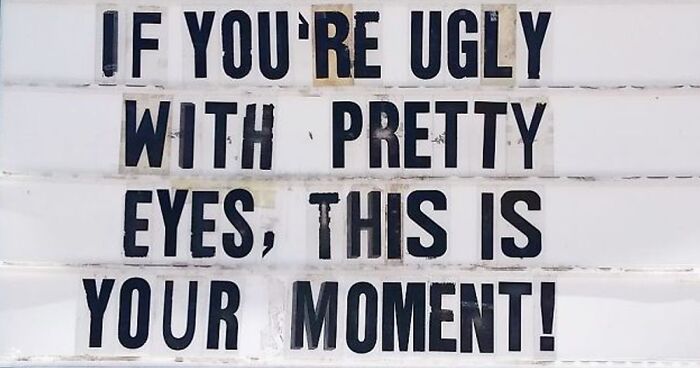
The consistent design helps. Black letters, a white background, and the restaurant’s name create an instantly recognizable template. Even when the joke circulates without a caption, viewers can often identify where it came from.
The Marquee Gives the Brand a Distinct Voice
Restaurants frequently sell similar items. Austin has no shortage of tacos, queso, enchiladas, and margaritas. A distinctive personality gives customers another reason to remember one establishment instead of another.
El Arroyo’s voice is playful, dry, occasionally cheeky, and comfortable with imperfection. The restaurant does not merely publish jokes; it maintains a recognizable comedic character.
That character extends to social posts, books, calendars, puzzles, cups, clothing, ornaments, kitchen accessories, and other branded products. The sign has become valuable intellectual property without losing the handmade appearance that made it popular.
The Content Works Even When People Are Not Hungry
Traditional restaurant marketing depends on appetite. A photograph of sizzling fajitas is powerful at 6 p.m. but less persuasive immediately after breakfast.
Humor has a wider window. Someone can enjoy a joke at almost any hour, which keeps the restaurant visible between dining decisions. When that person eventually wants Tex-Mex in Austin, the familiar name is already stored in memory.
The sign therefore operates at the top of the marketing funnel. It builds familiarity and affection before asking the audience to order anything.
When the Joke Becomes Part of the Community
Although comedy drives the marquee, the sign is not required to be funny every day. El Arroyo has occasionally replaced jokes with tributes, messages of support, or sincere responses to community events. Knowing when not to make a joke protects the brand from becoming a machine that treats every situation as punchline material.
During the COVID-19 pandemic, the restaurant continued posting humorous messages even as normal operations were disrupted. One sign suggested that the moment would be a good time to legalize margarita delivery. The message generated enormous attention at precisely the moment the business needed a workable takeout strategy.
Other pandemic-themed sayings were reproduced as yard signs and placed along trails in Austin parks. Sales of those signs helped support the Austin Parks Foundation. What began as restaurant humor became a way to raise spirits and contribute to public spaces.
That transition reveals why the marquee matters locally. It does not simply advertise a building. It responds to Austin, jokes with Austin, and occasionally comforts Austin.
The Sign Has Outgrown the Restaurant
El Arroyo’s online audience eventually became much larger than the number of guests its dining room could hold. Some followers reportedly discovered the jokes online before realizing that El Arroyo was an actual restaurant rather than a dedicated meme account.
The brand has collected hundreds of marquee messages in books, including a hardback volume featuring more than 150 signs. The jokes have also appeared on household goods, apparel, games, holiday products, and other merchandise shipped well beyond Texas.
This expansion works because the product is not merely the physical sign. The true product is a repeatable combination of visual familiarity and concise humor. A printed photograph of the marquee can preserve that experience on a coffee mug, desk calendar, puzzle, or greeting card.
Few restaurants manage to convert an outdoor fixture into a separate consumer-products business. Even fewer do it with equipment originally designed to announce lunch specials.
What Other Restaurants Can Learn From El Arroyo
Build a Format, Not a One-Time Stunt
A single funny sign may attract attention for a day. A dependable series creates an audience. Restaurants hoping to imitate the strategy need a repeatable format, a consistent voice, and a realistic publishing schedule.
The goal should not be to copy El Arroyo’s jokes. That would produce a weaker version of someone else’s identity. A seafood shack might develop humor around fishing and coastal life. A neighborhood bakery could joke about early mornings, sourdough starters, and the emotional risks of walking past fresh cinnamon rolls.
Keep the Joke Easy to Read
Good signage should survive a glance. Use large lettering, strong contrast, ordinary vocabulary, and one clear idea. If the audience needs to reread the message three times, the joke is probably better suited to a newsletter.
Create a Simple Approval Process
Topical humor dies in committee. Businesses should establish who writes ideas, who checks them, and who has final approval. The process should catch spelling mistakes, accidental cruelty, and legal problems without requiring a week of meetings.
Invite the Audience Into the Game
El Arroyo accepts sign suggestions from the public. That participation turns followers into collaborators. Even people whose ideas are never selected become more invested because they understand that the next message might come from an ordinary customer.
Remember That Funny Is Not the Same as Offensive
A memorable sign can create positive attention or an expensive headache. Jokes aimed at shared experiences are generally safer than jokes aimed at vulnerable individuals. Humor should make the audience feel included rather than selected as the day’s target.
The strongest brand comedy usually punches inward, upward, or toward harmless frustrations. It does not need cruelty to be sharp.
A Composite Visitor Experience: From Traffic Light to Taco Table
The El Arroyo experience can begin before a customer has decided to eat there. Imagine a first-time visitor riding through Austin traffic, staring out the passenger window while the navigation app repeatedly insists that a legal U-turn is possible somewhere inside a concrete barrier.
Then the marquee appears.
The message jokes about adulthood, Texas weather, exercise, or the suspicious emotional power of queso. The visitor laughs, asks the driver to slow down, and tries to take a photograph before the light changes. The first picture captures half the sign and an impressive close-up of the side mirror. A second attempt is more successful.
Within minutes, the photograph is in a group chat. One friend responds with a laughing emoji. Another claims to have seen the same restaurant online. A third ignores the joke and asks whether the restaurant serves frozen margaritas. Every group has a project manager.
That small roadside moment changes the dining decision. El Arroyo is no longer merely one Tex-Mex option among many. It has already created an experience, and nobody has entered the building yet.
At the restaurant, the marquee becomes part of the visit. People pose beside it, compare favorite messages, and discuss which joke they would submit. The sign acts as a conversation starter for couples, families, tourists, college students, and locals who have watched its personality evolve over the years.
Inside, the atmosphere continues the promise made outdoors: casual, energetic, and uninterested in excessive formality. The food remains essential, of course. A brilliant joke cannot rescue cold queso forever. But the sign shapes expectations before the first chip reaches the salsa.
For returning customers, checking the marquee can become a ritual. They may not photograph every message, but they look. The habit resembles checking a comic strip, daily horoscope, or favorite account. Some jokes earn a quick smile. Others are immediately sent to friends with no explanation because explanation would only ruin them.
Tourists experience the sign differently. They often arrive knowing it from social media and want proof that the famous board exists in the physical world. Finding it can feel like locating a familiar celebrity who happens to be rectangular and full of detachable letters.
Locals, meanwhile, may treat it as a piece of Austin’s emotional weather. A topical message tells them what the city is discussing. A sincere tribute signals that the moment is too important for sarcasm. A ridiculous taco pun says normal service has resumed.
The most revealing part of the experience comes later. Days or weeks after the meal, visitors may forget exactly which enchilada they ordered or whether someone stole the final chip. They are more likely to remember the joke on the sign, the photograph they took, and the person to whom they sent it.
That is the victory hidden inside the funny sign game. El Arroyo has attached a story to the restaurant visit. The story is portable, personal, and easy to share. It follows customers home without requiring them to carry a leaking container of salsa through airport security.
Conclusion: A Master Class Written in Plastic Letters
El Arroyo’s marquee succeeds because it does not behave like a conventional advertisement. It entertains first, builds familiarity second, and sells the restaurant almost as a side effect.
The sign is timely without abandoning its identity, local without becoming inaccessible, and commercial without feeling like a sales pitch. Its physical limitations encourage concise writing, while its daily rhythm creates anticipation. Public submissions strengthen the community, social media expands the audience, and merchandise allows the jokes to live far beyond West Fifth Street.
Other businesses can learn from the strategy, but the lesson is not simply “put a joke outside.” The deeper lesson is to develop a recognizable voice, deliver it consistently, respond to the world quickly, and give customers something worth remembering.
Plenty of restaurants serve good tacos. El Arroyo serves tacos with a punchline waiting by the road. That is why this restaurant is not merely competing in the funny sign game. It is changing the letters, taking the photograph, selling the book, and keeping the trophy.
Note: This original article synthesizes publicly documented information from El Arroyo’s official materials and reporting by established American restaurant, business, lifestyle, and local-news publications. Exact statistics can change as the restaurant’s audience, products, and locations grow.