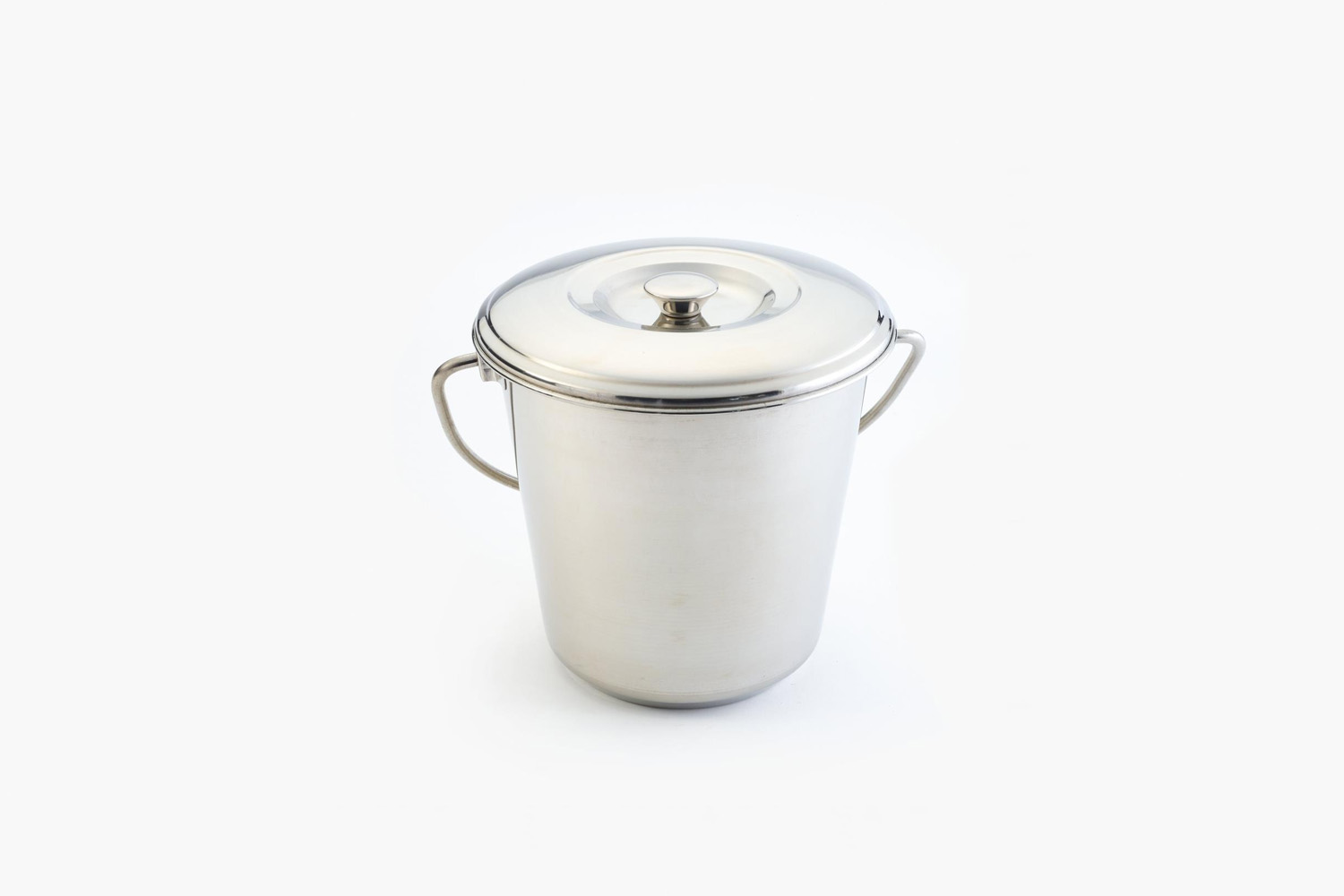
Kitchen compost bins perform one of the least glamorous jobs in the house: patiently holding banana peels, coffee grounds, onion skins, and the cilantro you bought with admirable optimism. Yet the right bin can make collecting food scraps feel surprisingly tidy, convenient, and even stylish.
Unlike a backyard compost pile, a countertop compost bin does not usually turn food into finished compost. It is a temporary collection point that keeps organic waste separate until you move it to a municipal organics cart, community drop-off site, worm bin, bokashi system, or outdoor compost pile. Composting then transforms those scraps into a soil-building material instead of leaving them mixed with ordinary trash.
The best kitchen compost bins are easy to open while your hands are covered in potato starch, simple to clean after an unfortunate watermelon incident, and appropriately sized for your cooking habits. Here are 10 easy pieces that balance odor management, capacity, appearance, and everyday usability.
What to Look for in a Kitchen Compost Bin
Choose the Right Capacity
A compact bin of roughly 0.75 to 1 gallon works well for one person, a small apartment, or a household that empties scraps daily. A 1.3- to 1.75-gallon countertop compost bin offers more breathing room for couples, families, and enthusiastic vegetable choppers.
Bigger is not automatically better. A large container encourages scraps to linger, and lingering scraps eventually begin writing their own strongly scented autobiography. Select a bin you can realistically empty every two or three days.
Decide Between Sealed and Ventilated Designs
Sealed lids help contain odors and discourage fruit flies, but they can trap moisture. Ventilated compost caddies allow air to circulate, which may slow the development of wet, anaerobic conditions. Some ventilated models use a replaceable charcoal filter to help manage smells.
Neither system eliminates the need for regular emptying. A charcoal filter is a supporting actor, not a wizard.
Check the Cleaning Requirements
Smooth interiors, rounded corners, removable buckets, and dishwasher-safe components make cleanup easier. Decorative ceramic bins look handsome but may be heavier to carry. Stainless steel resists staining and does not absorb odors easily, while lightweight plastic is often easier to rinse and transport.
Know Your Local Composting Rules
Municipal programs do not all accept the same materials. Some collect meat, dairy, bones, food-soiled paper, and certified compostable liners; others accept only plant-based scraps. Plastic packaging should remain out of organics bins unless a local program specifically says otherwise.
10 Easy Pieces: The Best Kitchen Compost Bins to Consider
1. OXO Good Grips Easy-Clean Compost Bin
Best for: Most households and first-time composters
The OXO Good Grips Easy-Clean Compost Bin is the practical overachiever of the group. It is available in compact 0.75-gallon and roomier 1.75-gallon sizes, giving apartment dwellers and family kitchens sensible options.
Its smooth interior has no fussy crevices where decomposing spinach can establish permanent residency. The lid flips open easily and can remain open while you scrape a cutting board, yet it closes securely enough to help contain odors. Independent testing has repeatedly highlighted the bin’s straightforward cleaning and user-friendly lid design.
This is the model for people who want composting to become an ordinary kitchen habit rather than a new personality.
2. Simplehuman Compost Caddy
Best for: Integrated waste-sorting stations
Simplehuman’s 4-liter compost caddy can sit on the counter, but its cleverest feature is the magnetic dock designed to attach it to compatible Simplehuman trash cans. The arrangement keeps food scraps beside the main waste station without sacrificing additional counter space.
The caddy detaches from its dock, allowing you to move it beside the cutting board during meal preparation. Once dinner is underway, it can return to its station like a small stainless-steel sidecar.
This system makes the most sense for someone already using a compatible Simplehuman can. As a stand-alone caddy, it remains compact and polished, but the magnetic integration is the feature that earns it a place on this list.
3. Bamboozle Food Composter
Best for: Design-conscious kitchens
The Bamboozle compost bin proves that a food scrap container does not need to resemble equipment borrowed from a janitor’s closet. Its softly curved body is made with bamboo fiber, and its muted colors blend naturally into modern, farmhouse, Scandinavian, and transitional kitchens.
With a capacity of approximately 1.2 gallons, it is spacious enough for several meals without becoming bulky. A charcoal filter in the lid helps manage odors, and the body can be cleaned without complicated disassembly. Product roundups and hands-on testing have especially praised its combination of countertop-friendly styling and odor control.
It is ideal for anyone who wants guests to say, “What a lovely container,” before discovering that it is currently holding six eggshells and the remains of a bell pepper.
4. Full Circle Fresh Air Compost Collector
Best for: Ventilated food scrap storage
The Full Circle Fresh Air collector takes a different approach to odor management. Instead of sealing scraps inside a closed container, its design encourages airflow. The goal is to reduce the warm, soggy conditions that can make stored food waste particularly pungent.
The 1.5-gallon capacity suits active home cooks, and the unit is designed for convenient cleaning. Full Circle states that the collector’s airflow slows the decomposition process while scraps are temporarily stored, and its components are dishwasher safe.
This design works best when paired with suitable liners or absorbent paper approved by your composting program. It may not be the first choice for households worried about insects, but it is a smart alternative for users who dislike condensation and sludge inside tightly sealed pails.
5. Joseph Joseph Compo 4-Liter Food Waste Caddy
Best for: Narrow counters and cabinet doors
At only 4 liters, the Joseph Joseph Compo is deliberately slim. Its wide opening makes it easy to scrape food from plates, while its shallow depth lets it occupy narrow areas that would reject a traditional round compost pail.
An adjustable air vent allows users to choose between increased ventilation and a more closed insect barrier. The included mounting bracket also lets the caddy hang inside a cabinet door, helping preserve precious counter space.
This is a particularly useful kitchen compost bin for renters, apartment residents, and anyone whose countertop is already hosting a coffee maker, air fryer, blender, toaster, and three decorative jars nobody is allowed to open.
6. Brabantia Sort & Go 3-Liter Waste Bin
Best for: Small kitchens and frequent emptying
Brabantia’s 3-liter Sort & Go bin is compact, cheerful, and refreshingly uncomplicated. Its stay-open lid is convenient during food preparation, and the integrated handle makes carrying scraps to an outdoor pile or municipal cart straightforward.
The small capacity is actually an advantage for odor control because it encourages frequent emptying. Brabantia markets the bin for peels, scraps, leftovers, and other organic kitchen waste, and its simple rectangular profile fits neatly against a backsplash or inside a cabinet.
Choose this model when you generate modest amounts of food waste or have easy access to a collection cart. It is less suitable for a family that cooks three meals a day unless someone enjoys making repeated ceremonial journeys to the compost pile.
7. Chef’n EcoCrock Compost Bin
Best for: Ceramic style with a removable bucket
The Chef’n EcoCrock looks more like a contemporary cookie jar than a compost container. Its ceramic outer crock gives it visual weight, while a removable inner bucket handles the actual dirty work.
An oval opening makes it easy to drop in trimmings, and a charcoal filter helps reduce odors. The dual-container design means you do not need to carry the heavier ceramic shell to the outdoor compost pile every time the bin fills.
The EcoCrock is a strong choice for visible countertops, especially when appearance matters as much as utility. Its main drawback is that ceramic requires more careful handling than plastic or stainless steel. A butter-fingered trip to the compost heap could become expensive modern art.
8. Chef’n Stainless Steel Compost Bin
Best for: Easy carrying and durable construction
For cooks who like the EcoCrock’s removable bucket but prefer a more durable exterior, Chef’n also offers a stainless steel compost bin. It combines a contemporary metal shell with an inner bucket that can be lifted out separately.
The outer surface can be wiped clean, while the removable inner bucket is designed for top-rack dishwasher cleaning. A charcoal filter in the lid provides additional odor management.
The result is a polished food scrap container that tolerates the bumps and splashes of a busy kitchen. Stainless steel may show fingerprints, but fingerprints are easier to forgive than fermented zucchini juice.
9. Epica 1.3-Gallon Stainless Steel Compost Bin
Best for: Bagless collection
The Epica countertop compost bin uses a familiar pail shape, stainless steel construction, and a replaceable charcoal filter. Its 1.3-gallon capacity provides enough room for an active household without becoming awkward to carry.
Stainless steel is useful for people who prefer to collect scraps without a liner because it resists staining and can be rinsed thoroughly. In comparative testing, the Epica has been recommended as a sturdy bagless option, although testers still advise emptying it frequently rather than expecting the filter to contain a week’s worth of aging scraps.
Its classic appearance works in almost any kitchen. It will not win an avant-garde design award, but neither will it frighten your sourdough starter.
10. Utopia Kitchen 1.3-Gallon Compost Bin
Best for: A traditional filtered compost pail
The Utopia Kitchen compost bin offers another straightforward stainless steel option. Its 1.3-gallon body is sized for countertops, and the lid accommodates a charcoal filter to help control odors between trips outside.
The manufacturer emphasizes the durability of the stainless steel construction, which is intended to resist cracking, scratching, and chipping. A spare charcoal filter is included with several versions of the bin.
This model is appealing when you want a simple compost pail without specialty mounting systems, unusual vents, or an instruction manual thick enough to qualify as airport reading. Put scraps in, place the lid on, empty regularly, and wash. Sometimes simplicity is the luxury feature.
How to Keep a Countertop Compost Bin Clean and Odor-Free
Empty It Before It Is Completely Full
A kitchen waste bin should not be treated like a suitcase before vacation. Do not keep pressing down the contents in the hope of fitting in one final layer. Empty the container every one to three days, especially during warm weather or when it contains wet scraps.
Control Moisture at the Bottom
A small piece of plain paper, shredded cardboard, or an approved compostable liner can absorb moisture and help scraps release cleanly. Confirm that your municipal program accepts the material before sending it to curbside collection.
Cut Large Scraps Into Smaller Pieces
Smaller scraps take up less space and break down more efficiently once added to a composting system. The EPA recommends chopping materials into smaller pieces when preparing them for home composting.
Wash the Lid and Handle, Too
The inside of the bin receives most of the attention, but residue also collects around hinges, lid rims, filters, and handles. Remove filters before washing unless the manufacturer specifically says they are washable. Let every component dry completely before reassembling the bin.
Balance Food Scraps With Brown Material Outdoors
When scraps go into a backyard compost pile, combine nitrogen-rich “greens,” including many food scraps, with carbon-rich “browns,” such as dry leaves and untreated wood material. The EPA describes a general target of about three parts browns to one part greens by volume.
Everyday Experience: What Living With a Kitchen Compost Bin Is Really Like
The Best Bin Is Usually the Most Convenient One
In everyday use, convenience matters more than impressive specifications. A beautifully engineered compost caddy will not change your habits if it is hidden behind a stack of pans in the darkest corner beneath the sink. The most effective location is usually close to the main food-preparation area, where scraps can travel directly from the cutting board into the bin.
After a few days, the motion becomes automatic: trim the carrots, sweep the peels into the caddy, continue cooking. That tiny reduction in effort makes composting feel less like an environmental project and more like an ordinary part of cleaning the kitchen.
Small Bins Can Be Less Annoying Than Large Ones
New composters often assume that maximum capacity means maximum convenience. The opposite can be true. A smaller container fills quickly, but it also forces a healthy emptying schedule. Scraps spend less time warming, softening, and developing the kind of odor that seems capable of opening doors by itself.
A large household may still need a 1.5-gallon bin, particularly when several people cook. For one or two people, however, a smaller caddy can make the entire routine cleaner. Carrying a lightweight container outside every evening is often easier than wrestling with a heavy bucket once a week.
Coffee Grounds Change Everything
Coffee grounds are common compost ingredients, but they introduce considerable moisture. When wet grounds settle beneath fruit scraps, the bottom layer can become dense and sticky. A piece of absorbent paper or dry shredded cardboard at the base of the bin can make emptying much less dramatic.
The same lesson applies to melon rinds, cucumber ends, tomato pulp, and other water-rich scraps. Drain excessive liquid before adding food to the caddy. A compost bin is prepared to handle peels; it does not need half a cup of soup as a motivational challenge.
Filters Help, but Routine Wins
Charcoal filters can reduce noticeable odors, especially in a well-designed lid. They cannot compensate indefinitely for forgotten scraps. In practical terms, the emptying schedule, moisture level, and cleanliness of the lid have more influence on the kitchen experience than the mere presence of a filter.
Replacement filters also create a small ongoing cost. Some households eventually decide that a filter-free, easy-wash bin suits them better. Others appreciate the extra protection because their outdoor collection cart is far away. Neither approach is universally superior; the right choice depends on how frequently the bin leaves the kitchen.
The Habit Reveals How Much Food You Waste
Perhaps the most surprising experience is seeing several days of food scraps gathered in one place. A compost caddy makes waste visible. Coffee grounds and eggshells are expected, but forgotten leftovers, spoiled berries, and unused herbs tell a more useful story.
That visibility can gradually improve shopping and meal planning. You begin buying smaller containers of delicate produce, freezing ingredients before they spoil, and finding uses for broccoli stems or herb stalks. Composting remains valuable for unavoidable scraps, but preventing edible food from being wasted is even better.
A Quick Rinse Prevents a Future Battle
The easiest cleaning routine happens immediately after emptying. Rinse the bin before residue dries, wipe the lid rim, and leave everything open to air-dry. Postponing the job turns a 30-second rinse into an archaeological excavation.
Once this routine becomes established, maintaining a kitchen compost bin is no more difficult than washing a mixing bowl. The bin stops being “the compost experiment” and becomes another normal kitchen tooljust one with a slightly more complicated relationship to banana peels.
Final Verdict
The best kitchen compost bin is not necessarily the most expensive, decorative, or heavily filtered model. It is the container that fits your counter, opens easily, cleans quickly, and matches the amount of food waste your household produces.
The OXO Good Grips Easy-Clean Compost Bin is the strongest all-around choice for straightforward daily use. The Simplehuman Compost Caddy excels in an integrated trash-and-organics station, while the Bamboozle and Chef’n EcoCrock offer more decorative alternatives. Small-space cooks should consider the Joseph Joseph Compo or Brabantia Sort & Go, and stainless steel fans have several durable, bagless options from Epica, Utopia Kitchen, and Chef’n.
Whichever design you select, place it within easy reach and empty it frequently. Composting does not require a perfect zero-waste kitchen. It begins with one convenient place to put the carrot tops.
Note: Product specifications and availability may change. Local composting programs set their own rules for meat, dairy, food-soiled paper, biodegradable liners, and other materials, so verify local requirements before placing them in your organics collection.